Close Menu
TechCentralTechCentral

    Subscribe to the newsletter

    Get the best South African technology news and analysis delivered to your e-mail inbox every morning.

    Facebook X (Twitter) YouTube LinkedIn
    WhatsApp Facebook X (Twitter) LinkedIn YouTube
    TechCentralTechCentral
    • News
      South Africa's stablecoin silence is becoming a policy failure

      South Africa’s stablecoin silence is becoming a policy failure

      6 February 2026
      Every electric car you can buy in South Africa in early 2026, ranked by price

      Every electric car you can buy in South Africa in early 2026, ranked by price

      6 February 2026
      From stocks to crypto, markets reel as AI doubts grow

      From stocks to crypto, markets reel as AI doubts grow

      6 February 2026
      South Africa deepens China ties as US trade tensions escalate

      South Africa deepens China ties as US trade tensions escalate

      6 February 2026
      Big changes at Lesaka as Bank Zero deal nears completion - Lincoln Mali

      Big changes at Lesaka as Bank Zero deal nears completion

      6 February 2026
    • World
      AI won't replace software, says Nvidia CEO amid market rout - Jensen Huang

      AI won’t replace software, says Nvidia CEO amid market rout

      4 February 2026
      Apple acquires audio AI start-up Q.ai

      Apple acquires audio AI start-up Q.ai

      30 January 2026
      SpaceX IPO may be largest in history

      SpaceX IPO may be largest in history

      28 January 2026
      Nvidia throws AI at the weather

      Nvidia throws AI at weather forecasting

      27 January 2026
      Debate erupts over value of in-flight Wi-Fi

      Debate erupts over value of in-flight Wi-Fi

      26 January 2026
    • In-depth
      How liberalisation is rewiring South Africa's power sector

      How liberalisation is rewiring South Africa’s power sector

      21 January 2026
      The top-performing South African tech shares of 2025

      The top-performing South African tech shares of 2025

      12 January 2026
      Digital authoritarianism grows as African states normalise internet blackouts

      Digital authoritarianism grows as African states normalise internet blackouts

      19 December 2025
      TechCentral's South African Newsmakers of 2025

      TechCentral’s South African Newsmakers of 2025

      18 December 2025
      Black Friday goes digital in South Africa as online spending surges to record high

      Black Friday goes digital in South Africa as online spending surges to record high

      4 December 2025
    • TCS
      TCS+ | How Cloud On Demand is helping SA businesses succeed in the cloud - Xhenia Rhode, Dion Kalicharan

      TCS+ | Cloud On Demand and Consnet: inside a real-world AWS partner success story

      30 January 2026
      Watts & Wheels S1E3: 'BYD's Corolla Cross challenger'

      Watts & Wheels S1E3: ‘BYD’s Corolla Cross challenger’

      30 January 2026
      Watts & Wheels S1E3: 'BYD's Corolla Cross challenger'

      Watts & Wheels S1E2: ‘China attacks, BMW digs in, Toyota’s sublime supercar’

      23 January 2026

      TCS+ | Why cybersecurity is becoming a competitive advantage for SA businesses

      20 January 2026
      Watts & Wheels S1E3: 'BYD's Corolla Cross challenger'

      Watts & Wheels: S1E1 – ‘William, Prince of Wheels’

      8 January 2026
    • Opinion
      South Africa's skills advantage is being overlooked at home - Richard Firth

      South Africa’s skills advantage is being overlooked at home

      29 January 2026
      Why Elon Musk's Starlink is a 'hard no' for me - Songezo Zibi

      Why Elon Musk’s Starlink is a ‘hard no’ for me

      26 January 2026
      South Africa's new fibre broadband battle - Duncan McLeod

      South Africa’s new fibre broadband battle

      20 January 2026
      AI moves from pilots to production in South African companies - Nazia Pillay SAP

      AI moves from pilots to production in South African companies

      20 January 2026
      South Africa's new fibre broadband battle - Duncan McLeod

      ANC’s attack on Solly Malatsi shows how BEE dogma trumps economic reality

      14 December 2025
    • Company Hubs
      • Africa Data Centres
      • AfriGIS
      • Altron Digital Business
      • Altron Document Solutions
      • Altron Group
      • Arctic Wolf
      • AvertITD
      • Braintree
      • CallMiner
      • CambriLearn
      • CYBER1 Solutions
      • Digicloud Africa
      • Digimune
      • Domains.co.za
      • ESET
      • Euphoria Telecom
      • Incredible Business
      • iONLINE
      • IQbusiness
      • Iris Network Systems
      • LSD Open
      • NEC XON
      • Netstar
      • Network Platforms
      • Next DLP
      • Ovations
      • Paracon
      • Paratus
      • Q-KON
      • SevenC
      • SkyWire
      • Solid8 Technologies
      • Telit Cinterion
      • Tenable
      • Vertiv
      • Videri Digital
      • Vodacom Business
      • Wipro
      • Workday
      • XLink
    • Sections
      • AI and machine learning
      • Banking
      • Broadcasting and Media
      • Cloud services
      • Contact centres and CX
      • Cryptocurrencies
      • Education and skills
      • Electronics and hardware
      • Energy and sustainability
      • Enterprise software
      • Financial services
      • Information security
      • Internet and connectivity
      • Internet of Things
      • Investment
      • IT services
      • Lifestyle
      • Motoring
      • Public sector
      • Retail and e-commerce
      • Satellite communications
      • Science
      • SMEs and start-ups
      • Social media
      • Talent and leadership
      • Telecoms
    • Events
    • Advertise
    TechCentralTechCentral
    Home » Sections » AI and machine learning » It’s the end of the OS as we know it

    It’s the end of the OS as we know it

    Soon, developers will start to build their products around AI platforms instead of operating systems.
    By Tim Culpan20 April 2023
    Twitter LinkedIn Facebook WhatsApp Email Telegram Copy Link
    News Alerts
    WhatsApp

    Artificial intelligence systems help us write essays, produce album art and translate languages. But the bigger impact from these technologies could be a shake-up of the entire software ecosystem, as a developers start to build their products around AI platforms instead of operating systems.

    Google and Microsoft are among those joining start-up OpenAI in the rush to stake out territory in the nascent market for generative AI — systems that create content that mimics what a human may produce. So far, their attention seems to be on search, which finds and delivers information. Yet those companies, plus Apple, need to look out for replacements to the more crucial platforms upon which much of their businesses are built.

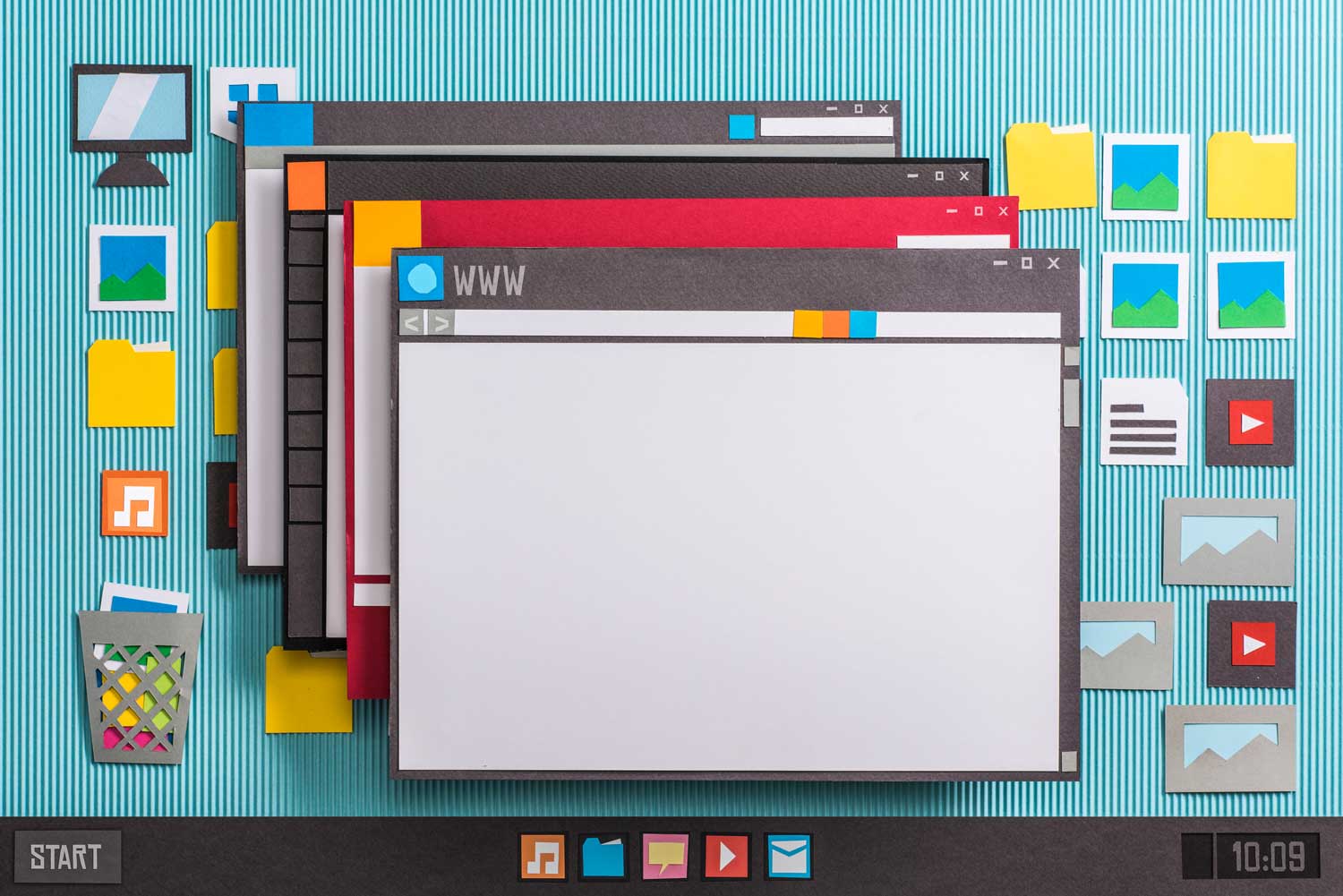
    At its most basic level, an operating system is merely a tool for managing various components of a computer, such as the processor, memory, storage, inputs (keyboard, mouse) and outputs (monitor, speakers). Handing off the administrative task of juggling system resources to the OS allows software such as an internet browser, social media app or photo editor to be simpler but also more stable.

    We need to think of AI systems not as software, but as operating systems upon which applications will be built

    The icons we see on the screen are merely the visible tip of the iceberg: early operating systems such as those developed by Microsoft were simple text-based iterations with the grunt work happening behind the scenes. Today, Windows and Apple’s iOS offer standard frameworks for interacting with their platforms, allowing external developers to create software more easily. And they do a lot more, from managing battery levels and switching between apps to securely storing passwords.

    Apple and Google have built so much functionality directly into iOS and Android that it’s sometimes hard to see where the OS ends and an app begins. The line has been blurred for decades. In the 1990s, Microsoft argued in defence of antitrust allegations that its Internet Explorer browser wasn’t a separate product but merely a feature of its Windows OS.

    Crucially, these platforms are incompatible. With rare exceptions, software built for one OS cannot run on another. That has forced developers to either pick one, or create multiple versions of their products for each. That raises costs for software makers, but creates a walled garden for the OS providers who can charge licence fees, dictate terms of use and keep control of how they’re deployed.

    Use cases

    A quarter of a century later, developments in AI systems like OpenAI’s GPT-4 again offer a host of underlying technologies. Chatbot ChatGPT is one example, as are image creator Dall-E and voice-to-text transcription product Whisper. Each has an underlying AI model — in this case developed using neural networks — with the consumer-facing apps plugging into that.

    As a result, we need to think of AI systems not as software, but as operating systems upon which applications will be built. Since releasing GPT-4 in March, dozens of companies have integrated Open AI’s model into existing services or built new ones on top. Language-learning app Duolingo, for example, uses it to offer role-playing scenarios to students. Morgan Stanley leverages it to collate investment information that then outputs answers via a chatbot.

    Over time, third-party software developers will create products not for an operating system but for the specific AI model that best suits their needs. This is likely to establish a flywheel effect: as more software is created for an AI platform, the more that ecosystem expands — which in turn entices other application providers to join the party. A larger software catalogue feeds larger reams of data back to the underlying model, making it even more powerful.

    AI platform developers, such as OpenAI, Google and Microsoft, are now rushing to get their products out in order to capture the market, or at least not miss the boat. Amazon.com is also joining the fray. This week, it launched a suite of products for Amazon Web Services called Bedrock, allowing cloud customers to use tools developed through its partnerships with other AI firms, including Israeli text-generation start-up A21 Labs, and British image generation player Stable Diffusion. Amazon’s position as one of the biggest cloud providers gives it a unique advantage in tying together generative AI services into an OS-style platform that clients can plug into.
    Critical mass for each of these companies seeking to sell AI services will be both crucial and lucrative. Unlike current operating systems, which are static and don’t change with increased usage, AI-based operating systems could be dynamic and constantly learning.

    What makes this approach likely very profitable is that these platforms can charge based on usage, not a flat fee. Over the past decade, software developers — especially those creating for mobile devices — have been shunted towards subscription-based pricing instead of one-time purchases. This is a replica of the software-as-a-service model long deployed for enterprise products. AI platforms taking on the role of operating systems could then give rise to OS as a service. Such an OSaaS model, with dynamic operating systems instead of the current static approach, would be harder to switch away from. This is akin to how clients can swap between cloud services like AWS, Microsoft Azure and Google Cloud, but often don’t because the time and cost is too prohibitive.

    Viewed through this lens, the AI companies that grow the biggest won’t necessarily be those with the best chatbots, but those that ensure their models are easiest to plug into and with the widest array of use cases. In time, the industry will learn that products like GPT-4 are far more important than cute and chatty search engines.  — (c) 2023 Bloomberg LP

    Get TechCentral’s daily newsletter


    ChatGPT Microsoft OpenAI Tim Culpan
    WhatsApp YouTube Follow on Google News Add as preferred source on Google
    Share. Facebook Twitter LinkedIn WhatsApp Telegram Email Copy Link
    Previous ArticleRamaphosa approval rating sinks on power cuts
    Next Article Huawei ditches Oracle, builds its own ERP system

    Related Posts

    From stocks to crypto, markets reel as AI doubts grow

    From stocks to crypto, markets reel as AI doubts grow

    6 February 2026
    Google goes from laggard to leader in AI

    Google goes from laggard to leader in AI

    5 February 2026
    OpenAI chip rethink signals turning point in AI hardware market - Sam Altman. Shelby Tauber/Reuters

    OpenAI chip rethink signals turning point in AI hardware market

    3 February 2026
    Company News
    The skills gap is a thinking gap: why South African employers can't find problem solvers

    The skills gap is a thinking gap: why SA employers can’t find problem solvers

    6 February 2026
    Vox Kiwi Wireless: fibre-like broadband for South African homes

    Vox Kiwi Wireless: fibre-like broadband for South African homes

    5 February 2026
    NEC XON achieves an African first with full Fortinet accreditation - Ian Kruger

    NEC XON achieves an African first with full Fortinet accreditation

    5 February 2026
    Opinion
    South Africa's skills advantage is being overlooked at home - Richard Firth

    South Africa’s skills advantage is being overlooked at home

    29 January 2026
    Why Elon Musk's Starlink is a 'hard no' for me - Songezo Zibi

    Why Elon Musk’s Starlink is a ‘hard no’ for me

    26 January 2026
    South Africa's new fibre broadband battle - Duncan McLeod

    South Africa’s new fibre broadband battle

    20 January 2026

    Subscribe to Updates

    Get the best South African technology news and analysis delivered to your e-mail inbox every morning.

    Latest Posts
    South Africa's stablecoin silence is becoming a policy failure

    South Africa’s stablecoin silence is becoming a policy failure

    6 February 2026
    Every electric car you can buy in South Africa in early 2026, ranked by price

    Every electric car you can buy in South Africa in early 2026, ranked by price

    6 February 2026
    From stocks to crypto, markets reel as AI doubts grow

    From stocks to crypto, markets reel as AI doubts grow

    6 February 2026
    South Africa deepens China ties as US trade tensions escalate

    South Africa deepens China ties as US trade tensions escalate

    6 February 2026
    © 2009 - 2026 NewsCentral Media
    • Cookie policy (ZA)
    • TechCentral – privacy and Popia

    Type above and press Enter to search. Press Esc to cancel.

    Manage consent

    TechCentral uses cookies to enhance its offerings. Consenting to these technologies allows us to serve you better. Not consenting or withdrawing consent may adversely affect certain features and functions of the website.

    Functional Always active
    The technical storage or access is strictly necessary for the legitimate purpose of enabling the use of a specific service explicitly requested by the subscriber or user, or for the sole purpose of carrying out the transmission of a communication over an electronic communications network.
    Preferences
    The technical storage or access is necessary for the legitimate purpose of storing preferences that are not requested by the subscriber or user.
    Statistics
    The technical storage or access that is used exclusively for statistical purposes. The technical storage or access that is used exclusively for anonymous statistical purposes. Without a subpoena, voluntary compliance on the part of your Internet Service Provider, or additional records from a third party, information stored or retrieved for this purpose alone cannot usually be used to identify you.
    Marketing
    The technical storage or access is required to create user profiles to send advertising, or to track the user on a website or across several websites for similar marketing purposes.
    • Manage options
    • Manage services
    • Manage {vendor_count} vendors
    • Read more about these purposes
    View preferences
    • {title}
    • {title}
    • {title}