Close Menu
TechCentralTechCentral

    Subscribe to the newsletter

    Get the best South African technology news and analysis delivered to your e-mail inbox every morning.

    Facebook X (Twitter) YouTube LinkedIn
    WhatsApp Facebook X (Twitter) LinkedIn YouTube
    TechCentralTechCentral
    • News
      Nedbank hires MTN's former tech chief as group CIO - Nikos Angelopoulos

      Nedbank hires MTN’s former tech chief as group CIO

      31 July 2026
      Eskom's diesel bill falls 86% as breakdowns hit eight-year low

      Eskom’s diesel bill falls 86% as breakdowns hit eight-year low

      31 July 2026
      Ramaphosa signs off on taking the grid away from Eskom

      Ramaphosa signs off on taking the grid away from Eskom

      31 July 2026
      Microsoft just had the biggest day in stock market history

      Microsoft just had the biggest day in stock market history

      31 July 2026
      MTN Nigeria's growth engine stalled in second quarter - Karl Toriola

      MTN Nigeria’s growth engine stalled in second quarter

      31 July 2026
    • World
      Meta AI will now tell parents if their teen is in crisis

      Meta AI will now tell parents if their teen is in crisis

      17 July 2026
      IBM shares crash 25% as AI upends software spending - Arvind Krishna

      IBM shares crash 25% as AI upends software spending

      15 July 2026
      Jony Ive's first OpenAI device: an AI smart speaker - Jony Ive and Sam Altman

      Jony Ive’s first OpenAI device: an AI smart speaker

      15 July 2026
      Stripe, Advent in talks to buy PayPal for $53-billion

      Stripe, Advent in talks to buy PayPal for $53-billion

      15 July 2026
      Memory crisis sends smartphone market into steep decline

      Memory crisis sends smartphone market into steep decline

      13 July 2026
    • In-depth
      The plan to stop AI from breaking the world - Google DeepMind CEO Demis Hassabis. Image: John Sears

      The plan to stop AI from breaking the world

      16 July 2026
      The internet has a Strait of Hormuz problem

      The internet has a Strait of Hormuz problem

      15 July 2026
      AI boom sparks rally, frenzy and fear

      AI boom sparks rally, frenzy and fear

      11 June 2026
      Every plug-in hybrid on sale in South Africa, ranked by price - Lamborghini Temerario

      Every plug-in hybrid on sale in South Africa, ranked by price

      7 June 2026
      What Wi-Fi 8 will mean for wireless networks

      What Wi-Fi 8 will mean for wireless networks

      1 June 2026
    • TCS
      TCS+ | Why South African workers must become supervisors of digital labour - Accelera Digital Group Cliff de Wit

      TCS+ | Why South African workers must become supervisors of digital labour

      31 July 2026
      TCS | Rapid deployment rules can't work without municipalities: ACT - Nomvuyiso Batyi

      TCS | Icasa’s rules skip the real bottleneck: ACT

      30 July 2026
      TCS+ | iStore Business on why Apple makes sense for SMEs - Sudesh Pillay and Tamia Nontsikelelo

      TCS+ | iStore Business on why Apple makes sense for SMEs

      30 July 2026
      TCS+ | A smarter approach to cloud for South African businesses - Joel Chacko and Jonathan Oaker

      TCS+ | A smarter approach to cloud for South African businesses

      28 July 2026
      TCS | How Optasia lends billions to people banks can't see - Salvador Anglada

      TCS | How Optasia lends billions to people banks can’t see

      23 July 2026
    • Opinion
      The author, Jannie van Zyl

      Selling vapour is corporate suicide in slow motion

      16 July 2026
      Brazil's online gambling crackdown is a lesson for South Africa

      How Amazon outmanoeuvred Starlink in South Africa

      15 July 2026
      The Popia problem with agentic AI - Herman Haasbroek

      The Popia problem with agentic AI

      14 July 2026
      The author, Fanie van Rooyen

      South Africa can still catch the AI wave – here’s how

      7 July 2026
      The author, Fanie van Rooyen

      The AI utopia South Africa can’t afford

      1 July 2026
    • Company Hubs
      • 1Stream
      • Africa Data Centres
      • AfriGIS
      • Altron Digital Business
      • Altron Document Solutions
      • Altron Group
      • Arctic Wolf
      • Ascent Technology
      • AvertITD
      • BBD
      • Braintree
      • CallMiner
      • CambriLearn
      • CM Telecom
      • Contactable
      • CYBER1 Solutions
      • Digicloud Africa
      • Digimune
      • Domains.co.za
      • ESET
      • Euphoria Telecom
      • HOSTAFRICA
      • Incredible Business
      • iONLINE
      • IQbusiness
      • Iris Network Systems
      • Kaspersky
      • LSD Open
      • Mitel
      • NEC XON
      • Netstar
      • Network Platforms
      • Next DLP
      • Ovations
      • Paracon
      • Paratus
      • Q-KON
      • SevenC
      • SkyWire
      • Solid8 Technologies
      • Telit Cinterion
      • Telviva
      • Tenable
      • Vertiv
      • Videri Digital
      • Vodacom Business
      • Vox
      • Wipro
      • Workday
      • XLink
    • Sections
      • AI and machine learning
      • Banking
      • Broadcasting and Media
      • Cloud services
      • Contact centres and CX
      • Cryptocurrencies
      • Education and skills
      • Electronics and hardware
      • Energy and sustainability
      • Enterprise software
      • Financial services
      • HealthTech
      • Information security
      • Internet and connectivity
      • Internet of Things
      • Investment
      • IT services
      • Lifestyle
      • Policy and regulation
      • Public sector
      • Retail and e-commerce
      • Satellite communications
      • Science
      • SMEs and start-ups
      • Social media
      • Talent and leadership
      • Telecoms
      • Watts & Wheels
    • Events
    • Advertise
    TechCentralTechCentral
    Home » News » Koeberg woes raise serious questions

    Koeberg woes raise serious questions

    The mishandling of the Koeberg life extension project raises serious questions about the capacity of South Africa’s nuclear sector.
    By Hartmut Winkler22 August 2022
    Twitter LinkedIn Facebook WhatsApp Email Telegram Copy Link
    News Alerts
    WhatsApp
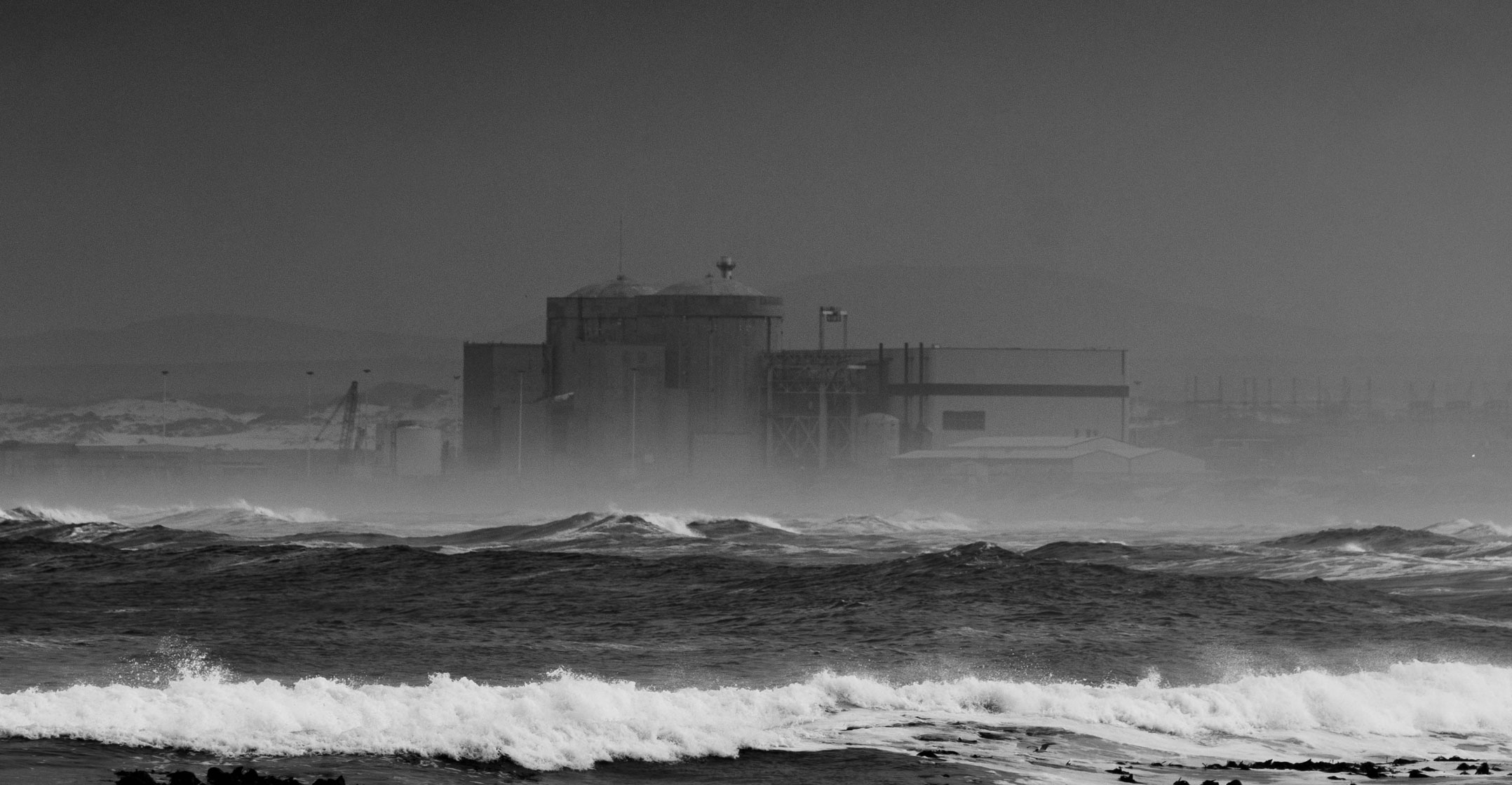
    The Koeberg nuclear power station. Image: 6000.co.za licensed under Creative Commons BY-NC-ND 2.0

    South Africa’s only nuclear power plant, Koeberg, has frequently been in the news in 2022, all for the wrong reasons.

    Its operating licence expires in 2024, and its continued operation thereafter depends on critical refurbishments and upgrades. Work on these finally began in January this year, but immediately ran into difficulties, forcing significant delays.

    Koeberg is supplying only half of its power while work is in progress. This has amplified the crippling power shortages South Africa has been experiencing. This state of affairs, where the country effectively has 3% less generating power available than it would otherwise have, is expected to persist for the bulk of the next two years.

    Read: Environmental battle over Koeberg ensnares Mantashe

    Other potential signs of turbulence linked to Koeberg include:

    • The delayed application to the nuclear regulator to extend the plant’s licence.
    • The controversial dismissal of one of the regulator’s board members – an opponent of nuclear power – by the minister of mineral & energy resources.
    • Resignations of senior Koeberg staff, though there is no evidence that these were due to friction.

    All of this has led to speculation that the Koeberg life extension exercise is in difficulty. In turn, it casts doubt on the capacity of South Africa’s nuclear sector, and is likely to put to bed the highly ambitious proposals still advocated within the sector to build new nuclear plants.

    Koeberg’s history

    Koeberg, Africa’s only operational nuclear power station, 27km north of the Cape Town city centre, is reaching the end of its scheduled life cycle.

    The plant consists of two units of just over 900MW each, and together these contribute roughly 5% of South Africa’s electricity.

    Koeberg was built by the French company Framatome between 1978 and 1984. In line with international practice, the plant was granted a 40-year operational licence which will expire in July 2024. Licensing the plant for a further 20 years is possible, as long as it meets specific safety criteria. Typically these involve particular upgrades and the replacement of various components.

    So far, the plant has operated reasonably safely, with only comparatively minor incidents recorded.

    Some civil society groups have called for the closure of Koeberg when its current licence expires in 2024. South Africa’s extreme electricity crisis would make such a closure very difficult to absorb. While the construction of new nuclear plants is prohibitively expensive and very time intensive, extending the life span of an existing plant is in principle achievable in the short term and financially defensible.

    The Koeberg nuclear power station. Image: 6000.co.za licensed under Creative Commons BY-NC-ND 2.0

    The extension of the lifespan of Koeberg was also envisaged in the government endorsed 2019 Integrated Resource Plan for electricity.

    Nuclear activities in South Africa are controlled by the National Nuclear Regulator. The regulator is expected to be guided by recommendations drawn up by experts commissioned by the International Atomic Energy Agency who inspected Koeberg in 2019. These recommendations include technical interventions for operating the plant safely for another 20 years. The most significant of these is the replacement of steam generators.

    The upgrade is projected to cost R20-billion. Most of this would go towards buying and installing six new steam generators.

    The need to replace them was identified over 10 years ago, but protracted litigation over who would do the job held up the project. The operation was eventually scheduled for 2022.

    Life extension project

    The replacements and upgrades needed to secure a 20-year operating licence extension require each Koeberg unit to be shut down for a projected five months. Unit 2 was therefore switched off on 18 January 2022 and was supposed to reopen in June 2022. Unit 1 was then to go through the same process, starting in October.

    Things then went wrong. The critical steam generator replacement was again postponed to 2023. The full reasons have not been officially disclosed. But there has been no denial of reports that the onsite storage facilities for the now radioactively contaminated old steam generators were not ready.

    Read: Koeberg unit shut down due to mechanical fault

    The delay in getting Koeberg unit 2 up and running on schedule resulted in an additional 900MW shortfall during South Africa’s most recent midwinter bout of severe power blackouts.

    Unit 2 finally started operating again on 7 August, almost two months later than projected. Another outage of comparable duration is still required in 2023.

    Significance for the nuclear sector

    The mishandling of the Koeberg life extension project raises serious questions about the capacity of South Africa’s nuclear sector. This sector has advocated the building of a large fleet of new nuclear plants, implying that it could be done without major cost and time overruns. But the much smaller and far more straightforward Koeberg upgrade has not gone well.

    South Africa should drop any ambitions for new nuclear plants. The nuclear sector should instead focus on its more modest target, namely to complete the Koeberg upgrade, run the plant for another 20 years and then complete the potentially problematic decommissioning.The Conversation

    • The author, Hartmut Winkler is professor of physics, University of Johannesburg
    • This article is republished from The Conversation under a Creative Commons licence

    Get the latest South African tech news

    Follow TechCentral on Google News Add TechCentral as your preferred source on Google


    Eskom Hartmut Winkler Koeberg
    WhatsApp YouTube
    Share. Facebook Twitter LinkedIn WhatsApp Telegram Email Copy Link
    Previous ArticleVodafone continues to offload assets: Hungary deal reached
    Next Article MTN, Telkom say they remain locked in deal talks

    Related Posts

    Eskom's diesel bill falls 86% as breakdowns hit eight-year low

    Eskom’s diesel bill falls 86% as breakdowns hit eight-year low

    31 July 2026
    Ramaphosa signs off on taking the grid away from Eskom

    Ramaphosa signs off on taking the grid away from Eskom

    31 July 2026
    Huawei Connect 2026: taking South African AI beyond pilots

    Huawei Connect 2026: taking South African AI beyond pilots

    29 July 2026
    Company News
    Domains.co.za launches self-hosted n8n VPS hosting

    Domains.co.za launches self-hosted n8n VPS hosting

    31 July 2026
    Smarter.tech '26 shows why smarter technology begins with context - Obsidian Systems

    Context is the missing piece in enterprise AI: Obsidian

    31 July 2026
    Huawei launches 12 intelligent transport solutions in South Africa - Sam Tang

    Huawei launches 12 intelligent transport solutions in South Africa

    30 July 2026
    Opinion
    The author, Jannie van Zyl

    Selling vapour is corporate suicide in slow motion

    16 July 2026
    Brazil's online gambling crackdown is a lesson for South Africa

    How Amazon outmanoeuvred Starlink in South Africa

    15 July 2026
    The Popia problem with agentic AI - Herman Haasbroek

    The Popia problem with agentic AI

    14 July 2026

    Subscribe to Updates

    Get the best South African technology news and analysis delivered to your e-mail inbox every morning.

    Latest Posts
    Nedbank hires MTN's former tech chief as group CIO - Nikos Angelopoulos

    Nedbank hires MTN’s former tech chief as group CIO

    31 July 2026
    Eskom's diesel bill falls 86% as breakdowns hit eight-year low

    Eskom’s diesel bill falls 86% as breakdowns hit eight-year low

    31 July 2026
    Ramaphosa signs off on taking the grid away from Eskom

    Ramaphosa signs off on taking the grid away from Eskom

    31 July 2026
    TCS+ | Why South African workers must become supervisors of digital labour - Accelera Digital Group Cliff de Wit

    TCS+ | Why South African workers must become supervisors of digital labour

    31 July 2026
    © 2009 - 2026 NewsCentral Media
    Built and maintained by Chronon
    • Cookie policy (ZA)
    • TechCentral – privacy and Popia

    Type above and press Enter to search. Press Esc to cancel.

    Manage consent

    TechCentral uses cookies to enhance its offerings. Consenting to these technologies allows us to serve you better. Not consenting or withdrawing consent may adversely affect certain features and functions of the website.

    Functional Always active
    The technical storage or access is strictly necessary for the legitimate purpose of enabling the use of a specific service explicitly requested by the subscriber or user, or for the sole purpose of carrying out the transmission of a communication over an electronic communications network.
    Preferences
    The technical storage or access is necessary for the legitimate purpose of storing preferences that are not requested by the subscriber or user.
    Statistics
    The technical storage or access that is used exclusively for statistical purposes. The technical storage or access that is used exclusively for anonymous statistical purposes. Without a subpoena, voluntary compliance on the part of your Internet Service Provider, or additional records from a third party, information stored or retrieved for this purpose alone cannot usually be used to identify you.
    Marketing
    The technical storage or access is required to create user profiles to send advertising, or to track the user on a website or across several websites for similar marketing purposes.
    • Manage options
    • Manage services
    • Manage {vendor_count} vendors
    • Read more about these purposes
    View preferences
    • {title}
    • {title}
    • {title}