One of the biggest challenges when starting a small manufacturing business is deciding what to sell.
Investing in equipment designed to manufacture a single product can be risky. If demand changes, competition increases or the product simply doesn’t sell as expected, the equipment may have limited use elsewhere.
Laser technology offers a different approach.
Instead of investing in a machine designed around one finished product, entrepreneurs can invest in a production tool capable of both cutting and engraving — opening the door to hundreds of different products across multiple markets.
That versatility is one of the reasons laser technology has become an attractive option for entrepreneurs looking to start a side business, bring production in-house or create an additional income stream.
One machine, two important capabilities
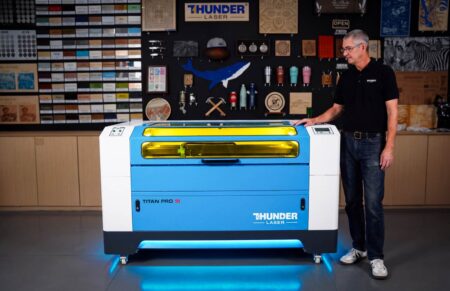
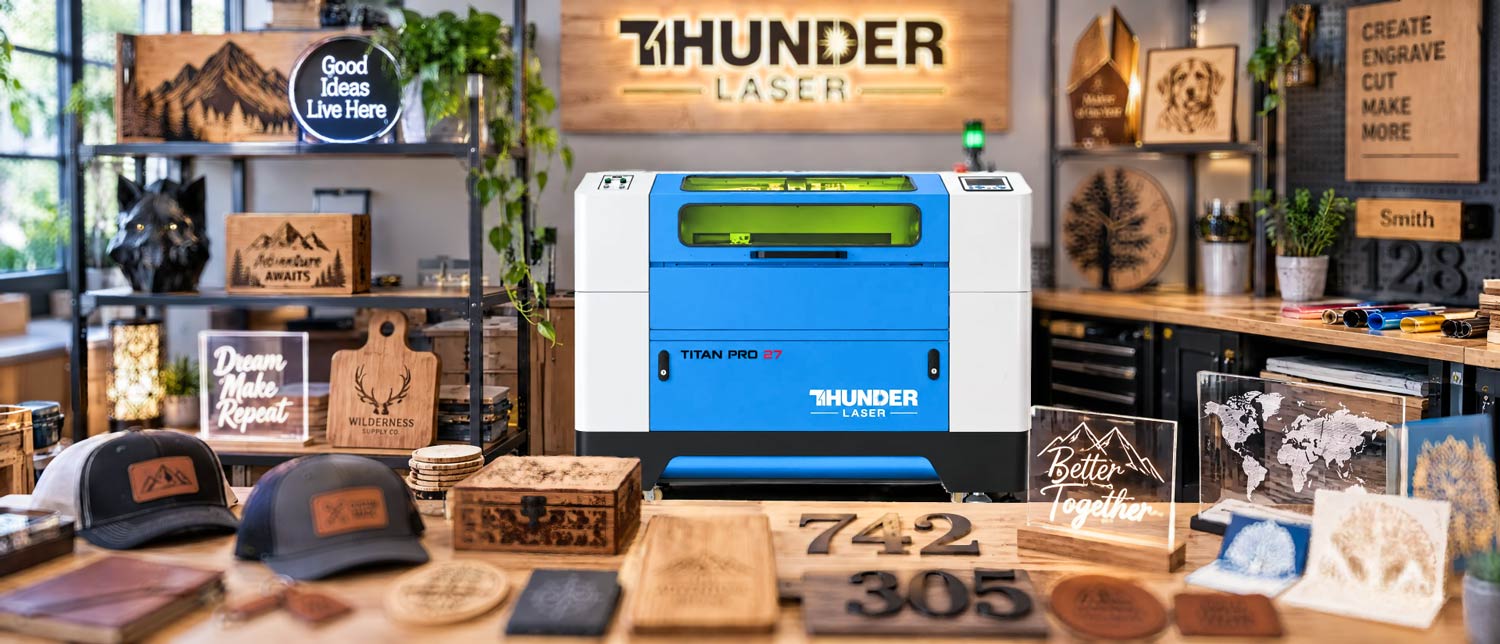
A single laser machine can give a business two valuable production capabilities: cutting and engraving. Depending on the laser technology and configuration, the same machine can cut materials such as acrylic, medium-density fibreboard (MDF) and wood to manufacture components, signage and finished products, while also engraving detailed designs, text, logos and photographs onto suitable materials.
This combination is what makes laser cutting and engraving machines particularly versatile for small businesses.
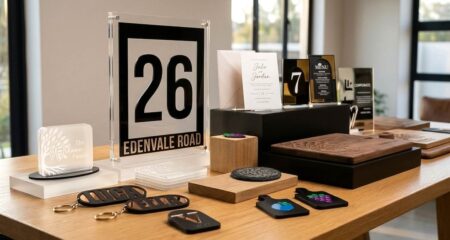
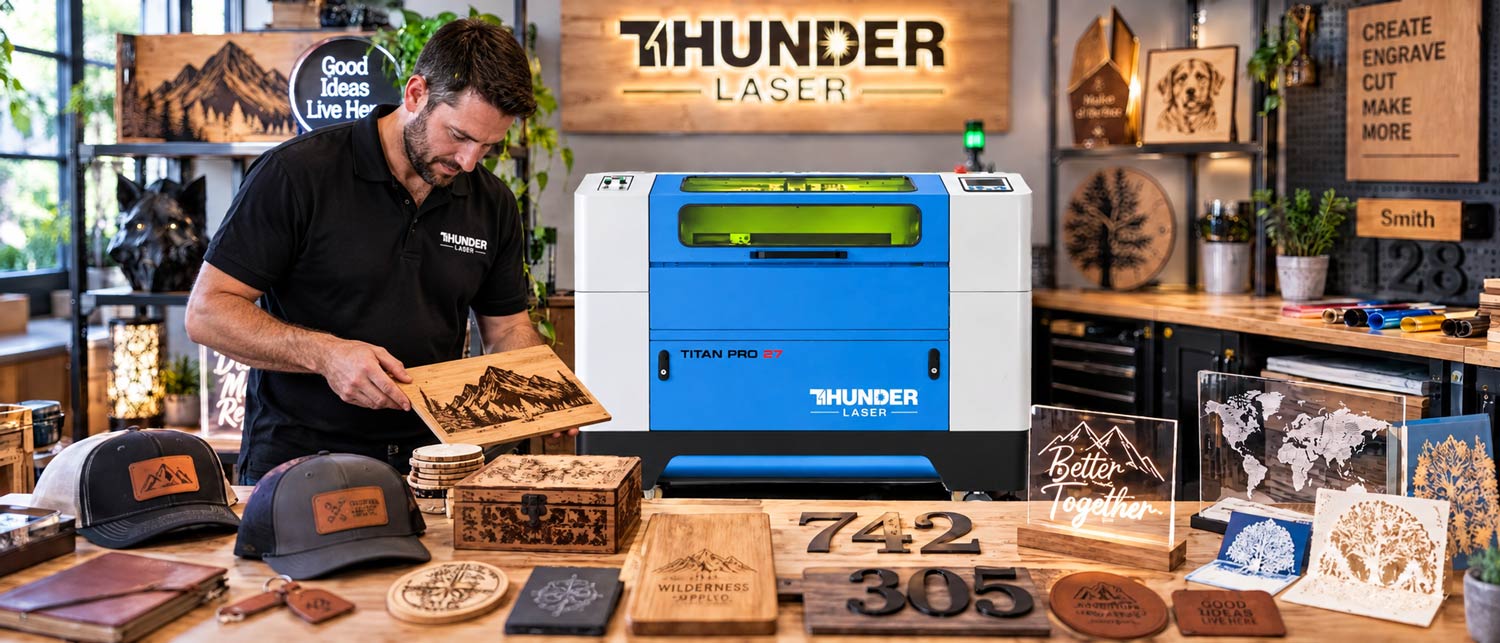
Consider something as simple as a personalised house number. The machine can cut the individual components from acrylic or another suitable material and engrave additional details where required. That same equipment could then be used to manufacture business signage, wall art, clocks, wedding décor, personalised gifts or corporate products.
The machine hasn’t changed. The product — and potentially the entire customer market — has.
From one idea to multiple markets
One of the advantages of laser technology is that entrepreneurs don’t necessarily need to invent something completely new.
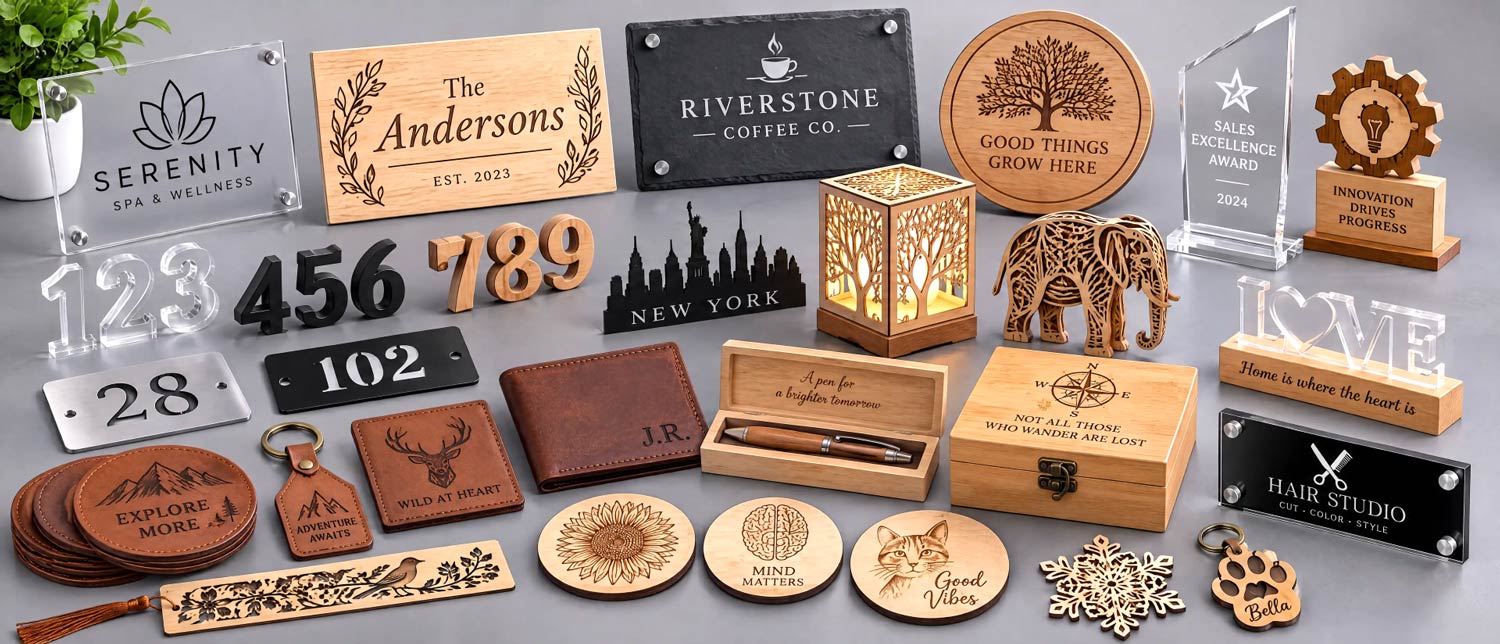
Opportunities already exist in products people and businesses purchase every day. House numbers, business signs, personalised children’s name signs, wedding decorations, keyrings, coasters, awards, wall décor and corporate gifts are all established product categories.
The opportunity might come from creating a better design, adding personalisation, manufacturing locally, delivering faster or simply providing customers with something they cannot easily purchase off the shelf.
Professional laser cutting machines can provide both cutting and engraving capabilities, allowing businesses to move between manufacturing components and adding detailed personalisation without necessarily changing equipment. This gives entrepreneurs the ability to test different ideas without committing their entire business to a single product.
Produce a few examples. Test the market. See what customers respond to. Then concentrate production on the opportunities that show the most potential.
Personalisation adds another layer
Cutting creates the product. Engraving can make it personal. Names, company logos, photographs, messages, serial numbers and detailed graphics can transform an otherwise standard item into something designed for a specific person or business.
When evaluating laser engraving machines, businesses should therefore consider more than engraving quality alone. Depending on what they intend to manufacture, cutting capability, working area, laser power and the materials the machine can process can all influence the range of products the business is able to offer. For an entrepreneur, that flexibility can be valuable.
A machine initially purchased for signage might later be used for personalised gifts. A business producing décor could discover an opportunity in corporate awards. Someone making wedding products might find that business signage provides more consistent work throughout the year.
A machine that can follow the market
Customer demand rarely stays exactly the same throughout the year. Wedding and event products can be seasonal. Corporate gifting may increase towards year-end. Signage, personalised products and home décor can each have different demand cycles.
A flexible production machine gives a small business the ability to move between these opportunities. This can be particularly useful for someone starting after hours or over weekends. Production can begin on a relatively small scale while the owner learns the technology, discovers which products sell and builds a customer base. As orders increase, the business can expand its product range, increase production and potentially invest in larger professional equipment. What begins as an additional income stream can eventually become a substantially larger operation.
The same principle applies to established businesses
Laser technology isn’t only relevant to start-ups. Existing businesses can use the same flexibility to bring outsourced production in-house or introduce additional services.
A signage company could manufacture components it previously purchased from a supplier. A branding business could add personalised products. A furniture manufacturer could produce decorative components, templates or engraved branding.
Instead of replacing the company’s existing business model, laser technology can complement it.
The real investment is flexibility
When evaluating production equipment, price, power and specifications naturally matter.
But small businesses should also ask another question: how many ways could this machine could generate revenue?
Equipment dedicated to one product succeeds or fails largely with that product. Flexible manufacturing technology gives the owner more options.
If one idea doesn’t work, another can be tested. If one market slows, another can be explored. And when customers start asking for something different, the business may already have the technology required to produce it.
That is perhaps the greatest advantage of modern laser technology for a small business. The entrepreneur isn’t simply investing in a machine that makes one particular product. They are investing in the ability to make the next one.
Find out more about MaxLaser at www.maxlaser.co.za, or follow it on Facebook, YouTube, Instagram and TikTok.
- Read more articles by MaxLaser on TechCentral
- This promoted content was paid for by the party concerned