For years, choosing a laser machine has largely meant choosing the material a business wants to work with. CO₂ lasers handle non-metals such as wood, acrylic, leather, rubber and MDF. Fibre lasers are built for metal.
That distinction creates a problem for any business that wants to diversify, because the technology it buys determines which materials — and ultimately which markets — it can reach. Dual-source technology is starting to change that by putting two laser sources in one machine.
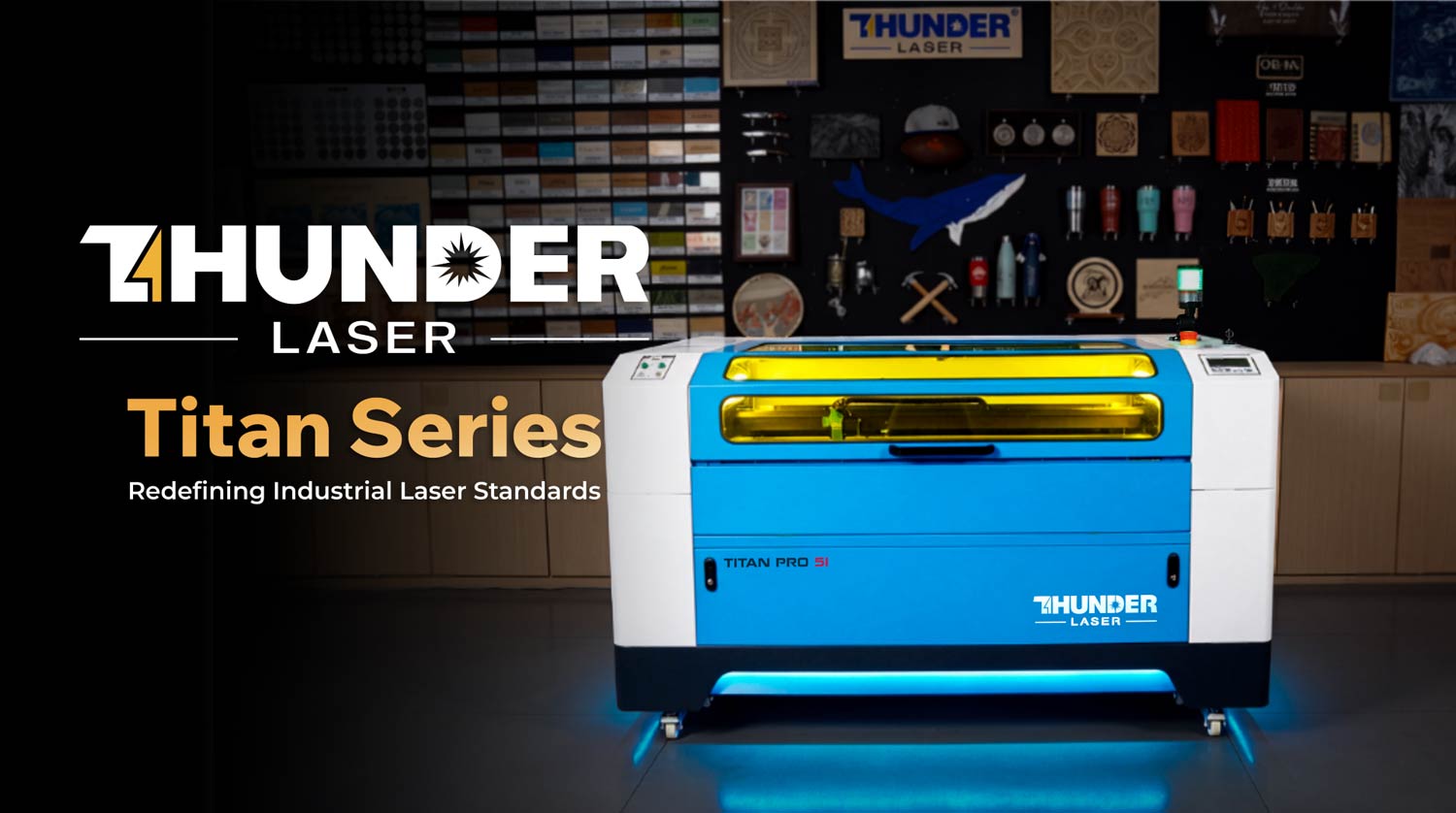
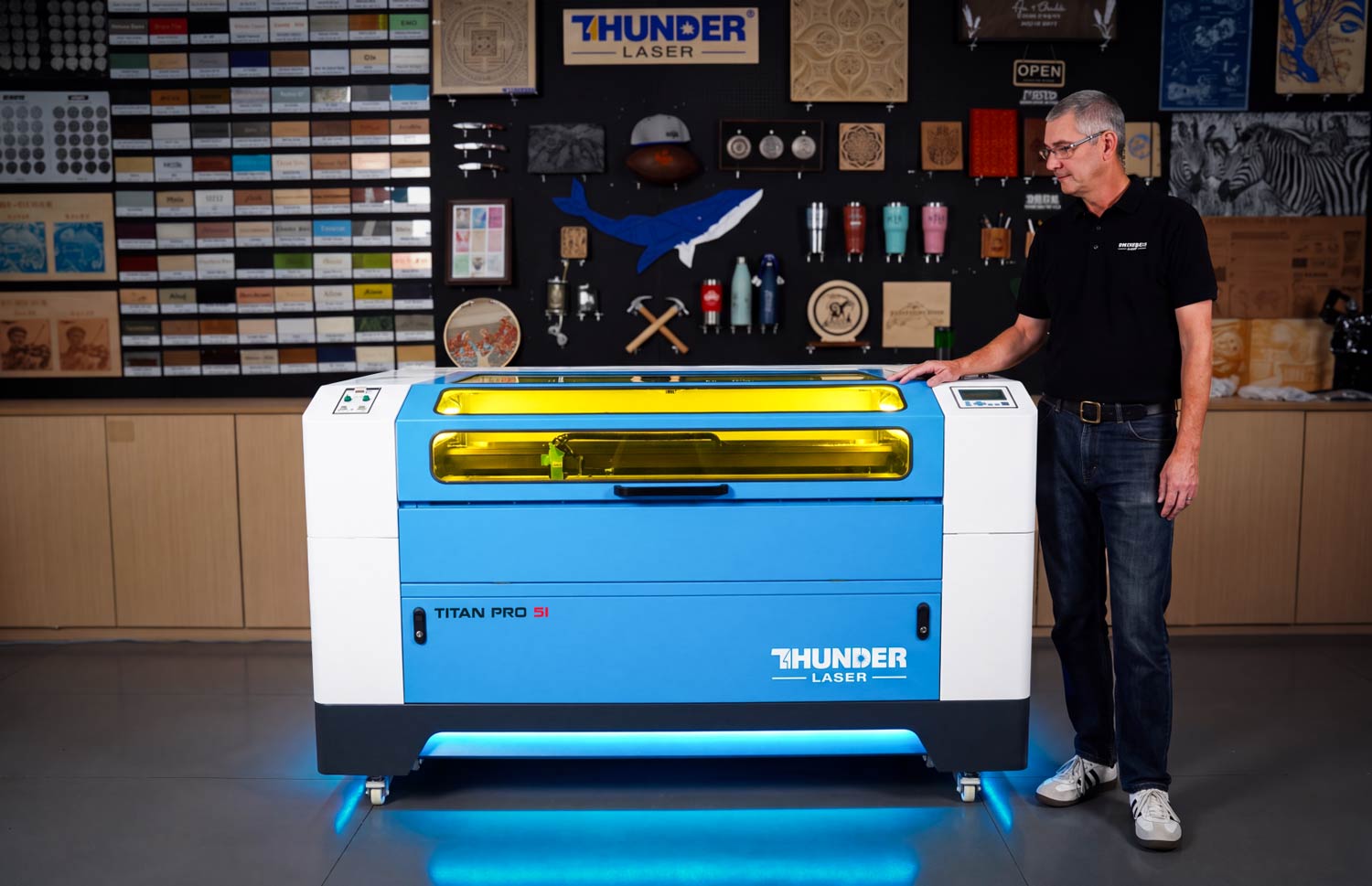
The Thunder Laser Titan Pro 51 is one example, pairing an 80W RF CO₂ source with a 100W MOPA fibre source across a 1 300x900mm bed. The result is a machine built around production range rather than a single application.
Why the laser source matters
Laser engraving machines do not all interact with materials the same way. The wavelength and characteristics of the source determine what it can process, which is why choosing a machine involves more than comparing power figures.
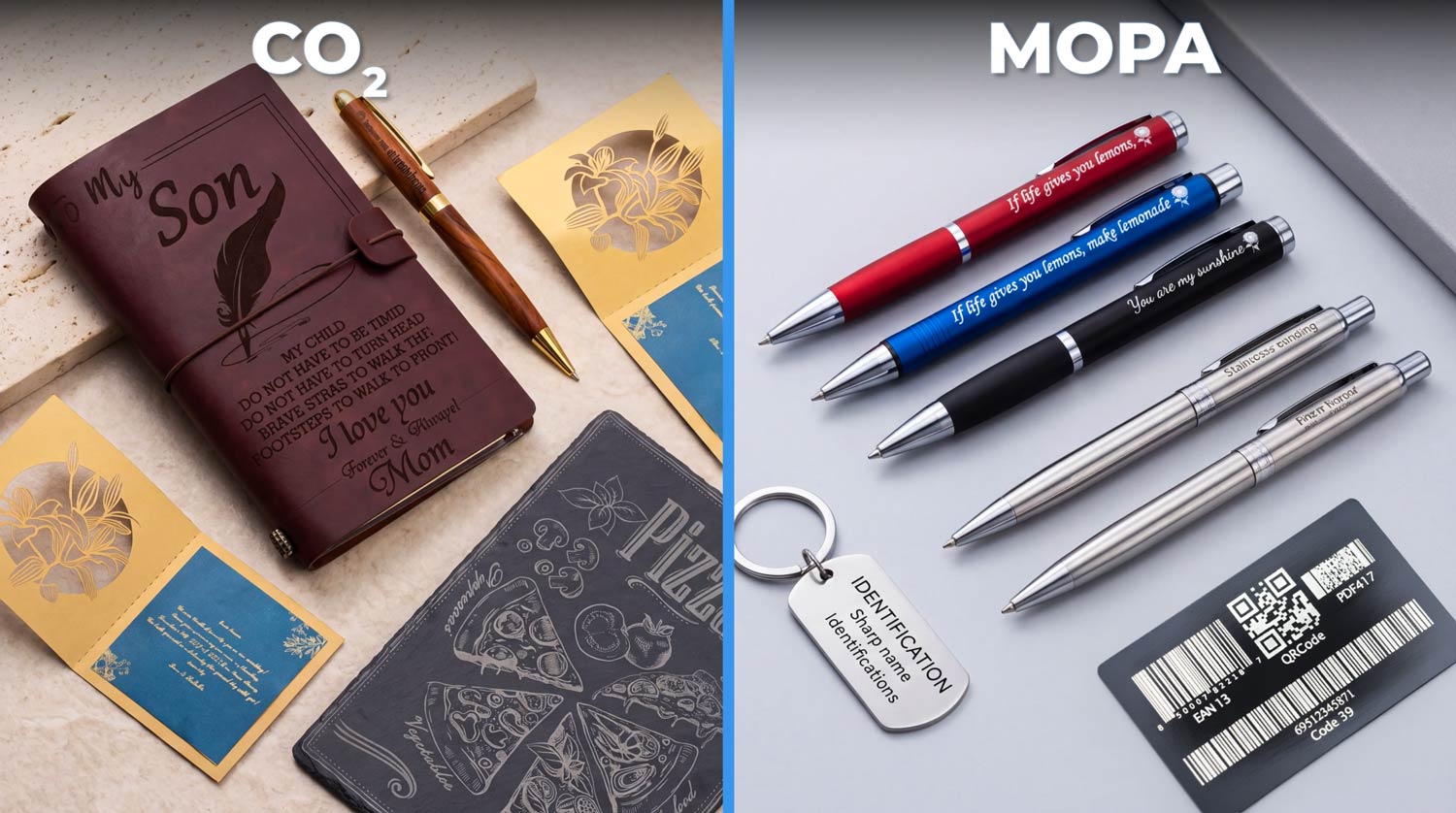
A CO₂ laser is the versatile option for non-metals, engraving wood, MDF, acrylic, leather, rubber and many other substrates. It is not limited to engraving either: with enough power it cuts as well. The 80W CO₂ source in the Titan Pro 51 lets a business move between detailed engraving and cutting on the same machine — engraving a design into an acrylic sign, then cutting the components to build the finished product.
Material compatibility does have limits, and they matter for safety as much as for output quality. PVC and vinyl, for instance, should never go near a CO₂ laser. MaxLaser covers material suitability as part of its machine training.
Adding MOPA changes the equation
Metal is a different problem, and it is where the Titan Pro 51’s second source comes in. Its 100W MOPA fibre laser — master oscillator power amplifier — marks and engraves metals, opening up product identification, branding, personalised metal goods and jewellery work.
MOPA also gives operators more control over pulse settings than a conventional Q-switched fibre laser, which is what makes different marking effects possible on the same metal. That matters where finish is part of the product rather than an afterthought.
Combining that with CO₂ means a business is no longer confined to either the non-metal engraving market or metal work. It can run across both.
One machine can mean multiple markets
An engraving company working predominantly with laser engraving wood, for example, may produce personalised gifts, décor, signage, awards or corporate products.
The same company can use laser engraving acrylic for signage, displays, awards, nameplates and branded products. Leather adds another category, and rubber covers work such as custom stamps.
Then the MOPA source brings metal into the mix. Rather than buying equipment around a single product idea, a business can use different materials to test entirely different markets.
That flexibility earns its keep when demand shifts. A shop that normally makes personalised products can chase corporate branding, signage or industrial marking work without rebuilding its operation around one type of customer.
Size matters, too
Dual-source capability is not the only thing worth noting. The 1 300x900mm bed — the largest in the Titan Pro range — gives significantly more room than a typical desktop engraver, which means larger pieces or multiple smaller items laid out across the bed for production runs.
That combination matters because versatility is only commercially useful if the machine can also handle the type and volume of work a growing business takes on. A large bed, CO₂ cutting and engraving, and MOPA metal marking together make this a production platform rather than an engraving tool.
Investing in possibilities rather than one product
For any business weighing up laser technology, the question is not only what the machine can make today but what it might allow the business to make in two years’ time. Equipment often arrives to produce signage, personalised products or corporate gifts, and then new customers and new skills open up work nobody planned for.
Dual-source technology makes that kind of diversification realistic, because two fundamentally different laser technologies sit inside one production platform: an 80W CO₂ source for engraving and cutting non-metals, a 100W MOPA source for metal, and a 1 300x900mm bed for both.
For entrepreneurs and established manufacturers alike, that is less about having more features than about having more directions to grow in.
About MaxLaser
MaxLaser is a South African supplier of laser engraving machines, laser cutting machines, UV printers, DTF printers, laser marking systems and 3D printers. Since 2018 it has helped businesses across South Africa and neighbouring countries start, grow and expand through manufacturing technology, hands-on training, technical support and business guidance — from entrepreneurs launching a side hustle to established manufacturers increasing production capacity. Learn more at maxlaser.co.za. Follow MaxLaser on Facebook, YouTube, Instagram and TikTok.
- Read more articles by MaxLaser on TechCentral
- This promoted content was paid for by the party concerned