Close Menu
TechCentralTechCentral

    Subscribe to the newsletter

    Get the best South African technology news and analysis delivered to your e-mail inbox every morning.

    Facebook X (Twitter) YouTube LinkedIn
    WhatsApp Facebook X (Twitter) LinkedIn YouTube
    TechCentralTechCentral
    • News
      The world has minted its first dollar trillionaire - Elon Musk

      The world has minted its first dollar trillionaire

      12 June 2026
      MTN's first AI target? Itself - Charles Molapisi

      MTN’s first AI target? Itself

      11 June 2026
      Anthropic vs OpenAI and the bitter battle for the future of AI - Dario Amodei and Sam Altman

      Anthropic vs OpenAI and the bitter battle for the future of AI

      11 June 2026
      Lost in translation: why AI voice agents fail South Africans

      Lost in translation: why AI voice agents fail South Africans

      11 June 2026
      Pick n Pay stores to double as nationwide e-waste drop-off network

      Pick n Pay stores to double as nationwide e-waste drop-off network

      11 June 2026
    • World
      Trouble at Xbox

      Trouble at Xbox

      11 June 2026
      Meta declares war on Israeli spyware firm

      Meta declares war on Israeli spyware firm

      8 June 2026
      Meta takes on OpenAI and Anthropic in enterprise AI

      Meta takes on OpenAI and Anthropic in enterprise AI

      4 June 2026
      AI demand sparks 'chipflation' warning

      AI demand sparks ‘chipflation’ warning

      4 June 2026
      Astronomers discover exoplanets with magnetic fields

      Strange winds reveal magnetic fields on distant ‘hot Jupiters’

      2 June 2026
    • In-depth
      AI boom sparks rally, frenzy and fear

      AI boom sparks rally, frenzy and fear

      11 June 2026
      Every plug-in hybrid on sale in South Africa, ranked by price - Lamborghini Temerario

      Every plug-in hybrid on sale in South Africa, ranked by price

      7 June 2026
      What Wi-Fi 8 will mean for wireless networks

      What Wi-Fi 8 will mean for wireless networks

      1 June 2026
      Alfa's electric rebel - Alfa Romeo Junior Elettrica Veloce

      Alfa’s electric rebel

      29 April 2026
      Africa switches on as Europe dims the lights

      Africa switches on as Europe dims the lights

      9 April 2026
    • TCS
      Watts & Wheels S1E5: 'A Bentley of the bush and a car that swims'

      Watts & Wheels S1E5: ‘A Bentley of the bush and a car that swims’

      8 June 2026
      TCS | Charge's R1.8-billion bet on an off-grid EV future - Charge chairman Joubert Roux

      TCS | Charge’s R1.8-billion bet on an off-grid EV future

      18 May 2026
      TCS+ | The Up&Up Group on the hidden cost of AI - Jason Harrison

      TCS+ | The Up&Up Group on the hidden cost of AI

      13 May 2026
      Michael Rossouw

      TCS+ | The retirement decision most South Africans get wrong

      6 May 2026
      TCS | The Cape Town start-up listening for TB with AI - Braden van Breda

      TCS | The Cape Town start-up listening for TB with AI

      4 May 2026
    • Opinion
      The clock is ticking on South African banks' biggest advantage - Pambos Soteriades

      The clock is ticking on South African banks’ biggest advantage

      9 June 2026

      Clashing judgments leave South Africa’s crypto law unsettled

      2 June 2026
      The clock is ticking on South African banks' biggest advantage - Pambos Soteriades

      The trap inside South Africa’s banking MVNO boom

      1 June 2026
      The hidden cost of social media age bans is everyone's privacy - Petrus Potgieter

      The hidden cost of social media age bans is everyone’s privacy

      29 May 2026
      Treasury's crypto crackdown is a betrayal of Mandela's promise - Duncan McLeod

      Treasury’s crypto crackdown is a betrayal of Mandela’s promise

      22 May 2026
    • Company Hubs
      • 1Stream
      • Africa Data Centres
      • AfriGIS
      • Altron Digital Business
      • Altron Document Solutions
      • Altron Group
      • Arctic Wolf
      • Ascent Technology
      • AvertITD
      • BBD
      • Braintree
      • CallMiner
      • CambriLearn
      • CM Telecom
      • Contactable
      • CYBER1 Solutions
      • Digicloud Africa
      • Digimune
      • Domains.co.za
      • ESET
      • Euphoria Telecom
      • HOSTAFRICA
      • Incredible Business
      • iONLINE
      • IQbusiness
      • Iris Network Systems
      • Kaspersky
      • LSD Open
      • Mitel
      • NEC XON
      • Netstar
      • Network Platforms
      • Next DLP
      • Ovations
      • Paracon
      • Paratus
      • Q-KON
      • SevenC
      • SkyWire
      • Solid8 Technologies
      • Telit Cinterion
      • Telviva
      • Tenable
      • Vertiv
      • Videri Digital
      • Vodacom Business
      • Wipro
      • Workday
      • XLink
    • Sections
      • AI and machine learning
      • Banking
      • Broadcasting and Media
      • Cloud services
      • Contact centres and CX
      • Cryptocurrencies
      • Education and skills
      • Electronics and hardware
      • Energy and sustainability
      • Enterprise software
      • Financial services
      • HealthTech
      • Information security
      • Internet and connectivity
      • Internet of Things
      • Investment
      • IT services
      • Lifestyle
      • Motoring
      • Policy and regulation
      • Public sector
      • Retail and e-commerce
      • Satellite communications
      • Science
      • SMEs and start-ups
      • Social media
      • Talent and leadership
      • Telecoms
    • Events
    • Advertise
    TechCentralTechCentral
    Home » Sections » Energy and sustainability » Load shedding: it’s too early to call a turnaround

    Load shedding: it’s too early to call a turnaround

    Electricity minister Kgosientsho Ramokgopa has declared that the worst of the load shedding crisis is over. Is he right?
    By Hartmut Winkler2 November 2023
    Twitter LinkedIn Facebook WhatsApp Email Telegram Copy Link
    News Alerts
    WhatsApp

    Over the past few months, South Africa’s power generation sector has performed better than expected. Four factors explain this: an acceleration of solar power installations, fewer frequent breakdowns at power stations, a less restricted supply of diesel and the return to operation of some units at Kusile coal fired power station.

    Throughout most of this year, South Africa experienced prolonged and damaging electricity shortages, making 2023 the worst year to date. Eskom confirmed this in its annual results presentation, in which it said: “Eskom’s generating plant availability reached the lowest levels ever, due to unprecedented levels of unplanned unavailability.”

    The percentage of functional power generating capacity, which was typically around 90% in the 1990s, has dropped over the past few years. It was between 50% and 60% for most of 2023.

    It’s too early to claim a turnaround, which requires fundamental medium-term measures and reforms

    Kgosientsho Ramokgopa, the minister of electricity, has declared that the worst of the crisis is over, and that power cuts will soon be a thing of the past.

    Is he right? Is the government’s optimism justified?

    There is certainly reason to be pleased that the 2023 winter electricity shortfalls were less grave than expected, and that Eskom has booked some recent successes in its efforts to stave off further declines. But it’s too early to claim a turnaround, which requires fundamental medium-term measures and reforms.

    In the last year, a number of factors have assisted in mitigating the power crisis.

    Firstly, an acceleration of private solar power installations. The acute power shortfalls triggered a long overdue drive towards private solar rooftop installations. The move was boosted by government-promoted tax incentives and loan schemes.

    Solar to the rescue

    According to estimates provided by Eskom, the capacity of private solar installations has risen by 349% between March 2022 and June 2023. The total peak generating capacity of these in June 2023 was expected to be almost 4.5GW. As solar energy generation is limited to daytime sunny conditions, this translates to about 1.2GW on average.

    Secondly, there were fewer frequent breakdowns at the coal power station fleet, apparently linked to a decrease in sabotage activity.

    The previous Eskom CEO claimed to have uncovered evidence of massive sabotage at power plants. While the scale of such sabotage is uncertain, it is likely that at least some occurred.

    Read: Big changes to Joburg load shedding schedules

    There have been several arrests. Instances of breakdown have been lower in recent months (although breakdowns are still extraordinarily high). Together with plant repairs, the effects have been to reduce unplanned outages by about 2GW.

    Thirdly, a less restricted supply of diesel.

    In 2022, the power crisis deepened when Eskom ran short of funds to purchase diesel. The power stations where electricity is generated from burning diesel are only envisaged as a backup during acute shortages, but have been kept running longer than intended.
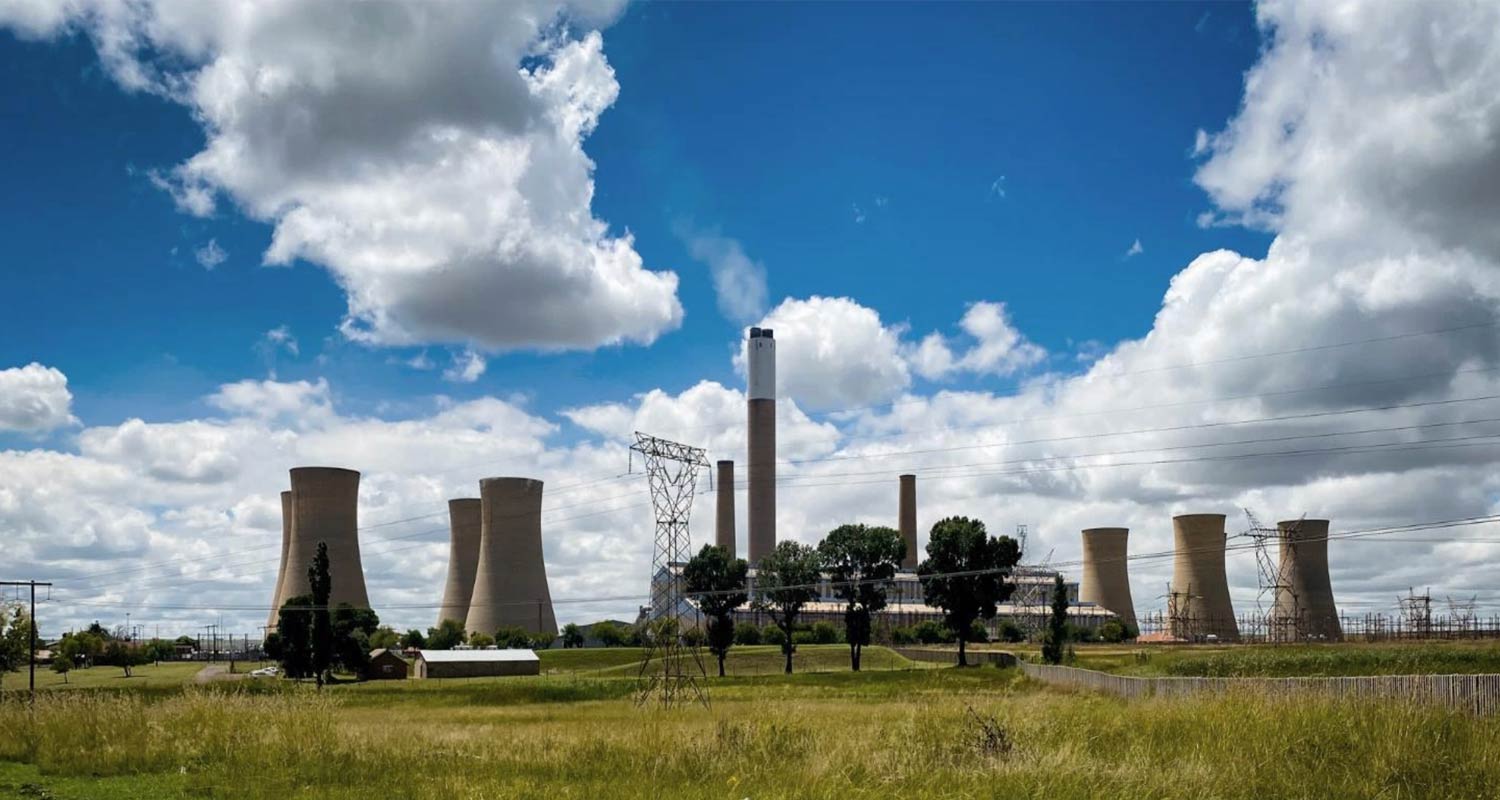
    Eskom’s Komati power station

    Assisted by government taking over half of its debt, Eskom has a much higher budget of R27.9-billion for diesel purchases (about US$1.6 billion) for the current financial year. Half of this amount has already been spent.

    Lastly, the return to service of some of the damaged Kusile coal power station units. This plant could, if fully operational, contribute about 15% of the country’s electricity needs.

    The scale of the power shortage in the last year was largely due to multiple failures at Kusile. Kusile is the country’s newest large plant, but nine years after its initially projected completion date, two of its six units have still not been completed.

    Read: Eskom pollution kills 330 people a year, company says

    In October 2022 Kusile lost three of its units, or 2.4GW, due to a collapse of the flue ducts. Two of these were restored in the last month, albeit with much higher than usually permitted emission levels. These additional 1.6GW now available, and the 2.4GW from the remaining three units, projected to come into service in the coming year, are the main reason for the minister’s optimism.

    The biggest threat is that the ageing and overworked coal plant fleet remains vulnerable to breakdowns

    On the down side, lengthy closures will be needed at some point to properly fix the flue ducts. It is also worrying that Kusile and the new Medupi plant have experienced so many failures already.

    There are nevertheless signs that the recovery of the power generating sector is still far off.

    The biggest threat is that the ageing and overworked coal plant fleet remains vulnerable to breakdowns.

    Secondly, the life extension project for the country’s sole nuclear power plant, Koeberg, is progressing far too slowly. Calls for its closure are gaining traction.

    Koeberg’s operating licence expires in July 2024. If not renewed, Koeberg’s two units would have to be closed for good. That would result in a 4% drop in the country’s generating capacity.

    To extend this licence for 20 years, the National Nuclear Regulator has requested significant plant upgrades and component replacements. This was in 2010 projected to cost R20-billion (US$2.8 billion at the time) and requires five months’ downtime for each unit.

    Bad planning

    Given bad planning and delays so far, it is unlikely that work will be completed by the licence expiry date.

    Thirdly, delays in the drafting of a revised national electricity plan highlight sharp disagreement within government on the solution.

    Electricity generating infrastructure planning in South Africa is guided by Integrated Resource Plans that are supposed to be redone every two years. The country is currently using a plan approved in 2019.

    Read: South Africans built a Medupi – all by themselves

    The next plan is therefore already two years late, and its release for public comment has been promised for many months. The latest September release date was also missed.

    The delays probably reflect unhappiness in parts of the ruling party with a path that emphasises renewable energy. The minister of mining and energy, whose department is responsible for the energy plan, is known to favour power generation from coal, gas and nuclear.

    Without strategic alignment on how to address the electricity crisis, government won’t be able to develop new power plants. The old coal plants will not be as efficient as 20 years ago, and high breakdown levels will persist.

    It therefore remains unlikely that South Africa’s electricity problems will end in the short to medium term.The Conversation

    • The author, Hartmut Winkler, is professor of physics, University of Johannesburg
    • This article is republished from The Conversation under a Creative Commons licence

    Get breaking news alerts from TechCentral on WhatsApp

    Follow TechCentral on Google News Add TechCentral as your preferred source on Google


    Eskom Hartmut Winkler Kgosientsho Ramokgopa
    WhatsApp YouTube
    Share. Facebook Twitter LinkedIn WhatsApp Telegram Email Copy Link
    Previous ArticleShowmax locks out South Africans living abroad
    Next Article Industry disappointed in delay in EV policy for South Africa

    Related Posts

    The projects leading Eskom's 32GW renewables charge

    The projects leading Eskom’s 32GW renewables charge

    11 June 2026
    Eskom Green to build 32GW of renewables by 2040 - Mteto Nyati - Mteto Nyati

    Eskom Green to build 32GW of renewables by 2040

    9 June 2026
    Moody's flags risk in Eskom grid split

    Moody’s flags risk in Eskom grid split

    1 June 2026
    Company News
    Hisense, Makro team up for winter laundry promotion

    Hisense, Makro team up for winter laundry promotion

    12 June 2026
    Workday Horizon shows SA firms how to make AI deliver - Kiv Moodley

    Workday Horizon shows SA firms how to make AI deliver

    12 June 2026
    10 benefits to online learning through Richfield

    10 benefits to online learning through Richfield

    11 June 2026
    Opinion
    The clock is ticking on South African banks' biggest advantage - Pambos Soteriades

    The clock is ticking on South African banks’ biggest advantage

    9 June 2026

    Clashing judgments leave South Africa’s crypto law unsettled

    2 June 2026
    The clock is ticking on South African banks' biggest advantage - Pambos Soteriades

    The trap inside South Africa’s banking MVNO boom

    1 June 2026

    Subscribe to Updates

    Get the best South African technology news and analysis delivered to your e-mail inbox every morning.

    Latest Posts
    Hisense, Makro team up for winter laundry promotion

    Hisense, Makro team up for winter laundry promotion

    12 June 2026
    Workday Horizon shows SA firms how to make AI deliver - Kiv Moodley

    Workday Horizon shows SA firms how to make AI deliver

    12 June 2026
    The world has minted its first dollar trillionaire - Elon Musk

    The world has minted its first dollar trillionaire

    12 June 2026
    MTN's first AI target? Itself - Charles Molapisi

    MTN’s first AI target? Itself

    11 June 2026
    © 2009 - 2026 NewsCentral Media
    • Cookie policy (ZA)
    • TechCentral – privacy and Popia

    Type above and press Enter to search. Press Esc to cancel.

    Manage consent

    TechCentral uses cookies to enhance its offerings. Consenting to these technologies allows us to serve you better. Not consenting or withdrawing consent may adversely affect certain features and functions of the website.

    Functional Always active
    The technical storage or access is strictly necessary for the legitimate purpose of enabling the use of a specific service explicitly requested by the subscriber or user, or for the sole purpose of carrying out the transmission of a communication over an electronic communications network.
    Preferences
    The technical storage or access is necessary for the legitimate purpose of storing preferences that are not requested by the subscriber or user.
    Statistics
    The technical storage or access that is used exclusively for statistical purposes. The technical storage or access that is used exclusively for anonymous statistical purposes. Without a subpoena, voluntary compliance on the part of your Internet Service Provider, or additional records from a third party, information stored or retrieved for this purpose alone cannot usually be used to identify you.
    Marketing
    The technical storage or access is required to create user profiles to send advertising, or to track the user on a website or across several websites for similar marketing purposes.
    • Manage options
    • Manage services
    • Manage {vendor_count} vendors
    • Read more about these purposes
    View preferences
    • {title}
    • {title}
    • {title}