Close Menu
TechCentralTechCentral

    Subscribe to the newsletter

    Get the best South African technology news and analysis delivered to your e-mail inbox every morning.

    Facebook X (Twitter) YouTube LinkedIn
    WhatsApp Facebook X (Twitter) LinkedIn YouTube
    TechCentralTechCentral
    • News
      China is closing in on US tech lead despite constraints

      China is closing in on US tech lead despite constraints

      11 January 2026
      Silicon batteries are about to upend smartphone battery life

      Silicon batteries are about to upend smartphone battery life

      9 January 2026
      AI hardware booms at CES, but consumer adoption is uncertain

      AI hardware booms at CES, but consumer adoption is uncertain

      9 January 2026
      Major overhaul coming to Gmail

      Major overhaul coming to Gmail

      9 January 2026
      Telecoms firms lose bid to rein in US tech giants

      Telecoms firms lose bid to rein in US tech giants

      9 January 2026
    • World
      Samsung forecasts record operating profit as AI demand sends memory chip prices sharply higher worldwide - TM Roh

      Samsung cashes in on AI data centre boom as memory prices soar

      8 January 2026
      EU pressure mounts on Musk's X over AI 'undressing' images - Wolfram Weimer

      EU pressure mounts on Musk’s X over AI ‘undressing’ images

      7 January 2026
      Intel launches Panther Lake, its next-gen PC chip

      Intel launches Panther Lake, its next-gen PC chip

      6 January 2026
      Starlink plans to lower satellite orbit to enhance safety

      Starlink plans to lower satellite orbit to enhance safety

      4 January 2026
      Lou Gerstner, the man who saved IBM, dies at 83

      Lou Gerstner, the man who saved IBM, dies at 83

      29 December 2025
    • In-depth
      Digital authoritarianism grows as African states normalise internet blackouts

      Digital authoritarianism grows as African states normalise internet blackouts

      19 December 2025
      TechCentral's South African Newsmakers of 2025

      TechCentral’s South African Newsmakers of 2025

      18 December 2025
      Black Friday goes digital in South Africa as online spending surges to record high

      Black Friday goes digital in South Africa as online spending surges to record high

      4 December 2025
      DStv dodges channel blackout in last-minute deal with Warner Bros

      Canal+ plays hardball – and DStv viewers feel the pain

      3 December 2025
      Jensen Huang Nvidia

      So, will China really win the AI race?

      14 November 2025
    • TCS
      TCS+ | Africa's digital transformation - unlocking AI through cloud and culture - Cliff de Wit Accelera Digital Group

      TCS+ | Cloud without culture won’t deliver AI: Accelera’s Cliff de Wit

      12 December 2025
      TCS+ | How Cloud on Demand helps partners thrive in the AWS ecosystem - Odwa Ndyaluvane and Xenia Rhode

      TCS+ | How Cloud On Demand helps partners thrive in the AWS ecosystem

      4 December 2025
      TCS | MTN Group CEO Ralph Mupita on competition, AI and the future of mobile

      TCS | Ralph Mupita on competition, AI and the future of mobile

      28 November 2025
      TCS | Dominic Cull on fixing South Africa's ICT policy bottlenecks

      TCS | Dominic Cull on fixing South Africa’s ICT policy bottlenecks

      21 November 2025
      TCS | BMW CEO Peter van Binsbergen on the future of South Africa's automotive industry

      TCS | BMW CEO Peter van Binsbergen on the future of South Africa’s automotive industry

      6 November 2025
    • Opinion
      ANC's attack on Solly Malatsi shows how BEE dogma trumps economic reality - Duncan McLeod

      ANC’s attack on Solly Malatsi shows how BEE dogma trumps economic reality

      14 December 2025
      Netflix, Warner Bros deal raises fresh headaches for MultiChoice - Duncan McLeod

      Netflix, Warner Bros deal raises fresh headaches for MultiChoice

      5 December 2025
      BIN scans, DDoS and the next cybercrime wave hitting South Africa's banks - Entersekt Gerhard Oosthuizen

      BIN scans, DDoS and the next cybercrime wave hitting South Africa’s banks

      3 December 2025
      ANC's attack on Solly Malatsi shows how BEE dogma trumps economic reality - Duncan McLeod

      Your data, your hardware: the DIY AI revolution is coming

      20 November 2025
      Zero Carbon Charge founder Joubert Roux

      The energy revolution South Africa can’t afford to miss

      20 November 2025
    • Company Hubs
      • Africa Data Centres
      • AfriGIS
      • Altron Digital Business
      • Altron Document Solutions
      • Altron Group
      • Arctic Wolf
      • AvertITD
      • Braintree
      • CallMiner
      • CambriLearn
      • CYBER1 Solutions
      • Digicloud Africa
      • Digimune
      • Domains.co.za
      • ESET
      • Euphoria Telecom
      • Incredible Business
      • iONLINE
      • IQbusiness
      • Iris Network Systems
      • LSD Open
      • NEC XON
      • Netstar
      • Network Platforms
      • Next DLP
      • Ovations
      • Paracon
      • Paratus
      • Q-KON
      • SevenC
      • SkyWire
      • Solid8 Technologies
      • Telit Cinterion
      • Tenable
      • Vertiv
      • Videri Digital
      • Vodacom Business
      • Wipro
      • Workday
      • XLink
    • Sections
      • AI and machine learning
      • Banking
      • Broadcasting and Media
      • Cloud services
      • Contact centres and CX
      • Cryptocurrencies
      • Education and skills
      • Electronics and hardware
      • Energy and sustainability
      • Enterprise software
      • Financial services
      • Information security
      • Internet and connectivity
      • Internet of Things
      • Investment
      • IT services
      • Lifestyle
      • Motoring
      • Public sector
      • Retail and e-commerce
      • Satellite communications
      • Science
      • SMEs and start-ups
      • Social media
      • Talent and leadership
      • Telecoms
    • Events
    • Advertise
    TechCentralTechCentral
    Home » In-depth » Lord of the rings: how tech is gamifying fitness

    Lord of the rings: how tech is gamifying fitness

    By The Conversation15 May 2016
    Twitter LinkedIn Facebook WhatsApp Email Telegram Copy Link
    News Alerts
    WhatsApp

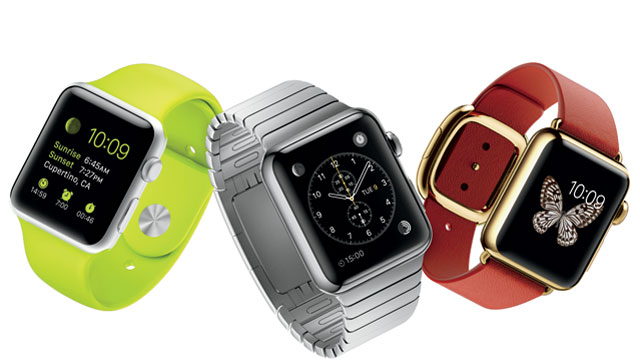
    apple-watch-640

    Hello, my name is Michael, and I’m a “ring addict”.

    No, not the one ring from The Lord of the Rings; not the cheap costume jewellery you get at the local Renaissance Fair. I’m talking about the red, green and blue rings that adorn my Apple Watch, tracking how much I move, exercise and stand.

    For the past five months, I’ve worked daily to meet those magical milestones that appear on my watch face, culminating last month in my earning the badge for 100 days of meeting my move goal. I’m hopelessly addicted, so much so that I sometimes take an extra lap around the University of California Irvine’s Aldrich Park just to make sure to get my red ring for the day.

    As the Apple Watch lapped its own first anniversary a couple of weeks ago, stories like mine abounded, with some commenters proudly reporting a year-long activity streak on the first anniversary of the watch.

    It would appear I’m not the only addict, with the fitness features of the watch often reported as the number one feature that attracts buyers. But what makes it so compelling? It turns out that the fitness features of the Apple Watch tap into the aspect of human psychology that makes us feel good about completing a goal or reaching an achievement. It’s one of the most prominent examples of gamification — a way of integrating these goals and achievements into traditionally nongame activities.

    Exit the Apple store, strap on your watch and, soon after, you’ll get your first fitness notification. The watch quickly asks you to set a move goal of a certain number of calories you’ll burn by moving each day (tracked via an internal pedometer). You also soon discover that the watch reminds you to stand for a few minutes every hour (and monitors whether you do it). And it uses your heart rate to track how many minutes of exercise you do each day (anything that raises your heart rate over that of a brisk walk counts).

    At first you may consider it all just a novelty. But the continuing reminders and the presence of the activity rings on the front watch face mean you quickly start to notice how you’re doing with these goals. Maybe it’s the stand goal first, when you get a reminder toward the end of one day that you’ve stood for 10 hours, encouraging you to stand up a couple times during your evening movie-watching. Then perhaps it’s the move goal, letting you know that all you need is 50 extra calories to meet your target for the day.

    Next, you get your first badge, for a day where you completed all your rings. And then, just to hook you entirely, the watch starts telling you that you’ve hit a streak, with 10 or 20 move goals hit in a row. It encourages you to keep on going.

    All of a sudden, you’re addicted, playing the fitness game, and you didn’t even realise! What happened?

    Blurring the ‘magic circle’

    Welcome to Apple’s pervasive fitness game. Through the use of goals and badges that can occur at any time, Apple has caught you in a game that you play all the time, wherever you are, and with anybody around you who also knows what the rings mean.

    Traditional games have a strict “magic circle” — a boundary you must enter that limits the game in time and space. Think of a hand of poker — it’s limited in space by being played at the poker table, limited in time because of the length of the hand and limited in players because of the number of seats at the table.

    But the type of game introduced by a fitness device such as the Apple Watch is ubiquitous and pervasive. Through a blurring of the magic circle that surrounds a traditional game, these kinds of devices are creating a game that can be played anywhere, at any time, either solo or in a group.

    By being built into our devices and active by default, this new type of serious game has the potential to become truly ubiquitous, integrating into our lives and allowing us to hit goals that affect not only the game, but also our outside lives. It pushes us toward positive change.

    apple-watch-640

    The success of this approach is not surprising. Research into serious games shows that “gamifying” a task can increase motivation for players and encourage them to continue to level up and meet higher numbers to complete the game’s activities. It’s amazing what the presence of a simple goal and some virtual badges for certain activities can do to help somebody persevere with a single task. It turns out that gamification brings out people’s natural desire for competition and achievement. Gamification simply applies those innate tendencies to what are traditionally nongame activities.

    For instance, serious games have been shown to greatly benefit health education, with promise in promoting diet and physical activity change for diabetes and obesity prevention in youth. In rehabilitation, serious games have proven able to improve outcomes for patients suffering from stroke, cerebral palsy and more, by providing them with a motivating way to do the repetitive motions — such as a particular arm or leg movement — often required in a rehab context.

    In a more instructional realm, serious games have been used to provide information to students about the environment, the supply chain and other areas of education. Even my own work in educational technology could be considered a type of serious game intended to improve learning outcomes for students.

    In all these examples, the ability to gamify improves motivation, encourages players to participate and, often, leads to improved outcomes. Working with Josh Tanenbaum at the Transformative Play Lab at UCI, we’re even exploring how tapping into the pleasure we get from games can be used to increase empathy for others.

    The warm embrace of technology

    But perhaps the most interesting aspect of gamification is how this type of pervasive, serious game can help change the way people interact with technology. There’s a fear that technology takes people away from the real world. But I’d argue the use of the type of pervasive, ubiquitous technology present in the Apple Watch actually helps to integrate people into the world around them. Rather than encouraging people to bury themselves in the technology, it prods them to get out and use the technology as part of their lives. Technology and the real world seamlessly integrate, even encouraging people to make a stronger connection between real-world activities — such as taking a walk around campus — and digital activities.

    As this pervasive integration of technology into our lives continues to improve, expect to see more and more Facebook status updates from your friends as they meet their goals, whether that be a badge on the Apple Watch or a successful run on Runtastic.

    And perhaps if we’re lucky, we’ll move farther away from the inaccurate stereotype that technology is something used by loner computer geeks in their basement lairs. We’ll recognise technology isn’t just all around us but integrated into our daily lives, keeping us more connected to the physical world and other people than ever.The Conversation

    • Michael Cowling is visiting project scientist in informatics, University of California, Irvine
    • This article was originally published on The Conversation


    Subscribe to TechCentral Subscribe to TechCentral
    Share. Facebook Twitter LinkedIn WhatsApp Telegram Email Copy Link
    Previous ArticleShowMax expands across Africa
    Next Article Craig Venter gambles on online comeback

    Related Posts

    China is closing in on US tech lead despite constraints

    China is closing in on US tech lead despite constraints

    11 January 2026
    Silicon batteries are about to upend smartphone battery life

    Silicon batteries are about to upend smartphone battery life

    9 January 2026
    AI hardware booms at CES, but consumer adoption is uncertain

    AI hardware booms at CES, but consumer adoption is uncertain

    9 January 2026
    Company News
    Owning the right data is the new competitive moat in AI - CallMiner

    Owning the right data is the new competitive moat in AI

    9 January 2026
    Why trust is the real currency in modern media

    Why trust is the real currency in modern media

    6 January 2026
    Why banks and insurers need a single decisioning brain as pressures collide - SAS

    Why banks and insurers need a single decisioning brain as pressures collide

    29 December 2025
    Opinion
    ANC's attack on Solly Malatsi shows how BEE dogma trumps economic reality - Duncan McLeod

    ANC’s attack on Solly Malatsi shows how BEE dogma trumps economic reality

    14 December 2025
    Netflix, Warner Bros deal raises fresh headaches for MultiChoice - Duncan McLeod

    Netflix, Warner Bros deal raises fresh headaches for MultiChoice

    5 December 2025
    BIN scans, DDoS and the next cybercrime wave hitting South Africa's banks - Entersekt Gerhard Oosthuizen

    BIN scans, DDoS and the next cybercrime wave hitting South Africa’s banks

    3 December 2025

    Subscribe to Updates

    Get the best South African technology news and analysis delivered to your e-mail inbox every morning.

    Latest Posts
    China is closing in on US tech lead despite constraints

    China is closing in on US tech lead despite constraints

    11 January 2026
    Silicon batteries are about to upend smartphone battery life

    Silicon batteries are about to upend smartphone battery life

    9 January 2026
    AI hardware booms at CES, but consumer adoption is uncertain

    AI hardware booms at CES, but consumer adoption is uncertain

    9 January 2026
    Major overhaul coming to Gmail

    Major overhaul coming to Gmail

    9 January 2026
    © 2009 - 2026 NewsCentral Media
    • Cookie policy (ZA)
    • TechCentral – privacy and Popia

    Type above and press Enter to search. Press Esc to cancel.

    Manage consent

    TechCentral uses cookies to enhance its offerings. Consenting to these technologies allows us to serve you better. Not consenting or withdrawing consent may adversely affect certain features and functions of the website.

    Functional Always active
    The technical storage or access is strictly necessary for the legitimate purpose of enabling the use of a specific service explicitly requested by the subscriber or user, or for the sole purpose of carrying out the transmission of a communication over an electronic communications network.
    Preferences
    The technical storage or access is necessary for the legitimate purpose of storing preferences that are not requested by the subscriber or user.
    Statistics
    The technical storage or access that is used exclusively for statistical purposes. The technical storage or access that is used exclusively for anonymous statistical purposes. Without a subpoena, voluntary compliance on the part of your Internet Service Provider, or additional records from a third party, information stored or retrieved for this purpose alone cannot usually be used to identify you.
    Marketing
    The technical storage or access is required to create user profiles to send advertising, or to track the user on a website or across several websites for similar marketing purposes.
    • Manage options
    • Manage services
    • Manage {vendor_count} vendors
    • Read more about these purposes
    View preferences
    • {title}
    • {title}
    • {title}