Close Menu
TechCentralTechCentral

    Subscribe to the newsletter

    Get the best South African technology news and analysis delivered to your e-mail inbox every morning.

    Facebook X (Twitter) YouTube LinkedIn
    WhatsApp Facebook X (Twitter) LinkedIn YouTube
    TechCentralTechCentral
    • News
      Vuyani Jarana: Mobile coverage masks a deeper broadband failure

      Vuyani Jarana: Mobile coverage masks a deeper broadband failure

      30 January 2026
      SABC Plus to flight Microsoft AI training videos

      SABC Plus to flight Microsoft AI training videos

      30 January 2026
      Fibre ducts

      Fibre industry consolidation in KZN

      30 January 2026
      Watts & Wheels S1E3: 'BYD's Corolla Cross challenger'

      Watts & Wheels S1E3: ‘BYD’s Corolla Cross challenger’

      30 January 2026
      What ordinary South Africans really think of AI

      What ordinary South Africans really think of AI

      30 January 2026
    • World
      Apple acquires audio AI start-up Q.ai

      Apple acquires audio AI start-up Q.ai

      30 January 2026
      SpaceX IPO may be largest in history

      SpaceX IPO may be largest in history

      28 January 2026
      Nvidia throws AI at the weather

      Nvidia throws AI at weather forecasting

      27 January 2026
      Debate erupts over value of in-flight Wi-Fi

      Debate erupts over value of in-flight Wi-Fi

      26 January 2026
      Intel takes another hit - Intel CEO Lip-Bu Tan. Laure Andrillon/Reuters

      Intel takes another hit

      23 January 2026
    • In-depth
      How liberalisation is rewiring South Africa's power sector

      How liberalisation is rewiring South Africa’s power sector

      21 January 2026
      The top-performing South African tech shares of 2025

      The top-performing South African tech shares of 2025

      12 January 2026
      Digital authoritarianism grows as African states normalise internet blackouts

      Digital authoritarianism grows as African states normalise internet blackouts

      19 December 2025
      TechCentral's South African Newsmakers of 2025

      TechCentral’s South African Newsmakers of 2025

      18 December 2025
      Black Friday goes digital in South Africa as online spending surges to record high

      Black Friday goes digital in South Africa as online spending surges to record high

      4 December 2025
    • TCS
      TCS+ | How Cloud On Demand is helping SA businesses succeed in the cloud - Xhenia Rhode, Dion Kalicharan

      TCS+ | Cloud On Demand and Consnet: inside a real-world AWS partner success story

      30 January 2026
      Watts & Wheels S1E3: 'BYD's Corolla Cross challenger'

      Watts & Wheels S1E2: ‘China attacks, BMW digs in, Toyota’s sublime supercar’

      23 January 2026

      TCS+ | Why cybersecurity is becoming a competitive advantage for SA businesses

      20 January 2026
      Watts & Wheels S1E3: 'BYD's Corolla Cross challenger'

      Watts & Wheels: S1E1 – ‘William, Prince of Wheels’

      8 January 2026
      TCS+ | Africa's digital transformation - unlocking AI through cloud and culture - Cliff de Wit Accelera Digital Group

      TCS+ | Cloud without culture won’t deliver AI: Accelera’s Cliff de Wit

      12 December 2025
    • Opinion
      South Africa's skills advantage is being overlooked at home - Richard Firth

      South Africa’s skills advantage is being overlooked at home

      29 January 2026
      Why Elon Musk's Starlink is a 'hard no' for me - Songezo Zibi

      Why Elon Musk’s Starlink is a ‘hard no’ for me

      26 January 2026
      South Africa's new fibre broadband battle - Duncan McLeod

      South Africa’s new fibre broadband battle

      20 January 2026
      AI moves from pilots to production in South African companies - Nazia Pillay SAP

      AI moves from pilots to production in South African companies

      20 January 2026
      South Africa's new fibre broadband battle - Duncan McLeod

      ANC’s attack on Solly Malatsi shows how BEE dogma trumps economic reality

      14 December 2025
    • Company Hubs
      • Africa Data Centres
      • AfriGIS
      • Altron Digital Business
      • Altron Document Solutions
      • Altron Group
      • Arctic Wolf
      • AvertITD
      • Braintree
      • CallMiner
      • CambriLearn
      • CYBER1 Solutions
      • Digicloud Africa
      • Digimune
      • Domains.co.za
      • ESET
      • Euphoria Telecom
      • Incredible Business
      • iONLINE
      • IQbusiness
      • Iris Network Systems
      • LSD Open
      • NEC XON
      • Netstar
      • Network Platforms
      • Next DLP
      • Ovations
      • Paracon
      • Paratus
      • Q-KON
      • SevenC
      • SkyWire
      • Solid8 Technologies
      • Telit Cinterion
      • Tenable
      • Vertiv
      • Videri Digital
      • Vodacom Business
      • Wipro
      • Workday
      • XLink
    • Sections
      • AI and machine learning
      • Banking
      • Broadcasting and Media
      • Cloud services
      • Contact centres and CX
      • Cryptocurrencies
      • Education and skills
      • Electronics and hardware
      • Energy and sustainability
      • Enterprise software
      • Financial services
      • Information security
      • Internet and connectivity
      • Internet of Things
      • Investment
      • IT services
      • Lifestyle
      • Motoring
      • Public sector
      • Retail and e-commerce
      • Satellite communications
      • Science
      • SMEs and start-ups
      • Social media
      • Talent and leadership
      • Telecoms
    • Events
    • Advertise
    TechCentralTechCentral
    Home » In-depth » LSD microdosing is trending in tech circles

    LSD microdosing is trending in tech circles

    By The Conversation15 February 2017
    Twitter LinkedIn Facebook WhatsApp Email Telegram Copy Link
    News Alerts
    WhatsApp
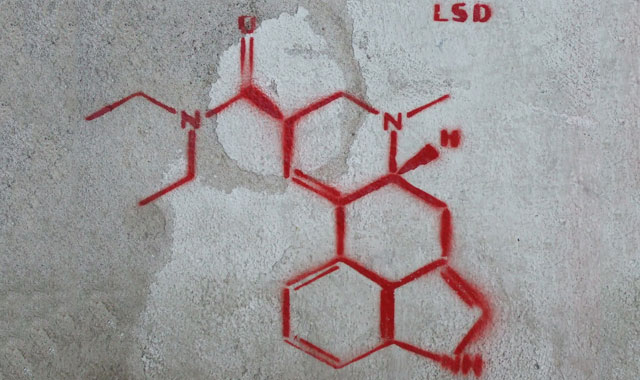
    The chemical structure of LSD (image Simba Tango)

    It may seem like a doomed attempt to mix business and pleasure. But a growing number of young professionals in Silicon Valley insist that taking small doses of psychedelic drugs simply makes them perform better at work — becoming more creative and focused. The practice, known as “microdosing”, involves taking minute quantities of drugs such as LSD, psilocybin (magic mushrooms) or mescaline (found in the Peyote cactus) every few days.

    LSD is the most well-known psychedelic drug since its popularity in the heyday of 1960s counterculture. But perhaps somewhat surprisingly, Silicon Valley also has a long history of psychedelic drug use to boost creativity: technology stars Steve Jobs and Bill Gates both famously experimented with LSD.

    At high doses, LSD powerfully alters perception, mood and a host of cognitive processes. LSD now appears to be one of the more commonly microdosed drugs. A microdose of LSD consists of about a tenth of a recreational dose (usually 10-20 micrograms), which is usually not potent enough to cause hallucinations. Instead, it is reported to heighten alertness, energy and creativity.

    Microdosing LSD also purportedly enhances overall well-being, helping to reduce stress and anxiety while improving sleep and leading to healthier habits. Although a widely reported phenomenon in the media, the lack of scientific studies on microdosing makes the prevalence nearly impossible to estimate. Reports suggest that what started off as an underground practice in Silicon Valley may be spreading rapidly to other workplaces.

    It is currently unknown how such low doses of psychedelics act in the brain to produce these intriguing self-reported effects on creativity. Like all classic hallucinogens, LSD produces its potent mind-altering effects primarily by mimicking the effects of the brain chemical serotonin, which regulates our mood. In particular, LSD activates 5-HT2A receptors in the pre-frontal cortex, which increases activity of the chemical glutamate in this region. Glutamate enables signals to be transmitted between nerve cells, and plays a role in learning and memory.

    In humans, two distinct effects of recreational doses of LSD have been reported. Initially, people experience psychedelic and positive feelings of euphoria. This may be followed by a later phase characterised by paranoia or even a psychotic-like state. LSD at low doses may produce mood elevation and creativity, mediated by the serotonin-mimicking effects. Actions on both glutamate and serotonin may also act to improve learning and cognitive flexibility , necessary for creativity, in the workplace. These findings could partly help to explain the microdosing phenomenon.

    Clinical evidence

    Clinical research with psychedelics is currently undergoing a major revival after having been brought to a halt in the 1960s. One of the benefits of conducting research into psychedelics is their potential to help deepen our understanding of consciousness. In 2016, researchers from Imperial College London were the first to use brain scanning techniques to visualise how LSD alters the way the brain works. One key finding was that LSD had a disorganising influence on cortical activity, which permitted the brain to operate in a freer, less constrained manner than usual.

    The results suggested that psychedelics increase communication between parts of the brain that are less likely to communicate with one another, and decrease communication between areas that frequently do. This likely underlies the profound altered state of consciousness that people often describe during an LSD experience. It is also related to what people sometimes call “ego-dissolution”, in which the normal sense of self is broken down. People instead often report a sense of reconnection with themselves, others and the natural world.

    The discovery that LSD and other psychedelic drugs induce a flexible state of mind may explain their reported extraordinary therapeutic benefits. For example, psilocybin has shown benefits in the treatment of tobacco and alcohol addiction, obsessive compulsive disorder and treatment-resistant major depression.
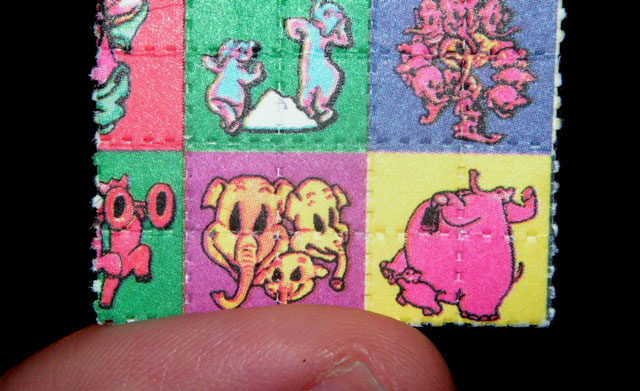
    Monday, 6am … time for a sliver of this?

    In a small pilot study, LSD in combination with psychological therapy also led to a slight improvement in anxiety experienced by terminally ill cancer patients. Many of these psychiatric disorders are characterised by inflexible, habitual patterns of brain activity. By introducing a disordered state of mind, LSD and other psychedelics may help to break these inflexible patterns.

    Similarly, the unconstrained brain state induced by psychedelics may also help explain the reported increases in creativity. From the late 1950s until the early 1970s, a whole host of studies sought to determine if classic psychedelics could be useful for enhancing creativity. In the most notable of these studies, researchers found that LSD and mescaline could aid in creative problem-solving when used in carefully controlled settings.

    However, while these studies do provide some insight, they are mere anecdotal by modern research standards (they were not double blind or placebo-controlled). A more recent study found that use of classic psychedelics was robustly associated with greater creative problem-solving ability. Enhancing creativity has many potential applications in society. For example, it could be both used by commercial industry including advertising and in clinical settings, such as helping patients with autism.

    The downsides

    Yet before rushing off to take hits of acid in the hopes of boosting our creativity at work, it should be remembered that microdosing with an illegal, unregulated drug is of course fraught with risks. Possession may get you put behind bars. Manufacture and supply of illegal drugs are not subject to rigorous regulatory controls. That means users can never be sure of what they are getting.

    This makes determining the dose problematic. Those who microdose incorrectly risk having unwanted, full-blown trips or even experience unpleasant trips. There are even some reports of psychosis-like symptoms in certain vulnerable individuals who use LSD recreationally. However, two recent US population surveys found no link between using psychedelics and mental health conditions.

    In an increasingly competitive world, it is tempting to find a quick fix to help us achieve more, better and faster. Yet, is this right? As a society, we should consider the reasons as to why healthy people choose to use drugs in the first place. A reliance on cognitive-enhancing technologies to cope with demanding working conditions may ultimately reduce the health and well-being of individuals. So, we must take care to ensure that enhancement is not seen as a substitute for a healthy working environment.

    It is therefore important that more research is done on the safety and efficacy of microdosing. In the meantime, physical exercise, education, social interaction, mindfulness and good quality sleep have all been shown to improve cognitive performance and overall well-being.The Conversation

    • Barbara Sahakian is professor of clinical neuropsychology, Camilla d’Angelo is research assistant in psychiatry and George Savulich is research associate in psychiatry, all at the University of Cambridge
    • This article was originally published on The Conversation


    WhatsApp YouTube Follow on Google News Add as preferred source on Google
    Share. Facebook Twitter LinkedIn WhatsApp Telegram Email Copy Link
    Previous ArticleIS in big Wi-Fi push in Africa
    Next Article EOH jumps 7% on trading update

    Related Posts

    Vuyani Jarana: Mobile coverage masks a deeper broadband failure

    Vuyani Jarana: Mobile coverage masks a deeper broadband failure

    30 January 2026
    TCS+ | How Cloud On Demand is helping SA businesses succeed in the cloud - Xhenia Rhode, Dion Kalicharan

    TCS+ | Cloud On Demand and Consnet: inside a real-world AWS partner success story

    30 January 2026
    Huawei turns 25 in South Africa, celebrates with major device discounts

    Huawei turns 25 in South Africa, celebrates with major device discounts

    30 January 2026
    Company News
    Huawei turns 25 in South Africa, celebrates with major device discounts

    Huawei turns 25 in South Africa, celebrates with major device discounts

    30 January 2026
    Phishing has not disappeared, but it has grown up - KnowBe4

    Phishing has not disappeared, but it has grown up

    30 January 2026
    Smartphone affordability: South Africa's new economic divide - PayJoy

    Smartphone affordability: South Africa’s new economic divide

    29 January 2026
    Opinion
    South Africa's skills advantage is being overlooked at home - Richard Firth

    South Africa’s skills advantage is being overlooked at home

    29 January 2026
    Why Elon Musk's Starlink is a 'hard no' for me - Songezo Zibi

    Why Elon Musk’s Starlink is a ‘hard no’ for me

    26 January 2026
    South Africa's new fibre broadband battle - Duncan McLeod

    South Africa’s new fibre broadband battle

    20 January 2026

    Subscribe to Updates

    Get the best South African technology news and analysis delivered to your e-mail inbox every morning.

    Latest Posts
    Vuyani Jarana: Mobile coverage masks a deeper broadband failure

    Vuyani Jarana: Mobile coverage masks a deeper broadband failure

    30 January 2026
    TCS+ | How Cloud On Demand is helping SA businesses succeed in the cloud - Xhenia Rhode, Dion Kalicharan

    TCS+ | Cloud On Demand and Consnet: inside a real-world AWS partner success story

    30 January 2026
    Huawei turns 25 in South Africa, celebrates with major device discounts

    Huawei turns 25 in South Africa, celebrates with major device discounts

    30 January 2026
    SABC Plus to flight Microsoft AI training videos

    SABC Plus to flight Microsoft AI training videos

    30 January 2026
    © 2009 - 2026 NewsCentral Media
    • Cookie policy (ZA)
    • TechCentral – privacy and Popia

    Type above and press Enter to search. Press Esc to cancel.

    Manage consent

    TechCentral uses cookies to enhance its offerings. Consenting to these technologies allows us to serve you better. Not consenting or withdrawing consent may adversely affect certain features and functions of the website.

    Functional Always active
    The technical storage or access is strictly necessary for the legitimate purpose of enabling the use of a specific service explicitly requested by the subscriber or user, or for the sole purpose of carrying out the transmission of a communication over an electronic communications network.
    Preferences
    The technical storage or access is necessary for the legitimate purpose of storing preferences that are not requested by the subscriber or user.
    Statistics
    The technical storage or access that is used exclusively for statistical purposes. The technical storage or access that is used exclusively for anonymous statistical purposes. Without a subpoena, voluntary compliance on the part of your Internet Service Provider, or additional records from a third party, information stored or retrieved for this purpose alone cannot usually be used to identify you.
    Marketing
    The technical storage or access is required to create user profiles to send advertising, or to track the user on a website or across several websites for similar marketing purposes.
    • Manage options
    • Manage services
    • Manage {vendor_count} vendors
    • Read more about these purposes
    View preferences
    • {title}
    • {title}
    • {title}