Close Menu
TechCentralTechCentral

    Subscribe to the newsletter

    Get the best South African technology news and analysis delivered to your e-mail inbox every morning.

    Facebook X (Twitter) YouTube LinkedIn
    WhatsApp Facebook X (Twitter) LinkedIn YouTube
    TechCentralTechCentral
    • News
      Have your say on the bill that could reshape SA telecoms

      Have your say on the bill that could reshape SA telecoms

      23 June 2026
      The real reason SA graduates can't get hired into tech jobs

      The real reason SA graduates can’t get hired into tech jobs

      23 June 2026
      The pivot South Africa's MVNOs cannot afford to miss

      The pivot South Africa’s MVNOs cannot afford to miss

      23 June 2026
      Why South Africans spend so little time on 5G

      Why South Africans spend so little time on 5G

      23 June 2026
      Oracle is slashing its workforce as it automates with AI

      Oracle is slashing its workforce as it automates with AI

      23 June 2026
    • World

      SK Hynix ends Samsung’s 26-year reign at the top

      22 June 2026
      Google on the hook for what its AI tells users, court rules

      Google on the hook for what its AI tells users, court rules

      15 June 2026
      How Russians juggle VPNs to outwit the Kremlin

      How Russians juggle VPNs to outwit the Kremlin

      15 June 2026
      Amazon CEO flagged Anthropic AI risks to Washington - Andy Jassy

      Amazon CEO flagged Anthropic AI risks to Washington

      14 June 2026
      Trouble at Xbox

      Trouble at Xbox

      11 June 2026
    • In-depth
      AI boom sparks rally, frenzy and fear

      AI boom sparks rally, frenzy and fear

      11 June 2026
      Every plug-in hybrid on sale in South Africa, ranked by price - Lamborghini Temerario

      Every plug-in hybrid on sale in South Africa, ranked by price

      7 June 2026
      What Wi-Fi 8 will mean for wireless networks

      What Wi-Fi 8 will mean for wireless networks

      1 June 2026
      Alfa's electric rebel - Alfa Romeo Junior Elettrica Veloce

      Alfa’s electric rebel

      29 April 2026
      Africa switches on as Europe dims the lights

      Africa switches on as Europe dims the lights

      9 April 2026
    • TCS
      Watts & Wheels S1E6: 'A flawless Alfa and a bakkie that divides'

      Watts & Wheels S1E6: ‘A flawless Alfa and a bakkie that divides’

      17 June 2026
      Watts & Wheels S1E6: 'A flawless Alfa and a bakkie that divides'

      Watts & Wheels S1E5: ‘A Bentley of the bush and a car that swims’

      8 June 2026
      TCS | Charge's R1.8-billion bet on an off-grid EV future - Charge chairman Joubert Roux

      TCS | Charge’s R1.8-billion bet on an off-grid EV future

      18 May 2026
      TCS+ | The Up&Up Group on the hidden cost of AI - Jason Harrison

      TCS+ | The Up&Up Group on the hidden cost of AI

      13 May 2026
      Michael Rossouw

      TCS+ | The retirement decision most South Africans get wrong

      6 May 2026
    • Opinion
      Brazil's online gambling crackdown is a lesson for South Africa

      Brazil’s online gambling crackdown is a lesson for South Africa

      22 June 2026
      Finish the job Mandela started - Farzam Ehsani

      Finish the job Mandela started

      18 June 2026
      The author, Fanie van Rooyen

      The US just showed it can switch off our AI

      17 June 2026
      The author, Pambos Soteriades

      The clock is ticking on South African banks’ biggest advantage

      9 June 2026

      Clashing judgments leave South Africa’s crypto law unsettled

      2 June 2026
    • Company Hubs
      • 1Stream
      • Africa Data Centres
      • AfriGIS
      • Altron Digital Business
      • Altron Document Solutions
      • Altron Group
      • Arctic Wolf
      • Ascent Technology
      • AvertITD
      • BBD
      • Braintree
      • CallMiner
      • CambriLearn
      • CM Telecom
      • Contactable
      • CYBER1 Solutions
      • Digicloud Africa
      • Digimune
      • Domains.co.za
      • ESET
      • Euphoria Telecom
      • HOSTAFRICA
      • Incredible Business
      • iONLINE
      • IQbusiness
      • Iris Network Systems
      • Kaspersky
      • LSD Open
      • Mitel
      • NEC XON
      • Netstar
      • Network Platforms
      • Next DLP
      • Ovations
      • Paracon
      • Paratus
      • Q-KON
      • SevenC
      • SkyWire
      • Solid8 Technologies
      • Telit Cinterion
      • Telviva
      • Tenable
      • Vertiv
      • Videri Digital
      • Vodacom Business
      • Wipro
      • Workday
      • XLink
    • Sections
      • AI and machine learning
      • Banking
      • Broadcasting and Media
      • Cloud services
      • Contact centres and CX
      • Cryptocurrencies
      • Education and skills
      • Electronics and hardware
      • Energy and sustainability
      • Enterprise software
      • Financial services
      • HealthTech
      • Information security
      • Internet and connectivity
      • Internet of Things
      • Investment
      • IT services
      • Lifestyle
      • Motoring
      • Policy and regulation
      • Public sector
      • Retail and e-commerce
      • Satellite communications
      • Science
      • SMEs and start-ups
      • Social media
      • Talent and leadership
      • Telecoms
    • Events
    • Advertise
    TechCentralTechCentral
    Home » In-depth » Meet the surfer who stopped WannaCry in its tracks

    Meet the surfer who stopped WannaCry in its tracks

    By Agency Staff6 July 2017
    Twitter LinkedIn Facebook WhatsApp Email Telegram Copy Link
    News Alerts
    WhatsApp
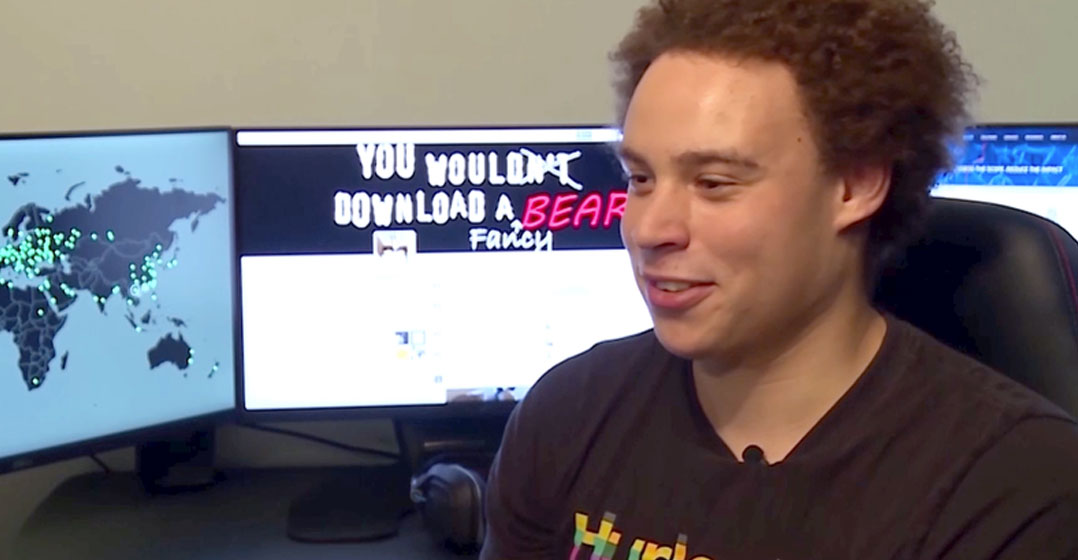
    Marcus Hutchins. Image via YouTube

    [dropcap]T[/dropcap]he 23-year-old who saved the world from a devastating cyberattack in May was asleep in his bed in the English seaside town of Ilfracombe last week after a night of partying when another online extortion campaign spread across the globe.

    Around 6pm on 27 June, Marcus Hutchins, a self-taught computer security researcher and avid surfer, was awakened by a phone call from a colleague telling him another attack was underway. Dreading a return of the virulent WannaCry malware that he stopped in its tracks the previous month, Hutchins logged on to his computer in the house he shares with his parents and younger brother to scan the latest reports.

    By then, more than 80 Ukrainian banks, government agencies and multinational firms including shipping giant AP Moller-Maersk and Russia’s biggest oil company Rosneft had been hit by a ransomware attack spreading like an electronic plague across their networks. Within 20 minutes, Hutchins later recounted, he got hold of a sample of the malware and was relieved to see it wasn’t another WannaCry, which infected hundreds of thousands of computers in more than 150 countries, but something more targeted and less virulent.

    Though both attacks took advantage of flaws in Microsoft’s Windows operating system to spread their payloads, WannaCry used the Internet to propagate itself — each compromised computer would scan and infect another, creating a snowball effect — while the so-called Petya attack was confined to local networks. Petya appeared bigger at first because hackers hit Ukrainian software company M.E.Doc and used an automatic update feature to download its malware onto the computers of all users of the software, Hutchins said.

    Unlikely hero

    Researchers like Hutchins and his colleagues at Los Angeles-based threat intelligence firm Kryptos Logic are akin to seismologists, scanning the Internet for electronic tremors that could signal the next attack. This time he was only an observer, but on 12 May Hutchins stopped the WannaCry attack that crippled organisations from Britain’s National Health Service to Deutsche Bahn in Germany and Renault factories across Europe.

    With a mop of curly hair, baggy jeans, T-shirt and sneakers, Hutchins is an unlikely hero. He rarely leaves rural north Devon, where he has lived since he was 8, and hadn’t travelled abroad until last year. He learned to program computers at 12 and was tracking and disrupting botnet attacks for his own enjoyment before anyone paid him to do so.

    Hutchins started a blog under the pseudonym MalwareTech while still a teenager and was hired by Kryptos in 2015. He said his parents and friends didn’t even know he had a job until the WannaCry attack.

    Hutchins was supposed to be enjoying a week’s holiday, but returning home after a lunch of burgers and cheesy chips with a friend and seeing the carnage WannaCry was inflicting, he couldn’t resist jumping in.

    The fact that so many NHS trusts were being hit at the same time was pretty much unprecedented. That for me was a massive red flag

    “The fact that so many NHS trusts were being hit at the same time was pretty much unprecedented,” Hutchins said in an interview a few weeks after the attack, drinking Coca-Cola in a hotel bar in Ilfracombe, a picturesque but faded tourist town. “That for me was a massive red flag, which showed that this thing was spreading on its own.”

    Most ransomware, which encrypts files on a target machine to force its owner to make a payment in exchange for decryption, is spread via e-mail attachments from rogue senders that infect host computers when they’re opened. Hutchins said he’d expect a handful of people to click on a mass e-mail over a few days, not thousands of employees at scores of medical facilities at the same time.

    After analysing a sample of the malware and seeing it spread by exploiting vulnerabilities in Microsoft’s network file-sharing protocols, he realised it was using a cyberweapon allegedly stolen from the US National Security Agency. Known as “EternalBlue”, it was part of a cache of sophisticated NSA hacking tools targeting Microsoft software that were obtained by the Shadow Brokers criminal gang last year and leaked onto the internet in April.

    Hutchins also noticed a quirk buried deep in the malware code. It tested for the existence of an unregistered nonsensical domain name. He promptly registered the domain for £8.50 (about R150) and redirected all traffic to a server designed to capture malicious data, known as a sinkhole, which would allow him to monitor the progress of the attack.

    Kill switch

    Although he didn’t realise it at the time, Hutchins had inadvertently triggered the malware’s kill switch. Before infecting and encrypting a computer’s hard drive, WannaCry would query the domain, and as long as it remained unregistered would proceed with the attack. Now, when the malware checked the domain and found it active, it immediately shut down. About 100m attempts to infect computers, including more than seven million in the US, have been mitigated since then, according to Kryptos data.

    “At the time, we were just like ‘Yay, we can track it now’, we didn’t know that we’d stopped it,” Hutchins said. “The minute we registered the domain we were looking at like 5 000 or 6 000 unique systems all connecting, and it went up to 200 000 within an hour. I remember thinking: holy shit, this is really big.”

    Hutchins is part of a global community of online security researchers and bloggers who battle with hackers and cybercriminals from their home offices at all hours of the day and night. Given the wave of attacks in recent years, they’re in high demand from governments and corporations and can command six-figure salaries while still in their early 20s.

    He was obviously solving hard problems and he wasn’t doing it for monetary reward, and those are some of the key traits of great cyberwarriors

    Hutchins said he has been courted by some of the world’s biggest cybersecurity firms. In 2015, he interviewed with Britain’s top-secret Government Communications Headquarters but went to work for Kryptos instead after it made him an offer he said he “couldn’t refuse”.

    “He’s a natural talent,” said Salim Neino, 33, Kryptos’s CEO, who hired Hutchins after reading his blog. “He was obviously solving hard problems and he wasn’t doing it for monetary reward, and those are some of the key traits of great cyberwarriors.”

    Neino, a self-taught programmer who got his first computing job at 15, co-founded Kryptos nine years ago. The firm doesn’t do any marketing and has no salespeople among its 25 employees.

    Hutchins said he didn’t ask for a raise after WannaCry because he had just been given one. He wouldn’t say how much he earns, but money goes a long way in Ilfracombe, where one in five children comes from a family whose income is less than 60% of the national average. He said he invests his earnings in stocks and bitcoin, and made thousands of pounds shorting the British currency after the country voted to leave the European Union last year.

    Given the nature of his work and his tendency to sound off on social media without much of a filter, Hutchins had kept his online and real-world lives separate.

    “No one knew on either side what the other side did,” he said.

    Changed forever

    WannaCry changed that forever. After registering the domain that Friday afternoon in May, Hutchins posted a link to it online so others could track the attack’s progress. Within a few hours it became clear that WannaCry had stopped self-propagating, and fellow researchers started tweeting that it was @MalwareTechBlog who had saved the day. Pretty soon he was being bombarded with thousands of e-mails and direct messages on Twitter from journalists and security companies wanting to know whether their clients had been infected.

    Hutchins knew it was only a matter of time before his identity was blown and admits feeling a little scared.

    “Generally, you don’t want to advertise what you’re doing as you don’t want to piss off the bad guys,” Hutchins said. “We published the tracker not knowing we’d foiled it. Had I known that, I wouldn’t have publicised that it was me. Angry criminals are the worst criminals.”

    For the next 72 hours, Hutchins went without sleep while fending off ever more aggressive attacks from hackers trying to take his servers offline to disable the kill switch and repropagate WannaCry.

    We published the tracker not knowing we’d foiled it. Had I known that, I wouldn’t have publicised that it was me. Angry criminals are the worst criminals

    Hutchins thinks that was mostly the work of low-level, semi-skilled hackers referred to in the industry as skids, or script kiddies. They aren’t in it for the money, he said, they just like causing as much trouble as possible.

    By Sunday, the British media had identified Hutchins as the man who stopped WannaCry, and the next day he had journalists camped outside his house, 275km from London, stuffing business cards through his letterbox and ringing the doorbell. At one point Hutchins jumped over the back wall of his yard and fled through a car park.

    “When I was outed, my parents were pretty shocked and my friends still don’t believe that I have a job,” Hutchins said. “Being unmasked was pretty horrendous.”

    Hutchins claims to not like people very much, but he’s affable and engaging. Several times during a walk around Ilfracombe’s harbour and through its narrow streets, friends and acquaintances called out greetings. He chafes at being identified as a hero and said he doesn’t have plans to move, though he did enjoy a recent trip to Copenhagen to give a speech at an industry convention.

    “What we did with WannaCry was impressive in terms of the scale of what we stopped, but on a technical level all we did was register a domain,” Hutchins said. “My employer was already paying me way more than I was worth, so the whole WannaCry thing didn’t really change anything.”

    Kryptos’s Neino is adamant that Hutchins deserves to be called a hero and warns that everyone should prepare for more attacks.

    “We’re going to see a wave of these attacks if Shadow Brokers make good on their promise to release more exploits,” Neino said. “They’ve made good on every other threat, so there’s no reason to think they won’t this time.”

    Petya was proof of more to come. After pulling another all-nighter, Hutchins said, he just wanted to go back to bed.  — Reported by Gavin Finch, with assistance from Edward Robinson, (c) 2017 Bloomberg LP

    Follow TechCentral on Google News Add TechCentral as your preferred source on Google


    Kryptos Logic Marcus Hutchins top WannaCry
    WhatsApp YouTube
    Share. Facebook Twitter LinkedIn WhatsApp Telegram Email Copy Link
    Previous ArticleQuirk of eccentric central bank club earns frown
    Next Article How technology is transforming SA tourism

    Related Posts

    The 10 most dangerous computer viruses ever created

    9 May 2023

    18GW in unplanned breakdowns cripple Eskom

    2 November 2021

    Nersa kicks the Karpowership can down the road

    13 September 2021
    Company News
    A smarter way to buy or renew your Red Hat subscriptions - LSD Open

    A smarter way to buy or renew your Red Hat subscriptions

    22 June 2026
    Moving past the pilot: inside the CloudZA and AWS closed-door AI executive roundtable

    CloudZA and AWS chart the road from AI pilots to production

    19 June 2026
    The role of edge infrastructure in South Africa's AI leap - OADC Open Access Data Centres

    The role of edge infrastructure in South Africa’s AI leap

    19 June 2026
    Opinion
    Brazil's online gambling crackdown is a lesson for South Africa

    Brazil’s online gambling crackdown is a lesson for South Africa

    22 June 2026
    Finish the job Mandela started - Farzam Ehsani

    Finish the job Mandela started

    18 June 2026
    The author, Fanie van Rooyen

    The US just showed it can switch off our AI

    17 June 2026

    Subscribe to Updates

    Get the best South African technology news and analysis delivered to your e-mail inbox every morning.

    Latest Posts
    Have your say on the bill that could reshape SA telecoms

    Have your say on the bill that could reshape SA telecoms

    23 June 2026
    The real reason SA graduates can't get hired into tech jobs

    The real reason SA graduates can’t get hired into tech jobs

    23 June 2026
    The pivot South Africa's MVNOs cannot afford to miss

    The pivot South Africa’s MVNOs cannot afford to miss

    23 June 2026
    Why South Africans spend so little time on 5G

    Why South Africans spend so little time on 5G

    23 June 2026
    © 2009 - 2026 NewsCentral Media
    • Cookie policy (ZA)
    • TechCentral – privacy and Popia

    Type above and press Enter to search. Press Esc to cancel.

    Manage consent

    TechCentral uses cookies to enhance its offerings. Consenting to these technologies allows us to serve you better. Not consenting or withdrawing consent may adversely affect certain features and functions of the website.

    Functional Always active
    The technical storage or access is strictly necessary for the legitimate purpose of enabling the use of a specific service explicitly requested by the subscriber or user, or for the sole purpose of carrying out the transmission of a communication over an electronic communications network.
    Preferences
    The technical storage or access is necessary for the legitimate purpose of storing preferences that are not requested by the subscriber or user.
    Statistics
    The technical storage or access that is used exclusively for statistical purposes. The technical storage or access that is used exclusively for anonymous statistical purposes. Without a subpoena, voluntary compliance on the part of your Internet Service Provider, or additional records from a third party, information stored or retrieved for this purpose alone cannot usually be used to identify you.
    Marketing
    The technical storage or access is required to create user profiles to send advertising, or to track the user on a website or across several websites for similar marketing purposes.
    • Manage options
    • Manage services
    • Manage {vendor_count} vendors
    • Read more about these purposes
    View preferences
    • {title}
    • {title}
    • {title}