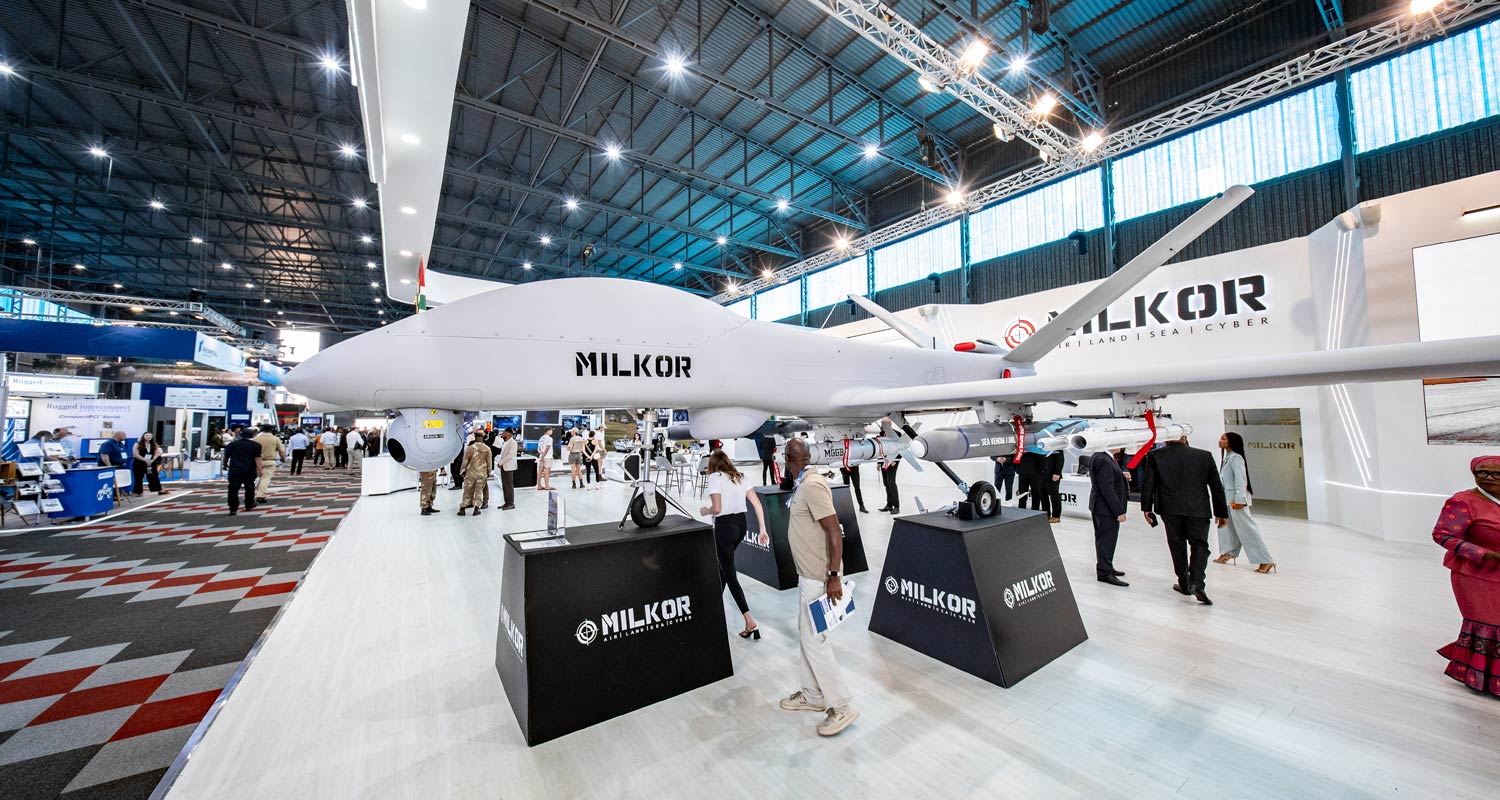
Four years after Milkor earmarked five of its 380 drones for the South African National Defence Force (SANDF), South Africa has still not bought one. The Cape Town-built aircraft is flying for a customer in the Middle East instead, Milkor says.
“South Africa is not a direct customer in the sense that they have bought,” Milkor vice-president for Africa Daniel du Plessis said in an interview for an upcoming episode of the TechCentrral podcast, recorded after September’s Africa Aerospace and Defence expo at Air Force Base Waterkloof. He last spoke to TechCentral in March 2025.
At AAD 2022, Milkor said it had signed a memorandum of understanding with the department of defence, Armscor and the South African Air Force (SAAF), and would build five aircraft in 2023 for testing and possible operational use in South Africa. Since then, Du Plessis said, there have been “extensive trials and demonstrations and contract negotiations”, and the process is “still ongoing”.
The obstacle is money, not interest, he said. “It’s not that they don’t want to use it.” He described the SANDF as “severely underfunded” and said government needs to allocate the funds. There are plans, “hopefully within the next year”, to “start the process of actually integrating it into the SANDF”.
He pointed to the conflict in the eastern Democratic Republic of the Congo, where South African troops served until this year. “A lot of these activities that they went through could have been better assisted and aided by a platform like the Milkor 380,” he said.
In a statement on 5 June, parliament’s joint standing committee on defence said about 70% of the defence budget now goes on salaries, against a planned split of 40% for personnel, 30% for operating costs and 30% for capital spending. Co-chair Phiroane Phala said the defence force cannot “rejuvenate its capabilities” or “sustain the defence industry that supports it”.
TechCentral has asked the SANDF, Armscor and the SAAF what became of the 2022 memorandum, whether contract negotiations are under way and whether the 380 has a budget line. None had responded by the time of publication.
Flying abroad instead
Du Plessis would not name the buyer, citing confidentiality, but said the 380 has been operational in the Middle East “for some time now”. Orders are expected from African countries, he said, and there is “huge interest” from Latin America.
The 380 weighs 1.5 tonnes at take-off and can fly for more than 30 hours and 4 000km. It is used mainly for surveillance and reconnaissance, but “there are ambitions from some of these end users, these countries, to also use it for strike capabilities”.
At AAD, Milkor signed a memorandum of understanding with European missile maker MBDA that, Du Plessis said in follow-up comments, “serves an agreement to integrate and supply MBDA’s range of weapon systems on the Milkor 380 across the world”. The 380 was displayed at the show with two MBDA Sea Venom/ANL anti-ship missiles.
Much of what Milkor exports was developed in South Africa, he said, and “it would be a massive benefit for the country to have it and use it”.
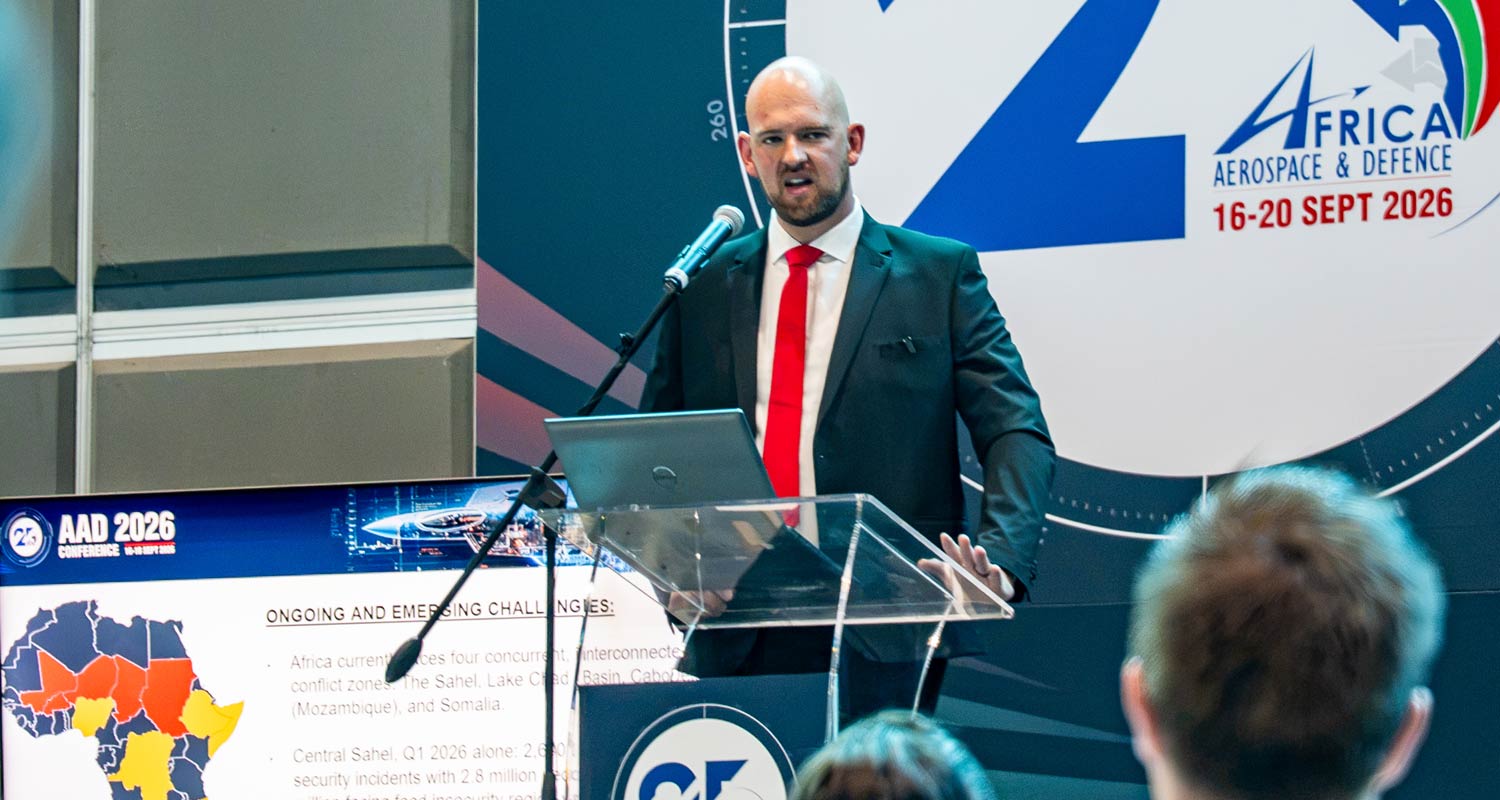
The clearest local fit, Du Plessis argued, is the Border Management Authority (BMA), which Milkor pitched the 380 to in a July statement. “They have vast areas that are unpatrolled by vehicles and limited human resources and soldiers on the ground.”
The BMA began using drones in a festive-season pilot in 2024/2025 and launched four of its own in April 2025. By December 2025, it had taken delivery of eight multi-rotor drones procured through Armscor, with two fixed-wing drones being procured, according to a parliamentary reply that acknowledged “a significant lack of investment in modern surveillance technology, such as drones”.
Du Plessis said the BMA’s doctrine for a large drone is “not yet well defined” and that it, too, has “limited funds available”.
Made in Cape Town
About 99% of the 380 is built locally, from software and firmware “all the way down to a PC board level”, with the engine imported, Du Plessis said. Its cameras, synthetic aperture radar and electronic warfare systems come from other South African defence companies.
Milkor has also signed memoranda of understanding with foreign suppliers covering some of the same kinds of equipment: radar integration with Hanwha Systems at the 2025 Paris Air Show; active electronically scanned array (AESA) radar and electronic warfare equipment with South Korea’s LIG D&A in April; and optronics and navigation systems with Safran at AAD.
Asked to clarify, Du Plessis said the agreements with Hanwha, LIG, Safran and MBDA “are for sensor and payload integration” and that the equipment is “not manufactured by Milkor”.
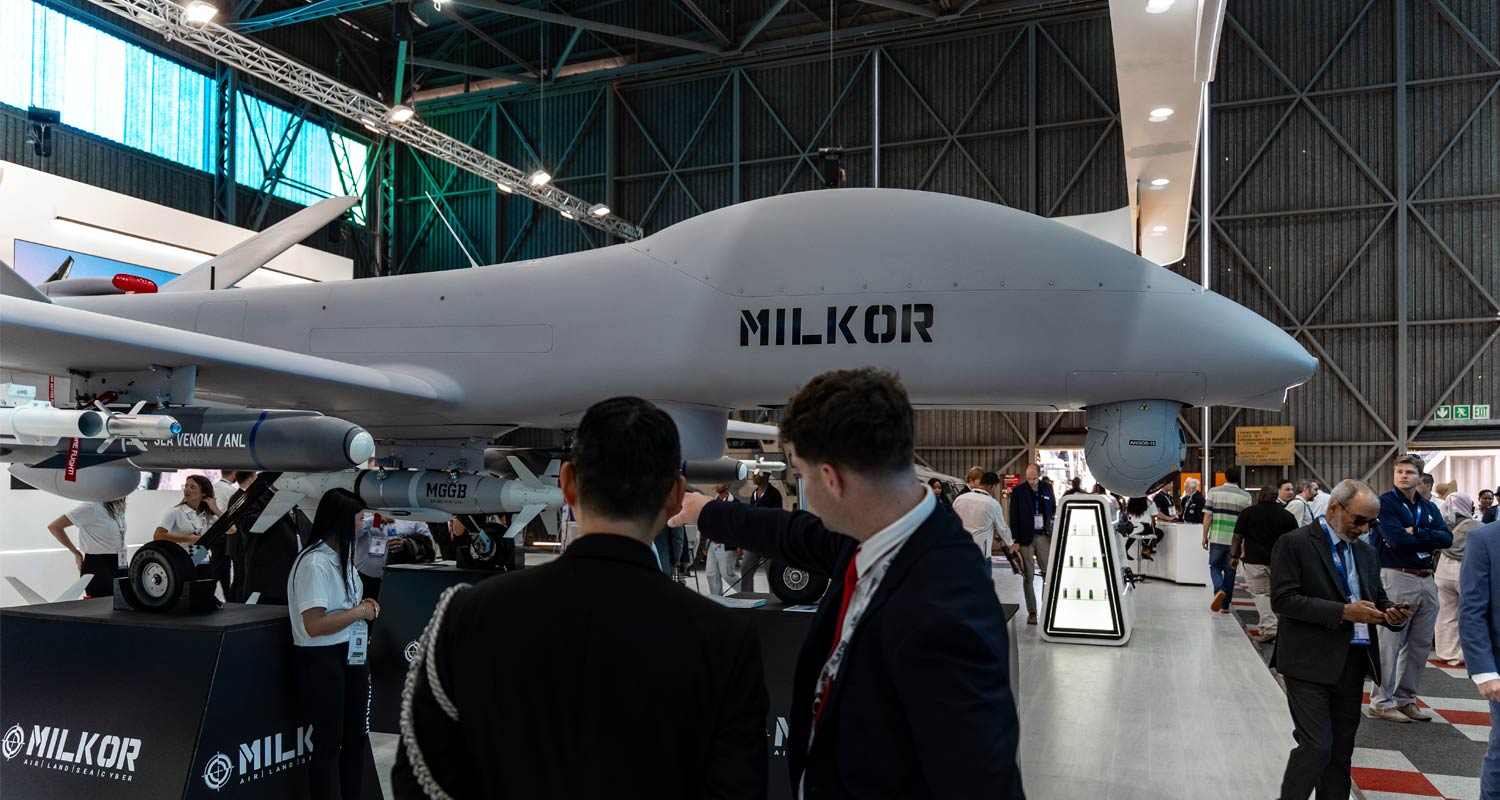
“The Milkor 380 is designed to accommodate multiple payloads from suppliers around the world to increase operational efficiency that are fit for purpose to the end users’ requirements,” he said. Milkor integrates the equipment and supplies the aircraft as one system.
South Africans working at Milkor in Cape Town, he said, have “built something that many countries, not even companies, but countries, have tried and failed”. – © 2026 NewsCentral Media