Close Menu
TechCentralTechCentral

    Subscribe to the newsletter

    Get the best South African technology news and analysis delivered to your e-mail inbox every morning.

    Facebook X (Twitter) YouTube LinkedIn
    WhatsApp Facebook X (Twitter) LinkedIn YouTube
    TechCentralTechCentral
    • News
      Big Microsoft 365 price increases coming next year

      Big Microsoft price increases coming next year

      5 December 2025
      Vodacom to take control of Safaricom in R36-billion deal - Shameel Joosub

      Vodacom to take control of Safaricom in R36-billion deal

      4 December 2025
      Black Friday goes digital in South Africa as online spending surges to record high

      Black Friday goes digital in South Africa as online spending surges to record high

      4 December 2025
      BYD takes direct aim at Toyota with launch of sub-R500 000 Sealion 5 PHEV

      BYD takes direct aim at Toyota with launch of sub-R500 000 Sealion 5 PHEV

      4 December 2025
      'Get it now': Takealot in new instant deliveries pilot

      ‘Get it now’: Takealot in new instant deliveries pilot

      4 December 2025
    • World
      Amazon and Google launch multi-cloud service for faster connectivity

      Amazon and Google launch multi-cloud service for faster connectivity

      1 December 2025
      Google makes final court plea to stop US breakup

      Google makes final court plea to stop US breakup

      21 November 2025
      Bezos unveils monster rocket: New Glenn 9x4 set to dwarf Saturn V

      Bezos unveils monster rocket: New Glenn 9×4 set to dwarf Saturn V

      21 November 2025
      Tech shares turbocharged by Nvidia's stellar earnings

      Tech shares turbocharged by stellar Nvidia earnings

      20 November 2025
      Config file blamed for Cloudflare meltdown that disrupted the web

      Config file blamed for Cloudflare meltdown that disrupted the web

      19 November 2025
    • In-depth
      Jensen Huang Nvidia

      So, will China really win the AI race?

      14 November 2025
      Valve's Linux console takes aim at Microsoft's gaming empire

      Valve’s Linux console takes aim at Microsoft’s gaming empire

      13 November 2025
      iOCO's extraordinary comeback plan - Rhys Summerton

      iOCO’s extraordinary comeback plan

      28 October 2025
      Why smart glasses keep failing - no, it's not the tech - Mark Zuckerberg

      Why smart glasses keep failing – it’s not the tech

      19 October 2025
      BYD to blanket South Africa with megawatt-scale EV charging network - Stella Li

      BYD to blanket South Africa with megawatt-scale EV charging network

      16 October 2025
    • TCS
      TCS+ | How Cloud on Demand helps partners thrive in the AWS ecosystem - Odwa Ndyaluvane and Xenia Rhode

      TCS+ | How Cloud On Demand helps partners thrive in the AWS ecosystem

      4 December 2025
      TCS | MTN Group CEO Ralph Mupita on competition, AI and the future of mobile

      TCS | Ralph Mupita on competition, AI and the future of mobile

      28 November 2025
      TCS | Dominic Cull on fixing South Africa's ICT policy bottlenecks

      TCS | Dominic Cull on fixing South Africa’s ICT policy bottlenecks

      21 November 2025
      TCS | BMW CEO Peter van Binsbergen on the future of South Africa's automotive industry

      TCS | BMW CEO Peter van Binsbergen on the future of South Africa’s automotive industry

      6 November 2025
      TCS | Why Altron is building an AI factory - Bongani Andy Mabaso

      TCS | Why Altron is building an AI factory in Johannesburg

      28 October 2025
    • Opinion
      Your data, your hardware: the DIY AI revolution is coming - Duncan McLeod

      Your data, your hardware: the DIY AI revolution is coming

      20 November 2025
      Zero Carbon Charge founder Joubert Roux

      The energy revolution South Africa can’t afford to miss

      20 November 2025
      It's time for a new approach to government IT spend in South Africa - Richard Firth

      It’s time for a new approach to government IT spend in South Africa

      19 November 2025
      How South Africa's broken Rica system fuels murder and mayhem - Farhad Khan

      How South Africa’s broken Rica system fuels murder and mayhem

      10 November 2025
      South Africa's AI data centre boom risks overloading a fragile grid - Paul Colmer

      South Africa’s AI data centre boom risks overloading a fragile grid

      30 October 2025
    • Company Hubs
      • Africa Data Centres
      • AfriGIS
      • Altron Digital Business
      • Altron Document Solutions
      • Altron Group
      • Arctic Wolf
      • AvertITD
      • Braintree
      • CallMiner
      • CambriLearn
      • CYBER1 Solutions
      • Digicloud Africa
      • Digimune
      • Domains.co.za
      • ESET
      • Euphoria Telecom
      • Incredible Business
      • iONLINE
      • IQbusiness
      • Iris Network Systems
      • LSD Open
      • NEC XON
      • Netstar
      • Network Platforms
      • Next DLP
      • Ovations
      • Paracon
      • Paratus
      • Q-KON
      • SevenC
      • SkyWire
      • Solid8 Technologies
      • Telit Cinterion
      • Tenable
      • Vertiv
      • Videri Digital
      • Vodacom Business
      • Wipro
      • Workday
      • XLink
    • Sections
      • AI and machine learning
      • Banking
      • Broadcasting and Media
      • Cloud services
      • Contact centres and CX
      • Cryptocurrencies
      • Education and skills
      • Electronics and hardware
      • Energy and sustainability
      • Enterprise software
      • Financial services
      • Information security
      • Internet and connectivity
      • Internet of Things
      • Investment
      • IT services
      • Lifestyle
      • Motoring
      • Public sector
      • Retail and e-commerce
      • Satellite communications
      • Science
      • SMEs and start-ups
      • Social media
      • Talent and leadership
      • Telecoms
    • Events
    • Advertise
    TechCentralTechCentral
    Home » In-depth » No, this is not the next Cold War

    No, this is not the next Cold War

    By The Conversation21 May 2019
    Twitter LinkedIn Facebook WhatsApp Email Telegram Copy Link
    News Alerts
    WhatsApp

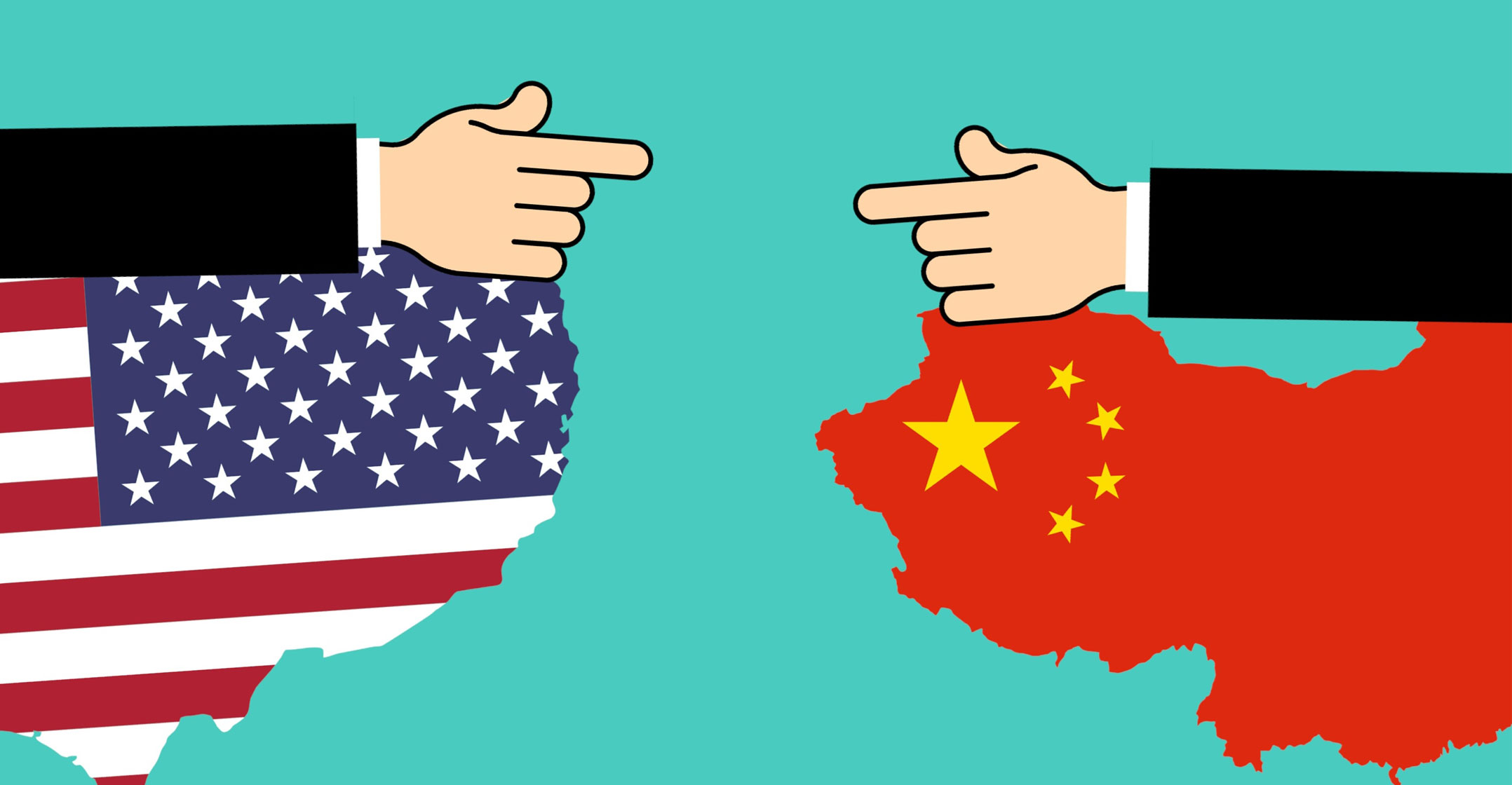
    US President Donald Trump’s long-threatened trade war with China is now a reality. Beijing has met Washington’s sanctions with retaliatory measures as the world’s two most important economies square off.

    Since vice President Mike Pence’s speech to the Hudson Institute in October 2018, American policymakers have increasingly used hardline rhetoric toward China. FBI director Christopher Wray described China as a “whole of society threat” in testimony to the US congress.

    The view that China’s rise has come at the expense of the US is now seen as conventional wisdom. The evidently warm relationship established by Trump and Chinese Premier Xi Jinping over chocolate cake at Mar-a-Lago in 2017 seems a world away.

    It is unsurprising that many scholars and analysts have described the emergence of a new Cold War between China and the US

    Given this, it is unsurprising that many scholars and analysts have described the emergence of a new Cold War between China and the US (including myself in an essay last year).

    The Cold War seems an obvious historical parallel. Like the former Soviet Union, China is also a communist country. And the US and China both have genuinely global interests and the capacity to act on those interests around the world.

    But is the deteriorating state of US-China relations likely to tip the world back into the kind of ideological and geopolitical competition that dominated international politics for four decades after the second World War?

    The Cold War was unlike any great power rivalry that has come before. Most obviously, it was the first geopolitical contest of the nuclear age. Both the US and Soviet Union rapidly developed vast arsenals of the most devastating weapons yet conceived. And their jockeying for power and influence meant that the threat of global annihilation was an ever-present risk.

    Ideological fight

    But it was not just a contest for power — the Cold War was also fight between two evangelical ideologies. Each side believed their respective ideologies — liberal capitalism and Soviet communism — represented universal and fundamentally superior ways of organising society. The mobilisation of resources on a global scale, the nature of these commitments and the risks they were willing to take was underpinned by the ideological dimensions of the contest.

    The Cold War was principally focused on Europe and East Asia, yet it had a global reach. As colonial empires crumbled after 1945, the Soviets and Americans competed for influence among those fighting for their independence and the newly free. This indirect competition, which led at times to proxy wars, and its consequence of dividing the world into duelling blocs was the Cold War’s third main component.

    Sino-American relations are at their lowest point since at least 1989 and appear to be entering a level of mutual mistrust and suspicion not seen since the 1970s. Yet, despite of the trade war, explicit calls from US officials to treat China as a full-spectrum threat, and a growing militarisation of their interactions in the western Pacific, this is no Cold War.

    More importantly, Sino-American relations are not even on that trajectory. And shrewd statecraft could easily avoid a repeat of the four decades when the world sat on the edge of nuclear apocalypse.

    Presently, there is no meaningful ideological dimension to the competition between the two. While China is formally a communist state, its economy is an unusual mix of command, market and statist forms.

    The country also shows little interest in spreading its particular mix of ideas and values globally, although, like all great powers, it is interested in increasing its global influence. China adheres to an orthodox view of sovereignty and evinces no meaningful desire to reshape the political and economic structures of states in its own image.

    Equally, the contest between the world’s top two economies has not moved beyond the Asian theatre, geo-politically. Clearly, the US is concerned that Chinese technology may be used on a global scale to advance the country’s interests, hence its very visible campaign to try to contain Huawei’s global reach, but this is a long way from using conscripts to intervene in conflicts in Vietnam and Korea.

    China presents an increasingly confident face on the global stage. It is increasingly assertive and at times even abrasive in the way it tries to advance its interests

    And most obviously, the economies of the USSR and US were hermetically sealed from one another. They may as well have been on different planets, such was the sparse nature of their interactions. The US and China could not be more different.

    Today, China presents an increasingly confident face on the global stage. It is increasingly assertive and at times even abrasive in the way it tries to advance its interests.

    But it is not yet explicitly contesting the US role in Asia or indeed the world. Rather, it is testing the US-led order to probe for vulnerability and creating new institutions to try to shape the world around it, like the Asian Infrastructure Investment Bank and the Belt and Road Initiative.

    Risk appetite

    But it is a long way from a direct confrontation. In part, this is because China’s risk appetite is not that great. But it’s also because Beijing believes it does not need to take such steps to increase its influence in the world.

    For its part, the US has moved from its cautious engagement of China to a position in which it is trying to counter Chinese advances and contain its influence. Even with the tariff wars, the two remain profoundly economically interdependent and it will take many years for any real de-coupling of their relationship to occur.

    The first great power rivalry of the 21st century has begun. It is not a re-run of the Cold War, however. Instead, this rivalry will look unlike any that has come before it. How acute the competition will be and the consequences for the world order will depend on the price China and the US are willing to pay to undermine and limit the other’s ambition.The Conversation

    • Written by Nick Bisley, head of humanities and social sciences and professor of international relations at La Trobe University
    • This article is republished from The Conversation under a Creative Commons licence


    Donald Trump Huawei Mike Pence top Xi Jinping
    Subscribe to TechCentral Subscribe to TechCentral
    Share. Facebook Twitter LinkedIn WhatsApp Telegram Email Copy Link
    Previous ArticleSouth Africans don’t trust companies to protect their data
    Next Article Is Huawei a Trump bargaining chip? Better hope so

    Related Posts

    Huawei makes the season brighter with service offers that truly care

    Huawei makes the season brighter with service offers that truly care

    3 December 2025
    Samsung's first trifold smartphone is here

    Samsung’s first trifold smartphone is here

    2 December 2025
    The AI threat to Cape Town's film industry - Julia Finnis-Bedford

    The AI threat to Cape Town’s film industry

    1 December 2025
    Company News
    AI is not a technology problem - iqbusiness

    AI is not a technology problem – iqbusiness

    5 December 2025
    Telcos are sitting on a data gold mine - but few know what do with it - Phillip du Plessis

    Telcos are sitting on a data gold mine – but few know what do with it

    4 December 2025
    Unlock smarter computing with your surface Copilot+ PC

    Unlock smarter computing with your Surface Copilot+ PC

    4 December 2025
    Opinion
    Your data, your hardware: the DIY AI revolution is coming - Duncan McLeod

    Your data, your hardware: the DIY AI revolution is coming

    20 November 2025
    Zero Carbon Charge founder Joubert Roux

    The energy revolution South Africa can’t afford to miss

    20 November 2025
    It's time for a new approach to government IT spend in South Africa - Richard Firth

    It’s time for a new approach to government IT spend in South Africa

    19 November 2025

    Subscribe to Updates

    Get the best South African technology news and analysis delivered to your e-mail inbox every morning.

    Latest Posts
    Big Microsoft 365 price increases coming next year

    Big Microsoft price increases coming next year

    5 December 2025
    AI is not a technology problem - iqbusiness

    AI is not a technology problem – iqbusiness

    5 December 2025
    Vodacom to take control of Safaricom in R36-billion deal - Shameel Joosub

    Vodacom to take control of Safaricom in R36-billion deal

    4 December 2025
    Black Friday goes digital in South Africa as online spending surges to record high

    Black Friday goes digital in South Africa as online spending surges to record high

    4 December 2025
    © 2009 - 2025 NewsCentral Media
    • Cookie policy (ZA)
    • TechCentral – privacy and Popia

    Type above and press Enter to search. Press Esc to cancel.

    Manage consent

    TechCentral uses cookies to enhance its offerings. Consenting to these technologies allows us to serve you better. Not consenting or withdrawing consent may adversely affect certain features and functions of the website.

    Functional Always active
    The technical storage or access is strictly necessary for the legitimate purpose of enabling the use of a specific service explicitly requested by the subscriber or user, or for the sole purpose of carrying out the transmission of a communication over an electronic communications network.
    Preferences
    The technical storage or access is necessary for the legitimate purpose of storing preferences that are not requested by the subscriber or user.
    Statistics
    The technical storage or access that is used exclusively for statistical purposes. The technical storage or access that is used exclusively for anonymous statistical purposes. Without a subpoena, voluntary compliance on the part of your Internet Service Provider, or additional records from a third party, information stored or retrieved for this purpose alone cannot usually be used to identify you.
    Marketing
    The technical storage or access is required to create user profiles to send advertising, or to track the user on a website or across several websites for similar marketing purposes.
    • Manage options
    • Manage services
    • Manage {vendor_count} vendors
    • Read more about these purposes
    View preferences
    • {title}
    • {title}
    • {title}