Close Menu
TechCentralTechCentral

    Subscribe to the newsletter

    Get the best South African technology news and analysis delivered to your e-mail inbox every morning.

    Facebook X (Twitter) YouTube LinkedIn
    WhatsApp Facebook X (Twitter) LinkedIn YouTube
    TechCentralTechCentral
    • News
      New OpenAI model can find and exploit unknown security flaws on its own

      New OpenAI model can find and exploit unknown security flaws on its own

      2 September 2026
      If it quacks like a duck: Kganyago on regulating fintechs - Reserve Bank governor Lesetja Kganyago

      If it quacks like a duck: Kganyago on regulating fintechs

      1 September 2026
      Shoprite closes its bet on the spaza till - Pieter Engelbrecht

      Shoprite closes its bet on the spaza till

      1 September 2026
      Wiocc lands $300-million from Saudi and African backers - Chris Wood

      Wiocc lands $300-million from Saudi and African backers

      1 September 2026
      China is rewriting the rules of open-source software

      China is rewriting the rules of open-source software

      1 September 2026
    • World
      AI-generated music banned from Australian charts

      AI-generated music banned from Australian charts

      26 August 2026
      Traders brace for a R4.5-trillion swing in Nvidia's value

      Traders brace for a R4.5-trillion swing in Nvidia’s value

      25 August 2026
      Russia building its own Starlink - and faster than expected - Vadym Skibitskyi

      Russia building its own Starlink – and faster than expected

      11 August 2026
      Meta AI will now tell parents if their teen is in crisis

      Meta AI will now tell parents if their teen is in crisis

      17 July 2026
      IBM shares crash 25% as AI upends software spending - Arvind Krishna

      IBM shares crash 25% as AI upends software spending

      15 July 2026
    • In-depth
      Google DeepMind CEO Demis Hassabis. Image: John Sears

      The plan to stop AI from breaking the world

      16 July 2026
      The internet has a Strait of Hormuz problem

      The internet has a Strait of Hormuz problem

      15 July 2026
      AI boom sparks rally, frenzy and fear

      AI boom sparks rally, frenzy and fear

      11 June 2026
      Every plug-in hybrid on sale in South Africa, ranked by price - Lamborghini Temerario

      Every plug-in hybrid on sale in South Africa, ranked by price

      7 June 2026
      What Wi-Fi 8 will mean for wireless networks

      What Wi-Fi 8 will mean for wireless networks

      1 June 2026
    • TCS
      Watts & Wheels S1E8: 'Tesla lands in Africa, just not here'

      Watts & Wheels S1E8: ‘Tesla lands in Africa, just not here’

      24 August 2026
      Meet the CIO | Discovery's Derek Wilcocks on AI, guardrails and growth

      Meet the CIO | Derek Wilcocks on how AI personalised Vitality

      13 August 2026
      TCS | Money just became native to the internet - Steven Boykey Sidley

      TCS | Money just became native to the internet – Steven Boykey Sidley

      12 August 2026
      TCS+ | Specops' Darren James on continuous trust in an AI world

      TCS+ | Specops’ Darren James on continuous trust in an AI world

      7 August 2026
      TCS+ | How AI is turning hardware into a subscription service - Shane van der Merwe Merchant West

      TCS+ | How AI is turning hardware into a subscription service

      6 August 2026
    • Opinion
      The fragile joint in the Capitec machine - Pambos Soteriades

      The R197-billion market the banks can’t reach

      25 August 2026
      South African tech's compounding debt problem - Jannie van Zyl

      Management consulting as we know it is over

      21 August 2026
      South African tech's compounding debt problem - Jannie van Zyl

      The most dangerous customer is the quiet one

      10 August 2026
      South African tech's compounding debt problem - Jannie van Zyl

      South African tech’s compounding debt problem

      29 July 2026
      The fragile joint in the Capitec machine - Pambos Soteriades

      Best network, worst vibes: the puzzle of SA telecoms

      20 July 2026
    • Company Hubs
      • 1Stream
      • Africa Data Centres
      • AfriGIS
      • Altron Digital Business
      • Altron Document Solutions
      • Altron Group
      • Arctic Wolf
      • Ascent Technology
      • AvertITD
      • BBD
      • Braintree
      • CallMiner
      • CambriLearn
      • CM.com
      • Contactable
      • CYBER1 Solutions
      • Digicloud Africa
      • Digimune
      • Domains.co.za
      • ESET
      • Euphoria Telecom
      • HOSTAFRICA
      • Incredible Business
      • iONLINE
      • IQbusiness
      • Iris Network Systems
      • Kaspersky
      • LSD Open
      • Mitel
      • NEC XON
      • Netstar
      • Network Platforms
      • Next DLP
      • Ovations
      • Paracon
      • Paratus
      • Q-KON
      • SevenC
      • SkyWire
      • Solid8 Technologies
      • Telit Cinterion
      • Telviva
      • Tenable
      • Vertiv
      • Videri Digital
      • Vodacom Business
      • Vox
      • Wipro
      • Workday
      • XLink
    • Sections
      • AI and machine learning
      • Banking
      • Broadcasting and Media
      • Cloud services
      • Contact centres and CX
      • Cryptocurrencies
      • Education and skills
      • Electronics and hardware
      • Energy and sustainability
      • Enterprise software
      • Financial services
      • HealthTech
      • Information security
      • Internet and connectivity
      • Internet of Things
      • Investment
      • IT services
      • Lifestyle
      • Policy and regulation
      • Public sector
      • Retail and e-commerce
      • Satellite communications
      • Science
      • SMEs and start-ups
      • Social media
      • Talent and leadership
      • Telecoms
      • Watts & Wheels
    • Events
    • Advertise
    TechCentralTechCentral
    Home » Sections » Electronics and hardware » Nvidia’s $40-billion ARM deal will upend the entire chip industry

    Nvidia’s $40-billion ARM deal will upend the entire chip industry

    By Agency Staff14 September 2020
    Twitter LinkedIn Facebook WhatsApp Email Telegram Copy Link
    News Alerts
    WhatsApp
    Nvidia’s head office in Silicon Valley

    Nvidia wants it all. And if the Silicon Valley-based semiconductor giant is able to pull off its blockbuster acquisition of premier chip designer ARM, the deal may be the final piece it needs to dominate the industry for a generation.

    Late on Sunday, Nvidia and ARM’s parent, SoftBank Group, announced they reached an agreement under which the US-based company will acquire ARM for about US$40-billion in stock and cash. The components of the transaction include $21.5-billion in Nvidia shares, $12-billion in cash, an up to $5-billion “earn-out” payment for SoftBank subject to financial performance targets and $1.5-billion in equity for ARM employees. The companies said the board of directors of all three companies have approved the deal and expect it to close in about 18 months.

    Why would Nvidia want to pay tens of billions for ARM in the biggest chip deal in history and why now? First, Nvidia has attained substantially more financial firepower, which gives it the resources to do so. It has thrived this year as demand for its products that serve the data centre and video-gaming markets have soared amid the pandemic. As a result, the company’s share price has more than doubled, making it 2020’s second best performing stock in the entire S&P 500 Index after Carrier Global. With Nvidia’s market value now at about $300-billion — roughly 50% more than the previous semiconductor king Intel — the stock part of any transaction is more palatable.

    Nvidia deserves the title of America’s chip leader with the impressive innovation and performance gains behind its latest chips

    Nvidia also may be trying to take advantage of SoftBank’s string of turmoil and strategy changes, which has included a large-scale disposal of assets amid pressure from investors as well as controversy over its recent aggressive derivative bets in the public markets. And now the Japan-based conglomerate’s very structure may be in a state of flux as well. This weekend, the Financial Times reported SoftBank’s executives have revived discussions about taking the company private, following frustration over the discount in its market value versus the aggregate value of its holdings.

    As to the rationale of the deal, an Nvidia-ARM combination has the potential to remake the entire semiconductor industry over the next decade. Nvidia has always pitched itself as a chip company built for the big ideas of the future, a provider of the key components required for all the large high-growth opportunities such as cloud computing, artificial intelligence, robotic automation, mobile computing and Internet of things — a vast array of millions of Internet-connected sensors and devices.

    Hole in its line-up

    While Nvidia’s graphics chips are deemed essential for a large swath of those applications, the company has a huge hole in its line-up. The company lacks a general-purpose processor chip, or CPU, that serves at the main conductor in all computing devices. Every time it sells a graphics processor chip, its customers need to use another company’s CPU. To illustrate, earlier this year when Nvidia launched its latest artificial intelligence computer system, it was forced to use the server chip made by rival AMD because it didn’t have a competitive offering.

    With the ARM acquisition, which provides chip designs and technologies for general processors, Nvidia would gain the ability to own the whole chip stack, across mobile phones, computers and cloud computing data centres. Nvidia CEO Jensen Huang has already hinted at ARM’s potential. He swooned over ARM’s chip architecture prospects, saying it was “incredibly energy efficient” and has “the headwind to scale into very high performance levels over time” during an investor conference call last month.

    The acquisition will also help Nvidia extend its technologies into new markets. Sure, the company could have just licensed an ARM chip design like everyone else, but by owning the asset it can shape its future. For example, it can leverage ARM’s dominant position in the smartphone market and nascent ARM-based server processors by incorporating the use of its own software and programming interfaces into ARM’s designs, increasing the likelihood other vendors will standardise on Nvidia’s chips and technologies.

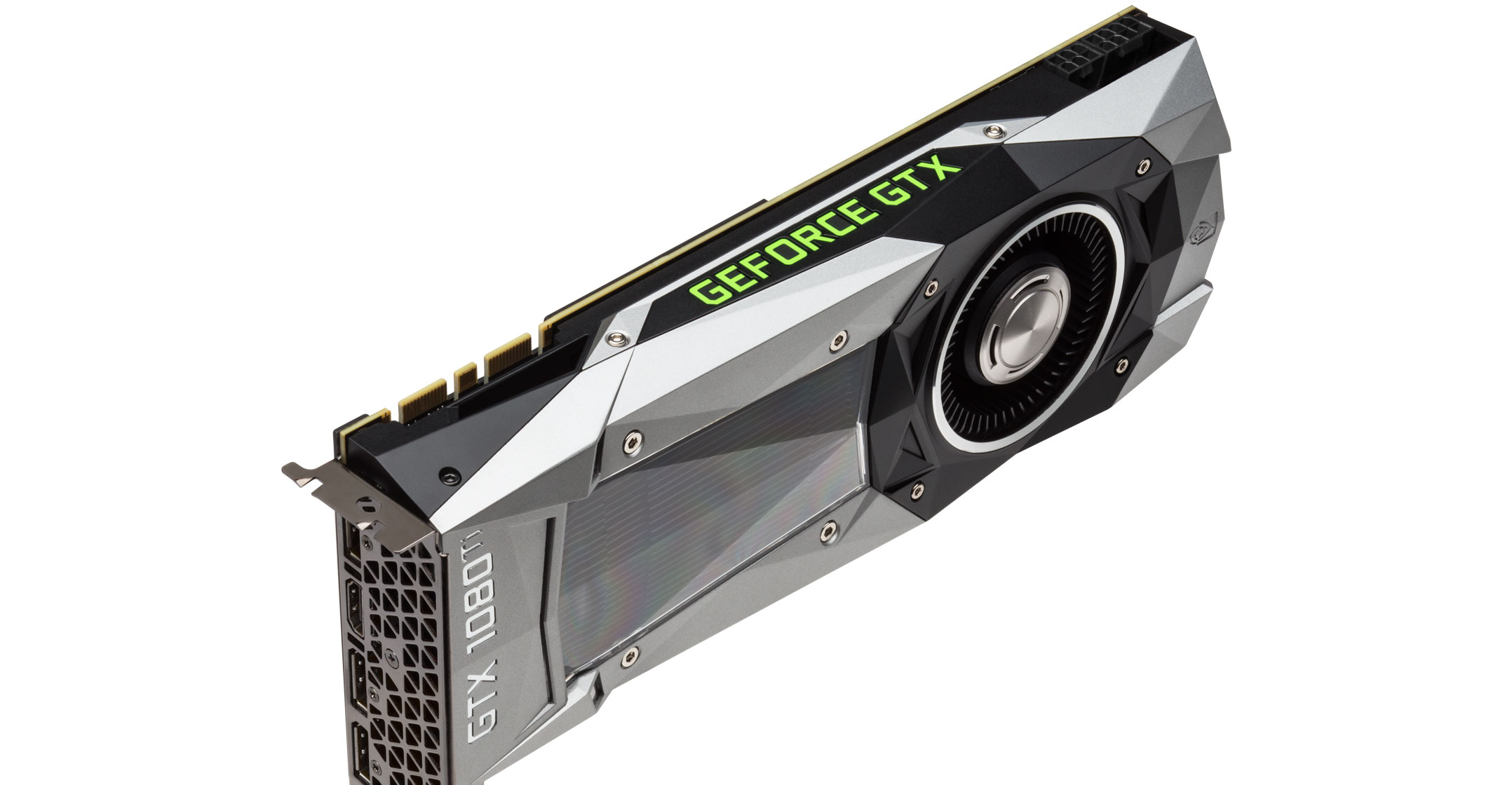
    Nvidia is the leader in chips used in graphics cards but lacks a computer CPU in its portfolio

    An Nvidia-ARM combination is not a foregone conclusion. Because of its large size, it will require regulatory approvals from the European Union, the US, the UK and China. While the US will probably be fine with the transaction as it puts a critical chip asset under an American banner, a sign-off by China is far from certain given the recent rise in tensions between the two economic superpowers. Further, while there is little significant share overlap between Nvidia’s current main graphics chip businesses and those of ARM’s big customers such as Apple, Qualcomm and Samsung Electronics, expect a flurry of complaints from them anyway as they will question Nvidia’s neutrality and the prospect of the company adding its technologies into ARM designs.

    Nvidia deserves the title of America’s chip leader with the impressive innovation and performance gains behind its latest chips likely presaging many quarters of strong results ahead. But on top of the short-term bright outlook, the prospective acquisition of ARM signals Nvidia has grander designs for its future. If successful, it could mean Nvidia will remain on top for a much longer time.  — By Tae Kim, (c) 2020 Bloomberg LP

    Follow TechCentral on Google News Add TechCentral as your preferred source on Google


    Apple ARM Jensen Huang Nvidia Qualcomm SoftBank top
    WhatsApp YouTube
    Share. Facebook Twitter LinkedIn WhatsApp Telegram Email Copy Link
    Previous ArticleShareholders reject Telkom’s cash-for-shares resolution
    Next Article No digital migration before 2022: director-general

    Related Posts

    The John Ternus era begins at Apple - Tim Cook

    The John Ternus era begins at Apple

    1 September 2026
    The Apple-OpenAI feud just got a lot uglier - Sam Altman

    The Apple, OpenAI feud just got a lot uglier

    1 September 2026
    Nvidia's biggest customers are becoming its biggest threat - Jensen Huang

    Nvidia’s best customers are becoming its biggest threat

    30 August 2026
    Company News
    Solid8 brings AlgoSec Horizon to Southern Africa - Simone Santana

    Solid8 brings AlgoSec Horizon to Southern Africa

    1 September 2026
    Ren-Flex installs Africa's first HP Indigo 200K

    Ren-Flex installs Africa’s first HP Indigo 200K

    1 September 2026
    Telecoms uptime is as much a finance question as an engineering one - Elzette Cronje Jordaan, Backspace Technologies

    Telecoms uptime is as much a finance question as an engineering one

    1 September 2026
    Opinion
    The fragile joint in the Capitec machine - Pambos Soteriades

    The R197-billion market the banks can’t reach

    25 August 2026
    South African tech's compounding debt problem - Jannie van Zyl

    Management consulting as we know it is over

    21 August 2026
    South African tech's compounding debt problem - Jannie van Zyl

    The most dangerous customer is the quiet one

    10 August 2026

    Subscribe to Updates

    Get the best South African technology news and analysis delivered to your e-mail inbox every morning.

    Latest Posts
    New OpenAI model can find and exploit unknown security flaws on its own

    New OpenAI model can find and exploit unknown security flaws on its own

    2 September 2026
    If it quacks like a duck: Kganyago on regulating fintechs - Reserve Bank governor Lesetja Kganyago

    If it quacks like a duck: Kganyago on regulating fintechs

    1 September 2026
    Shoprite closes its bet on the spaza till - Pieter Engelbrecht

    Shoprite closes its bet on the spaza till

    1 September 2026
    Wiocc lands $300-million from Saudi and African backers - Chris Wood

    Wiocc lands $300-million from Saudi and African backers

    1 September 2026
    © 2009 - 2026 NewsCentral Media
    Built and maintained by Chronon
    • Cookie policy (ZA)
    • TechCentral – privacy and Popia

    Type above and press Enter to search. Press Esc to cancel.

    Manage consent

    TechCentral uses cookies to enhance its offerings. Consenting to these technologies allows us to serve you better. Not consenting or withdrawing consent may adversely affect certain features and functions of the website.

    Functional Always active
    The technical storage or access is strictly necessary for the legitimate purpose of enabling the use of a specific service explicitly requested by the subscriber or user, or for the sole purpose of carrying out the transmission of a communication over an electronic communications network.
    Preferences
    The technical storage or access is necessary for the legitimate purpose of storing preferences that are not requested by the subscriber or user.
    Statistics
    The technical storage or access that is used exclusively for statistical purposes. The technical storage or access that is used exclusively for anonymous statistical purposes. Without a subpoena, voluntary compliance on the part of your Internet Service Provider, or additional records from a third party, information stored or retrieved for this purpose alone cannot usually be used to identify you.
    Marketing
    The technical storage or access is required to create user profiles to send advertising, or to track the user on a website or across several websites for similar marketing purposes.
    • Manage options
    • Manage services
    • Manage {vendor_count} vendors
    • Read more about these purposes
    View preferences
    • {title}
    • {title}
    • {title}