Close Menu
TechCentralTechCentral

    Subscribe to the newsletter

    Get the best South African technology news and analysis delivered to your e-mail inbox every morning.

    Facebook X (Twitter) YouTube LinkedIn
    WhatsApp Facebook X (Twitter) LinkedIn YouTube
    TechCentralTechCentral
    • News
      Gaping holes in South African government cyber defences

      Gaping holes in South African government cyber defences

      2 April 2026
      EV charging start-up Charge bypasses JSE for token-based raise - Joubert Roux

      EV charging start-up Charge bypasses JSE for token-based raise

      2 April 2026
      Ring, reject, repeat: South Africa's spam call crisis

      Ring, reject, repeat: South Africa’s spam call crisis

      2 April 2026
      Four astronauts begin humanity's return to the moon - Artemis II

      Four astronauts begin humanity’s return to the moon

      2 April 2026
      Sars to give every taxpayer a digital identity in sweeping tech overhaul

      Sars to give every taxpayer a digital identity in sweeping tech overhaul

      1 April 2026
    • World
      Amazon in talks to buy satellite operator Globalstar

      Amazon in talks to buy satellite operator Globalstar

      2 April 2026

      Apple plans to open Siri to rival AI services

      27 March 2026
      It's official: ads are coming to ChatGPT

      It’s official: ads are coming to ChatGPT

      23 March 2026
      Mystery Chinese AI model revealed to be Xiaomi's

      Mystery Chinese AI model revealed to be Xiaomi’s

      19 March 2026
      A mystery AI model has developers buzzing

      A mystery AI model has developers buzzing

      18 March 2026
    • In-depth
      The R18-billion tech giant hiding in plain sight - Jens Montanana

      The R16-billion tech giant hiding in plain sight

      26 March 2026
      The last generation of coders

      The last generation of coders

      18 February 2026
      Sentech is in dire straits

      Sentech is in dire straits

      10 February 2026
      How liberalisation is rewiring South Africa's power sector

      How liberalisation is rewiring South Africa’s power sector

      21 January 2026
      The top-performing South African tech shares of 2025

      The top-performing South African tech shares of 2025

      12 January 2026
    • TCS
      TCS | MTN's Divysh Joshi on the strategy behind Pi - Divyesh Joshi

      TCS | MTN’s Divyesh Joshi on the strategy behind Pi

      1 April 2026
      Anoosh Rooplal

      TCS | Anoosh Rooplal on the Post Office’s last stand

      27 March 2026
      Meet the CIO | HealthBridge CTO Anton Fatti on the future of digital health

      Meet the CIO | Healthbridge CTO Anton Fatti on the future of digital health

      23 March 2026
      TCS+ | Arctic Wolf unpacks the evolving threat landscape for SA businesses - Clare Loveridge and Jason Oehley

      TCS+ | Arctic Wolf unpacks the evolving threat landscape for SA businesses

      19 March 2026
      TCS+ | Vox Kiwi: a wireless solution promising a fibre-like experience - Theo van Zyl

      TCS+ | Vox Kiwi: a wireless solution promising a fibre-like experience

      13 March 2026
    • Opinion
      The conflict of interest at the heart of PayShap's slow adoption - Cheslyn Jacobs

      The conflict of interest at the heart of PayShap’s slow adoption

      26 March 2026
      South Africa's energy future hinges on getting wheeling right - Aishah Gire

      South Africa’s energy future hinges on getting wheeling right

      10 March 2026
      Hold the doom: the case for a South African comeback - Duncan McLeod

      Apple just dropped a bomb on the Windows world

      5 March 2026
      VC's centre of gravity is shifting - and South Africa is in the frame - Alison Collier

      VC’s centre of gravity is shifting – and South Africa is in the frame

      3 March 2026
      Hold the doom: the case for a South African comeback - Duncan McLeod

      Hold the doom: the case for a South African comeback

      26 February 2026
    • Company Hubs
      • 1Stream
      • Africa Data Centres
      • AfriGIS
      • Altron Digital Business
      • Altron Document Solutions
      • Altron Group
      • Arctic Wolf
      • Ascent Technology
      • AvertITD
      • BBD
      • Braintree
      • CallMiner
      • CambriLearn
      • CYBER1 Solutions
      • Digicloud Africa
      • Digimune
      • Domains.co.za
      • ESET
      • Euphoria Telecom
      • HOSTAFRICA
      • Incredible Business
      • iONLINE
      • IQbusiness
      • Iris Network Systems
      • Kaspersky
      • LSD Open
      • Mitel
      • NEC XON
      • Netstar
      • Network Platforms
      • Next DLP
      • Ovations
      • Paracon
      • Paratus
      • Q-KON
      • SevenC
      • SkyWire
      • Solid8 Technologies
      • Telit Cinterion
      • Telviva
      • Tenable
      • Vertiv
      • Videri Digital
      • Vodacom Business
      • Wipro
      • Workday
      • XLink
    • Sections
      • AI and machine learning
      • Banking
      • Broadcasting and Media
      • Cloud services
      • Contact centres and CX
      • Cryptocurrencies
      • Education and skills
      • Electronics and hardware
      • Energy and sustainability
      • Enterprise software
      • Financial services
      • HealthTech
      • Information security
      • Internet and connectivity
      • Internet of Things
      • Investment
      • IT services
      • Lifestyle
      • Motoring
      • Policy and regulation
      • Public sector
      • Retail and e-commerce
      • Satellite communications
      • Science
      • SMEs and start-ups
      • Social media
      • Talent and leadership
      • Telecoms
    • Events
    • Advertise
    TechCentralTechCentral
    Home » Opinion » Gaelyn Scott » Orange wins SA trademark appeal

    Orange wins SA trademark appeal

    By Gaelyn Scott2 April 2014
    Twitter LinkedIn Facebook WhatsApp Email Telegram Copy Link
    News Alerts
    WhatsApp

    Gaelyn-Scott-180On 22 November 2013, the supreme court of appeal (SCA) handed down a rare trademark judgment. It’s marked on the judgment as one that’s not worth reporting in the law reports, which is a great pity given that is of considerable importance.

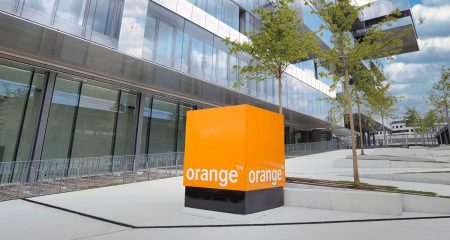
    The case pitted international telecommunications operator Orange against a local accounting software company.

    The issue was very simple: was the local company entitled to a trademark registration for the mark Orangeworks for computer software in the face of an earlier application by Orange to register the trademark Orange for a wide range of goods that included software?

    Both the registrar of trademarks and a full bench of the high court in Gauteng had found that the local company was entitled to trademark registration on the basis that there was unlikely to be confusion. However, the SCA overruled the earlier findings, holding that there was a likelihood of confusion. It made a number of important findings.

    The appeals court said that the earlier tribunals had misapplied themselves in that they had both based their decisions on the fact that, whereas the international company used the trademark in the telecoms industry, the local company used its trademark in the accounting industry.

    But in trademark oppositions, you need to consider not just what the parties are doing, but what they might lawfully do with their trademarks. The SCA said this: “In opposition proceedings, the question that falls to be decided is not how the parties use or intend to use their marks, but how they would be entitled to use them if both were to be registered — that is, how they might notionally be used.”

    As both trademarks could lawfully be used for computer software, the issue was simply whether there would be confusion if both companies were to do so. It’s a little alarming that this matter had to go all the way to the SCA before this rather elementary point was recognised.

    The SCA referred to some earlier South African trademark decisions, including the venerable case of Plascon Evans Paints Ltd v Van Riebeek Paints (Pty) Ltd 1984 (3) SA 623 (A). It said all the things that courts say in trademark cases: that the issue is not whether everyone will be confused but whether a substantial number of people will be; that you don’t actually have to show that a substantial number of people will believe that the one company’s goods are the others, but simply that they will be left wondering about the origin of the goods; that you must consider the matter through the eyes of the average consumer who has imperfect recollection; that you must consider the sense, sound and appearance of the trademarks; that you must consider how the trademarks will be seen in the marketplace, both side-by-side and separately; and that you must consider the dominant feature and general impression of each trademark.

    But then the SCA went slightly off script. It said that ultimately it’s a “value judgment to be made by the court, dictated by the overall impression created by the marks, given their respective characteristics, and the circumstances in which they are likely to be encountered, instead of being drawn into excessive analysis.” It said that prior cases are of little assistance because each case is so different.

    In order to persuade a tribunal that confusion between two trademarks is unlikely, lawyers like to show that the common feature is in common usage. But in this case, the SCA found that evidence of extensive use of the word “orange” in company and domain names was unhelpful, because “many of those names might be distinctive by virtue of their composition or association, and others might themselves be confusingly similar to the mark in the present case, all of which begs the question that confronts us”.

    Another factor that’s often raised in trademark cases is the likely consumer, the thinking being that the more educated and discerning the consumer, the smaller the chance of any confusion. But the local company’s evidence in this regard did not impress the court either. The court said this: “I have no doubt that computer software for accounting is indeed purchased with considerable care, but confusion need not be lasting for it to disqualify a mark from registration. It is sufficient if it is confusing only for a short time, sufficient to attract initial interest, albeit that the confusion might later be cleared up.”

    The court felt that the common feature, the word “orange”, was highly distinctive: “I accept that ‘orange’ is an ordinary English word, in wide use to describe a colour or a fruit, and is not a constructed word finding its distinctiveness in the word itself. But to my mind the dominant feature of the word when used as a mark in this context, is that in its ordinary meaning it has no association with computer software or computer technology. It is precisely the absence of any natural association that makes the mark distinctive and catches attention.”

    gavel-640

    Which made the likelihood of confusion very strong: “To my mind it is that dominant and catching feature that is immediately brought to mind by the mark Orangeworks, aurally, visually and in concept. The suffix “works” — a word that might at best suggest an imprecise metaphor — trails off considerably when the mark is expressed orally, is dominated visually by the distinctive Orange when written, and is entirely overshadowed by the unusual conceptual use of Orange in association with technology. In my view, the mark is indeed likely to cause at least initial confusion when used in that context, albeit that the initial confusion might soon be cleared up.”

    Which meant that the appeal had to succeed, as did the opposition to the application for registration of the trademark Orangeworks.

    This judgment is likely to have a significant impact on trademark law and practice. The most noteworthy aspect of the judgment is probably the reference to what’s sometimes referred to as “initial-interest confusion”, and the apparent acceptance that short-term confusion is sufficient — it’s a pity that this issue wasn’t discussed in detail.

    It’s perhaps also a pity that there was no real discussion on what, if any, special factors need to be considered in cases where the one trademark wholly incorporates the other (as is the case with Orangeworks and Orange). There have, for example, been quite a few European Union and UK cases that have discussed this point, including the famous case involving the trademarks Life and Thomson Life. The approach there seems to be this — if the earlier trademark still has an independent distinctive role in the composite trademark, irrespective of whether or not it is the dominant element, there will be a likelihood of confusion.

    The right result was probably reached, but it’s a pity that the court didn’t go into the law in a little more detail.

    • Gaelyn Scott is head of and director in ENSafrica’s intellectual property business. The lawfirm did not represent any of the parties involved

    Follow TechCentral on Google News Add TechCentral as your preferred source on Google


    ENS ENSafrica Gaelyn Scott Orange Orangeworx
    WhatsApp YouTube
    Share. Facebook Twitter LinkedIn WhatsApp Telegram Email Copy Link
    Previous ArticleHow to avoid becoming a cybercrime victim
    Next Article IT fingered over Nkandla blunder

    Related Posts

    Major change to telco licensing rules in Europe - Henna Virkkunen

    Major change to telco licensing rules in Europe

    21 January 2026

    EU kills ‘Fair Share’ plan favoured by South African operators

    31 July 2025
    Africa growth offsets French decline at Orange

    Africa growth offsets French decline at Orange

    29 July 2025
    Company News
    Synthesis helps financial enterprises transform with new Gemini Enterprise - Digicloud Africa

    Synthesis helps financial enterprises transform with new Gemini Enterprise

    2 April 2026
    The next churn wave is already in your contact centre conversations - CallMiner

    The next churn wave is already in your contact centre conversations

    2 April 2026
    Mining's problem isn't output, it's execution - Workday

    Mining’s problem isn’t output, it’s execution – Workday

    1 April 2026
    Opinion
    The conflict of interest at the heart of PayShap's slow adoption - Cheslyn Jacobs

    The conflict of interest at the heart of PayShap’s slow adoption

    26 March 2026
    South Africa's energy future hinges on getting wheeling right - Aishah Gire

    South Africa’s energy future hinges on getting wheeling right

    10 March 2026
    Hold the doom: the case for a South African comeback - Duncan McLeod

    Apple just dropped a bomb on the Windows world

    5 March 2026

    Subscribe to Updates

    Get the best South African technology news and analysis delivered to your e-mail inbox every morning.

    Latest Posts
    Gaping holes in South African government cyber defences

    Gaping holes in South African government cyber defences

    2 April 2026
    EV charging start-up Charge bypasses JSE for token-based raise - Joubert Roux

    EV charging start-up Charge bypasses JSE for token-based raise

    2 April 2026
    Ring, reject, repeat: South Africa's spam call crisis

    Ring, reject, repeat: South Africa’s spam call crisis

    2 April 2026
    Amazon in talks to buy satellite operator Globalstar

    Amazon in talks to buy satellite operator Globalstar

    2 April 2026
    © 2009 - 2026 NewsCentral Media
    • Cookie policy (ZA)
    • TechCentral – privacy and Popia

    Type above and press Enter to search. Press Esc to cancel.

    Manage consent

    TechCentral uses cookies to enhance its offerings. Consenting to these technologies allows us to serve you better. Not consenting or withdrawing consent may adversely affect certain features and functions of the website.

    Functional Always active
    The technical storage or access is strictly necessary for the legitimate purpose of enabling the use of a specific service explicitly requested by the subscriber or user, or for the sole purpose of carrying out the transmission of a communication over an electronic communications network.
    Preferences
    The technical storage or access is necessary for the legitimate purpose of storing preferences that are not requested by the subscriber or user.
    Statistics
    The technical storage or access that is used exclusively for statistical purposes. The technical storage or access that is used exclusively for anonymous statistical purposes. Without a subpoena, voluntary compliance on the part of your Internet Service Provider, or additional records from a third party, information stored or retrieved for this purpose alone cannot usually be used to identify you.
    Marketing
    The technical storage or access is required to create user profiles to send advertising, or to track the user on a website or across several websites for similar marketing purposes.
    • Manage options
    • Manage services
    • Manage {vendor_count} vendors
    • Read more about these purposes
    View preferences
    • {title}
    • {title}
    • {title}