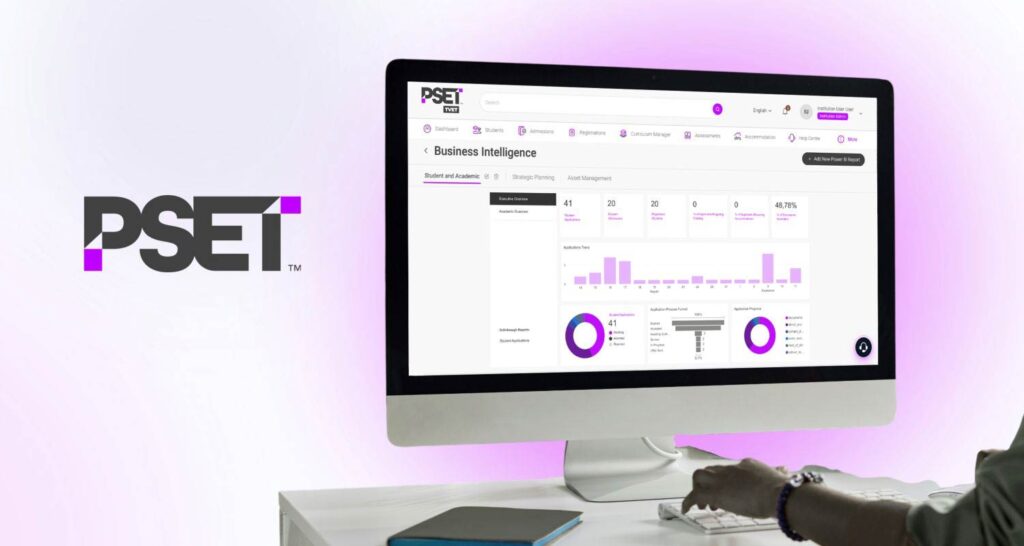
Most conversations about enterprise software start with features. Gregory Steenberg, manager: business and data analysis at PSET, which makes an ERP platform for higher education, starts somewhere else: with the institution itself.
“The important thing, as a first order, is to understand the business,” he said. “When you look at an organisation, it consists of processes, systems and the people that operate those systems.”
Steenberg spent just over 10 years in the higher education sector, working at deputy director level. He says that experience exposed him to the challenges institutions face across all three of those areas.
That background carries weight with the sector. Sydney Maqoqa, deputy director of ICT customer services at Nelson Mandela University, has worked with Steenberg and CTO Chris Wentworth before. “They’ve really produced a high standard of service at university,” he said. “That made us really trust what PSET is.”
Holistically, the idea is to bring value through a data-driven solution that will help with decisions,” he said, “and be able to forge a better future for the institution.”
PSET’s Gregory Steenberg
Understanding the business processes behind an institution, Steenberg explains, is what makes it possible to add value. It also reveals how data moves between different parts of the organisation.
“You get an in-depth understanding of how the data flows between the various aspects of any process or system,” he said. “How they interface with one another, how they complement one another and how they inform one another.”
Operations first, strategy built in
That understanding shaped PSET’s underlying design. “We realised that data is the currency,” Steenberg said.
The principle is that the platform has two jobs at once. It must keep day-to-day operations running. And it must turn the data those operations create into information leaders can act on.
“The operation must go,” he said. “But the system must be so well positioned to provide both operational data, as well as management and strategic information based on that data, so that strategic and business decisions can be made.”
Everything talks to everything
To make that possible, PSET was built as a fully integrated system. “Every single module, submodule, the underlying data and the underlying processes work seamlessly together,” Steenberg said. “And the data then becomes more strategic.”
The result, he says, is a wider base for decision-making. Leaders can see where the institution stands today and where it is heading.
Institutions feel the absence of this today. Thembi Tabatha, director of procurement at Vaal University of Technology, says that when data sits in separate systems, it affects “the analysis of data, data mining and just good-quality decision-making”.
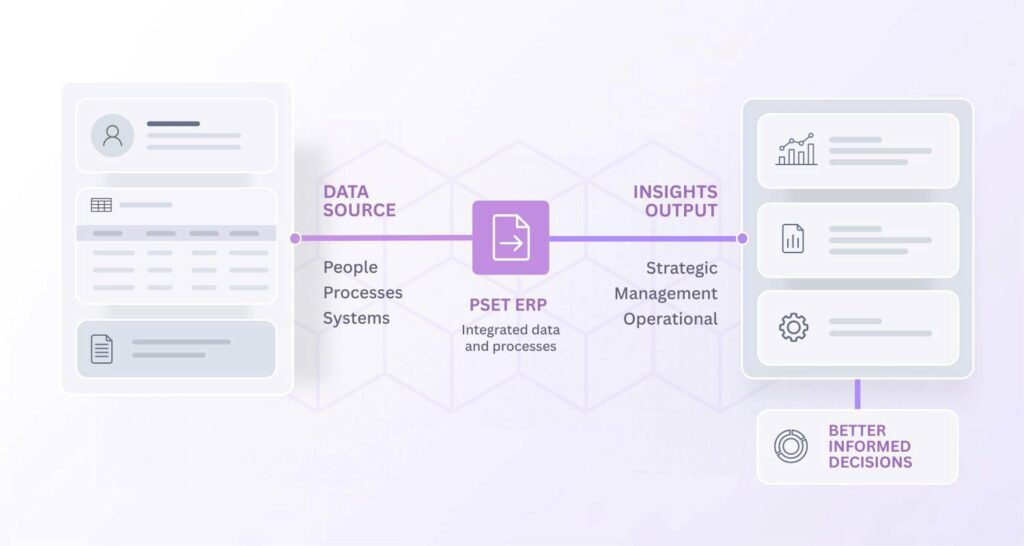
In practice, PSET delivers this through three layers of reporting:
- Operational reporting across the institution, which users can export.
- Management reporting for leadership and department heads.
- Strategic dashboards that visualise the data held in the system.
Better decisions, better futures
Steenberg sees this as the core of what PSET offers. “Holistically, the idea is to bring value through a data-driven solution that will help with decisions,” he said, “and be able to forge a better future for the institution.”
The PSET brochure puts the same idea more briefly: turning “institutional data into actionable insight”.
For institutions that have long struggled to get a clear, current picture of their own performance, that shift could matter more than any single feature.
- Read more articles by PSET on TechCentral
- This promoted content was paid for by the party concerned