Close Menu
TechCentralTechCentral

    Subscribe to the newsletter

    Get the best South African technology news and analysis delivered to your e-mail inbox every morning.

    Facebook X (Twitter) YouTube LinkedIn
    WhatsApp Facebook X (Twitter) LinkedIn YouTube
    TechCentralTechCentral
    • News
      Forget the iPhone: Apple's real next act is your home

      Forget the iPhone: Apple’s real next act is your home

      27 August 2026
      Meta wins by settling

      Meta wins by settling

      27 August 2026
      A Limpopo solar farm is now powering a smelter in Richards Bay

      A Limpopo solar farm is now powering a smelter in Richards Bay

      27 August 2026
      The real story behind Iris, South Africa's classroom robot - Bonisiwe “Thandoh” Gumede with Iris

      The real story behind Iris, South Africa’s classroom robot

      27 August 2026
      South Africa's 'clean coal' plan is a bet against arithmetic

      South Africa’s ‘clean coal’ plan is a bet against arithmetic

      27 August 2026
    • World
      AI-generated music banned from Australian charts

      AI-generated music banned from Australian charts

      26 August 2026
      Traders brace for a R4.5-trillion swing in Nvidia's value

      Traders brace for a R4.5-trillion swing in Nvidia’s value

      25 August 2026
      Russia building its own Starlink - and faster than expected - Vadym Skibitskyi

      Russia building its own Starlink – and faster than expected

      11 August 2026
      Meta AI will now tell parents if their teen is in crisis

      Meta AI will now tell parents if their teen is in crisis

      17 July 2026
      IBM shares crash 25% as AI upends software spending - Arvind Krishna

      IBM shares crash 25% as AI upends software spending

      15 July 2026
    • In-depth
      Google DeepMind CEO Demis Hassabis. Image: John Sears

      The plan to stop AI from breaking the world

      16 July 2026
      The internet has a Strait of Hormuz problem

      The internet has a Strait of Hormuz problem

      15 July 2026
      AI boom sparks rally, frenzy and fear

      AI boom sparks rally, frenzy and fear

      11 June 2026
      Every plug-in hybrid on sale in South Africa, ranked by price - Lamborghini Temerario

      Every plug-in hybrid on sale in South Africa, ranked by price

      7 June 2026
      What Wi-Fi 8 will mean for wireless networks

      What Wi-Fi 8 will mean for wireless networks

      1 June 2026
    • TCS
      Watts & Wheels S1E8: 'Tesla lands in Africa, just not here'

      Watts & Wheels S1E8: ‘Tesla lands in Africa, just not here’

      24 August 2026
      Meet the CIO | Discovery's Derek Wilcocks on AI, guardrails and growth

      Meet the CIO | Derek Wilcocks on how AI personalised Vitality

      13 August 2026
      TCS | Money just became native to the internet - Steven Boykey Sidley

      TCS | Money just became native to the internet – Steven Boykey Sidley

      12 August 2026
      TCS+ | Specops' Darren James on continuous trust in an AI world

      TCS+ | Specops’ Darren James on continuous trust in an AI world

      7 August 2026
      TCS+ | How AI is turning hardware into a subscription service - Shane van der Merwe Merchant West

      TCS+ | How AI is turning hardware into a subscription service

      6 August 2026
    • Opinion
      The fragile joint in the Capitec machine - Pambos Soteriades

      The R197-billion market the banks can’t reach

      25 August 2026
      South African tech's compounding debt problem - Jannie van Zyl

      Management consulting as we know it is over

      21 August 2026
      South African tech's compounding debt problem - Jannie van Zyl

      The most dangerous customer is the quiet one

      10 August 2026
      South African tech's compounding debt problem - Jannie van Zyl

      South African tech’s compounding debt problem

      29 July 2026
      The fragile joint in the Capitec machine - Pambos Soteriades

      Best network, worst vibes: the puzzle of SA telecoms

      20 July 2026
    • Company Hubs
      • 1Stream
      • Africa Data Centres
      • AfriGIS
      • Altron Digital Business
      • Altron Document Solutions
      • Altron Group
      • Arctic Wolf
      • Ascent Technology
      • AvertITD
      • BBD
      • Braintree
      • CallMiner
      • CambriLearn
      • CM Telecom
      • Contactable
      • CYBER1 Solutions
      • Digicloud Africa
      • Digimune
      • Domains.co.za
      • ESET
      • Euphoria Telecom
      • HOSTAFRICA
      • Incredible Business
      • iONLINE
      • IQbusiness
      • Iris Network Systems
      • Kaspersky
      • LSD Open
      • Mitel
      • NEC XON
      • Netstar
      • Network Platforms
      • Next DLP
      • Ovations
      • Paracon
      • Paratus
      • Q-KON
      • SevenC
      • SkyWire
      • Solid8 Technologies
      • Telit Cinterion
      • Telviva
      • Tenable
      • Vertiv
      • Videri Digital
      • Vodacom Business
      • Vox
      • Wipro
      • Workday
      • XLink
    • Sections
      • AI and machine learning
      • Banking
      • Broadcasting and Media
      • Cloud services
      • Contact centres and CX
      • Cryptocurrencies
      • Education and skills
      • Electronics and hardware
      • Energy and sustainability
      • Enterprise software
      • Financial services
      • HealthTech
      • Information security
      • Internet and connectivity
      • Internet of Things
      • Investment
      • IT services
      • Lifestyle
      • Policy and regulation
      • Public sector
      • Retail and e-commerce
      • Satellite communications
      • Science
      • SMEs and start-ups
      • Social media
      • Talent and leadership
      • Telecoms
      • Watts & Wheels
    • Events
    • Advertise
    TechCentralTechCentral
    Home » Gadgets & Reviews » Pureview 808 review: the Dolly Parton of phones

    Pureview 808 review: the Dolly Parton of phones

    By Craig Wilson17 July 2012
    Twitter LinkedIn Facebook WhatsApp Email Telegram Copy Link
    News Alerts
    WhatsApp

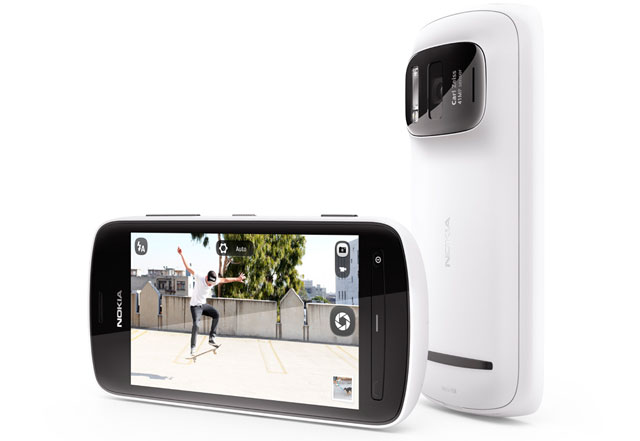
    Finnish handset manufacturer Nokia pioneered cameras in mobile phones. Now it’s looking to set the standard again with the 41-megapixel shooter in its Pureview 808 handset. The phone boasts the highest resolution camera ever seen in a handset, but is that enough reason to consider the device, particularly given some of Nokia’s other peculiar decisions when it comes to its design?

    One of the strangest things about the Pureview is the choice of operating system (OS). Rather than using Windows Phone, which powers Nokia’s flagship Lumia range, the company has opted for the dated Symbian OS — version 10.1 “Belle” in this instance. Symbian is a clumsy, sluggish and dated solution when compared to Windows Phone.

    Nokia will surely rectify this with later models in the Pureview range, but it seems bizarre that the 808 has been saddled with what feels like outdated software, and all the more so because it’s a device that’s otherwise intended to be at the cutting edge.

    Another anomaly is the fact that Nokia calls it a 41-megapixel camera when it is, in fact, effectively a 38-megapixel camera (multiply the width and height of an image together and you get 38,4m).

    There’s a price to pay for squeezing a 38-megapixel camera into a pocket-sized device. The first of these is that the Pureview is 13,9mm thick and built like Dolly Parton. It’s decidedly top heavy, but surprisingly comfortable to hold. The matt, slightly textured finish helps in this regard, and makes it feel like a high-end device.

    At just under 170g, the Pureview 808 isn’t actually that much heavier than other top-end smartphones. It just feels hefty on account of how thick it is and the fact that the camera housing protrudes so noticeably.

    At full tilt, the camera produces images of with a resolution of 7 152×5 368 pixels. Needless to say, that’s enormous.

    Why bother with such a large sensor? Partly so that you can turn digital zoom into a vaguely useful feature. With mobile phones being too slim to handle optic zoom lenses, and no one wanting a lens that protrudes from their phone, more megapixels means you can take 5- or 8-megapixel “zoomed” images by using only a portion of the available pixels.

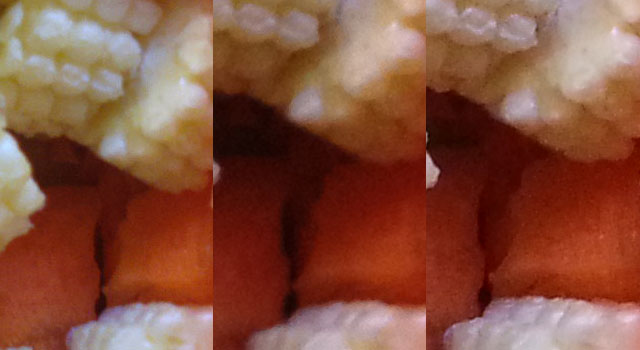
    Left to right: 100% crops of pictures taken on the Pureview 808, an iPhone 4S and a Samsung Galaxy S3
    Left to right: 100% crops of pictures taken on the Pureview, an iPhone 4S and a Galaxy S3

    This is an innovative idea from Nokia and one that will no doubt show up in other manufacturers’ devices soon enough, hopefully in a slimmer and otherwise better-equipped body.

    By default, the 808 doesn’t actually shoot at full resolution. Rather, it shoots 5-megapixel images and allows users to zoom (it’s impossible to zoom if shooting at full resolution). That’s also because no one in their right mind actually wants to send an image that can be as big as 7MB using their mobile phone.

    Supposedly, this also means better-quality pictures overall because the handset starts with a higher resolution image (assuming one hasn’t zoomed in) and compresses it to 5-megapixels.

    A full-resolution, 38-megapixel image taken with the Pureview 808 (click on the image for full size)

    The camera menu is intuitively laid out and allows for a great deal of control. Three custom modes allow you to fiddle ISO, exposure compensation, colour rendition and even shoot bracketed shots for creating HDR (high-dynamic range) images.

    There’s a dedicated two-step camera button on the right-hand side of the 808 that can be used to enter camera mode from the lock screen, and the unlock slider can be used to toggle the flash on and off for use as a torch by holding it for an extended period. There’s little discernible shutter lag when taking a picture, but there can be a delay while it saves, particularly if shooting at full resolution.

    One would expect the images from the Pureview 808 to be excellent, but in our experience they simply aren’t. On the whole, colour reproduction is natural and it certainly handles low-light images far better than the competition, but the compression can make for softer shots overall and the lack of saturation — while perhaps more natural — results in duller images than those from either the iPhone 4S or the Samsung Galaxy S3.

    In theory the Pureview should blow the competition out of the water, and in terms of resolution it does. But in day-to-day use it’s no better, and in some instances arguably worse, than other leading mobile phone cameras. Unless you deliberately create a custom setting to shoot images at the full 38-megapixel resolution images come out at 5-megapixels, and this is three less than either the Samsung or the iPhone 4S. Most users want to point and shoot, and other current handsets simply do this better.

    The Pureview’s larger sensor results in low-light images that are surprisingly free of noise (click image for full version taken at five megapixels)

    The Xenon flash performs well in low light and is accompanied by an LED light for shooting video. The 808 captures video at 1 080p at 30 frames a second, and the front-facing camera is capable of the same frame rate, albeit at VGA (640×480-pixel) quality.

    Like most of its competitors, the 808 allows you to tap on the image to select the focus point and, because of its f2,4 maximum aperture and the fact that it’s sensor is roughly the size of a postage stamp — about four times the size of most camera phone sensors — it’s possible to isolate subjects from the background with ease.

    With a 1,3GHz processor and 500MB RAM, the 808 soon slows down when asked to run multiple applications and, on the whole, the experience is by no means the most fluid we’ve encountered. Home screen widgets can take a moment or two to refresh and the experience is reminiscent of a far older handset when it comes to day-to-day operations.

    Aside from the interface, another letdown is the 4-inch Amoled screen. Colour rendition and viewing angles are excellent, but with a resolution of only 360×640 pixels, one can’t help feeling a little disappointed, particularly in light of the enormous and detailed images the device is capable of capturing.

    The 808 supports micro-Sim cards and has an expansion slot for a microSD card, up to a maximum of 32GB. It comes with 16GB of onboard storage and includes an HDMI port and a 3,5mm audio jack.

    In many ways, Symbian really is the most disappointing aspect of the 808. It’s not the worst mobile OS we’ve ever seen, but it looks so dated compared to the latest versions of Google’s Android and Apple’s iOS. There’s also a far slimmer selection of applications available and the knowledge that Symbian is on the way out makes it difficult to recommend. Buy an 808 and you’re investing in legacy software.

    Symbian also has other quirks that can prove annoying. The menu structure isn’t the most intuitive and the result is a substandard user experience. Neither the impressive camera nor other touches like an FM transmitter can make up for a deficient experience. Unless, of course, you’re a Nokia loyalist or the sort of user for whom a mobile phone is primarily a photographic tool.

    If you’re looking for a superb smartphone with a capable camera, you’re better off getting a rival handset, or one of Nokia’s own Lumia range. If you’re looking for a superb camera, an equally capable compact can be had for less money.

    Ultimately, the 808 is exciting because of what it portends. There’s no compelling reason to pick one up now other than for its value as a conversation piece. It feels like an experiment rather than a genuine competitor in the current smartphone market.

    The 808 is easily as well equipped as your average compact camera, but the problem is that it’s also a phone. It’s a great camera, but a decidedly mediocre phone.  — (c) 2012 NewsCentral Media

    • The Pureview 808 retails for R7 999 outside of a contract and is only available from Vodacom

    Follow TechCentral on Google News Add TechCentral as your preferred source on Google


    Nokia Nokia Pureview 808 Pureview 808
    WhatsApp YouTube
    Share. Facebook Twitter LinkedIn WhatsApp Telegram Email Copy Link
    Previous ArticleTelkom snaps up Samsung’s Liebenberg
    Next Article Bailey quits Glo over salary dispute

    Related Posts

    Nvidia and Nokia set sights on 6G

    Nvidia and Nokia set sights on 6G

    29 October 2025
    Africa's next terrestrial internet leap might come from the sea - Seacom Nic Breytenbach

    Africa’s next terrestrial internet leap might come from the sea

    10 October 2025
    INX-ZA to supercharge its South African internet exchanges

    INX-ZA to supercharge its South African internet exchanges

    21 August 2025
    Company News
    Can you trust the AI speaking to your customers? - 1Stream

    Can you trust the AI speaking to your customers?

    27 August 2026
    Telviva launches Viva, a digital agent built for South African businesses - Telviva CEO David Meintjes

    Telviva launches Viva, a digital agent built for South African businesses

    27 August 2026
    Regulated systems need more automation, not less - BBD Software

    Regulated systems need more automation, not less

    27 August 2026
    Opinion
    The fragile joint in the Capitec machine - Pambos Soteriades

    The R197-billion market the banks can’t reach

    25 August 2026
    South African tech's compounding debt problem - Jannie van Zyl

    Management consulting as we know it is over

    21 August 2026
    South African tech's compounding debt problem - Jannie van Zyl

    The most dangerous customer is the quiet one

    10 August 2026

    Subscribe to Updates

    Get the best South African technology news and analysis delivered to your e-mail inbox every morning.

    Latest Posts
    Forget the iPhone: Apple's real next act is your home

    Forget the iPhone: Apple’s real next act is your home

    27 August 2026
    Meta wins by settling

    Meta wins by settling

    27 August 2026
    A Limpopo solar farm is now powering a smelter in Richards Bay

    A Limpopo solar farm is now powering a smelter in Richards Bay

    27 August 2026
    The real story behind Iris, South Africa's classroom robot - Bonisiwe “Thandoh” Gumede with Iris

    The real story behind Iris, South Africa’s classroom robot

    27 August 2026
    © 2009 - 2026 NewsCentral Media
    Built and maintained by Chronon
    • Cookie policy (ZA)
    • TechCentral – privacy and Popia

    Type above and press Enter to search. Press Esc to cancel.

    Manage consent

    TechCentral uses cookies to enhance its offerings. Consenting to these technologies allows us to serve you better. Not consenting or withdrawing consent may adversely affect certain features and functions of the website.

    Functional Always active
    The technical storage or access is strictly necessary for the legitimate purpose of enabling the use of a specific service explicitly requested by the subscriber or user, or for the sole purpose of carrying out the transmission of a communication over an electronic communications network.
    Preferences
    The technical storage or access is necessary for the legitimate purpose of storing preferences that are not requested by the subscriber or user.
    Statistics
    The technical storage or access that is used exclusively for statistical purposes. The technical storage or access that is used exclusively for anonymous statistical purposes. Without a subpoena, voluntary compliance on the part of your Internet Service Provider, or additional records from a third party, information stored or retrieved for this purpose alone cannot usually be used to identify you.
    Marketing
    The technical storage or access is required to create user profiles to send advertising, or to track the user on a website or across several websites for similar marketing purposes.
    • Manage options
    • Manage services
    • Manage {vendor_count} vendors
    • Read more about these purposes
    View preferences
    • {title}
    • {title}
    • {title}