Close Menu
TechCentralTechCentral

    Subscribe to the newsletter

    Get the best South African technology news and analysis delivered to your e-mail inbox every morning.

    Facebook X (Twitter) YouTube LinkedIn
    WhatsApp Facebook X (Twitter) LinkedIn YouTube
    TechCentralTechCentral
    • News
      Eskom lifts load reduction for 140 000 customers

      Eskom lifts load reduction for 140 000 customers

      8 February 2026
      AI chatbots are coming to Apple CarPlay

      AI chatbots are coming to Apple CarPlay

      8 February 2026
      South Africa's stablecoin silence is becoming a policy failure

      South Africa’s stablecoin silence is becoming a policy failure

      6 February 2026
      Every electric car you can buy in South Africa in early 2026, ranked by price

      Every electric car you can buy in South Africa in early 2026, ranked by price

      6 February 2026
      From stocks to crypto, markets reel as AI doubts grow

      From stocks to crypto, markets reel as AI doubts grow

      6 February 2026
    • World
      Crypto firm accidentally sends R700-billion in bitcoin to its users

      Crypto firm accidentally sends R700-billion in bitcoin to its users

      8 February 2026
      AI won't replace software, says Nvidia CEO amid market rout - Jensen Huang

      AI won’t replace software, says Nvidia CEO amid market rout

      4 February 2026
      Apple acquires audio AI start-up Q.ai

      Apple acquires audio AI start-up Q.ai

      30 January 2026
      SpaceX IPO may be largest in history

      SpaceX IPO may be largest in history

      28 January 2026
      Nvidia throws AI at the weather

      Nvidia throws AI at weather forecasting

      27 January 2026
    • In-depth
      How liberalisation is rewiring South Africa's power sector

      How liberalisation is rewiring South Africa’s power sector

      21 January 2026
      The top-performing South African tech shares of 2025

      The top-performing South African tech shares of 2025

      12 January 2026
      Digital authoritarianism grows as African states normalise internet blackouts

      Digital authoritarianism grows as African states normalise internet blackouts

      19 December 2025
      TechCentral's South African Newsmakers of 2025

      TechCentral’s South African Newsmakers of 2025

      18 December 2025
      Black Friday goes digital in South Africa as online spending surges to record high

      Black Friday goes digital in South Africa as online spending surges to record high

      4 December 2025
    • TCS
      TCS+ | How Cloud On Demand is helping SA businesses succeed in the cloud - Xhenia Rhode, Dion Kalicharan

      TCS+ | Cloud On Demand and Consnet: inside a real-world AWS partner success story

      30 January 2026
      Watts & Wheels S1E3: 'BYD's Corolla Cross challenger'

      Watts & Wheels S1E3: ‘BYD’s Corolla Cross challenger’

      30 January 2026
      Watts & Wheels S1E3: 'BYD's Corolla Cross challenger'

      Watts & Wheels S1E2: ‘China attacks, BMW digs in, Toyota’s sublime supercar’

      23 January 2026

      TCS+ | Why cybersecurity is becoming a competitive advantage for SA businesses

      20 January 2026
      Watts & Wheels S1E3: 'BYD's Corolla Cross challenger'

      Watts & Wheels: S1E1 – ‘William, Prince of Wheels’

      8 January 2026
    • Opinion
      South Africa's skills advantage is being overlooked at home - Richard Firth

      South Africa’s skills advantage is being overlooked at home

      29 January 2026
      Why Elon Musk's Starlink is a 'hard no' for me - Songezo Zibi

      Why Elon Musk’s Starlink is a ‘hard no’ for me

      26 January 2026
      South Africa's new fibre broadband battle - Duncan McLeod

      South Africa’s new fibre broadband battle

      20 January 2026
      AI moves from pilots to production in South African companies - Nazia Pillay SAP

      AI moves from pilots to production in South African companies

      20 January 2026
      South Africa's new fibre broadband battle - Duncan McLeod

      ANC’s attack on Solly Malatsi shows how BEE dogma trumps economic reality

      14 December 2025
    • Company Hubs
      • Africa Data Centres
      • AfriGIS
      • Altron Digital Business
      • Altron Document Solutions
      • Altron Group
      • Arctic Wolf
      • AvertITD
      • Braintree
      • CallMiner
      • CambriLearn
      • CYBER1 Solutions
      • Digicloud Africa
      • Digimune
      • Domains.co.za
      • ESET
      • Euphoria Telecom
      • Incredible Business
      • iONLINE
      • IQbusiness
      • Iris Network Systems
      • LSD Open
      • NEC XON
      • Netstar
      • Network Platforms
      • Next DLP
      • Ovations
      • Paracon
      • Paratus
      • Q-KON
      • SevenC
      • SkyWire
      • Solid8 Technologies
      • Telit Cinterion
      • Tenable
      • Vertiv
      • Videri Digital
      • Vodacom Business
      • Wipro
      • Workday
      • XLink
    • Sections
      • AI and machine learning
      • Banking
      • Broadcasting and Media
      • Cloud services
      • Contact centres and CX
      • Cryptocurrencies
      • Education and skills
      • Electronics and hardware
      • Energy and sustainability
      • Enterprise software
      • Financial services
      • Information security
      • Internet and connectivity
      • Internet of Things
      • Investment
      • IT services
      • Lifestyle
      • Motoring
      • Public sector
      • Retail and e-commerce
      • Satellite communications
      • Science
      • SMEs and start-ups
      • Social media
      • Talent and leadership
      • Telecoms
    • Events
    • Advertise
    TechCentralTechCentral
    Home » Sections » Telecoms » Why the real story at Apple’s launch was eSim, not the iPhone Air

    Why the real story at Apple’s launch was eSim, not the iPhone Air

    Behind the marketing glitz of the iPhone 17 launch, another announcement may prove far more consequential.
    By Duncan McLeod10 September 2025
    Twitter LinkedIn Facebook WhatsApp Email Telegram Copy Link
    News Alerts
    WhatsApp

    Why the real story at Apple's launch was eSim, not the iPhone AirWhen Apple took the wraps off the iPhone 17 line-up on Tuesday evening South African time, the spotlight naturally fell on the new iPhone Air – its thinnest handset yet – and the iPhone 17 range. Analysts praised the miniaturisation, the titanium frame and the new A19 Pro chip tuned for artificial intelligence workloads. But behind the marketing glitz, another announcement may prove far more consequential for the mobile industry: Apple’s accelerated push towards embedded Sim, or eSim, technology.

    For years, eSim has been touted as the logical next step in mobile connectivity. Instead of inserting a small plastic card into a tray, a user downloads a digital profile from their operator, often by scanning a QR code. Apple has been quietly championing eSim since the iPhone XS in 2018, but with the iPhone 17 line-up, the company is effectively signalling that the future of connectivity is embedded, virtual and plastic-free. The new, ultra-slim iPhone 17 Air doesn’t even have a physical Sim slot at all, a move Apple touted as a way of maximising space for the battery.

    The shift can’t happen soon enough!

    South Africa’s high levels of Sim churn make the case for eSim adoption stronger here than almost anywhere else

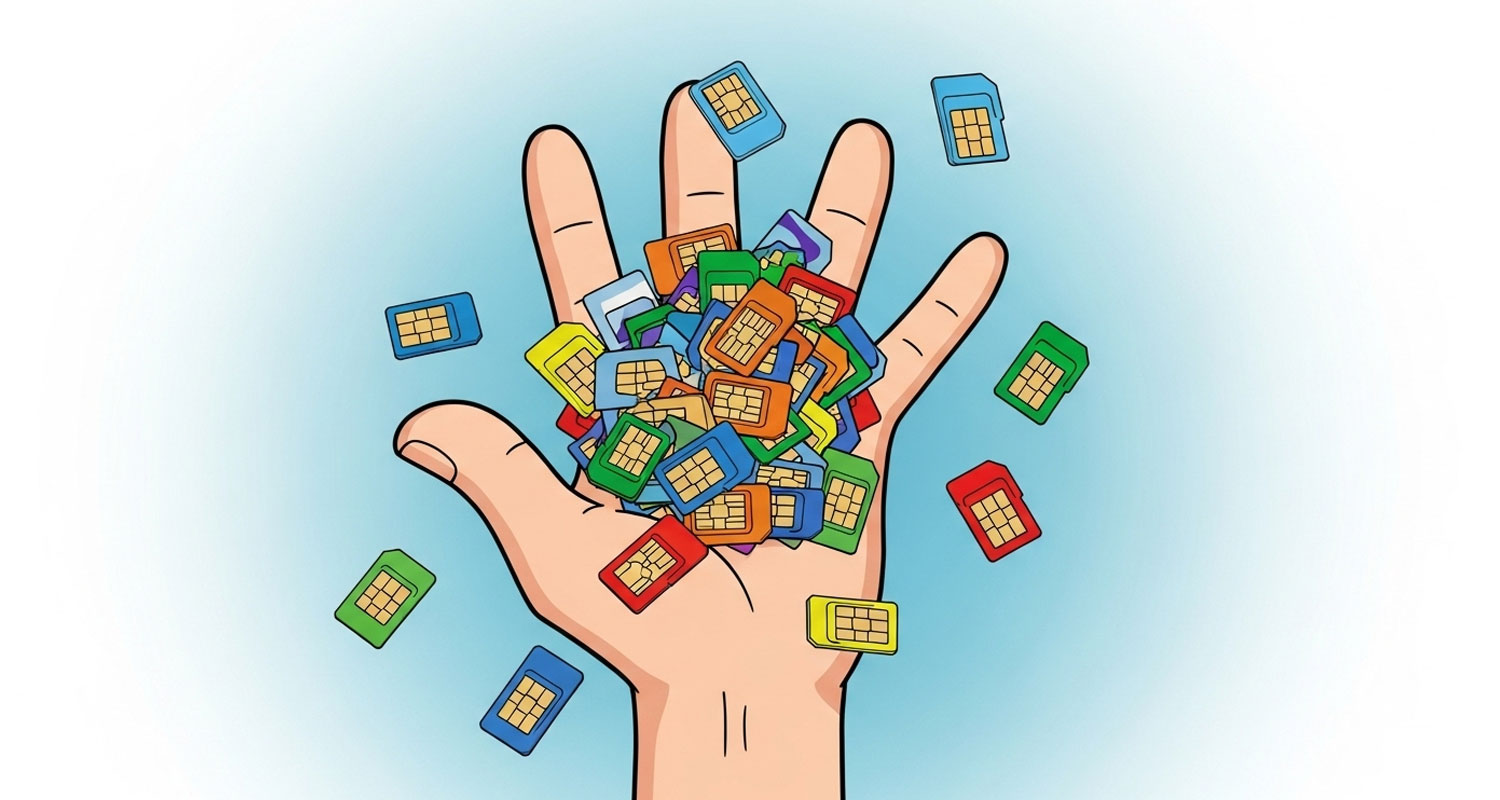
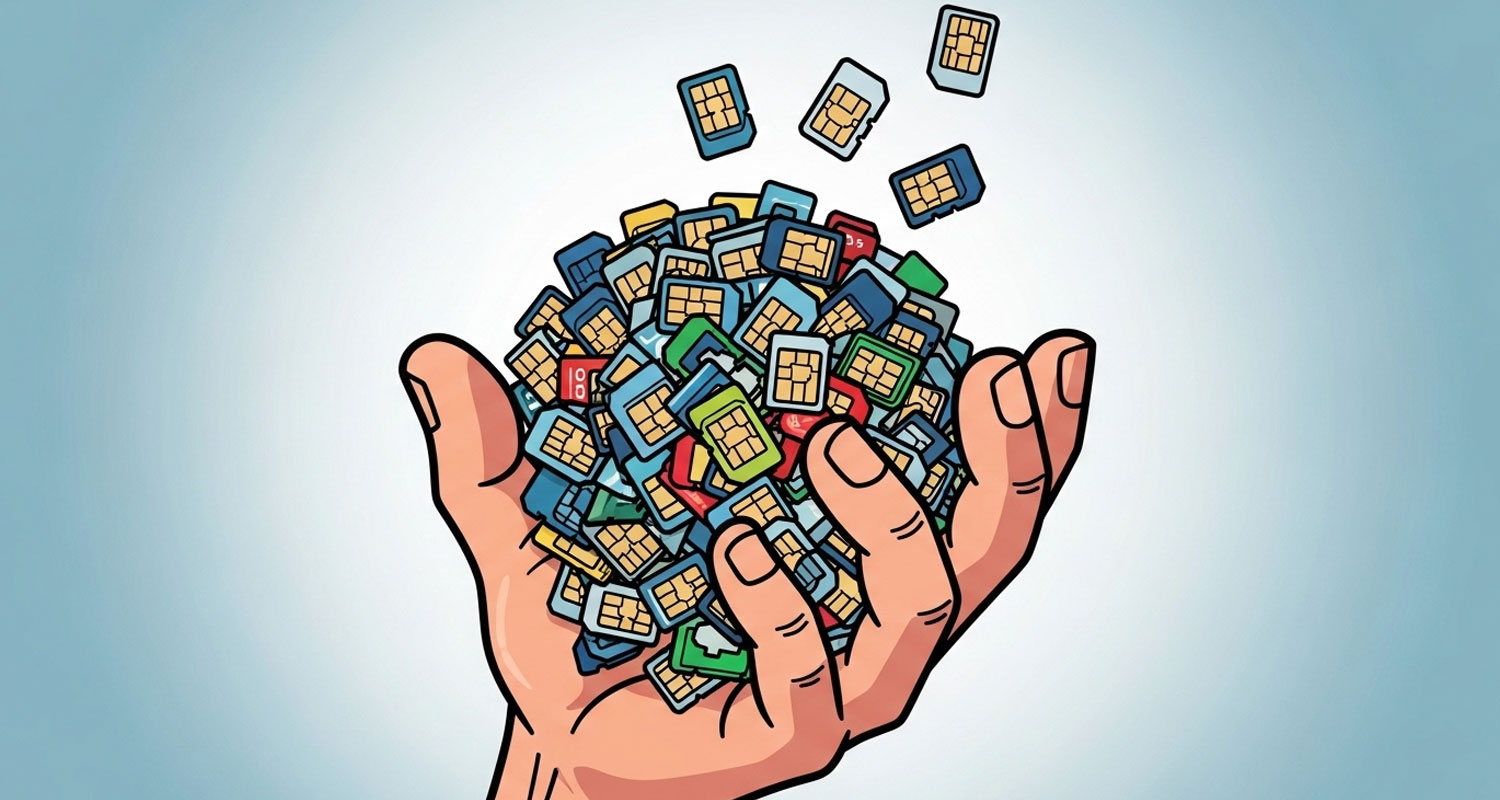
    This is not just a matter of convenience. It’s also an environmental story. Sim cards are small, but the churn is vast. In South Africa, tens of millions of Sim cards are issued and replaced every year, mainly because of customers swapping between networks to chase better deals. Each of those tiny cards is made of plastic and most end up in landfill – or in our rivers and oceans.

    TechCentral has reported extensively on the environmental cost of Sim churn in South Africa, highlighting how the industry generates tons of unnecessary plastic waste annually. Unlike larger pieces of consumer electronics, Sim cards rarely find their way into recycling operations. They are too small, too cheap and too easy to toss away.

    By shifting users onto eSims, Apple is well positioned to push the industry globally towards a future where billions of these plastic cards are never manufactured in the first place. Apple has already made sustainability a central plank of its brand, from recycled aluminium in MacBooks to carbon-neutral packaging. Even if you believe this is little more than marketing by Apple, eliminating physical Sim cards is a logical extension of that strategy – and undoubtedly good news for the environment.

    Advantages

    The advantages for consumers extend beyond environmental gains. Anyone who has fumbled with swapping Sim cards in a foreign airport knows how clunky roaming can be. With eSim, a traveller can land in London, Nairobi or Shanghai and, within minutes, download a local operator profile to their phone. They can even do it before they leave home – no need to find a retail store, no need for plastic packaging and no need to carry a pin to eject a tray.

    Apple said in Tuesday’s keynote that it has already partnered with global carriers to make eSim provisioning seamless, and the trend is accelerating. South African operators, too, have been gradually adding eSim support, as have mobile virtual network operators like Melon Mobile. With Apple leaning in, pressure will only grow for the laggards to catch up.

    Read: Sim card insanity in South Africa

    And, yes, smartphones without Sim trays allow for more space for the battery, which in the case of the ultra-slim iPhone Air is critical. Battery life has long been the Achilles’ heel of slim smartphones. Every fraction of a millimetre reclaimed internally is an opportunity to pack in more capacity. In the case of the iPhone Air, Apple has managed to combine an ultra-thin design with a battery that, on paper, rivals chunkier predecessors. The removal of the Sim slot is one quiet but significant factor behind this feat.
    The irony is that operators have long had an interest in eSim – it reduces logistics costs and curbs fraud – but they have been reluctant to disrupt the status quo. Physical Sim cards are entrenched in business processes, from distribution networks to retail commissions. Left to their own devices, South African operators might have continued dragging their feet.

    But Apple has never shied away from reshaping industry norms. Just as it killed the headphone jack (some users still miss the jack) and nudged the world towards Bluetooth headphones and earbuds, Apple is now wielding its market power to make eSim technology mainstream. Consumers grumbled when AirPods replaced wired headphones; now they barely remember life before Bluetooth. Expect a similar arc with eSim.

    Read: South Africa must tackle Sim card fraud to escape FATF grey list

    For South Africa, the transition will not be without challenges. Regulatory frameworks, operator readiness and consumer education all have to align. But the writing is on the wall: physical Sim cards are living on borrowed time. The country’s high levels of Sim churn – and the environmental toll that comes with it – make the case for eSim adoption stronger here than almost anywhere else.  – © 2025 NewsCentral Media

    Get breaking news from TechCentral on WhatsApp. Sign up here.

    Don’t miss:

    iPhone Air steals the show at Apple’s 2025 launch event


    Apple iPhone 17 Air iPhone Air
    WhatsApp YouTube Follow on Google News Add as preferred source on Google
    Share. Facebook Twitter LinkedIn WhatsApp Telegram Email Copy Link
    Previous ArticleTymeBank rolls out PayShap Request for merchant partners
    Next Article Eskom kicks off EV roll-out, targets full distribution fleet electrification by 2035

    Related Posts

    AI chatbots are coming to Apple CarPlay

    AI chatbots are coming to Apple CarPlay

    8 February 2026
    Google goes from laggard to leader in AI

    Google goes from laggard to leader in AI

    5 February 2026
    Apple acquires audio AI start-up Q.ai

    Apple acquires audio AI start-up Q.ai

    30 January 2026
    Company News
    The skills gap is a thinking gap: why South African employers can't find problem solvers

    The skills gap is a thinking gap: why SA employers can’t find problem solvers

    6 February 2026
    Vox Kiwi Wireless: fibre-like broadband for South African homes

    Vox Kiwi Wireless: fibre-like broadband for South African homes

    5 February 2026
    NEC XON achieves an African first with full Fortinet accreditation - Ian Kruger

    NEC XON achieves an African first with full Fortinet accreditation

    5 February 2026
    Opinion
    South Africa's skills advantage is being overlooked at home - Richard Firth

    South Africa’s skills advantage is being overlooked at home

    29 January 2026
    Why Elon Musk's Starlink is a 'hard no' for me - Songezo Zibi

    Why Elon Musk’s Starlink is a ‘hard no’ for me

    26 January 2026
    South Africa's new fibre broadband battle - Duncan McLeod

    South Africa’s new fibre broadband battle

    20 January 2026

    Subscribe to Updates

    Get the best South African technology news and analysis delivered to your e-mail inbox every morning.

    Latest Posts
    Eskom lifts load reduction for 140 000 customers

    Eskom lifts load reduction for 140 000 customers

    8 February 2026
    Crypto firm accidentally sends R700-billion in bitcoin to its users

    Crypto firm accidentally sends R700-billion in bitcoin to its users

    8 February 2026
    AI chatbots are coming to Apple CarPlay

    AI chatbots are coming to Apple CarPlay

    8 February 2026
    South Africa's stablecoin silence is becoming a policy failure

    South Africa’s stablecoin silence is becoming a policy failure

    6 February 2026
    © 2009 - 2026 NewsCentral Media
    • Cookie policy (ZA)
    • TechCentral – privacy and Popia

    Type above and press Enter to search. Press Esc to cancel.

    Manage consent

    TechCentral uses cookies to enhance its offerings. Consenting to these technologies allows us to serve you better. Not consenting or withdrawing consent may adversely affect certain features and functions of the website.

    Functional Always active
    The technical storage or access is strictly necessary for the legitimate purpose of enabling the use of a specific service explicitly requested by the subscriber or user, or for the sole purpose of carrying out the transmission of a communication over an electronic communications network.
    Preferences
    The technical storage or access is necessary for the legitimate purpose of storing preferences that are not requested by the subscriber or user.
    Statistics
    The technical storage or access that is used exclusively for statistical purposes. The technical storage or access that is used exclusively for anonymous statistical purposes. Without a subpoena, voluntary compliance on the part of your Internet Service Provider, or additional records from a third party, information stored or retrieved for this purpose alone cannot usually be used to identify you.
    Marketing
    The technical storage or access is required to create user profiles to send advertising, or to track the user on a website or across several websites for similar marketing purposes.
    • Manage options
    • Manage services
    • Manage {vendor_count} vendors
    • Read more about these purposes
    View preferences
    • {title}
    • {title}
    • {title}