Close Menu
TechCentralTechCentral

    Subscribe to the newsletter

    Get the best South African technology news and analysis delivered to your e-mail inbox every morning.

    Facebook X (Twitter) YouTube LinkedIn
    WhatsApp Facebook X (Twitter) LinkedIn YouTube
    TechCentralTechCentral
    • News
      So, who exactly will buy Apple's R50 000 iPhone Duo

      Why Apple can’t tell you who its R50 000 iPhone is for

      11 September 2026
      South Africa is behind its neighbours on the plumbing of digital IDs

      South Africa is behind its neighbours on the plumbing of digital IDs

      11 September 2026
      South Africa to extradite US cyberfraud-gang suspects to US

      South Africa to extradite cyberfraud-gang suspects to US

      11 September 2026
      Newspaper group Caxton deploys AI editors

      Newspaper group Caxton deploys AI copy editors

      11 September 2026
      'There are no adults in the room': the AI safety exodus

      ‘There are no adults in the room’: the AI safety exodus

      11 September 2026
    • World
      'This is not circular': Jensen Huang defends $3.5-billion MediaTek deal

      ‘This is not circular’: Jensen Huang defends $3.5-billion MediaTek deal

      2 September 2026
      AI-generated music banned from Australian charts

      AI-generated music banned from Australian charts

      26 August 2026
      Traders brace for a R4.5-trillion swing in Nvidia's value

      Traders brace for a R4.5-trillion swing in Nvidia’s value

      25 August 2026
      Russia building its own Starlink - and faster than expected - Vadym Skibitskyi

      Russia building its own Starlink – and faster than expected

      11 August 2026
      Meta AI will now tell parents if their teen is in crisis

      Meta AI will now tell parents if their teen is in crisis

      17 July 2026
    • In-depth
      Google DeepMind CEO Demis Hassabis. Image: John Sears

      The plan to stop AI from breaking the world

      16 July 2026
      The internet has a Strait of Hormuz problem

      The internet has a Strait of Hormuz problem

      15 July 2026
      AI boom sparks rally, frenzy and fear

      AI boom sparks rally, frenzy and fear

      11 June 2026
      Every plug-in hybrid on sale in South Africa, ranked by price - Lamborghini Temerario

      Every plug-in hybrid on sale in South Africa, ranked by price

      7 June 2026
      What Wi-Fi 8 will mean for wireless networks

      What Wi-Fi 8 will mean for wireless networks

      1 June 2026
    • TCS
      Meet the CIO | Shoprite's Chris Shortt on what a supermarket becomes

      Meet the CIO | Shoprite’s Chris Shortt on what a supermarket becomes

      9 September 2026
      Rubicon's EV charging network is profitable - and growing fast - Watts & Wheels

      Rubicon’s EV charging network is profitable – and growing fast

      8 September 2026
      Winstone Jordaan on building a national EV charging network

      Winstone Jordaan on building a national EV charging network

      2 September 2026
      Watts & Wheels S1E8: 'Tesla lands in Africa, just not here'

      Watts & Wheels S1E8: ‘Tesla lands in Africa, just not here’

      24 August 2026
      TCS | Herotel CEO Van Zyl Botha on beating Starlink to South Africa

      TCS | Herotel CEO Van Zyl Botha on beating Starlink to South Africa

      14 August 2026
    • Opinion
      The fragile joint in the Capitec machine - Pambos Soteriades

      The R197-billion market the banks can’t reach

      25 August 2026
      South African tech's compounding debt problem - Jannie van Zyl

      Management consulting as we know it is over

      21 August 2026
      South African tech's compounding debt problem - Jannie van Zyl

      The most dangerous customer is the quiet one

      10 August 2026
      South African tech's compounding debt problem - Jannie van Zyl

      South African tech’s compounding debt problem

      29 July 2026
      The fragile joint in the Capitec machine - Pambos Soteriades

      Best network, worst vibes: the puzzle of SA telecoms

      20 July 2026
    • Company Hubs
      • 1Stream
      • Africa Data Centres
      • AfriGIS
      • Altron Digital Business
      • Altron Document Solutions
      • Altron Group
      • Arctic Wolf
      • Ascent Technology
      • AvertITD
      • BBD
      • Braintree
      • CallMiner
      • CambriLearn
      • CM.com
      • Contactable
      • CYBER1 Solutions
      • Digicloud Africa
      • Digimune
      • Domains.co.za
      • ESET
      • Euphoria Telecom
      • HOSTAFRICA
      • Incredible Business
      • iONLINE
      • IQbusiness
      • Iris Network Systems
      • Kaspersky
      • LSD Open
      • Mitel
      • NEC XON
      • Netstar
      • Network Platforms
      • Next DLP
      • Ovations
      • Paracon
      • Paratus
      • Q-KON
      • SevenC
      • SkyWire
      • Solid8 Technologies
      • Telit Cinterion
      • Telviva
      • Tenable
      • Vertiv
      • Videri Digital
      • Vodacom Business
      • Vox
      • Wipro
      • Workday
      • XLink
    • Sections
      • AI and machine learning
      • Banking
      • Broadcasting and Media
      • Cloud services
      • Contact centres and CX
      • Cryptocurrencies
      • Education and skills
      • Electronics and hardware
      • Energy and sustainability
      • Enterprise software
      • Financial services
      • HealthTech
      • Information security
      • Internet and connectivity
      • Internet of Things
      • Investment
      • IT services
      • Lifestyle
      • Policy and regulation
      • Public sector
      • Retail and e-commerce
      • Satellite communications
      • Science
      • SMEs and start-ups
      • Social media
      • Talent and leadership
      • Telecoms
      • Watts & Wheels
    • Events
    • Advertise
    TechCentralTechCentral
    Home » Opinion » Andries Brink » SA needs an independent, hi-tech central bank

    SA needs an independent, hi-tech central bank

    By Andries Brink12 September 2018
    Twitter LinkedIn Facebook WhatsApp Email Telegram Copy Link
    Get breaking news on WhatsApp

    Lower costs and better access to investment are fundamental for growth and jobs. Those advantages become reality when you apply the appropriate technologies. But technology can be risky, and everyone prefers a stable hand to help guide the process.

    The South African Reserve Bank knows this, which is why it pioneered Project Khokha to drive consensus and adoption of blockchain systems in South Africa’s financial sector. It is a highly proactive action, similar to other astute emerging markets such as Dubai and Singapore.

    Blockchain or distributed ledger systems are fairly new. Setting aside all the buzz around cryptocurrencies, at its root a blockchain system is a fantastic trust authority that is based on a transparent smart contract. Many different systems maintain a ledger independently from each other, so a transaction can be vetted automatically by simply comparing ledgers. In other words, no cooking the books because, as has been famously quipped, a computer can’t take an envelope!

    What is so special about this?

    Project Khokha is a highly proactive action, similar to other astute emerging markets such as Dubai and Singapore

    Blockchain is a new way to enforce trust. It disintermediates the middlemen and instead uses a ledger replicated between many different machines to underwrite something’s veracity. This increases the speed of agreement between parties and, when designed properly, drastically reduces the costs involved. Through smart contracts, it can protect lenders and borrowers alike, creating an optimised environment for entrepreneurship. It also combats corruption and disables patronage networks.

    But that isn’t the story here. The real headline belongs to the Reserve Bank’s proactive attitude. Through Project Khokha, it is helping guide South Africa into a hi-tech future that benefits everyone. It creates the stability that others can build upon, leading to more innovation and job creation. This has long been the crucial role of the Bank: it maintains the course so that others can flourish on the stability it provides.

    It’s no wonder that the World Economic Forum recognised South African banks as the second most sound globally. Despite significant body blows in recent years, the South African economy has maintained much of its resilience and remains attractive to investors. That is not by accident — it has everything to do with sound policy and vision from the Reserve Bank.

    Regulation

    South Africa has some of the best industry self-regulation bodies. Basa, Pasa and numerous subcommittees continue to do excellent work, unhindered by external influence. In the capital markets, the JSE and Strate are solid institutions that facilitate efficient trade and capital flow.

    But it’s a culture that can only thrive if the Reserve Bank remains politically agnostic. In recent months, calls for nationalising the Bank have grown. There is a view that a central bank controlled by the government is the best way to create gains for South Africa’s people. But both theory and real-world examples don’t agree. The Bank’s track record proves that a non-public-sector entity can take on those roles to the benefit of all.

    Recently, some have jumped on the Bank’s shortcomings as a reason for wanting to end its independence. Indeed, the Bank doesn’t have a spotless record. Other than more recent examples such as African Bank and VBS, it also stumbled on the Tier II banking shutdown and the 1998 mini-crisis. But no institution is perfect.
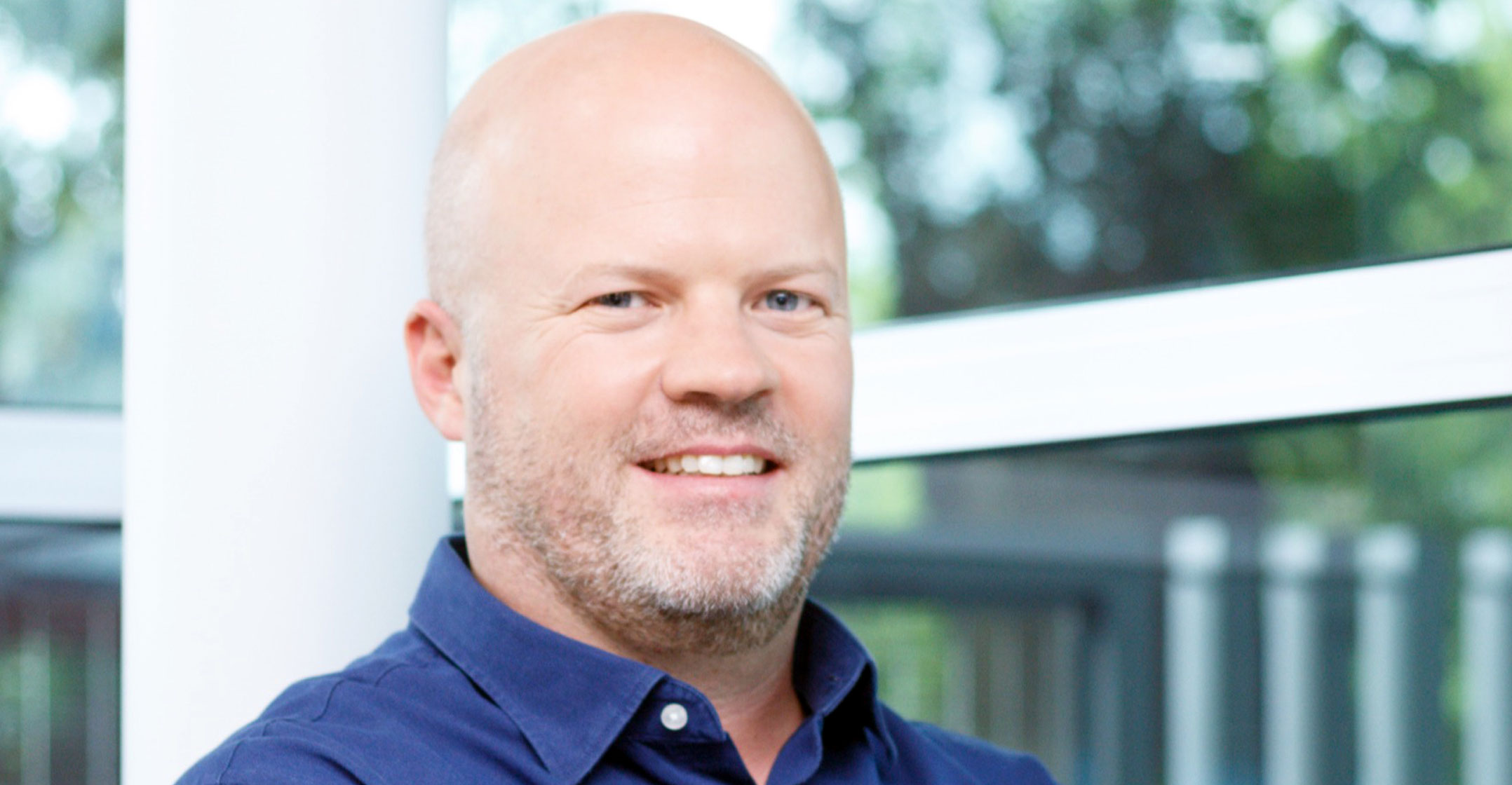
    The author, Andries Brink, argues that by supporting blockchain technologies, the Reserve Bank is saying it supports self-regulation by consensus

    It’s impossible to regulate comprehensively to avoid utmost greed, such as at African Bank, and graft as we saw at VBS. There is also no proof that nationalised banks are any more effective at preventing such extreme abuses. The Reserve Bank is actually very effective. Consider how decisively it acted with African Bank, managing to turn it around in just two years. There are banks in developed countries that still haven’t quite recovered from the 2009 crisis. We really undervalue the effectiveness and stability we get from the Reserve Bank.

    By supporting blockchain technologies, the Bank is saying it supports self-regulation by consensus, based on transparent contracts as a hi-tech addition to normal bank regulation. It’s demonstrating it is willing and able to move with the times while remaining solid in the execution of core responsibilities.

    A state-run Reserve Bank will result in the opposite: Venezuela

    Technology is creating positive change. In the wake of the Tier II crisis, new challenger banks used technology to fill the vacuum and upset incumbents. Those challengers became Capitec and Discovery and now include Bidvest and Sasfin. They were able to take risks in good faith, knowing that the right policies and support were in place.

    Such support doesn’t materialise out of thin air. They require an institution of vision and drive to back them, as the Bank is doing. Blockchain is just one example: the world is changing fast through numerous digital technologies and the countries that can’t adapt will become the paupers of the 21st century. A technologically progressive and visionary Reserve Bank holds the keys to South Africa’s future.

    This is not possible if the Bank isn’t independent of politics.

    South Africa to remain self-regulated and properly regulated by independent and excellent institutions such as the Bank is an economic imperative. Those uncomfortable about all the tax-funded bailouts of rogue banks should support an independent Bank because it stands for innovation, trust and value. A state-run Reserve Bank will result in the opposite: Venezuela.

    • Andries Brink is CEO of Andile Solutions

    Add TechCentral as a preferred source on GoogleFollow TechCentral on Google NewsGet breaking news on WhatsApp


    Andries Brink Reserve Bank
    WhatsApp YouTube
    Share. Facebook Twitter LinkedIn WhatsApp Telegram Email Copy Link
    Previous ArticleNigerian authorities have overreached: MTN
    Next Article Anger as EU votes in favour of new online copyright rules

    Related Posts

    If it quacks like a duck: Kganyago on regulating fintechs - Reserve Bank governor Lesetja Kganyago

    If it quacks like a duck: Kganyago on regulating fintechs

    1 September 2026
    DA MP's fintech denies clients were kept in the dark - Mark Burke

    DA MP’s fintech denies clients were kept in the dark

    19 August 2026
    South Afircan inflation breaks its upward run

    South African inflation breaks its upward run

    19 August 2026
    Company News
    Why businesses are moving n8n onto their own servers - Domains.co.za

    Why businesses are moving n8n onto their own servers

    11 September 2026
    Nitda, NDPC and Galaxy Backbone back CyFrica 2026

    Nitda, NDPC and Galaxy Backbone back CyFrica 2026

    11 September 2026
    Can an online school produce a scientist? CambriLearn has an independent answer

    Can an online school produce a scientist? CambriLearn has an independent answer

    9 September 2026
    Opinion
    The fragile joint in the Capitec machine - Pambos Soteriades

    The R197-billion market the banks can’t reach

    25 August 2026
    South African tech's compounding debt problem - Jannie van Zyl

    Management consulting as we know it is over

    21 August 2026
    South African tech's compounding debt problem - Jannie van Zyl

    The most dangerous customer is the quiet one

    10 August 2026

    Subscribe to Updates

    Get the best South African technology news and analysis delivered to your e-mail inbox every morning.

    Latest Posts
    So, who exactly will buy Apple's R50 000 iPhone Duo

    Why Apple can’t tell you who its R50 000 iPhone is for

    11 September 2026
    South Africa is behind its neighbours on the plumbing of digital IDs

    South Africa is behind its neighbours on the plumbing of digital IDs

    11 September 2026
    South Africa to extradite US cyberfraud-gang suspects to US

    South Africa to extradite cyberfraud-gang suspects to US

    11 September 2026
    Newspaper group Caxton deploys AI editors

    Newspaper group Caxton deploys AI copy editors

    11 September 2026
    © 2009 - 2026 NewsCentral Media
    Built and maintained by Chronon
    • Cookie policy (ZA)
    • TechCentral – privacy and Popia

    Type above and press Enter to search. Press Esc to cancel.

    Manage consent

    TechCentral uses cookies to enhance its offerings. Consenting to these technologies allows us to serve you better. Not consenting or withdrawing consent may adversely affect certain features and functions of the website.

    Functional Always active
    The technical storage or access is strictly necessary for the legitimate purpose of enabling the use of a specific service explicitly requested by the subscriber or user, or for the sole purpose of carrying out the transmission of a communication over an electronic communications network.
    Preferences
    The technical storage or access is necessary for the legitimate purpose of storing preferences that are not requested by the subscriber or user.
    Statistics
    The technical storage or access that is used exclusively for statistical purposes. The technical storage or access that is used exclusively for anonymous statistical purposes. Without a subpoena, voluntary compliance on the part of your Internet Service Provider, or additional records from a third party, information stored or retrieved for this purpose alone cannot usually be used to identify you.
    Marketing
    The technical storage or access is required to create user profiles to send advertising, or to track the user on a website or across several websites for similar marketing purposes.
    • Manage options
    • Manage services
    • Manage {vendor_count} vendors
    • Read more about these purposes
    View preferences
    • {title}
    • {title}
    • {title}