Close Menu
TechCentralTechCentral

    Subscribe to the newsletter

    Get the best South African technology news and analysis delivered to your e-mail inbox every morning.

    Facebook X (Twitter) YouTube LinkedIn
    WhatsApp Facebook X (Twitter) LinkedIn YouTube
    TechCentralTechCentral
    • News
      Big Microsoft 365 price increases coming next year

      Big Microsoft price increases coming next year

      5 December 2025
      Vodacom to take control of Safaricom in R36-billion deal - Shameel Joosub

      Vodacom to take control of Safaricom in R36-billion deal

      4 December 2025
      Black Friday goes digital in South Africa as online spending surges to record high

      Black Friday goes digital in South Africa as online spending surges to record high

      4 December 2025
      BYD takes direct aim at Toyota with launch of sub-R500 000 Sealion 5 PHEV

      BYD takes direct aim at Toyota with launch of sub-R500 000 Sealion 5 PHEV

      4 December 2025
      'Get it now': Takealot in new instant deliveries pilot

      ‘Get it now’: Takealot in new instant deliveries pilot

      4 December 2025
    • World
      Amazon and Google launch multi-cloud service for faster connectivity

      Amazon and Google launch multi-cloud service for faster connectivity

      1 December 2025
      Google makes final court plea to stop US breakup

      Google makes final court plea to stop US breakup

      21 November 2025
      Bezos unveils monster rocket: New Glenn 9x4 set to dwarf Saturn V

      Bezos unveils monster rocket: New Glenn 9×4 set to dwarf Saturn V

      21 November 2025
      Tech shares turbocharged by Nvidia's stellar earnings

      Tech shares turbocharged by stellar Nvidia earnings

      20 November 2025
      Config file blamed for Cloudflare meltdown that disrupted the web

      Config file blamed for Cloudflare meltdown that disrupted the web

      19 November 2025
    • In-depth
      Jensen Huang Nvidia

      So, will China really win the AI race?

      14 November 2025
      Valve's Linux console takes aim at Microsoft's gaming empire

      Valve’s Linux console takes aim at Microsoft’s gaming empire

      13 November 2025
      iOCO's extraordinary comeback plan - Rhys Summerton

      iOCO’s extraordinary comeback plan

      28 October 2025
      Why smart glasses keep failing - no, it's not the tech - Mark Zuckerberg

      Why smart glasses keep failing – it’s not the tech

      19 October 2025
      BYD to blanket South Africa with megawatt-scale EV charging network - Stella Li

      BYD to blanket South Africa with megawatt-scale EV charging network

      16 October 2025
    • TCS
      TCS+ | How Cloud on Demand helps partners thrive in the AWS ecosystem - Odwa Ndyaluvane and Xenia Rhode

      TCS+ | How Cloud On Demand helps partners thrive in the AWS ecosystem

      4 December 2025
      TCS | MTN Group CEO Ralph Mupita on competition, AI and the future of mobile

      TCS | Ralph Mupita on competition, AI and the future of mobile

      28 November 2025
      TCS | Dominic Cull on fixing South Africa's ICT policy bottlenecks

      TCS | Dominic Cull on fixing South Africa’s ICT policy bottlenecks

      21 November 2025
      TCS | BMW CEO Peter van Binsbergen on the future of South Africa's automotive industry

      TCS | BMW CEO Peter van Binsbergen on the future of South Africa’s automotive industry

      6 November 2025
      TCS | Why Altron is building an AI factory - Bongani Andy Mabaso

      TCS | Why Altron is building an AI factory in Johannesburg

      28 October 2025
    • Opinion
      Your data, your hardware: the DIY AI revolution is coming - Duncan McLeod

      Your data, your hardware: the DIY AI revolution is coming

      20 November 2025
      Zero Carbon Charge founder Joubert Roux

      The energy revolution South Africa can’t afford to miss

      20 November 2025
      It's time for a new approach to government IT spend in South Africa - Richard Firth

      It’s time for a new approach to government IT spend in South Africa

      19 November 2025
      How South Africa's broken Rica system fuels murder and mayhem - Farhad Khan

      How South Africa’s broken Rica system fuels murder and mayhem

      10 November 2025
      South Africa's AI data centre boom risks overloading a fragile grid - Paul Colmer

      South Africa’s AI data centre boom risks overloading a fragile grid

      30 October 2025
    • Company Hubs
      • Africa Data Centres
      • AfriGIS
      • Altron Digital Business
      • Altron Document Solutions
      • Altron Group
      • Arctic Wolf
      • AvertITD
      • Braintree
      • CallMiner
      • CambriLearn
      • CYBER1 Solutions
      • Digicloud Africa
      • Digimune
      • Domains.co.za
      • ESET
      • Euphoria Telecom
      • Incredible Business
      • iONLINE
      • IQbusiness
      • Iris Network Systems
      • LSD Open
      • NEC XON
      • Netstar
      • Network Platforms
      • Next DLP
      • Ovations
      • Paracon
      • Paratus
      • Q-KON
      • SevenC
      • SkyWire
      • Solid8 Technologies
      • Telit Cinterion
      • Tenable
      • Vertiv
      • Videri Digital
      • Vodacom Business
      • Wipro
      • Workday
      • XLink
    • Sections
      • AI and machine learning
      • Banking
      • Broadcasting and Media
      • Cloud services
      • Contact centres and CX
      • Cryptocurrencies
      • Education and skills
      • Electronics and hardware
      • Energy and sustainability
      • Enterprise software
      • Financial services
      • Information security
      • Internet and connectivity
      • Internet of Things
      • Investment
      • IT services
      • Lifestyle
      • Motoring
      • Public sector
      • Retail and e-commerce
      • Satellite communications
      • Science
      • SMEs and start-ups
      • Social media
      • Talent and leadership
      • Telecoms
    • Events
    • Advertise
    TechCentralTechCentral
    Home » In-depth » SA’s state-owned companies: a complex history that’s seldom told

    SA’s state-owned companies: a complex history that’s seldom told

    By The Conversation27 July 2019
    Twitter LinkedIn Facebook WhatsApp Email Telegram Copy Link
    News Alerts
    WhatsApp
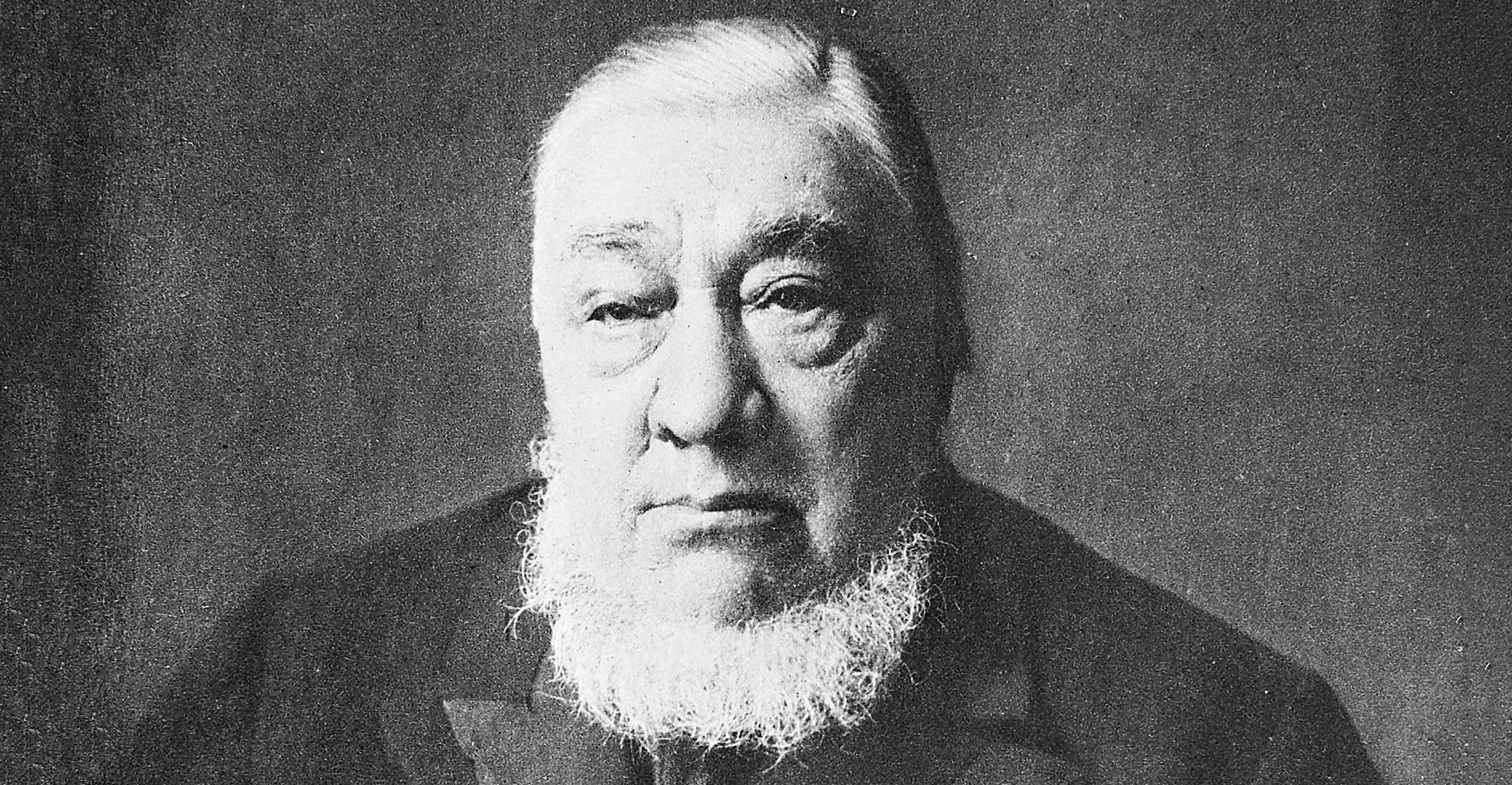
    Paul Kruger

    The problems of South Africa’s state-owned enterprises are in the headlines every day. Yet many have existed for over 80 years.

    Why were they established in the first place and how have they survived this long? Their histories provide clues for their successes and failures.

    State-owned enterprises in South Africa date back to the 19th century when Paul Kruger’s Zuid Afrikaansche Republiek tried to promote local industries to stave off British control. Kruger’s government erected high tariffs against imports of many consumer goods as well as industrial goods used by the mining industry. At the same time, it handed out monopoly concessions for local manufacture. In most cases, foreign capital still managed to control these enterprises — the most important for railway service and electricity generation for the mines.

    Although both Eskom and Iscor were established under state auspices, they enjoyed only tepid government support and faced stiff competition

    Kruger’s aim of fostering economic independence through local industries was utterly defeated with the British victory in the South African War in 1902. But the connection between economy and state lived on through the railway and electricity concessions. By the 1920s, the expanding railway enterprise — the South African Railways and Harbours, now Transnet — needed more and cheaper electricity, and steel for rails. In 1923, the Smuts government established the Electricity Supply Commission (now Eskom) in part to serve the railways and the growing mining industry.

    In 1928, Prime Minister Barry Hertzog established the Iron and Steel Corporation (Iscor) to produce cheap steel rails for the South African Railways and Harbour and to create some independence from the profit-seeking European steel makers.

    Dumping

    Although both Eskom and Iscor were established under state auspices, they enjoyed only tepid government support and faced stiff competition. They were established at a time when nearly all industrial goods and many consumer goods were imported at great cost. In the case of electricity, the major market — the Rand gold mines — was already under contract to the private Victoria Fall Power Company . And in the case of steel, a European cartel of steel makers was ready to dump cheap steel on the South African market in order to kill off local production. Some foreign firms established small operations inside the country, but with profits still flowing back to overseas investors.

    Initially, both state corporations survived through close partnerships with their private competitors. In the case of Eskom, the power supplier agreed to provide electricity to the private Victoria Fall Power Company at cost while the company passed it onto their mining customers at a hefty profit.

    Iscor reached similar agreements with local engineering firms, providing them with raw steel to be fashioned into finished products. In addition, Iscor reached a compromise agreement with European steel producers in 1936. This essentially divided the local market, with Iscor providing approximately one-third of steel goods.

    Even more contentious were the corporations’ labour policies. In the 1920s and 1930s, the white South African government pursued a policy of favouring white people in industrial jobs as a means of alleviating poverty in largely Afrikaans-speaking rural communities. State entities were under the most pressure to hire whites, many unskilled, into their operations. But, facing heavy competition, Iscor could not raise its costs and employed almost as many black people as white people on its factory floor in Pretoria. In fact, most white employees were foreign skilled workers. And the associated coal and iron ore mines (both Iscor and Eskom used vast amounts of coal) had predominantly black workers.

    Both of the first state corporations were dependent on close business relations with private firms, often to their own detriment, and reliance on low labour costs to survive. But they could hardly profit or flourish under such conditions. During the second World War, they were able to establish more successful operations under near monopoly conditions.

    By the end of the war, Eskom posted a loss for the first time in its history while the Victoria Fall Power Company earned handsome profits

    During World War 2, South Africa’s position changed from an importer to an exporter of many industrial and consumer goods. Its normal trading partners — England and Germany — were obviously preoccupied with supporting their own wartime needs. In fact, England called on South Africa to provide goods from bullets to blankets to help the Allied effort. The intensified local manufacture of so many goods placed pressure on Eskom and Iscor, but also provided great opportunities for expansion.

    In Eskom’s case, the greediness of the private Victoria Fall Power Company throughout the war persuaded private capitalists that a partnership with the state would be beneficial. Electricity demand from the mines and the wartime factories on the Witwatersrand (Rand) skyrocketed during the war. The cost of electricity to the mines rose by 10%. By the end of the war, Eskom posted a loss for the first time in its history while the Victoria Fall Power Company earned handsome profits.

    National grid

    By 1948, Eskom had succeeded in expropriating the private company with assistance from the largest mining company in the country — Anglo American Corporation — which provided money for the buyout. Eskom then linked all power stations in the country into a national grid allowing for cheaper production of electricity and lower prices to its customers.

    Similarly, Iscor was able to eliminate competition through partnerships with Anglo American. Iscor needed to find local engineering firms that would process its raw steel into war materiel. Many were either foreign or were owned by the Lewis and Marks investment company that also operated a competing steel company, Union Steel.

    In 1945, Anglo American — which became Iscor’s partner in all of the major engineering firms — bought out the company. Since Anglo was principally a customer for their goods, it was interested in low prices and not in reaping profits through steel manufacture.

    The Nationalist government initially refused to provide the funds for further expansion of either Iscor’s or Eskom’s facilities

    The change of government in 1948 led to a brief change in policies toward the state corporations. The Nationalist government, wary of foreign and even local capital and suspicious of the state corporations’ ties to Anglo American, initially refused to provide the funds for further expansion of either Iscor’s or Eskom’s facilities. Partnerships with the local engineering firms were likewise ditched.

    But by the early 1950s, realising the advantages to such arrangements, the government relented and the old ties were renewed, leading to massive increases in production by both firms. In addition, the government looked the other way as it became apparent that black workers were being used extensively at both firms — and even as semi-skilled workers at Iscor — yielding a wage bill that was less than a quarter what it was for whites.

    Ultimately, the early state corporations could only survive by relying heavily on support from private capital in the form of partnerships and outright financial support, and the extensive use of disenfranchised and thus lower-cost labour to ensure low charges to its customers.

    Capital flight

    Yet this structure could not survive the flight of capital and the enfranchisement of the workforce that followed the democratic transition of the 1990s.

    Iscor’s former partners fled to more lucrative parts of the world and the steel corporation was sold to private interests; and Eskom faced an expanding demand for residential electricity without the financial and marketing support of the mining houses.

    Their survival now depends on adapting to the dramatic changes in South Africa’s post-apartheid economy rather than relying on their old strategies.

    This article is based on a book, Manufacturing Apartheid: State Corporations in South Africa, written by Nancy L Clark. Published in 1994, it is now out of print.The Conversation

    • Nancy L Clark is dean and professor emeritus, Louisiana State University
    • This article is republished from The Conversation under a Creative Commons licence.


    Anglo American Eskom Iscor Paul Kruger top Transnet
    Subscribe to TechCentral Subscribe to TechCentral
    Share. Facebook Twitter LinkedIn WhatsApp Telegram Email Copy Link
    Previous ArticleTrump vows to retaliate against French digital tax
    Next Article Young Instagram users give up privacy in search of metrics

    Related Posts

    Eskom targets 2027 approval for new 5.2GW nuclear facility

    Eskom targets 2027 approval for new 5.2GW nuclear facility

    2 December 2025
    Eskom profit surges 37% as load shedding virtually vanishes

    Eskom profit surges 37% as load shedding virtually vanishes

    28 November 2025
    Big step forward in opening South Africa's electricity market - NTCSA

    Big step forward in opening South Africa’s electricity market

    28 November 2025
    Company News
    AI is not a technology problem - iqbusiness

    AI is not a technology problem – iqbusiness

    5 December 2025
    Telcos are sitting on a data gold mine - but few know what do with it - Phillip du Plessis

    Telcos are sitting on a data gold mine – but few know what do with it

    4 December 2025
    Unlock smarter computing with your surface Copilot+ PC

    Unlock smarter computing with your Surface Copilot+ PC

    4 December 2025
    Opinion
    Your data, your hardware: the DIY AI revolution is coming - Duncan McLeod

    Your data, your hardware: the DIY AI revolution is coming

    20 November 2025
    Zero Carbon Charge founder Joubert Roux

    The energy revolution South Africa can’t afford to miss

    20 November 2025
    It's time for a new approach to government IT spend in South Africa - Richard Firth

    It’s time for a new approach to government IT spend in South Africa

    19 November 2025

    Subscribe to Updates

    Get the best South African technology news and analysis delivered to your e-mail inbox every morning.

    Latest Posts
    Big Microsoft 365 price increases coming next year

    Big Microsoft price increases coming next year

    5 December 2025
    AI is not a technology problem - iqbusiness

    AI is not a technology problem – iqbusiness

    5 December 2025
    Vodacom to take control of Safaricom in R36-billion deal - Shameel Joosub

    Vodacom to take control of Safaricom in R36-billion deal

    4 December 2025
    Black Friday goes digital in South Africa as online spending surges to record high

    Black Friday goes digital in South Africa as online spending surges to record high

    4 December 2025
    © 2009 - 2025 NewsCentral Media
    • Cookie policy (ZA)
    • TechCentral – privacy and Popia

    Type above and press Enter to search. Press Esc to cancel.

    Manage consent

    TechCentral uses cookies to enhance its offerings. Consenting to these technologies allows us to serve you better. Not consenting or withdrawing consent may adversely affect certain features and functions of the website.

    Functional Always active
    The technical storage or access is strictly necessary for the legitimate purpose of enabling the use of a specific service explicitly requested by the subscriber or user, or for the sole purpose of carrying out the transmission of a communication over an electronic communications network.
    Preferences
    The technical storage or access is necessary for the legitimate purpose of storing preferences that are not requested by the subscriber or user.
    Statistics
    The technical storage or access that is used exclusively for statistical purposes. The technical storage or access that is used exclusively for anonymous statistical purposes. Without a subpoena, voluntary compliance on the part of your Internet Service Provider, or additional records from a third party, information stored or retrieved for this purpose alone cannot usually be used to identify you.
    Marketing
    The technical storage or access is required to create user profiles to send advertising, or to track the user on a website or across several websites for similar marketing purposes.
    • Manage options
    • Manage services
    • Manage {vendor_count} vendors
    • Read more about these purposes
    View preferences
    • {title}
    • {title}
    • {title}