Close Menu
TechCentralTechCentral

    Subscribe to the newsletter

    Get the best South African technology news and analysis delivered to your e-mail inbox every morning.

    Facebook X (Twitter) YouTube LinkedIn
    WhatsApp Facebook X (Twitter) LinkedIn YouTube
    TechCentralTechCentral
    • News
      Estonia's digital ID lesson for South Africa

      Estonia’s digital ID lesson for South Africa

      4 February 2026
      Vodacom's real growth story isn't mobile

      Vodacom’s real growth story isn’t mobile

      4 February 2026
      Why stablecoins are booming in Africa - Yellow Card MD Lasbery Oludimu

      Why stablecoins are booming in Africa

      4 February 2026
      Prosus inks three-year AWS deal to scale AI across its global portfolio

      Prosus inks three-year AWS deal to scale AI across its global portfolio

      4 February 2026
      South African fintech Lula lands R340m to scale SME working capital - Trevor Gosling

      South African fintech Lula lands R340m to scale SME working capital

      4 February 2026
    • World
      AI won't replace software, says Nvidia CEO amid market rout - Jensen Huang

      AI won’t replace software, says Nvidia CEO amid market rout

      4 February 2026
      Apple acquires audio AI start-up Q.ai

      Apple acquires audio AI start-up Q.ai

      30 January 2026
      SpaceX IPO may be largest in history

      SpaceX IPO may be largest in history

      28 January 2026
      Nvidia throws AI at the weather

      Nvidia throws AI at weather forecasting

      27 January 2026
      Debate erupts over value of in-flight Wi-Fi

      Debate erupts over value of in-flight Wi-Fi

      26 January 2026
    • In-depth
      How liberalisation is rewiring South Africa's power sector

      How liberalisation is rewiring South Africa’s power sector

      21 January 2026
      The top-performing South African tech shares of 2025

      The top-performing South African tech shares of 2025

      12 January 2026
      Digital authoritarianism grows as African states normalise internet blackouts

      Digital authoritarianism grows as African states normalise internet blackouts

      19 December 2025
      TechCentral's South African Newsmakers of 2025

      TechCentral’s South African Newsmakers of 2025

      18 December 2025
      Black Friday goes digital in South Africa as online spending surges to record high

      Black Friday goes digital in South Africa as online spending surges to record high

      4 December 2025
    • TCS
      TCS+ | How Cloud On Demand is helping SA businesses succeed in the cloud - Xhenia Rhode, Dion Kalicharan

      TCS+ | Cloud On Demand and Consnet: inside a real-world AWS partner success story

      30 January 2026
      Watts & Wheels S1E3: 'BYD's Corolla Cross challenger'

      Watts & Wheels S1E3: ‘BYD’s Corolla Cross challenger’

      30 January 2026
      Watts & Wheels S1E3: 'BYD's Corolla Cross challenger'

      Watts & Wheels S1E2: ‘China attacks, BMW digs in, Toyota’s sublime supercar’

      23 January 2026

      TCS+ | Why cybersecurity is becoming a competitive advantage for SA businesses

      20 January 2026
      Watts & Wheels S1E3: 'BYD's Corolla Cross challenger'

      Watts & Wheels: S1E1 – ‘William, Prince of Wheels’

      8 January 2026
    • Opinion
      South Africa's skills advantage is being overlooked at home - Richard Firth

      South Africa’s skills advantage is being overlooked at home

      29 January 2026
      Why Elon Musk's Starlink is a 'hard no' for me - Songezo Zibi

      Why Elon Musk’s Starlink is a ‘hard no’ for me

      26 January 2026
      South Africa's new fibre broadband battle - Duncan McLeod

      South Africa’s new fibre broadband battle

      20 January 2026
      AI moves from pilots to production in South African companies - Nazia Pillay SAP

      AI moves from pilots to production in South African companies

      20 January 2026
      South Africa's new fibre broadband battle - Duncan McLeod

      ANC’s attack on Solly Malatsi shows how BEE dogma trumps economic reality

      14 December 2025
    • Company Hubs
      • Africa Data Centres
      • AfriGIS
      • Altron Digital Business
      • Altron Document Solutions
      • Altron Group
      • Arctic Wolf
      • AvertITD
      • Braintree
      • CallMiner
      • CambriLearn
      • CYBER1 Solutions
      • Digicloud Africa
      • Digimune
      • Domains.co.za
      • ESET
      • Euphoria Telecom
      • Incredible Business
      • iONLINE
      • IQbusiness
      • Iris Network Systems
      • LSD Open
      • NEC XON
      • Netstar
      • Network Platforms
      • Next DLP
      • Ovations
      • Paracon
      • Paratus
      • Q-KON
      • SevenC
      • SkyWire
      • Solid8 Technologies
      • Telit Cinterion
      • Tenable
      • Vertiv
      • Videri Digital
      • Vodacom Business
      • Wipro
      • Workday
      • XLink
    • Sections
      • AI and machine learning
      • Banking
      • Broadcasting and Media
      • Cloud services
      • Contact centres and CX
      • Cryptocurrencies
      • Education and skills
      • Electronics and hardware
      • Energy and sustainability
      • Enterprise software
      • Financial services
      • Information security
      • Internet and connectivity
      • Internet of Things
      • Investment
      • IT services
      • Lifestyle
      • Motoring
      • Public sector
      • Retail and e-commerce
      • Satellite communications
      • Science
      • SMEs and start-ups
      • Social media
      • Talent and leadership
      • Telecoms
    • Events
    • Advertise
    TechCentralTechCentral
    Home » News » Smartwatches: a solution in search of a problem

    Smartwatches: a solution in search of a problem

    By The Conversation11 September 2014
    Twitter LinkedIn Facebook WhatsApp Email Telegram Copy Link
    News Alerts
    WhatsApp
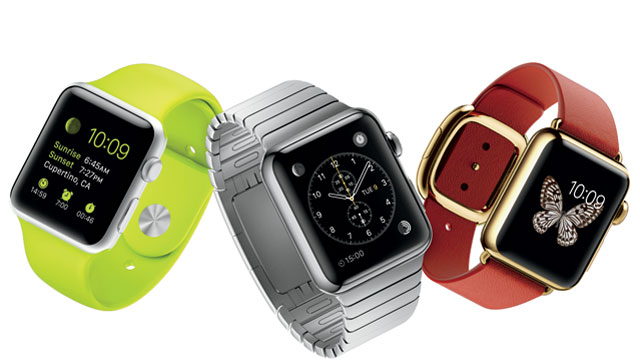
    Apple-Watch-640
    Apple Watch

    Apple’s September 2014 keynote was highly anticipated and #applelive supplanted #indyref, #Ukraine and #ISIS from the Twitter trending leaderboard. A huge part of the hype surrounding it was Tim Cook’s announcement that Apple would be launching an entirely new gizmo — Apple Watch.

    The launch of Apple Watch comes hot on the heels of competitors launching their second generation products last week. Sony has launched SmartWatch 3 and Samsung launched its Gear S. These devices promise to be the next step beyond smartphones, fusing mobile technology and life-logging capacity with a humble watch. Some commentators think this is a moment of disruptive innovation for not just the mobile computing industry, but also for other product categories ranging from watches to healthcare.

    Despite the showy launch event, one big unanswered question remains: do consumers actually want smartwatches? There have been smartwatches on the market already for a year, and the results have been somewhat lacklustre.

    Market research firms have found that one third of smartwatche users abandoned their new gadgets after six months. It is not even clear if the unique selling points of smartwatches are important to users.

    A central plank of Apple strategy for its smartwatch is exploiting the fitness and health apps on the device which allow you to track the number of steps you take a day, your heartbeat, your sleep or even your moods. Research suggests, however, that many smartwatch users are uninterested in these health-related apps.

    So, if people don’t use their smartwatches for tracking their health, what do they use them for? To answer this question, Alberto Rizzoli and I studied how early adopters of smartwatches actually used their devices. We spent more than 300 hours observing and interacting with smartwatch users on online forums. We also interviewed 24 users of smartwatches throughout the world.

    We were surprised to find that most consumers didn’t use most of the functions on their smartwatches. They didn’t use them to surf the Web, answer e-mails, operate most apps or even log vital statistics with health or fitness tracking apps. What they did use their smartwatches for was to monitor the flow of personal information like e-mails, SMS messages and Twitter updates. Users could glance at their watch to see who e-mails were coming from without necessarily opening the message. This helped to quell the anxiety which comes from hearing your phone buzz with a new message and not knowing what the message is.

    We also found that smartwatches were particularly useful to keep track of messages without interrupting the flow of social interaction. They helped users to avoid the embarrassment of having a buzzing smartphone interrupting a meeting or a date. One judge described how he would use his smartwatch to keep an eye on incoming emails when taking evidence in court. We found that if users wanted to do anything beyond checking basic information, they turned to a larger device such as tablet or laptop.

    Another big advantage identified by smartwatch users was that the devices saved them from frantically digging through a bag to find a ringing phone. Having a smartwatch meant the device was always close at hand. This was particularly appreciated by female users who complained about the constant frustration of finding their phone in their handbag. This meant users felt less controlled by their device — a common experience of smartphone users.

    Motorola's Moto 360 smartwatch
    Motorola’s Moto 360 smartwatch

    A surprising finding was that heavy users started to suffer from a phantom device effect. This happened when heavy users who were not wearing the device started compulsively to check their bare wrist for information updates. The people who started to suffer from the phantom device effect were also the people who were most happy with their watch.

    One big ethical issue users did not consider is how these devices will be used to track and collect intimate data about their everyday lives. Most smartwatches have life-logging technologies which collect data about bodily rhythms. These could be used as a potential surveillance device.

    It could also see technology companies selling our most private health information to a whole range of parties such as insurance agencies. After all, prisoners are forced to wear tracking devices, while Apple aims to get consumers to pay hundreds of dollars for the pleasure.

    The constant stream of data about our most intimate information could also lead users to become increasingly narcissistic. In a forthcoming book, Carl Cederstrom and I look at how wearable technology has triggered mounting self-obsession in consumers. Users become more interested in monitoring their own health and happiness than engaging with the world around them. This fuels a wider obsession with our own personal health and happiness that we call “the wellness syndrome”. Far from making people feel better, it often makes them feel increasingly anxious. The Conversation

    So, if you do decide to experiment with entering the world of smartwatches, it’s worth bearing in mind that it might help to manage information overload, but it could become a luxury surveillance device.

    • Andre Spicer is professor of organisational behaviour, Cass Business School at City University London
    • This article was originally published on The Conversation


    Andre Spicer Apple Apple Watch
    WhatsApp YouTube Follow on Google News Add as preferred source on Google
    Share. Facebook Twitter LinkedIn WhatsApp Telegram Email Copy Link
    Previous ArticleAdii Pienaar, SA’s WordPress pioneer
    Next Article Review: Backtracker, a radar for your bike

    Related Posts

    Apple acquires audio AI start-up Q.ai

    Apple acquires audio AI start-up Q.ai

    30 January 2026
    Chip shortage will get worse, Samsung warns

    Chip shortage will get worse, Samsung warns

    29 January 2026
    Reports of the smartphone's impending death are greatly exaggerated

    Reports of the smartphone’s impending death are greatly exaggerated

    28 January 2026
    Company News
    Most business owners don't worry about IT, until they have to - Graeme Millar SevenC

    Most business owners don’t worry about IT – until they have to

    4 February 2026
    Why cloud projects fail - and how three days can fix it - LSD Open

    Why cloud projects fail – and how three days can fix this

    4 February 2026
    Zero downtime, 12 months: XLink raises the bar for mission-critical networks

    Zero downtime, 12 months: XLink raises the bar for mission-critical networks

    4 February 2026
    Opinion
    South Africa's skills advantage is being overlooked at home - Richard Firth

    South Africa’s skills advantage is being overlooked at home

    29 January 2026
    Why Elon Musk's Starlink is a 'hard no' for me - Songezo Zibi

    Why Elon Musk’s Starlink is a ‘hard no’ for me

    26 January 2026
    South Africa's new fibre broadband battle - Duncan McLeod

    South Africa’s new fibre broadband battle

    20 January 2026

    Subscribe to Updates

    Get the best South African technology news and analysis delivered to your e-mail inbox every morning.

    Latest Posts
    Estonia's digital ID lesson for South Africa

    Estonia’s digital ID lesson for South Africa

    4 February 2026
    Vodacom's real growth story isn't mobile

    Vodacom’s real growth story isn’t mobile

    4 February 2026
    Why stablecoins are booming in Africa - Yellow Card MD Lasbery Oludimu

    Why stablecoins are booming in Africa

    4 February 2026
    Prosus inks three-year AWS deal to scale AI across its global portfolio

    Prosus inks three-year AWS deal to scale AI across its global portfolio

    4 February 2026
    © 2009 - 2026 NewsCentral Media
    • Cookie policy (ZA)
    • TechCentral – privacy and Popia

    Type above and press Enter to search. Press Esc to cancel.

    Manage consent

    TechCentral uses cookies to enhance its offerings. Consenting to these technologies allows us to serve you better. Not consenting or withdrawing consent may adversely affect certain features and functions of the website.

    Functional Always active
    The technical storage or access is strictly necessary for the legitimate purpose of enabling the use of a specific service explicitly requested by the subscriber or user, or for the sole purpose of carrying out the transmission of a communication over an electronic communications network.
    Preferences
    The technical storage or access is necessary for the legitimate purpose of storing preferences that are not requested by the subscriber or user.
    Statistics
    The technical storage or access that is used exclusively for statistical purposes. The technical storage or access that is used exclusively for anonymous statistical purposes. Without a subpoena, voluntary compliance on the part of your Internet Service Provider, or additional records from a third party, information stored or retrieved for this purpose alone cannot usually be used to identify you.
    Marketing
    The technical storage or access is required to create user profiles to send advertising, or to track the user on a website or across several websites for similar marketing purposes.
    • Manage options
    • Manage services
    • Manage {vendor_count} vendors
    • Read more about these purposes
    View preferences
    • {title}
    • {title}
    • {title}