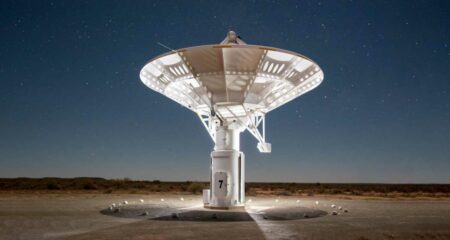
South Africa’s role at the heart of one of the world’s most ambitious scientific instruments moved a step closer to reality this week, as the Square Kilometre Array Observatory announced that its SKA-Mid telescope has achieved a crucial early milestone known as “first fringes”.
The achievement means that two of SKA-Mid’s giant radio dishes have successfully worked together as an interferometer for the first time, proving that the telescope’s core hardware and software systems are functioning as a single, coordinated scientific instrument.
“This is the first true test that all our systems are working together, and that the SKA-Mid telescope is alive as a scientific instrument,” said Philip Diamond, director-general of the SKA Observatory.
While individual dishes have previously been shown to work on their own, Diamond said operating them in concert represents a far more complex technical challenge. That hurdle has now been cleared.
SKA-Mid, like the SKA-Low telescope under construction in Australia, is not a single dish but a vast array of antennas spread across large distances and linked by high-speed optical fibre. When signals from multiple antennas are combined precisely, they act like a single telescope with a diameter equal to the distance between the furthest antennas.
“Fringes” are produced when signals from two or more antennas are successfully combined, demonstrating that the timing, synchronisation, signal processing and control systems are all working correctly.
For this test, engineers used two 15m-diameter SKA-Mid dishes to observe a distant radio galaxy about 2.6 billion light years away.
‘Working as designed’
“This source has been well studied, so we know what the signal should look like – and that’s exactly what we observed,” said Betsey Adams, commissioning scientist for SKA-Mid. “It confirms that our hardware and software systems are working as designed.”
Adams said the milestone validates everything from the telescope manager software that coordinates the dishes’ movement across the sky, to the cryogenic receivers cooled to around -250°C, the ultra-precise timing system accurate to a billionth of a second, and the correlator that aligns and processes the data.
Read: Nasa’s Jim Adams on aliens, Mars, the SKA and more
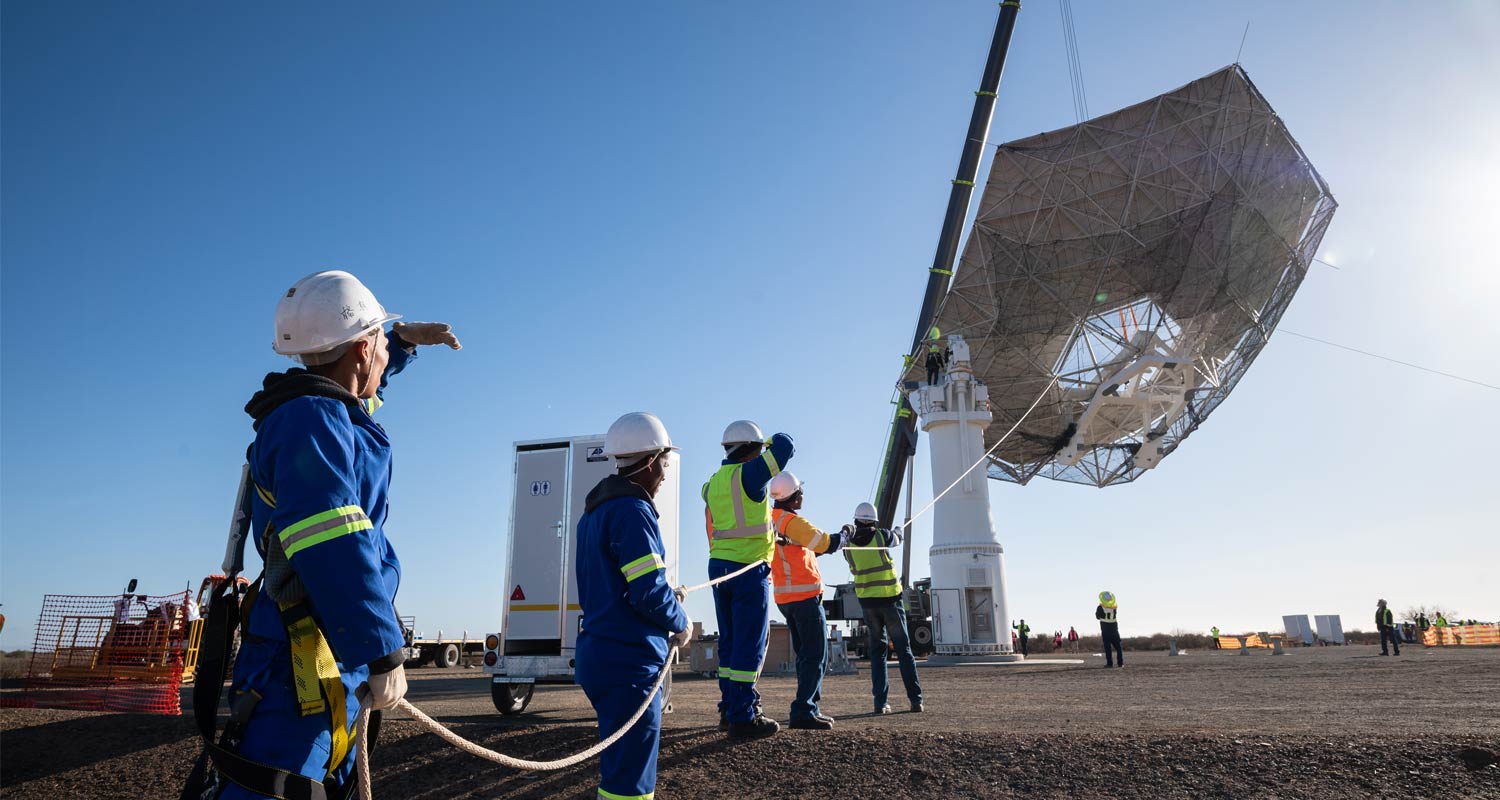
Seven SKA-Mid dish structures have now been assembled at the telescope site in South Africa’s Northern Cape, close to Carnarvon. A further 12 dishes are en route from manufacturer CETC54 in China.
Once complete, SKA-Mid will comprise 197 dishes. This total includes the integration of the existing MeerKAT array, which was built and is operated by the South African Radio Astronomy Observatory (Sarao).
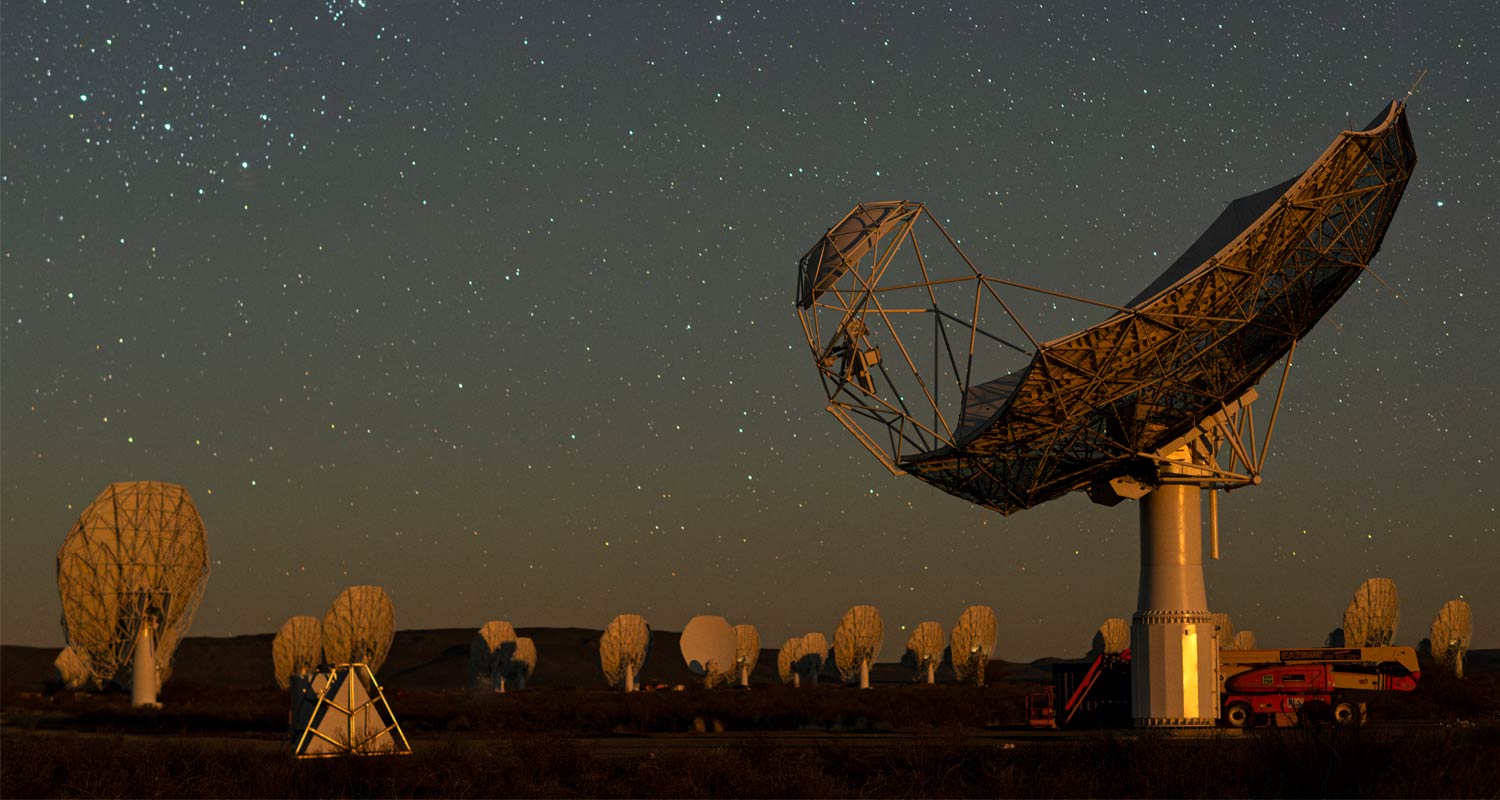
According to SKA-Mid senior project manager Ben Lewis, the “first fringes” milestone is a major morale boost for teams in South Africa and across the SKA’s international partner states.
“With all we’ve learned in the build-up to first fringes, we’re well positioned to reach our next goal – producing a first image from a four-dish array within the next few months,” Lewis said. From there, SKA-Mid will steadily grow in size and capability as more dishes are added.
On the other side of the Indian Ocean, construction of the SKA-Low telescope in Western Australia continues at pace. Around 70 antenna stations – each made up of 256 individual antennas – have already been installed at the Inyarrimanha Ilgari Bundara site on Wajarri Yamaji Country.
Read: Canada to invest R3.7-billion in SKA telescope project
An early version of SKA-Low, using just four stations or less than 1% of the final telescope, produced its first image last year. Planning is now under way for science verification activities to begin in 2027, when initial data will be released to the global astronomy community.
For South Africa, however, the first fringes result confirms that SKA-Mid is no longer just a construction project in the Karoo – it is beginning its transformation into a working scientific instrument that will help answer some of the biggest questions about the universe. – © 2026 NewsCentral Media
Get breaking news from TechCentral on WhatsApp. Sign up here.