
Close Menu
TechCentralTechCentral

    Subscribe to the newsletter

    Get the best South African technology news and analysis delivered to your e-mail inbox every morning.

    Facebook X (Twitter) YouTube LinkedIn
    WhatsApp Facebook X (Twitter) LinkedIn YouTube
    TechCentralTechCentral
    • News
      Big Microsoft 365 price increases coming next year

      Big Microsoft price increases coming next year

      5 December 2025
      Vodacom to take control of Safaricom in R36-billion deal - Shameel Joosub

      Vodacom to take control of Safaricom in R36-billion deal

      4 December 2025
      Black Friday goes digital in South Africa as online spending surges to record high

      Black Friday goes digital in South Africa as online spending surges to record high

      4 December 2025
      BYD takes direct aim at Toyota with launch of sub-R500 000 Sealion 5 PHEV

      BYD takes direct aim at Toyota with launch of sub-R500 000 Sealion 5 PHEV

      4 December 2025
      'Get it now': Takealot in new instant deliveries pilot

      ‘Get it now’: Takealot in new instant deliveries pilot

      4 December 2025
    • World
      Amazon and Google launch multi-cloud service for faster connectivity

      Amazon and Google launch multi-cloud service for faster connectivity

      1 December 2025
      Google makes final court plea to stop US breakup

      Google makes final court plea to stop US breakup

      21 November 2025
      Bezos unveils monster rocket: New Glenn 9x4 set to dwarf Saturn V

      Bezos unveils monster rocket: New Glenn 9×4 set to dwarf Saturn V

      21 November 2025
      Tech shares turbocharged by Nvidia's stellar earnings

      Tech shares turbocharged by stellar Nvidia earnings

      20 November 2025
      Config file blamed for Cloudflare meltdown that disrupted the web

      Config file blamed for Cloudflare meltdown that disrupted the web

      19 November 2025
    • In-depth
      Jensen Huang Nvidia

      So, will China really win the AI race?

      14 November 2025
      Valve's Linux console takes aim at Microsoft's gaming empire

      Valve’s Linux console takes aim at Microsoft’s gaming empire

      13 November 2025
      iOCO's extraordinary comeback plan - Rhys Summerton

      iOCO’s extraordinary comeback plan

      28 October 2025
      Why smart glasses keep failing - no, it's not the tech - Mark Zuckerberg

      Why smart glasses keep failing – it’s not the tech

      19 October 2025
      BYD to blanket South Africa with megawatt-scale EV charging network - Stella Li

      BYD to blanket South Africa with megawatt-scale EV charging network

      16 October 2025
    • TCS
      TCS+ | How Cloud on Demand helps partners thrive in the AWS ecosystem - Odwa Ndyaluvane and Xenia Rhode

      TCS+ | How Cloud On Demand helps partners thrive in the AWS ecosystem

      4 December 2025
      TCS | MTN Group CEO Ralph Mupita on competition, AI and the future of mobile

      TCS | Ralph Mupita on competition, AI and the future of mobile

      28 November 2025
      TCS | Dominic Cull on fixing South Africa's ICT policy bottlenecks

      TCS | Dominic Cull on fixing South Africa’s ICT policy bottlenecks

      21 November 2025
      TCS | BMW CEO Peter van Binsbergen on the future of South Africa's automotive industry

      TCS | BMW CEO Peter van Binsbergen on the future of South Africa’s automotive industry

      6 November 2025
      TCS | Why Altron is building an AI factory - Bongani Andy Mabaso

      TCS | Why Altron is building an AI factory in Johannesburg

      28 October 2025
    • Opinion
      Your data, your hardware: the DIY AI revolution is coming - Duncan McLeod

      Your data, your hardware: the DIY AI revolution is coming

      20 November 2025
      Zero Carbon Charge founder Joubert Roux

      The energy revolution South Africa can’t afford to miss

      20 November 2025
      It's time for a new approach to government IT spend in South Africa - Richard Firth

      It’s time for a new approach to government IT spend in South Africa

      19 November 2025
      How South Africa's broken Rica system fuels murder and mayhem - Farhad Khan

      How South Africa’s broken Rica system fuels murder and mayhem

      10 November 2025
      South Africa's AI data centre boom risks overloading a fragile grid - Paul Colmer

      South Africa’s AI data centre boom risks overloading a fragile grid

      30 October 2025
    • Company Hubs
      • Africa Data Centres
      • AfriGIS
      • Altron Digital Business
      • Altron Document Solutions
      • Altron Group
      • Arctic Wolf
      • AvertITD
      • Braintree
      • CallMiner
      • CambriLearn
      • CYBER1 Solutions
      • Digicloud Africa
      • Digimune
      • Domains.co.za
      • ESET
      • Euphoria Telecom
      • Incredible Business
      • iONLINE
      • IQbusiness
      • Iris Network Systems
      • LSD Open
      • NEC XON
      • Netstar
      • Network Platforms
      • Next DLP
      • Ovations
      • Paracon
      • Paratus
      • Q-KON
      • SevenC
      • SkyWire
      • Solid8 Technologies
      • Telit Cinterion
      • Tenable
      • Vertiv
      • Videri Digital
      • Vodacom Business
      • Wipro
      • Workday
      • XLink
    • Sections
      • AI and machine learning
      • Banking
      • Broadcasting and Media
      • Cloud services
      • Contact centres and CX
      • Cryptocurrencies
      • Education and skills
      • Electronics and hardware
      • Energy and sustainability
      • Enterprise software
      • Financial services
      • Information security
      • Internet and connectivity
      • Internet of Things
      • Investment
      • IT services
      • Lifestyle
      • Motoring
      • Public sector
      • Retail and e-commerce
      • Satellite communications
      • Science
      • SMEs and start-ups
      • Social media
      • Talent and leadership
      • Telecoms
    • Events
    • Advertise
    TechCentralTechCentral
    Home » Opinion » Anton Gaylard » The state of the cashless economy in Africa

    The state of the cashless economy in Africa

    By Anton Gaylard23 November 2017
    Twitter LinkedIn Facebook WhatsApp Email Telegram Copy Link
    News Alerts
    WhatsApp

    Father of capitalism Adam Smith once called money “one of the three great inventions, along with the written word and mathematics”. Money has helped business grow more efficiently, enabled markets to expand more dynamically, and allowed nations to trade more effectively.

    However, since the concept of a credit card was first described in Edward Bellamy’s novels in the late 19th century, the concept of a cashless economy has remained pervasive. A cashless society describes “an economic state whereby financial transactions are conducted through the transfer of digital information (ordinarily as an electronic representation of money) between transacting parties, instead of a physical exchange of banknotes or coins”.

    Cashless payments in the modern context emerged in the 1970s when mag-stripe cards replaced cheques to combat cheque fraud. With the advent of the Internet, electronic banking drove the migration to cashless transactions in the 1990s. By the 2010s, digital payment methods were widespread in many countries, and government-driven cashless economy initiatives especially in developing countries became increasingly popular.

    Several cashless economy initiatives in developing countries have provided interesting insights into the possibilities of an African cashless society

    The appeal of a cashless society is obvious: by removing cash from the economy, governments can eliminate black markets, develop better monetary policies and improve the implementation thereof, and develop trackable records that simplify and improve tax collection. Merchants enjoy lower risk by reducing cash kept at hand while also speeding up the transaction process, while consumers benefit through ease of use and improved security. A whole new suite of value-add services also become possible when cash is replaced by electronic-based payments.

    Recently, several cashless economy initiatives in developing countries have provided interesting insights into the possibilities of an African cashless society.

    The example of India

    India recently embarked on the most ambitious cashless economy initiative in the world. Prior to 2009, half of all Indians had no form of official identification, prompting the government to launch Aadhaar, the world’s largest biometric ID system with nearly 1.2bn enrolled members. In 2016, India added another component to Aadhaar called India Stack, a series of connected systems that allow people to store data such as addresses, tax filings and bank statements. India Stack also allows citizens to open a bank account, buy a mutual fund, or otherwise participate in formal economic activities. Since the launch of Aadhaar, 270m bank accounts have been opened across India.

    Then, in November 2016, Indian Prime Minister Narendra Modi announced that all Rs500 and Rs1 000 notes were going to be taken out of circulation overnight. In the ensuing panic and confusion, 1.5m jobs were lost, and many cash-intensive industries stuttered to a halt. A year later, the World Bank has cut India’s growth forecast, industrial production slowed, and the black market continues to thrive.
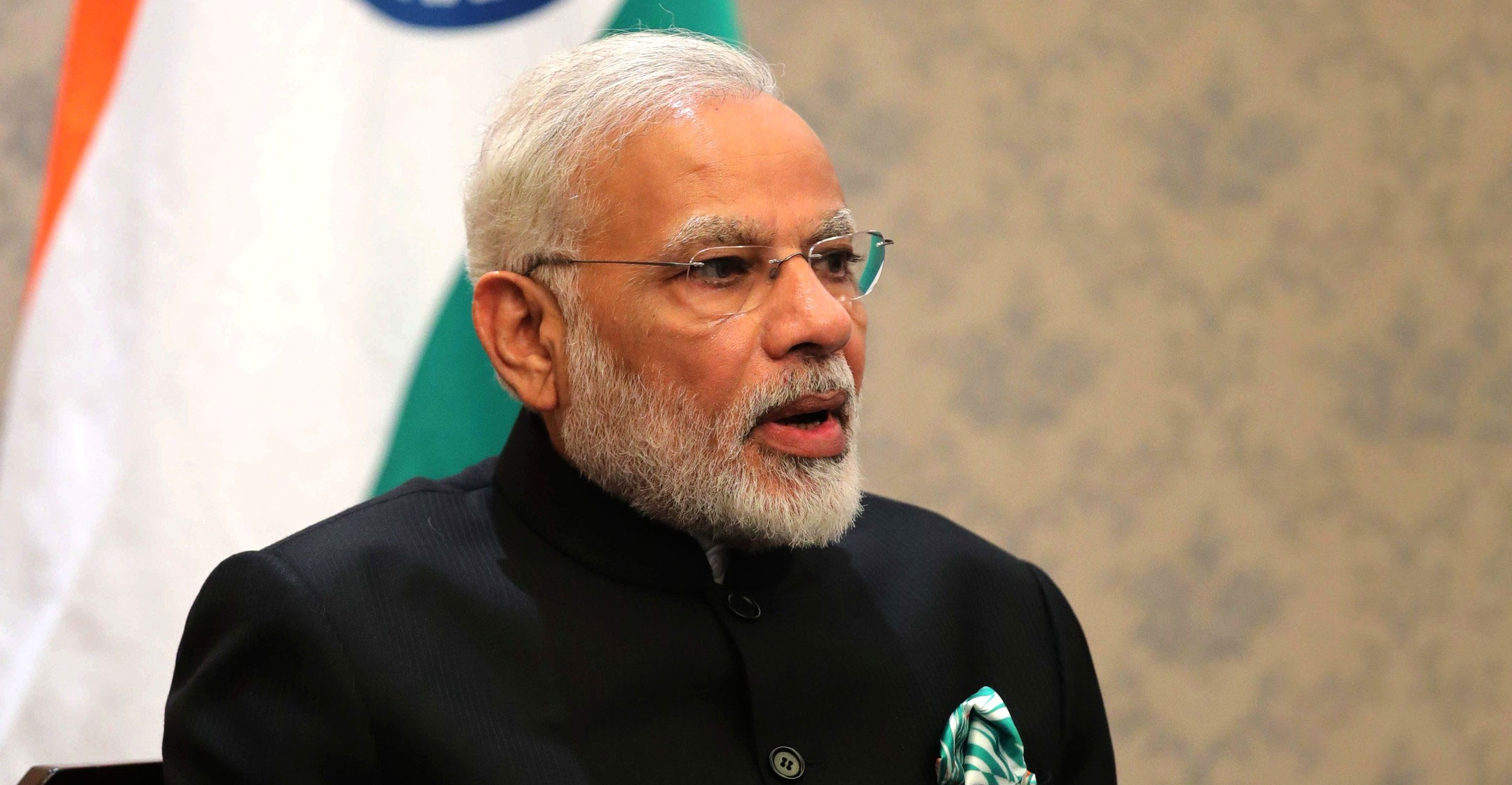
    Narendra Modi

    With fewer than 5% of adults in Sub-Saharan Africa having a credit card, and 80% using no formal or semi-formal banking facilities, African countries recorded the lowest economic impact of electronic payments. In Nigeria, where three-quarters of the adult population have never been banked, the government introduced a policy via its central bank to limit cash-based payments. The aim was to reduce the cost of banking services, drive financial inclusion, improve the implementation of monetary policy and help the economy break into the global top 20. However, payment cards added a mere US$640m cumulatively to Nigeria’s GDP between 2011 and 2015.

    In Kenya, this figure is a near-insignificant $70m, although the popularity of mobile money wallet M-Pesa does provide some indication to the possible future of what shape a cashless African society could take.

    M-Pesa processed more than $28bn in 2015 via more than 35m Kenyan users. By 2019, analysts expect more than half of total Kenyan GDP to flow through M-Pesa. This has partly been driven by the prevalence of mobile phones: more than half a billion people in Africa subscribe to mobile services, and smartphone connections have nearly doubled over the past two years to reach 226m.

    Airtime has also emerged as an alternative currency: between 2011 and 2012, the value of airtime transfers doubled from $350m to $700m. Services such as Crowdcoin allows mobile subscribers exchange airtime for cash, send and receive money, and make purchases.

    South Africa still leads

    Africa’s most advanced financial market is also its best placed to take advantage of cashless payments. Three-quarters of adults in South Africa have some form of bank account, and smartphone penetration sits at more than a third of mobile users.

    The country’s sophisticated business environment also allows cashless payment providers to introduce advanced products and services that add convenience to consumers’ lives while driving business value across the value chain. Mobile transacting company wiGroup, for example, has established a presence at more than 80 000 retail lanes, allowing consumers to conduct a range of cashless and cardless transactions including earning and redeeming loyalty, conducting mobile money transfers, earning rewards and paying via their mobile. To date, more than R7bn in transactions have been processed via wiGroup’s platform.

    The author, Anton Gaylard, argues that South Africa is best placed on the continent to take advantage of cashless payments

    Mobile payment app SnapScan counts more than 26 000 South African businesses as clients, establishing a strong cashless subculture partly driven by millennials’ desire for convenience and novelty. Online transacting is also set for rapid growth, with South Africa’s online spend set to grow to more than R53bn in 2018. Mobile card payment provider iKhokha’s recent partnership with Mastercard has increased access to cashless payment technology for informal traders, who recorded a 15-30% increase in revenue during a trial period.

    As cashless payment methods continue to gain ground, industry and government will need to work together to ensure reliable connectivity and that transaction integrity is maintained at all stages of the payment process. As global tech giants such as Apple, Samsung and Android bring frictionless payments to new markets, and incumbents such as Visa (Checkout) and Mastercard (MasterPass) introduce new payment methods, industry role players must take heed of security concerns to ensure public trust in new forms of payment is maintained.

    It’s a brave new cashless world out there.

    • Anton Gaylard is co-founder of CrossFin Technology Holdings


    Anton Gaylard Crossfin Technology Holdings iKhokha M-Pesa SnapScan top wiGroup
    Subscribe to TechCentral Subscribe to TechCentral
    Share. Facebook Twitter LinkedIn WhatsApp Telegram Email Copy Link
    Previous ArticleThe sober person’s guide to Black Friday
    Next Article Uber faces wide probe into hacking cover-up

    Related Posts

    Fragmented digital IDs are slowing Africa's fintech boom

    Fragmented digital IDs are slowing Africa’s fintech boom

    14 November 2025
    Fintech fires up Vodacom's half-year results

    Fintech fires up Vodacom’s half-year results

    10 November 2025
    Vodacom, MTN racing to dominate digital financial services in Africa

    Vodacom, MTN racing to dominate digital financial services in Africa

    3 November 2025
    Company News
    AI is not a technology problem - iqbusiness

    AI is not a technology problem – iqbusiness

    5 December 2025
    Telcos are sitting on a data gold mine - but few know what do with it - Phillip du Plessis

    Telcos are sitting on a data gold mine – but few know what do with it

    4 December 2025
    Unlock smarter computing with your surface Copilot+ PC

    Unlock smarter computing with your Surface Copilot+ PC

    4 December 2025
    Opinion
    Your data, your hardware: the DIY AI revolution is coming - Duncan McLeod

    Your data, your hardware: the DIY AI revolution is coming

    20 November 2025
    Zero Carbon Charge founder Joubert Roux

    The energy revolution South Africa can’t afford to miss

    20 November 2025
    It's time for a new approach to government IT spend in South Africa - Richard Firth

    It’s time for a new approach to government IT spend in South Africa

    19 November 2025

    Subscribe to Updates

    Get the best South African technology news and analysis delivered to your e-mail inbox every morning.

    Latest Posts
    Big Microsoft 365 price increases coming next year

    Big Microsoft price increases coming next year

    5 December 2025
    AI is not a technology problem - iqbusiness

    AI is not a technology problem – iqbusiness

    5 December 2025
    Vodacom to take control of Safaricom in R36-billion deal - Shameel Joosub

    Vodacom to take control of Safaricom in R36-billion deal

    4 December 2025
    Black Friday goes digital in South Africa as online spending surges to record high

    Black Friday goes digital in South Africa as online spending surges to record high

    4 December 2025
    © 2009 - 2025 NewsCentral Media
    • Cookie policy (ZA)
    • TechCentral – privacy and Popia

    Type above and press Enter to search. Press Esc to cancel.

    Manage consent

    TechCentral uses cookies to enhance its offerings. Consenting to these technologies allows us to serve you better. Not consenting or withdrawing consent may adversely affect certain features and functions of the website.

    Functional Always active
    The technical storage or access is strictly necessary for the legitimate purpose of enabling the use of a specific service explicitly requested by the subscriber or user, or for the sole purpose of carrying out the transmission of a communication over an electronic communications network.
    Preferences
    The technical storage or access is necessary for the legitimate purpose of storing preferences that are not requested by the subscriber or user.
    Statistics
    The technical storage or access that is used exclusively for statistical purposes. The technical storage or access that is used exclusively for anonymous statistical purposes. Without a subpoena, voluntary compliance on the part of your Internet Service Provider, or additional records from a third party, information stored or retrieved for this purpose alone cannot usually be used to identify you.
    Marketing
    The technical storage or access is required to create user profiles to send advertising, or to track the user on a website or across several websites for similar marketing purposes.
    • Manage options
    • Manage services
    • Manage {vendor_count} vendors
    • Read more about these purposes
    View preferences
    • {title}
    • {title}
    • {title}