Close Menu
TechCentralTechCentral

    Subscribe to the newsletter

    Get the best South African technology news and analysis delivered to your e-mail inbox every morning.

    Facebook X (Twitter) YouTube LinkedIn
    WhatsApp Facebook X (Twitter) LinkedIn YouTube
    TechCentralTechCentral
    • News
      Vuyani Jarana: Mobile coverage masks a deeper broadband failure

      Vuyani Jarana: Mobile coverage masks a deeper broadband failure

      30 January 2026
      SABC Plus to flight Microsoft AI training videos

      SABC Plus to flight Microsoft AI training videos

      30 January 2026
      Fibre ducts

      Fibre industry consolidation in KZN

      30 January 2026
      Watts & Wheels S1E3: 'BYD's Corolla Cross challenger'

      Watts & Wheels S1E3: ‘BYD’s Corolla Cross challenger’

      30 January 2026
      What ordinary South Africans really think of AI

      What ordinary South Africans really think of AI

      30 January 2026
    • World
      Apple acquires audio AI start-up Q.ai

      Apple acquires audio AI start-up Q.ai

      30 January 2026
      SpaceX IPO may be largest in history

      SpaceX IPO may be largest in history

      28 January 2026
      Nvidia throws AI at the weather

      Nvidia throws AI at weather forecasting

      27 January 2026
      Debate erupts over value of in-flight Wi-Fi

      Debate erupts over value of in-flight Wi-Fi

      26 January 2026
      Intel takes another hit - Intel CEO Lip-Bu Tan. Laure Andrillon/Reuters

      Intel takes another hit

      23 January 2026
    • In-depth
      How liberalisation is rewiring South Africa's power sector

      How liberalisation is rewiring South Africa’s power sector

      21 January 2026
      The top-performing South African tech shares of 2025

      The top-performing South African tech shares of 2025

      12 January 2026
      Digital authoritarianism grows as African states normalise internet blackouts

      Digital authoritarianism grows as African states normalise internet blackouts

      19 December 2025
      TechCentral's South African Newsmakers of 2025

      TechCentral’s South African Newsmakers of 2025

      18 December 2025
      Black Friday goes digital in South Africa as online spending surges to record high

      Black Friday goes digital in South Africa as online spending surges to record high

      4 December 2025
    • TCS
      TCS+ | How Cloud On Demand is helping SA businesses succeed in the cloud - Xhenia Rhode, Dion Kalicharan

      TCS+ | Cloud On Demand and Consnet: inside a real-world AWS partner success story

      30 January 2026
      Watts & Wheels S1E3: 'BYD's Corolla Cross challenger'

      Watts & Wheels S1E2: ‘China attacks, BMW digs in, Toyota’s sublime supercar’

      23 January 2026

      TCS+ | Why cybersecurity is becoming a competitive advantage for SA businesses

      20 January 2026
      Watts & Wheels S1E3: 'BYD's Corolla Cross challenger'

      Watts & Wheels: S1E1 – ‘William, Prince of Wheels’

      8 January 2026
      TCS+ | Africa's digital transformation - unlocking AI through cloud and culture - Cliff de Wit Accelera Digital Group

      TCS+ | Cloud without culture won’t deliver AI: Accelera’s Cliff de Wit

      12 December 2025
    • Opinion
      South Africa's skills advantage is being overlooked at home - Richard Firth

      South Africa’s skills advantage is being overlooked at home

      29 January 2026
      Why Elon Musk's Starlink is a 'hard no' for me - Songezo Zibi

      Why Elon Musk’s Starlink is a ‘hard no’ for me

      26 January 2026
      South Africa's new fibre broadband battle - Duncan McLeod

      South Africa’s new fibre broadband battle

      20 January 2026
      AI moves from pilots to production in South African companies - Nazia Pillay SAP

      AI moves from pilots to production in South African companies

      20 January 2026
      South Africa's new fibre broadband battle - Duncan McLeod

      ANC’s attack on Solly Malatsi shows how BEE dogma trumps economic reality

      14 December 2025
    • Company Hubs
      • Africa Data Centres
      • AfriGIS
      • Altron Digital Business
      • Altron Document Solutions
      • Altron Group
      • Arctic Wolf
      • AvertITD
      • Braintree
      • CallMiner
      • CambriLearn
      • CYBER1 Solutions
      • Digicloud Africa
      • Digimune
      • Domains.co.za
      • ESET
      • Euphoria Telecom
      • Incredible Business
      • iONLINE
      • IQbusiness
      • Iris Network Systems
      • LSD Open
      • NEC XON
      • Netstar
      • Network Platforms
      • Next DLP
      • Ovations
      • Paracon
      • Paratus
      • Q-KON
      • SevenC
      • SkyWire
      • Solid8 Technologies
      • Telit Cinterion
      • Tenable
      • Vertiv
      • Videri Digital
      • Vodacom Business
      • Wipro
      • Workday
      • XLink
    • Sections
      • AI and machine learning
      • Banking
      • Broadcasting and Media
      • Cloud services
      • Contact centres and CX
      • Cryptocurrencies
      • Education and skills
      • Electronics and hardware
      • Energy and sustainability
      • Enterprise software
      • Financial services
      • Information security
      • Internet and connectivity
      • Internet of Things
      • Investment
      • IT services
      • Lifestyle
      • Motoring
      • Public sector
      • Retail and e-commerce
      • Satellite communications
      • Science
      • SMEs and start-ups
      • Social media
      • Talent and leadership
      • Telecoms
    • Events
    • Advertise
    TechCentralTechCentral
    Home » In-depth » Stereotypes keep women from tech careers

    Stereotypes keep women from tech careers

    By The Conversation20 February 2017
    Twitter LinkedIn Facebook WhatsApp Email Telegram Copy Link
    News Alerts
    WhatsApp

    Children’s ideas about what their gender means for their intellectual capacity are formed before they have even turned six. One idea that’s particularly pervasive and dangerous is that, only boys are good at maths and science.

    Popular media only exacerbates the problem. Research has shown that girls hardly ever see adult women doing jobs that involve science, technology, engineering and maths on television programmes. Children’s programmes also rarely feature women doing anything scientific.

    These early stereotypes may lead to young girls developing a “fear” of these subjects throughout their schooling. This ultimately limits their career aspirations. They become afraid to enter fields that are based on science, technology, engineering and mathematics (Stem).

    Statistics compiled by Unesco reveal that, globally, women make up less than 30% of the people working in Stem careers. The situation is worse in some countries in sub-Saharan Africa.

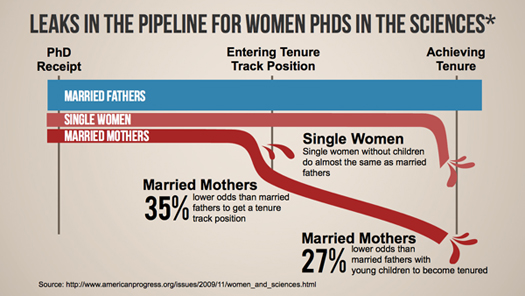
    In South Africa, the problem is worsened by the country’s apartheid history. Today black women are still struggling to access scientific careers at all. Those who do may fall victim to the “leaky pipeline” syndrome: they start degrees in science, but don’t continue to postgraduate level or go on to work in Stem fields. There are many reasons for this, including gender bias.

    It’s a complex problem. So, how can it be tackled? For starters, there should be a concerted effort to raise girls in a way that encourages them to ignore stereotypical norms. The country’s basic education system also needs massive improvement when it comes to teaching maths and science so that they become attractive subject choices for more pupils.

    But it will also require funding for bursaries, improved science communication and, linked to this, boosting scientists’ visibility so that young people — and especially girls — realise that they, too, could become scientists. Interventions with just this aim have been successful elsewhere in the world, and there’s no reason they can’t work in Africa, too.

    There have been some positive steps towards getting more young people, particularly women, involved in studying Stem subjects.

    In recent years, South Africa has unveiled several undergraduate and postgraduate programmes to encourage women to enrol for Stem subjects. For example, black women held the largest share of National Research Foundation (NRF) bursary support in 2016 overall. In the areas of engineering and computer science, NRF funding was increased more for women, though men still get the lion’s share of funding in these important subjects. The funders are trying, but because of the leaky pipeline, among other factors, there aren’t always women to take up these opportunities.

    So, while money is important, it’s not enough. Retention levels are low.

    Almost equal numbers of men to women are entering undergraduate science-based degrees. At the postgraduate level, though, the number of men is higher in many science-based degrees, suggesting that their female peers have left the system.

    This isn’t a uniquely South African problem, but what drives it is different — the fact that apartheid, for the most part, kept black people out of universities.

    As elsewhere, patriarchy is a common global factor in holding girls (and especially black girls) back. In many cultures, women are expected to be subservient to “show respect” for men and the idea that a “woman’s place is in the kitchen” persists.

    There’s another issue at play: young people in Africa very rarely know any scientists. They don’t see scientists at work, learn about local scientists in school or, often, understand what it is that scientists do. The role of scientists is still a mystery to many even though there have been a number of great initiatives, both global and regional, to improve science communication and engagement.

    To fix this problem, more science communication and public engagement of society in science is needed.

    Possible solutions

    All media, whether it’s print, radio, television or social platforms, should be geared to breaking stereotypes linked to science and technology. With clever campaigns, girls will realise that they can become scientists and work in technology and innovation environments — and thrive.

    The lack of role models is often a resounding theme for young women entering Stem careers. Stem-based content, whether it’s on TV fiction series or contained in journalism, is urgently needed. This can be developed to reach all South Africans, ideally through the SABC’s radio and TV channels because these have incredible reach and represent all 11 of the country’s official languages.

    Mentorship is another possible approach. Research has shown just how valuable it is for women in Stem to work with mentors. Doing so increases their access to role models, helps them to acquire and refine career development skills, allows them to set goals more effectively and provides a supportive network. All of this wards off women’s feelings of being isolated and underrepresented in their Stem fields.

    A word of caution, though: individuals shouldn’t feel forced into mentorship. It must be a matter of personal choice. If universities offer mandatory mentorship programmes, these might do more harm than good by suggesting that women need more help than men to succeed.

    Finally, society needs more messages that counter stereotypes. Schools, for instance, could teach pupils about the important contributions made by women scientists, especially those in Africa, in all fields. This would improve the visibility of women in Stem — a good way to start untangling age-old stereotypes so that Africa’s future women in science don’t remain forever hidden.The Conversation

    • Nox Makunga is associate professor: medicinal plant biotechnology, Stellenbosch University
    • This article was originally published on The Conversation


    WhatsApp YouTube Follow on Google News Add as preferred source on Google
    Share. Facebook Twitter LinkedIn WhatsApp Telegram Email Copy Link
    Previous ArticleKim Dotcom faces extradition to US
    Next Article Backspace: ‘Gone shopping’

    Related Posts

    Vuyani Jarana: Mobile coverage masks a deeper broadband failure

    Vuyani Jarana: Mobile coverage masks a deeper broadband failure

    30 January 2026
    TCS+ | How Cloud On Demand is helping SA businesses succeed in the cloud - Xhenia Rhode, Dion Kalicharan

    TCS+ | Cloud On Demand and Consnet: inside a real-world AWS partner success story

    30 January 2026
    Huawei turns 25 in South Africa, celebrates with major device discounts

    Huawei turns 25 in South Africa, celebrates with major device discounts

    30 January 2026
    Company News
    Huawei turns 25 in South Africa, celebrates with major device discounts

    Huawei turns 25 in South Africa, celebrates with major device discounts

    30 January 2026
    Phishing has not disappeared, but it has grown up - KnowBe4

    Phishing has not disappeared, but it has grown up

    30 January 2026
    Smartphone affordability: South Africa's new economic divide - PayJoy

    Smartphone affordability: South Africa’s new economic divide

    29 January 2026
    Opinion
    South Africa's skills advantage is being overlooked at home - Richard Firth

    South Africa’s skills advantage is being overlooked at home

    29 January 2026
    Why Elon Musk's Starlink is a 'hard no' for me - Songezo Zibi

    Why Elon Musk’s Starlink is a ‘hard no’ for me

    26 January 2026
    South Africa's new fibre broadband battle - Duncan McLeod

    South Africa’s new fibre broadband battle

    20 January 2026

    Subscribe to Updates

    Get the best South African technology news and analysis delivered to your e-mail inbox every morning.

    Latest Posts
    Vuyani Jarana: Mobile coverage masks a deeper broadband failure

    Vuyani Jarana: Mobile coverage masks a deeper broadband failure

    30 January 2026
    TCS+ | How Cloud On Demand is helping SA businesses succeed in the cloud - Xhenia Rhode, Dion Kalicharan

    TCS+ | Cloud On Demand and Consnet: inside a real-world AWS partner success story

    30 January 2026
    Huawei turns 25 in South Africa, celebrates with major device discounts

    Huawei turns 25 in South Africa, celebrates with major device discounts

    30 January 2026
    SABC Plus to flight Microsoft AI training videos

    SABC Plus to flight Microsoft AI training videos

    30 January 2026
    © 2009 - 2026 NewsCentral Media
    • Cookie policy (ZA)
    • TechCentral – privacy and Popia

    Type above and press Enter to search. Press Esc to cancel.

    Manage consent

    TechCentral uses cookies to enhance its offerings. Consenting to these technologies allows us to serve you better. Not consenting or withdrawing consent may adversely affect certain features and functions of the website.

    Functional Always active
    The technical storage or access is strictly necessary for the legitimate purpose of enabling the use of a specific service explicitly requested by the subscriber or user, or for the sole purpose of carrying out the transmission of a communication over an electronic communications network.
    Preferences
    The technical storage or access is necessary for the legitimate purpose of storing preferences that are not requested by the subscriber or user.
    Statistics
    The technical storage or access that is used exclusively for statistical purposes. The technical storage or access that is used exclusively for anonymous statistical purposes. Without a subpoena, voluntary compliance on the part of your Internet Service Provider, or additional records from a third party, information stored or retrieved for this purpose alone cannot usually be used to identify you.
    Marketing
    The technical storage or access is required to create user profiles to send advertising, or to track the user on a website or across several websites for similar marketing purposes.
    • Manage options
    • Manage services
    • Manage {vendor_count} vendors
    • Read more about these purposes
    View preferences
    • {title}
    • {title}
    • {title}