Close Menu
TechCentralTechCentral

    Subscribe to the newsletter

    Get the best South African technology news and analysis delivered to your e-mail inbox every morning.

    Facebook X (Twitter) YouTube LinkedIn
    WhatsApp Facebook X (Twitter) LinkedIn YouTube
    TechCentralTechCentral
    • News
      Telecoms industry drags home affairs minister to court - Nomvuyiso Batyi

      Telecoms industry drags home affairs minister to court

      27 January 2026
      DStv cuts decoder prices and adds cost-sharing feature

      DStv cuts decoder prices and adds cost-sharing feature

      27 January 2026
      Amazon brings image-based shopping to South Africa - Robert Koen

      Amazon brings image-based shopping to South Africa

      27 January 2026
      South African cloud market set to top R100-billion by 2029 - BMIT

      South African cloud market set to top R100-billion by 2029

      27 January 2026
      Outa warns homeowners against rushing to register rooftop solar

      Outa warns homeowners against rushing to register rooftop solar

      27 January 2026
    • World
      Nvidia throws AI at the weather

      Nvidia throws AI at weather forecasting

      27 January 2026
      Debate erupts over value of in-flight Wi-Fi

      Debate erupts over value of in-flight Wi-Fi

      26 January 2026
      Intel takes another hit - Intel CEO Lip-Bu Tan. Laure Andrillon/Reuters

      Intel takes another hit

      23 January 2026
      ByteDance clinches US TikTok deal

      ByteDance clinches US TikTok deal

      23 January 2026
      New details emerge about Apple's big Siri overhaul

      New details emerge about Apple’s big Siri overhaul

      22 January 2026
    • In-depth
      How liberalisation is rewiring South Africa's power sector

      How liberalisation is rewiring South Africa’s power sector

      21 January 2026
      The top-performing South African tech shares of 2025

      The top-performing South African tech shares of 2025

      12 January 2026
      Digital authoritarianism grows as African states normalise internet blackouts

      Digital authoritarianism grows as African states normalise internet blackouts

      19 December 2025
      TechCentral's South African Newsmakers of 2025

      TechCentral’s South African Newsmakers of 2025

      18 December 2025
      Black Friday goes digital in South Africa as online spending surges to record high

      Black Friday goes digital in South Africa as online spending surges to record high

      4 December 2025
    • TCS
      Watts & Wheels S1E2: 'China attacks, BMW digs in, Toyota's sublime supercar'

      Watts & Wheels S1E2: ‘China attacks, BMW digs in, Toyota’s sublime supercar’

      23 January 2026

      TCS+ | Why cybersecurity is becoming a competitive advantage for SA businesses

      20 January 2026
      Watts & Wheels S1E2: 'China attacks, BMW digs in, Toyota's sublime supercar'

      Watts & Wheels: S1E1 – ‘William, Prince of Wheels’

      8 January 2026
      TCS+ | Africa's digital transformation - unlocking AI through cloud and culture - Cliff de Wit Accelera Digital Group

      TCS+ | Cloud without culture won’t deliver AI: Accelera’s Cliff de Wit

      12 December 2025
      TCS+ | How Cloud on Demand helps partners thrive in the AWS ecosystem - Odwa Ndyaluvane and Xenia Rhode

      TCS+ | How Cloud On Demand helps partners thrive in the AWS ecosystem

      4 December 2025
    • Opinion
      Why Elon Musk's Starlink is a 'hard no' for me - Songezo Zibi

      Why Elon Musk’s Starlink is a ‘hard no’ for me

      26 January 2026
      South Africa's new fibre broadband battle - Duncan McLeod

      South Africa’s new fibre broadband battle

      20 January 2026
      AI moves from pilots to production in South African companies - Nazia Pillay SAP

      AI moves from pilots to production in South African companies

      20 January 2026
      South Africa's new fibre broadband battle - Duncan McLeod

      ANC’s attack on Solly Malatsi shows how BEE dogma trumps economic reality

      14 December 2025
      South Africa's new fibre broadband battle - Duncan McLeod

      Netflix, Warner Bros deal raises fresh headaches for MultiChoice

      5 December 2025
    • Company Hubs
      • Africa Data Centres
      • AfriGIS
      • Altron Digital Business
      • Altron Document Solutions
      • Altron Group
      • Arctic Wolf
      • AvertITD
      • Braintree
      • CallMiner
      • CambriLearn
      • CYBER1 Solutions
      • Digicloud Africa
      • Digimune
      • Domains.co.za
      • ESET
      • Euphoria Telecom
      • Incredible Business
      • iONLINE
      • IQbusiness
      • Iris Network Systems
      • LSD Open
      • NEC XON
      • Netstar
      • Network Platforms
      • Next DLP
      • Ovations
      • Paracon
      • Paratus
      • Q-KON
      • SevenC
      • SkyWire
      • Solid8 Technologies
      • Telit Cinterion
      • Tenable
      • Vertiv
      • Videri Digital
      • Vodacom Business
      • Wipro
      • Workday
      • XLink
    • Sections
      • AI and machine learning
      • Banking
      • Broadcasting and Media
      • Cloud services
      • Contact centres and CX
      • Cryptocurrencies
      • Education and skills
      • Electronics and hardware
      • Energy and sustainability
      • Enterprise software
      • Financial services
      • Information security
      • Internet and connectivity
      • Internet of Things
      • Investment
      • IT services
      • Lifestyle
      • Motoring
      • Public sector
      • Retail and e-commerce
      • Satellite communications
      • Science
      • SMEs and start-ups
      • Social media
      • Talent and leadership
      • Telecoms
    • Events
    • Advertise
    TechCentralTechCentral
    Home » Sections » Broadcasting and Media » Television at 50 | The broadcast that changed everything

    Television at 50 | The broadcast that changed everything

    Heinrich Marnitz and Dorianne Berry, the first two presenters to appear on South African television, tell TechCentral about the big day 50 years ago.
    By Amy Musgrave6 January 2026
    Twitter LinkedIn Facebook WhatsApp Email Telegram Copy Link
    News Alerts
    WhatsApp
    Television at 50 | The broadcast that changed everything - Heinrich Marnitz and Dorianne Berry
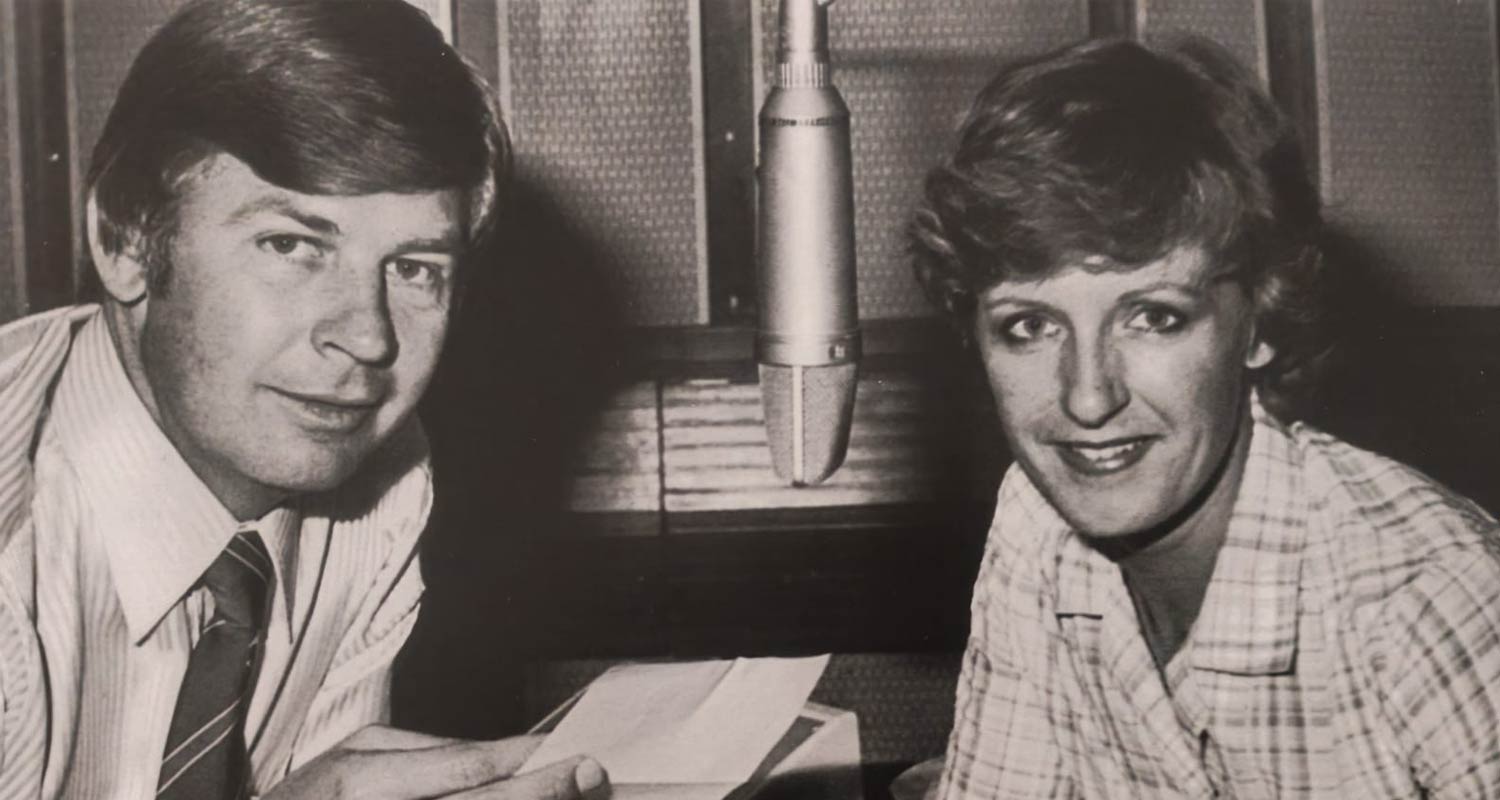
    Heinrich Marnitz and Dorianne Berry in an undated photograph from the 1970s. The two presenters were the first to appear on SABC television on 5 January 1976 and became household names

    From the first black-and-white broadcast to today’s world of high-definition streaming and smart screens, the introduction of television on 5 January 1976 marked more than a media milestone – it redefined how a nation saw itself.

    This is the second in a series of articles TechCentral is publishing this week to mark the anniversary of the launch of television broadcasting in South Africa on 5 January 1976. Read the first piece here.

    Over the past five decades, it has informed, entertained and connected South Africans through rapid technological change. As the country marks the 50th anniversary since the first official national broadcast, TechCentral looks back to those early days of TV.

    The first broadcast was presented in Afrikaans by Heinrich Marnitz, with Dorianne Berry delivering the English-language segments. Although regional test transmissions started in Johannesburg in May 1975, this was the first time television reached the entire country.

    The National Party government regarded television as a direct threat to its control of information

    Unlike many other African countries (and the rest of the world), the introduction of TV was remarkably late in South Africa. Nigeria launched Western Nigeria Television in 1959, while Rhodesia, which is now Zimbabwe, adopted TV in 1960.

    The delay was no accident. The ultra-conservative National Party government regarded television as a direct threat to its control of information. It feared that it would expose South Africans to the ideas and images beyond the state’s carefully managed worldview and accelerate the dominance of English over Afrikaans. The minister of posts & telegraphs, Albert Hertzog, famously described TV as the “the devil’s own box” for spreading communism and immorality.

    But South Africa eventually adopted TV because technological, economic and political realities made continued resistance untenable. The government recognised that the absence of TV was a visible symbol of the country’s backwardness, and a government commission in 1971 concluded that with the advent of satellite technology and video cassettes, people would soon be able to bypass government censorship entirely.

    Straight to colour

    The removal of the ultra-verkrampte Hertzog by Prime Minister John Vorster in 1968 also softened the government’s stance. However, the state still wanted to maintain its grip, and by launching TV through the SABC, it could shape language use, editorial content and political messaging.

    Ironically, South Africa’s late entry into television delivered one major advantage. While many households still owned black-and-white sets, the SABC launched its service using the PAL (phase alternate line) broadcast standard, enabling colour television from day one.

    Television at 50 | How the SABC lost its way – and what it must become

    The inaugural broadcast in Auckland Park, Johannesburg was carried by the SABC and transmitted in the early evening. It was deliberately formal, restrained and symbolic. It was meant to be seen as controlled extension of radio rather than a disruptive new force.

    Berry, who now lives in Seattle in the US, remembers that first day vividly. She told TechCentral in a phone interview that while there had been numerous rehearsals and test broadcasts, the day itself was markedly different.

    Watch the first-ever broadcast on SABC television

    “It wasn’t like walking into the building for the first time. It was different. No one was joking. I knew we were making history, but I didn’t realise what the power of the camera meant. I would be on the beach with my kids and people would want my autograph. We were in their homes,” she said.

    Both Berry and Marnitz, who retired this year from Pretoria FM where he covered the foreign news for 16 years, were in radio before they were chosen during auditions to be the first faces of South African television. They both hosted a music show on Johannesburg radio station Highveld and auditioned together.

    Marnitz told TechCentral that he did not fully appreciate at the time that he had been part of an historic moment.

    Everybody was aware, totally aware, of the magnificence of the occasion; no games were played

    “Everybody was aware, totally aware, of the magnificence of the occasion; no games were played. Everything was so serious in the passages. There was a very strange feeling in the passages… All the directors and the programme managers were sitting in the foyer with television sets in front of them looking very worried. But I didn’t realise that that occasion was as big as it was,” he said.

    Asked how he feels in hindsight about those early days of TV, Marnitz told TechCentral: “To be quite honest, during the night, when I see it now, I get goosebumps realising how big that occasion was at the time.

    “During the period running up to 5 January 1976 we were busy preparing, not only for the opening, but for implementing TV on a-day-to-day format after the opening. So, there was no stopping after it. I thought I was just part of the show, but looking back today, 50 years since, and it is still remembered by the public as a major happening in this country, as part of the history of the country, and I get goosebumps.”

    ‘Part of the world’

    Although Marnitz and Berry played no role in programming decisions or political direction, each came to recognise, at different moments, that television would profoundly shape the country’s social and political landscape.

    “I realised really soon. The stranglehold on the news was so incredibly tight … but you were also getting international news that made you realise that suddenly you are part of the world,” said Berry.

    For Marnitz, the realisation came later. He said the early focus was on the novelty of seeing familiar faces on screen and the entertainment on offer, driven largely by what he described as a “curiosity factor”.

    Read: As DStv turns 30, it faces its toughest test yet

    “But during the 1980s, serious political problems developed in the country, and the programme content, especially the news, was being strictly controlled,” he said.

    By contrast, he points to the broadcast of the 1995 Rugby World Cup as an example of television’s positive evolution. “Rugby played a major role through television in bringing together and uniting different cultures and people,” Marnitz said.

    A recent photo of Heinrich Marnitz, who now lives in Pretoria
    A recent photo of Heinrich Marnitz, who now lives in Pretoria

    Like Marnitz, Berry has fond memories of her days in TV. Asked to share some mistakes where she had to improvise, she said there were many. One was when she worked on the iconic Good Morning South Africa, where they often went to small towns for broadcasts. The team was in Upington in the Northern Cape and the cameramen and army, which was overseeing a marathon, managed to lose the runners in the dark.

    Berry had to ad lib for 12 minutes until the runners were located.

    She recalls that ahead of the inaugural broadcast, the SABC operated a public helpline during the test transmissions, staffed by senior employees. One caller, she said, was “enraged” by the alternating language schedule, unable to understand why the afternoon broadcast was in English and the evening in Afrikaans, only for the pattern to reverse the following day.

    A recent photo of Dorianne Berry, who now lives in Seattle in the US
    A recent photo of Dorianne Berry, who now lives in Seattle in the US

    For the first six years, South Africans had access to just one channel, TV1, which split its programming evenly between English and Afrikaans. In 1982, the SABC launched TV2 and TV3 to serve urban Zulu/Xhosa and Tswana/Sotho audiences respectively. A fourth channel, TV4, focusing on sport and entertainment, followed in 1985.

    Despite this expansion, the National Party government maintained strict control over broadcast content. That grip only began to loosen with the launch of subscription broadcaster M-Net in 1986.  – (c) 2026 NewsCentral Media

    Get breaking news from TechCentral on WhatsApp. Sign up here.



    Albert Hertzog Dorianne Berry Heinrich Marnitz John Vorster SABC SABC TV
    WhatsApp YouTube Follow on Google News Add as preferred source on Google
    Share. Facebook Twitter LinkedIn WhatsApp Telegram Email Copy Link
    Previous ArticleTelevision at 50 | A timeline of events that shaped an industry
    Next Article EU pressure mounts on Musk’s X over AI ‘undressing’ images

    Related Posts

    South African digital radio trial is about to go live - Aldred Dreyer

    South African digital radio trial is about to go live

    21 January 2026
    Icasa to target Sentech with tougher broadcast pricing rules

    Icasa to target Sentech with tougher broadcast pricing rules

    19 January 2026
    Television at 50 | How the internet broke the broadcast schedule

    Television at 50 | How the internet broke the broadcast schedule

    8 January 2026
    Company News
    The changing state of fintech - from disruption to infrastructure - BBD Software

    The changing state of fintech – from disruption to infrastructure

    27 January 2026
    Human behaviour, not AI will determine who wins in 2026

    Human behaviour, not AI, will determine who wins in 2026

    27 January 2026
    Arctic Wolf expands leading Security Operations Warranty to South Africa

    Arctic Wolf expands leading Security Operations Warranty to South Africa

    27 January 2026
    Opinion
    Why Elon Musk's Starlink is a 'hard no' for me - Songezo Zibi

    Why Elon Musk’s Starlink is a ‘hard no’ for me

    26 January 2026
    South Africa's new fibre broadband battle - Duncan McLeod

    South Africa’s new fibre broadband battle

    20 January 2026
    AI moves from pilots to production in South African companies - Nazia Pillay SAP

    AI moves from pilots to production in South African companies

    20 January 2026

    Subscribe to Updates

    Get the best South African technology news and analysis delivered to your e-mail inbox every morning.

    Latest Posts
    Telecoms industry drags home affairs minister to court - Nomvuyiso Batyi

    Telecoms industry drags home affairs minister to court

    27 January 2026
    DStv cuts decoder prices and adds cost-sharing feature

    DStv cuts decoder prices and adds cost-sharing feature

    27 January 2026
    Amazon brings image-based shopping to South Africa - Robert Koen

    Amazon brings image-based shopping to South Africa

    27 January 2026
    South African cloud market set to top R100-billion by 2029 - BMIT

    South African cloud market set to top R100-billion by 2029

    27 January 2026
    © 2009 - 2026 NewsCentral Media
    • Cookie policy (ZA)
    • TechCentral – privacy and Popia

    Type above and press Enter to search. Press Esc to cancel.

    Manage consent

    TechCentral uses cookies to enhance its offerings. Consenting to these technologies allows us to serve you better. Not consenting or withdrawing consent may adversely affect certain features and functions of the website.

    Functional Always active
    The technical storage or access is strictly necessary for the legitimate purpose of enabling the use of a specific service explicitly requested by the subscriber or user, or for the sole purpose of carrying out the transmission of a communication over an electronic communications network.
    Preferences
    The technical storage or access is necessary for the legitimate purpose of storing preferences that are not requested by the subscriber or user.
    Statistics
    The technical storage or access that is used exclusively for statistical purposes. The technical storage or access that is used exclusively for anonymous statistical purposes. Without a subpoena, voluntary compliance on the part of your Internet Service Provider, or additional records from a third party, information stored or retrieved for this purpose alone cannot usually be used to identify you.
    Marketing
    The technical storage or access is required to create user profiles to send advertising, or to track the user on a website or across several websites for similar marketing purposes.
    • Manage options
    • Manage services
    • Manage {vendor_count} vendors
    • Read more about these purposes
    View preferences
    • {title}
    • {title}
    • {title}