Close Menu
TechCentralTechCentral

    Subscribe to the newsletter

    Get the best South African technology news and analysis delivered to your e-mail inbox every morning.

    Facebook X (Twitter) YouTube LinkedIn
    WhatsApp Facebook X (Twitter) LinkedIn YouTube
    TechCentralTechCentral
    • News
      SA experts split on whether the singularity has begun

      SA experts split on whether the singularity has begun

      3 August 2026
      Telkom's prepaid growth is running on credit - Serame Taukobong

      Telkom’s prepaid growth is running on credit

      3 August 2026
      The debate about the grid is over

      The debate about the grid is over

      3 August 2026
      Nedbank hires MTN's former tech chief as group CIO - Nikos Angelopoulos

      Nedbank hires MTN’s former tech chief as group CIO

      31 July 2026
      Eskom's diesel bill falls 86% as breakdowns hit eight-year low

      Eskom’s diesel bill falls 86% as breakdowns hit eight-year low

      31 July 2026
    • World
      Meta AI will now tell parents if their teen is in crisis

      Meta AI will now tell parents if their teen is in crisis

      17 July 2026
      IBM shares crash 25% as AI upends software spending - Arvind Krishna

      IBM shares crash 25% as AI upends software spending

      15 July 2026
      Jony Ive's first OpenAI device: an AI smart speaker - Jony Ive and Sam Altman

      Jony Ive’s first OpenAI device: an AI smart speaker

      15 July 2026
      Stripe, Advent in talks to buy PayPal for $53-billion

      Stripe, Advent in talks to buy PayPal for $53-billion

      15 July 2026
      Memory crisis sends smartphone market into steep decline

      Memory crisis sends smartphone market into steep decline

      13 July 2026
    • In-depth
      The plan to stop AI from breaking the world - Google DeepMind CEO Demis Hassabis. Image: John Sears

      The plan to stop AI from breaking the world

      16 July 2026
      The internet has a Strait of Hormuz problem

      The internet has a Strait of Hormuz problem

      15 July 2026
      AI boom sparks rally, frenzy and fear

      AI boom sparks rally, frenzy and fear

      11 June 2026
      Every plug-in hybrid on sale in South Africa, ranked by price - Lamborghini Temerario

      Every plug-in hybrid on sale in South Africa, ranked by price

      7 June 2026
      What Wi-Fi 8 will mean for wireless networks

      What Wi-Fi 8 will mean for wireless networks

      1 June 2026
    • TCS
      TCS+ | Why South African workers must become supervisors of digital labour - Accelera Digital Group Cliff de Wit

      TCS+ | Why South African workers must become supervisors of digital labour

      31 July 2026
      TCS | Rapid deployment rules can't work without municipalities: ACT - Nomvuyiso Batyi

      TCS | Icasa’s rules skip the real bottleneck: ACT

      30 July 2026
      TCS+ | iStore Business on why Apple makes sense for SMEs - Sudesh Pillay and Tamia Nontsikelelo

      TCS+ | iStore Business on why Apple makes sense for SMEs

      30 July 2026
      TCS+ | A smarter approach to cloud for South African businesses - Joel Chacko and Jonathan Oaker

      TCS+ | A smarter approach to cloud for South African businesses

      28 July 2026
      TCS | How Optasia lends billions to people banks can't see - Salvador Anglada

      TCS | How Optasia lends billions to people banks can’t see

      23 July 2026
    • Opinion
      The author, Jannie van Zyl

      Selling vapour is corporate suicide in slow motion

      16 July 2026
      Brazil's online gambling crackdown is a lesson for South Africa

      How Amazon outmanoeuvred Starlink in South Africa

      15 July 2026
      The Popia problem with agentic AI - Herman Haasbroek

      The Popia problem with agentic AI

      14 July 2026
      The author, Fanie van Rooyen

      South Africa can still catch the AI wave – here’s how

      7 July 2026
      The author, Fanie van Rooyen

      The AI utopia South Africa can’t afford

      1 July 2026
    • Company Hubs
      • 1Stream
      • Africa Data Centres
      • AfriGIS
      • Altron Digital Business
      • Altron Document Solutions
      • Altron Group
      • Arctic Wolf
      • Ascent Technology
      • AvertITD
      • BBD
      • Braintree
      • CallMiner
      • CambriLearn
      • CM Telecom
      • Contactable
      • CYBER1 Solutions
      • Digicloud Africa
      • Digimune
      • Domains.co.za
      • ESET
      • Euphoria Telecom
      • HOSTAFRICA
      • Incredible Business
      • iONLINE
      • IQbusiness
      • Iris Network Systems
      • Kaspersky
      • LSD Open
      • Mitel
      • NEC XON
      • Netstar
      • Network Platforms
      • Next DLP
      • Ovations
      • Paracon
      • Paratus
      • Q-KON
      • SevenC
      • SkyWire
      • Solid8 Technologies
      • Telit Cinterion
      • Telviva
      • Tenable
      • Vertiv
      • Videri Digital
      • Vodacom Business
      • Vox
      • Wipro
      • Workday
      • XLink
    • Sections
      • AI and machine learning
      • Banking
      • Broadcasting and Media
      • Cloud services
      • Contact centres and CX
      • Cryptocurrencies
      • Education and skills
      • Electronics and hardware
      • Energy and sustainability
      • Enterprise software
      • Financial services
      • HealthTech
      • Information security
      • Internet and connectivity
      • Internet of Things
      • Investment
      • IT services
      • Lifestyle
      • Policy and regulation
      • Public sector
      • Retail and e-commerce
      • Satellite communications
      • Science
      • SMEs and start-ups
      • Social media
      • Talent and leadership
      • Telecoms
      • Watts & Wheels
    • Events
    • Advertise
    TechCentralTechCentral
    Home » Editor's pick » The electric car’s time has arrived

    The electric car’s time has arrived

    By Agency Staff24 April 2017
    Twitter LinkedIn Facebook WhatsApp Email Telegram Copy Link
    News Alerts
    WhatsApp
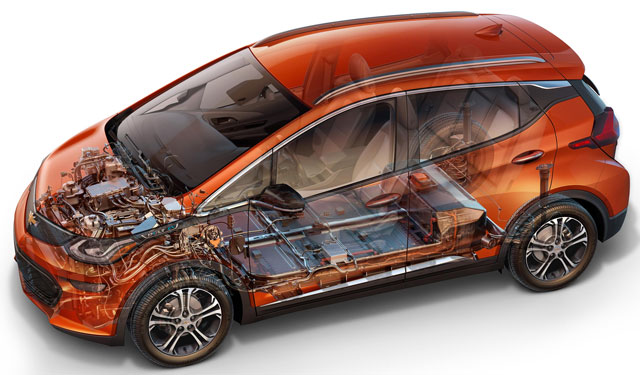
    The 2017 Chevy Bolt EV

    Are electric cars ready to stand on their own?

    If you took a spin down to the New York International Auto Show last week and saw the US$37 500 (R486 000) Chevy Bolt (electric) parked next to the strikingly similar $17 000 (R220 000) Chevy Cruze (gasoline), the answer is probably a hard no. The Bolt is arguably a better car than the Cruze — but not $20 000 better.

    Edmunds, the car-research company, recently weighed in with a hard no of its own, warning that the elimination of a $7 500 US tax credit is “likely to kill [the] US EV market”.

    Edmunds pinned its argument on what happened in Georgia, a state that became an unlikely leader in electric cars thanks to an extra $5 000 incentive. At one point, almost 4% of new cars being sold in Georgia were electric. Then they pulled away the punch bowl.

    But a very illuminating thing happened after Georgia’s incentives expired. Unlike the Nissan Leaf, which made up the majority of the EV market there, sales of electric-luxury Teslas were barely affected by the loss of the tax credit. In fact, more people are buying Teslas in Georgia today than during the subsidy years.

    The Tesla exception shows what happens when an electric car reaches parity with fuel-burning competitors in both price and function. Unlike the Leaf and the BMW i3, the Tesla Model S is quicker than similarly priced gasoline cars, has a long driving range, extensive fast-charging network, and is packed with unrivaled tech advances like Autopilot and wireless software updates.

    As a result, the Model S is now the best-selling large luxury vehicle in America. Changes to state or federal incentives are unlikely to alter that fact. But those Teslas are premium cars that start around $70 000. For plug-ins to really pass the subsidy test and take over the car industry, they’ll need to prove themselves in cheaper classes of car, and there will have to me more manufacturers besides Tesla.

    The primary cost for an electric car is its battery, responsible for almost half the price tag of a mid-sized plug-in. If you take that away, electric cars are much cheaper to produce and maintain than internal combustion vehicles. (That’s why French car maker Renault sells its popular Zoe without a battery, which customers pay a monthly fee to lease.)

    For true mass market appeal, the up-front sticker price is what matters most, and battery prices must come down further. Fortunately, prices are falling fast — by roughly 20%/year. The manufacturing cost of electric cars will fall below their petrol counterparts across the board around 2026, according to a recent analysis by Bloomberg New Energy Finance.

    The question of when electric cars will cost the same as their combustion counterparts isn’t academic. The $7 500 federal incentive is set to taper off as each manufacturer reaches its 200 000th US sale. For Tesla, that day will arrive sometime next year. Nissan and GM won’t be far behind — and any extension of the subsidy by the Trump administration seems unlikely.

    Another thing that makes electric cars more expensive is that, at lower volumes (less than 100 000/year of the early models), even the traditional components of a car come at higher costs. Low production numbers and high battery development costs created a valley of despair for EVs that lasted decades, which is why subsidies have been critical to giving the sector enough breathing room to eventually stand on its own.
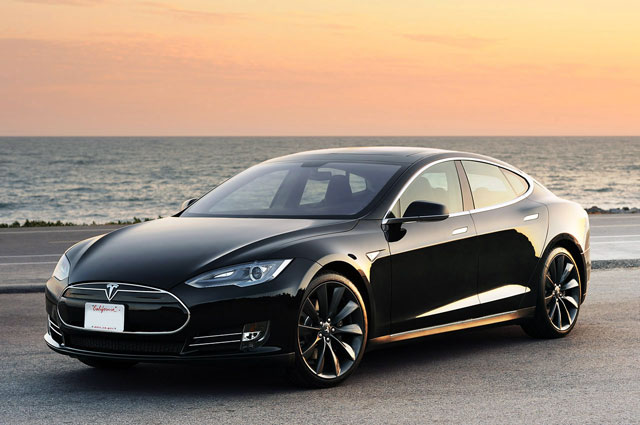
    The Tesla Model S

    Government incentives were crucial to the birth of the EV industry, and many countries and local governments will continue to offer them because of the critical role electric cars play in reducing pollution and combatting climate change.

    But even where governments are less enlightened, the valley of despair is coming to an end. Tesla, the first to approach price and function parity in the Model S sedan and Model X SUV, will attempt to recreate that magic later this year with the Model 3, a $35 000 entry-level luxury sedan. A longer-range Nissan Leaf will be unveiled in September, and depending on its price tag, it could begin to approach the parity zone in the sub-$30 000 market.

    And then watch out: in 2018, Volkswagen plows into electrification with an Audi SUV and the first high-speed US charging network to rival Tesla’s Superchargers. Jaguar and Volvo both have promising cars on the way too, and by 2020, the avalanche really begins, with Mercedes, VW, General Motors and others releasing dozens of new models.

    When the US incentives begin to expire next year, don’t expect a Georgia-sized collapse in the market. The period of greatest peril is ending for EVs, and the time of greatest promise is beginning. All the top car makers are investing billions of dollars to electrify their drivetrains, and the smart ones will compete aggressively on pricing in the short term in order to establish market share for the long haul. Incentives are important, but they won’t define the market for much longer.  — (c) 2017 Bloomberg LP

    Follow TechCentral on Google News Add TechCentral as your preferred source on Google


    Audi BMW Chevrolet General Motors Jaguar Mercedes-Benz Nissan Tesla Volkswagen Volvo
    WhatsApp YouTube
    Share. Facebook Twitter LinkedIn WhatsApp Telegram Email Copy Link
    Previous ArticleInternet will bring decades of pain: Jack Ma
    Next Article IBM CEO rakes in riches despite firm’s troubles

    Related Posts

    How Chinese cars took over South African showrooms

    How Chinese cars took over South African showrooms

    30 July 2026
    From care homes to production lines, the robots are coming

    From care homes to production lines, the robots are coming

    21 July 2026
    Watts & Wheels S1E7: 'Ferrari's EV breaks the internet'

    Watts & Wheels S1E7: ‘Ferrari’s EV breaks the internet’

    8 July 2026
    Company News
    Google Cloud, AI adoption gain momentum in Africa - Digicloud Africa

    Google Cloud, AI adoption gain momentum in Africa

    3 August 2026
    Domains.co.za launches self-hosted n8n VPS hosting

    Domains.co.za launches self-hosted n8n VPS hosting

    31 July 2026
    Smarter.tech '26 shows why smarter technology begins with context - Obsidian Systems

    Context is the missing piece in enterprise AI: Obsidian

    31 July 2026
    Opinion
    The author, Jannie van Zyl

    Selling vapour is corporate suicide in slow motion

    16 July 2026
    Brazil's online gambling crackdown is a lesson for South Africa

    How Amazon outmanoeuvred Starlink in South Africa

    15 July 2026
    The Popia problem with agentic AI - Herman Haasbroek

    The Popia problem with agentic AI

    14 July 2026

    Subscribe to Updates

    Get the best South African technology news and analysis delivered to your e-mail inbox every morning.

    Latest Posts
    SA experts split on whether the singularity has begun

    SA experts split on whether the singularity has begun

    3 August 2026
    Google Cloud, AI adoption gain momentum in Africa - Digicloud Africa

    Google Cloud, AI adoption gain momentum in Africa

    3 August 2026
    Telkom's prepaid growth is running on credit - Serame Taukobong

    Telkom’s prepaid growth is running on credit

    3 August 2026
    The debate about the grid is over

    The debate about the grid is over

    3 August 2026
    © 2009 - 2026 NewsCentral Media
    Built and maintained by Chronon
    • Cookie policy (ZA)
    • TechCentral – privacy and Popia

    Type above and press Enter to search. Press Esc to cancel.

    Manage consent

    TechCentral uses cookies to enhance its offerings. Consenting to these technologies allows us to serve you better. Not consenting or withdrawing consent may adversely affect certain features and functions of the website.

    Functional Always active
    The technical storage or access is strictly necessary for the legitimate purpose of enabling the use of a specific service explicitly requested by the subscriber or user, or for the sole purpose of carrying out the transmission of a communication over an electronic communications network.
    Preferences
    The technical storage or access is necessary for the legitimate purpose of storing preferences that are not requested by the subscriber or user.
    Statistics
    The technical storage or access that is used exclusively for statistical purposes. The technical storage or access that is used exclusively for anonymous statistical purposes. Without a subpoena, voluntary compliance on the part of your Internet Service Provider, or additional records from a third party, information stored or retrieved for this purpose alone cannot usually be used to identify you.
    Marketing
    The technical storage or access is required to create user profiles to send advertising, or to track the user on a website or across several websites for similar marketing purposes.
    • Manage options
    • Manage services
    • Manage {vendor_count} vendors
    • Read more about these purposes
    View preferences
    • {title}
    • {title}
    • {title}