Close Menu
TechCentralTechCentral

    Subscribe to the newsletter

    Get the best South African technology news and analysis delivered to your e-mail inbox every morning.

    Facebook X (Twitter) YouTube LinkedIn
    WhatsApp Facebook X (Twitter) LinkedIn YouTube
    TechCentralTechCentral
    • News
      Free Market Foundation slams treasury's proposed gambling tax

      Free Market Foundation slams treasury’s proposed gambling tax

      20 February 2026
      What Gen Z really thinks about the tech world it inherited - Tinashe Mazodze

      What Gen Z really thinks about the tech world it inherited

      20 February 2026
      Showmax 'can't continue' in its current form

      Showmax ‘can’t continue’ in its current form

      20 February 2026
      MultiChoice scraps annual DStv price hikes for 2026 - David Mignot

      MultiChoice scraps annual DStv price hike

      20 February 2026
      South Africa's dynamic spectrum breakthrough - Paul Colmer

      South Africa’s dynamic spectrum breakthrough

      20 February 2026
    • World
      Prominent Southern African journalist targeted with Predator spyware

      Prominent Southern African journalist targeted with Predator spyware

      18 February 2026
      More drama in Warner Bros tug of war

      More drama in Warner Bros tug of war

      17 February 2026
      Russia bans WhatsApp

      Russia bans WhatsApp

      12 February 2026
      EU regulators take aim at WhatsApp

      EU regulators take aim at WhatsApp

      9 February 2026
      Musk hits brakes on Mars mission

      Musk hits brakes on Mars mission

      9 February 2026
    • In-depth
      How liberalisation is rewiring South Africa's power sector

      How liberalisation is rewiring South Africa’s power sector

      21 January 2026
      The top-performing South African tech shares of 2025

      The top-performing South African tech shares of 2025

      12 January 2026
      Digital authoritarianism grows as African states normalise internet blackouts

      Digital authoritarianism grows as African states normalise internet blackouts

      19 December 2025
      TechCentral's South African Newsmakers of 2025

      TechCentral’s South African Newsmakers of 2025

      18 December 2025
      Black Friday goes digital in South Africa as online spending surges to record high

      Black Friday goes digital in South Africa as online spending surges to record high

      4 December 2025
    • TCS
      Watts & Wheels S1E4: 'We drive an electric Uber'

      Watts & Wheels S1E4: ‘We drive an electric Uber’

      10 February 2026
      TCS+ | How Cloud On Demand is helping SA businesses succeed in the cloud - Xhenia Rhode, Dion Kalicharan

      TCS+ | Cloud On Demand and Consnet: inside a real-world AWS partner success story

      30 January 2026
      Watts & Wheels S1E4: 'We drive an electric Uber'

      Watts & Wheels S1E3: ‘BYD’s Corolla Cross challenger’

      30 January 2026
      Watts & Wheels S1E4: 'We drive an electric Uber'

      Watts & Wheels S1E2: ‘China attacks, BMW digs in, Toyota’s sublime supercar’

      23 January 2026

      TCS+ | Why cybersecurity is becoming a competitive advantage for SA businesses

      20 January 2026
    • Opinion
      A million reasons monopolies don't work - Duncan McLeod

      A million reasons monopolies don’t work

      10 February 2026
      The author, Business Leadership South Africa CEO Busi Mavuso

      Eskom unbundling U-turn threatens to undo hard-won electricity gains

      9 February 2026
      South Africa's skills advantage is being overlooked at home - Richard Firth

      South Africa’s skills advantage is being overlooked at home

      29 January 2026
      Why Elon Musk's Starlink is a 'hard no' for me - Songezo Zibi

      Why Elon Musk’s Starlink is a ‘hard no’ for me

      26 January 2026
      A million reasons monopolies don't work - Duncan McLeod

      South Africa’s new fibre broadband battle

      20 January 2026
    • Company Hubs
      • Africa Data Centres
      • AfriGIS
      • Altron Digital Business
      • Altron Document Solutions
      • Altron Group
      • Arctic Wolf
      • AvertITD
      • Braintree
      • CallMiner
      • CambriLearn
      • CYBER1 Solutions
      • Digicloud Africa
      • Digimune
      • Domains.co.za
      • ESET
      • Euphoria Telecom
      • Incredible Business
      • iONLINE
      • IQbusiness
      • Iris Network Systems
      • LSD Open
      • Mitel
      • NEC XON
      • Netstar
      • Network Platforms
      • Next DLP
      • Ovations
      • Paracon
      • Paratus
      • Q-KON
      • SevenC
      • SkyWire
      • Solid8 Technologies
      • Telit Cinterion
      • Tenable
      • Vertiv
      • Videri Digital
      • Vodacom Business
      • Wipro
      • Workday
      • XLink
    • Sections
      • AI and machine learning
      • Banking
      • Broadcasting and Media
      • Cloud services
      • Contact centres and CX
      • Cryptocurrencies
      • Education and skills
      • Electronics and hardware
      • Energy and sustainability
      • Enterprise software
      • Financial services
      • Information security
      • Internet and connectivity
      • Internet of Things
      • Investment
      • IT services
      • Lifestyle
      • Motoring
      • Public sector
      • Retail and e-commerce
      • Satellite communications
      • Science
      • SMEs and start-ups
      • Social media
      • Talent and leadership
      • Telecoms
    • Events
    • Advertise
    TechCentralTechCentral
    Home » In-depth » The great decoupling? What’s next in US-China rift

    The great decoupling? What’s next in US-China rift

    By Agency Staff15 June 2020
    Twitter LinkedIn Facebook WhatsApp Email Telegram Copy Link
    News Alerts
    WhatsApp

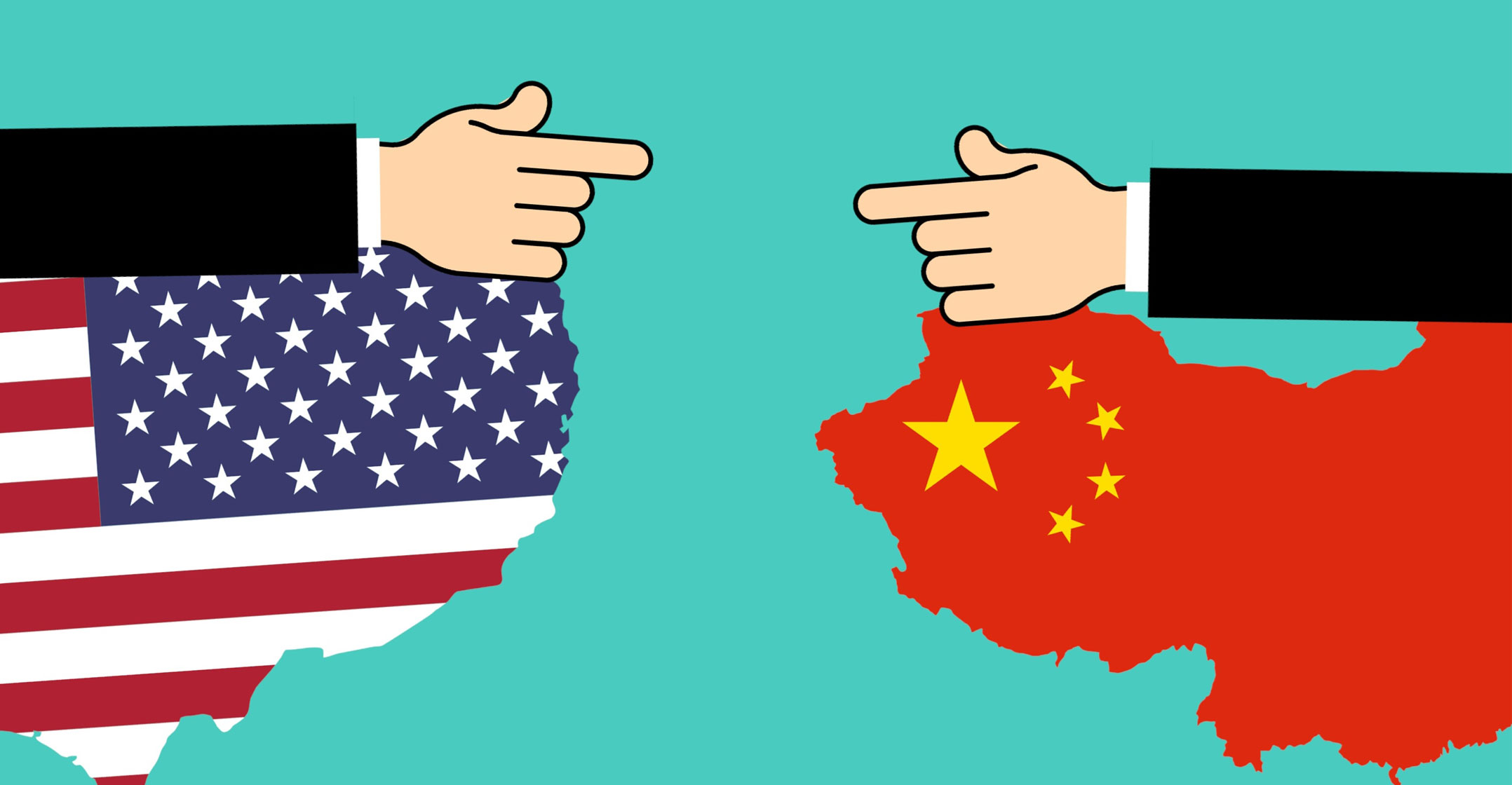
    In terms of economic relations, the US and China have been coupling up for decades. So much so that they became the biggest trading partners on the planet from 2014. But now, amid trade and technology wars, a global pandemic and strained diplomatic relations, politicians and pundits say the world’s largest economies are bound for a seismic “decoupling”. Yet, with businesses harbouring long-term ambitions for these two giant markets, breaking up may be hard to do.

    1. Are China and the US really decoupling?

    Bilateral trade sank by 15% in 2019 after US President Donald Trump began imposing tariffs on Chinese imports and China responded in kind. It had surged by an annual average 11% from 2001 to 2018, a stretch that included China’s admission to the World Trade Organisation and transformation into a global manufacturing powerhouse shipping cheap electronics, toys and clothes to American consumers. The coronavirus and the lingering trade war will depress trade further in 2020 as tensions on multiple fronts provoke what some see as an unavoidable tumble into a new Cold War.

    2. Which other fronts?

    Technological, geopolitical and financial. The US sees China’s ambitions in advanced technologies and involvement in foreign communications networks as a threat to national security and has targeted Chinese companies including Huawei, the world leader in 5G communications. The Trump administration is planning to shake up its relationship with Hong Kong over China’s plans for new security laws there. The US has blocked Chinese takeovers of international companies and is passing legislation that could stop shares of large Chinese corporations from trading in the US. Trump ordered a federal state pension fund not to include Chinese equities in its portfolio. On the other hand, China continues to open its financial sector to US banks.

    3. What about the coronavirus?

    Besides a war of words (Trump accused China of responding slowly to the virus as a ploy to harm his re-election chances), the shutdown of Hubei province following the initial outbreak in the city of Wuhan, a technology and auto hub, left international companies short of vital parts. That prompted calls from politicians to repatriate production from China, echoing an order made by Trump during the trade war. Those demands intensified as countries desperately sought face masks and protective clothing. China is the world’s biggest exporter of protective equipment. Some US politicians proposed paying companies to relocate operations from China, a move the Japanese government actually introduced. Robert Lighthizer, the US Trade Representative, said the crisis demonstrated the need for “strong and diverse supply chains with trusted trade partners” and how “depending purely on cheap imports for strategic products can make us vulnerable in times of crisis”.

    4. So, is this a watershed for American companies?

    The pandemic will probably push countries including the US to localise some production for health-security reasons. But moves to reconfigure supply chains have been under way since at least 2011, when the tsunami in Japan and floods in Thailand put a new premium on managing risks to production and diversifying suppliers. The so-called “China + 1” sourcing strategy adopted by many non-Chinese companies accelerated during the trade war. Factories did leave China, but they moved to other countries rather than “reshoring” to America’s industrial heartland. For example, the US has increasingly turned to Mexico for imports of technology-intensive products including electrical machinery and to Vietnam for toys, furniture and footwear. Still, China remains the dominant foreign supplier of those products, accounting for more than three-quarters of American toy imports.

    5. Are US companies getting out of China altogether?

    Not for now. More than 70% of companies surveyed in March by the American Chamber of Commerce in China said they had no plans yet to relocate production and supply-chain operations or sourcing outside of China due to Covid-19. The Asian country has advantages that are likely to sustain its position as the world’s main factory — mature supply chains, a massive market, well-built infrastructure and skilled labour. Indeed, much of the production in China by American companies is aimed at the local market. Even with the trade war raging in 2019, US companies plowed some US$14-billion into new factories and other long-term investments in China, including Tesla’s new gigafactory near Shanghai. China is also making efforts to attract overseas businesses such as a new law to protect foreign investment and a pledge to ease market access and deepen reform of state-owned enterprises to level the playing field for foreign firms.

    6. Do US businesses support the US strategy?

    Many executives worry they will be shut out of what remains the world’s most promising market. The more the US blocks the export of components like semiconductors and jet engines to China, and imposes tough sanctions on anyone who violates such bans, the more it will force not just Chinese companies to stop buying American components but those from third countries aiming to sell to China. They fret that selling to China in the future could mean getting America out of the supply chain. Others speculate that the Trump administration’s actions will serve to turbocharge China’s drive to become the dominant country in areas including artificial intelligence and biomedicine.

    7. How did it get to this?

    Trump brought his “America First” agenda to the White House just as President Xi Jinping was flexing China’s military, economic and technological muscle. Having lambasted China for harming the US economy and stealing American jobs during his 2016 campaign, Trump instigated the trade war two years later with the first imposition of tariffs that eventually applied to around $500-billion of goods. The US had for years — along with other trading partners — accused China of playing loose with the rules of international business. For instance, it complained that China forced foreign companies to hand over industrial and technological know-how, or simply stole it.

    8. What if Trump loses the US election?

    It’s possible that nothing much will change. The desire to check China has been one of the rare unifying forces among America’s polarised politicians, including opposition Democrats. And while former vice President Joe Biden, Trump’s opponent in November, was promoting his “friendship” with Xi as recently as 2016, this was his take on the Chinese president in February: “This is a guy who is a thug.”  — Reported by Brendan Murray, (c) 2020 Bloomberg LP

    Follow TechCentral on Google News Add TechCentral as your preferred source on Google


    Donald Trump Huawei Robert Lighthizer Tesla top Xi Jinping
    WhatsApp YouTube
    Share. Facebook Twitter LinkedIn WhatsApp Telegram Email Copy Link
    Previous ArticleWhatsApp payments launched in Brazil with more markets to follow
    Next Article Telkom earnings to plummet as fixed-voice business nosedives

    Related Posts

    Huawei turns 25 in South Africa, celebrates with major device discounts

    Huawei turns 25 in South Africa, celebrates with major device discounts

    30 January 2026
    A single Musk super-company may be taking shape - Elon Musk

    A single Musk super-company may be taking shape

    30 January 2026
    Tesla abandons traditional EV growth for a high-stakes AI future

    Tesla abandons traditional EV growth for a high-stakes AI future

    29 January 2026
    Company News
    Service is everyone's problem now - and that's exactly why the Atlassian Service Collection matters

    Service is everyone’s problem now – why the Atlassian Service Collection matters

    20 February 2026
    Customers have new expectations. Is your CX ready? 1Stream

    Customers have new expectations. Is your CX ready?

    19 February 2026
    South Africa's cybersecurity challenge is not a tool problem - Nicholas Applewhite, Trinexia South Africa

    South Africa’s cybersecurity challenge is not a tool problem

    19 February 2026
    Opinion
    A million reasons monopolies don't work - Duncan McLeod

    A million reasons monopolies don’t work

    10 February 2026
    The author, Business Leadership South Africa CEO Busi Mavuso

    Eskom unbundling U-turn threatens to undo hard-won electricity gains

    9 February 2026
    South Africa's skills advantage is being overlooked at home - Richard Firth

    South Africa’s skills advantage is being overlooked at home

    29 January 2026

    Subscribe to Updates

    Get the best South African technology news and analysis delivered to your e-mail inbox every morning.

    Latest Posts
    Service is everyone's problem now - and that's exactly why the Atlassian Service Collection matters

    Service is everyone’s problem now – why the Atlassian Service Collection matters

    20 February 2026
    Free Market Foundation slams treasury's proposed gambling tax

    Free Market Foundation slams treasury’s proposed gambling tax

    20 February 2026
    What Gen Z really thinks about the tech world it inherited - Tinashe Mazodze

    What Gen Z really thinks about the tech world it inherited

    20 February 2026
    Showmax 'can't continue' in its current form

    Showmax ‘can’t continue’ in its current form

    20 February 2026
    © 2009 - 2026 NewsCentral Media
    • Cookie policy (ZA)
    • TechCentral – privacy and Popia

    Type above and press Enter to search. Press Esc to cancel.

    Manage consent

    TechCentral uses cookies to enhance its offerings. Consenting to these technologies allows us to serve you better. Not consenting or withdrawing consent may adversely affect certain features and functions of the website.

    Functional Always active
    The technical storage or access is strictly necessary for the legitimate purpose of enabling the use of a specific service explicitly requested by the subscriber or user, or for the sole purpose of carrying out the transmission of a communication over an electronic communications network.
    Preferences
    The technical storage or access is necessary for the legitimate purpose of storing preferences that are not requested by the subscriber or user.
    Statistics
    The technical storage or access that is used exclusively for statistical purposes. The technical storage or access that is used exclusively for anonymous statistical purposes. Without a subpoena, voluntary compliance on the part of your Internet Service Provider, or additional records from a third party, information stored or retrieved for this purpose alone cannot usually be used to identify you.
    Marketing
    The technical storage or access is required to create user profiles to send advertising, or to track the user on a website or across several websites for similar marketing purposes.
    • Manage options
    • Manage services
    • Manage {vendor_count} vendors
    • Read more about these purposes
    View preferences
    • {title}
    • {title}
    • {title}