
Close Menu
TechCentralTechCentral

    Subscribe to the newsletter

    Get the best South African technology news and analysis delivered to your e-mail inbox every morning.

    Facebook X (Twitter) YouTube LinkedIn
    WhatsApp Facebook X (Twitter) LinkedIn YouTube
    TechCentralTechCentral
    • News
      Big Microsoft 365 price increases coming next year

      Big Microsoft price increases coming next year

      5 December 2025
      Vodacom to take control of Safaricom in R36-billion deal - Shameel Joosub

      Vodacom to take control of Safaricom in R36-billion deal

      4 December 2025
      Black Friday goes digital in South Africa as online spending surges to record high

      Black Friday goes digital in South Africa as online spending surges to record high

      4 December 2025
      BYD takes direct aim at Toyota with launch of sub-R500 000 Sealion 5 PHEV

      BYD takes direct aim at Toyota with launch of sub-R500 000 Sealion 5 PHEV

      4 December 2025
      'Get it now': Takealot in new instant deliveries pilot

      ‘Get it now’: Takealot in new instant deliveries pilot

      4 December 2025
    • World
      Amazon and Google launch multi-cloud service for faster connectivity

      Amazon and Google launch multi-cloud service for faster connectivity

      1 December 2025
      Google makes final court plea to stop US breakup

      Google makes final court plea to stop US breakup

      21 November 2025
      Bezos unveils monster rocket: New Glenn 9x4 set to dwarf Saturn V

      Bezos unveils monster rocket: New Glenn 9×4 set to dwarf Saturn V

      21 November 2025
      Tech shares turbocharged by Nvidia's stellar earnings

      Tech shares turbocharged by stellar Nvidia earnings

      20 November 2025
      Config file blamed for Cloudflare meltdown that disrupted the web

      Config file blamed for Cloudflare meltdown that disrupted the web

      19 November 2025
    • In-depth
      Jensen Huang Nvidia

      So, will China really win the AI race?

      14 November 2025
      Valve's Linux console takes aim at Microsoft's gaming empire

      Valve’s Linux console takes aim at Microsoft’s gaming empire

      13 November 2025
      iOCO's extraordinary comeback plan - Rhys Summerton

      iOCO’s extraordinary comeback plan

      28 October 2025
      Why smart glasses keep failing - no, it's not the tech - Mark Zuckerberg

      Why smart glasses keep failing – it’s not the tech

      19 October 2025
      BYD to blanket South Africa with megawatt-scale EV charging network - Stella Li

      BYD to blanket South Africa with megawatt-scale EV charging network

      16 October 2025
    • TCS
      TCS+ | How Cloud on Demand helps partners thrive in the AWS ecosystem - Odwa Ndyaluvane and Xenia Rhode

      TCS+ | How Cloud On Demand helps partners thrive in the AWS ecosystem

      4 December 2025
      TCS | MTN Group CEO Ralph Mupita on competition, AI and the future of mobile

      TCS | Ralph Mupita on competition, AI and the future of mobile

      28 November 2025
      TCS | Dominic Cull on fixing South Africa's ICT policy bottlenecks

      TCS | Dominic Cull on fixing South Africa’s ICT policy bottlenecks

      21 November 2025
      TCS | BMW CEO Peter van Binsbergen on the future of South Africa's automotive industry

      TCS | BMW CEO Peter van Binsbergen on the future of South Africa’s automotive industry

      6 November 2025
      TCS | Why Altron is building an AI factory - Bongani Andy Mabaso

      TCS | Why Altron is building an AI factory in Johannesburg

      28 October 2025
    • Opinion
      Your data, your hardware: the DIY AI revolution is coming - Duncan McLeod

      Your data, your hardware: the DIY AI revolution is coming

      20 November 2025
      Zero Carbon Charge founder Joubert Roux

      The energy revolution South Africa can’t afford to miss

      20 November 2025
      It's time for a new approach to government IT spend in South Africa - Richard Firth

      It’s time for a new approach to government IT spend in South Africa

      19 November 2025
      How South Africa's broken Rica system fuels murder and mayhem - Farhad Khan

      How South Africa’s broken Rica system fuels murder and mayhem

      10 November 2025
      South Africa's AI data centre boom risks overloading a fragile grid - Paul Colmer

      South Africa’s AI data centre boom risks overloading a fragile grid

      30 October 2025
    • Company Hubs
      • Africa Data Centres
      • AfriGIS
      • Altron Digital Business
      • Altron Document Solutions
      • Altron Group
      • Arctic Wolf
      • AvertITD
      • Braintree
      • CallMiner
      • CambriLearn
      • CYBER1 Solutions
      • Digicloud Africa
      • Digimune
      • Domains.co.za
      • ESET
      • Euphoria Telecom
      • Incredible Business
      • iONLINE
      • IQbusiness
      • Iris Network Systems
      • LSD Open
      • NEC XON
      • Netstar
      • Network Platforms
      • Next DLP
      • Ovations
      • Paracon
      • Paratus
      • Q-KON
      • SevenC
      • SkyWire
      • Solid8 Technologies
      • Telit Cinterion
      • Tenable
      • Vertiv
      • Videri Digital
      • Vodacom Business
      • Wipro
      • Workday
      • XLink
    • Sections
      • AI and machine learning
      • Banking
      • Broadcasting and Media
      • Cloud services
      • Contact centres and CX
      • Cryptocurrencies
      • Education and skills
      • Electronics and hardware
      • Energy and sustainability
      • Enterprise software
      • Financial services
      • Information security
      • Internet and connectivity
      • Internet of Things
      • Investment
      • IT services
      • Lifestyle
      • Motoring
      • Public sector
      • Retail and e-commerce
      • Satellite communications
      • Science
      • SMEs and start-ups
      • Social media
      • Talent and leadership
      • Telecoms
    • Events
    • Advertise
    TechCentralTechCentral
    Home » In-depth » The making of the modern skyscraper

    The making of the modern skyscraper

    By The Conversation11 May 2016
    Twitter LinkedIn Facebook WhatsApp Email Telegram Copy Link
    News Alerts
    WhatsApp
    skyscraper-640
    Image: Thomas Hawk

    From the legendary Tower of Babel to the iconic Burj Khalifa, humans have always aspired to build to ever greater heights. Over the centuries, we have constructed towering edifices to celebrate our culture, promote our cities — or simply to show off.

    Historically, tall structures were the preserve of great rulers, religions and empires. For instance, the Great Pyramid of Giza — built to house the tomb of Pharaoh Khufu — once towered over 145m high. It was the tallest man-made structure for nearly 4 000 years, before being overtaken by the 160m tall Lincoln Cathedral in the 14th century. Other edifices, such as Tibet’s Potala Palace (the traditional home of the Dalai Lama), or the monasteries of Athos were constructed atop mountains or rocky outcrops, to bring them even closer to the heavens.

    Yet these grand historical efforts are dwarfed by the skyscrapers of the 20th and 21st centuries. London’s Shard looms at 310m tall at its fractured tip — but it’s made to look small by the world’s tallest building, Burj Khalifa, which stands at more than 828m. And both these behemoths will be left in the shadows by the Kingdom Tower in Jeddah. Originally planned by architect Adrian Smith to reach 1 600m, the tower is now likely to reach 1km high once it’s completed in 2020.
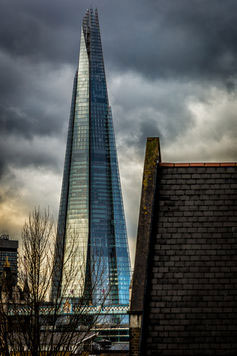
    The Shard in London
    The Shard in London

    So, how did we make this great leap upwards?

    We can trace our answer back to the 1880s, when the first generation of skyscrapers appeared in Chicago and New York. The booming insurance businesses of the mid-19th century were among the first enterprises to exploit the technological advancements, which made tall buildings possible.

    Constructed in the aftermath of the great fire of 1871, Chicago’s Home Insurance building — completed in 1884 by William Le Baron Jenney — is widely considered to be the first tall building of the industrial era, at 12 stories high.

    Architects Louis Sullivan and Dankmar Adler first coined the term “tall office building” in 1896, drawing on the architectural precedent of Italy’s Renaissance palazzi. His definition denoted that the first two stories are given over to the entrance way and retail activity, with a service basement below, repeated storeys above and a cornice or attic storey to finish the building at the top. Vertical ducts unite the building with power, heat and circulation. This specification still holds good today.

    The American technological revolution of 1880 to 1890 saw a burst of creativity that produced a wave of new inventions that helped architects to build higher than ever before: Bessemer steel, formed into I-sections in the new rolling mills enabled taller and more flexible frame design than the cast iron of the previous era; the newly-patented sprinkler head allowed buildings to escape the strict, 23m height limit, which was imposed to control the risk of fire; and the patenting of AC electricity allowed elevators to be electrically powered and rise to ten or more stories.
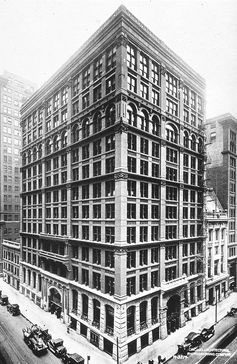
    The Home Insurance building
    The Home Insurance building

    Early tall buildings contained offices. The typewriter, telephone and US universal postal system also appeared in this decade, and they revolutionised office work and enabled administration to be concentrated in individual high-rise buildings within a city’s business district.

    Changes in urban life also encouraged the switch to taller, higher-density facilities. Street trams, subways and elevated rail links provided the means to deliver hundreds of workers to a single urban location, decades before the European motor car appeared on American streets and reshaped urban form away from the city grid.

    Apart from a few high-rise mansion blocks around Central Park, New York, the terraced house reigned supreme in the crowded cities of the pre-motor car age, such as Paris, London and Manhattan, and evolved to nine stories in ultra-dense Hong Kong.

    Early office towers filled their city blocks entirely, with buildings enclosing a large light and air-well, as a squared U, O or H shape. This permitted natural light and ventilation within the building, but didn’t provide any public spaces. Chicago imposed a height limit of 40m in 1893, but New York raced ahead with large and tall blocks. Many of these, such as the Singer, Woolworth, MetLife and Chrysler buildings, tapered off with “campanile” towers, battling to be tallest in the world.

    Second-generation giants

    In 1915, following the completion of the 40-storey Equitable building on Broadway, there was such alarm at the darkening streets that New York introduced “zoning laws” that forced new buildings to step ziggurat-like as they rose, in order to bring daylight down to street level.

    This meant that while the base still filled the city block, the rest of the tower would rise centrally, stepping back every few stories, and it forced the service core to the building’s centre, leading to the loss of the light-well and making mechanical ventilation and artificial lighting essential for human habitation. This was a radical change in the shape of tall buildings, and the second generation of skyscrapers.
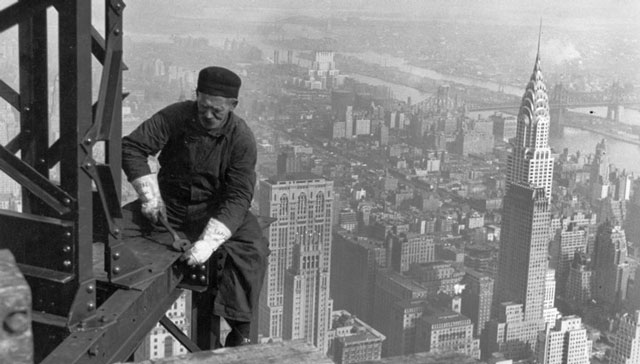
    A race to the top
    A race to the top

    As architectural historian Carol Willis would have it, “form follows finance”: the developers of early 20th century high-rise office blocks would work out how to maximise the amount of usable floor space in a city site, before asking an architect to put a wall around it. Such vast wall surfaces with conventional windows invited patterns of geometric decoration, and the ziggurat style came to be the most recognisable architectural symbol of the Art Deco movement.

    The mania for profit-driven tall development got out of hand in the late 1920s, however, and culminated in 1931 with the Chrysler and the Empire State buildings. The oversupply of office buildings, the depression of the 1930s and World War 2 brought an end to the Art Deco boom. There were no more skyscrapers until the 1950s, when the post-war era summoned forth a third generation: the International Style, the buildings of darkened glass and steel-framed boxes, with air conditioning and plaza fronts that we see in so many of the world’s cities today.The Conversation

    • David Nicholson-Cole is assistant professor in architecture, University of Nottingham
    • This article was originally published on The Conversation


    Subscribe to TechCentral Subscribe to TechCentral
    Share. Facebook Twitter LinkedIn WhatsApp Telegram Email Copy Link
    Previous ArticleCwele puts broadband above revenue
    Next Article Busting the Africa science myth

    Related Posts

    Big Microsoft 365 price increases coming next year

    Big Microsoft price increases coming next year

    5 December 2025
    AI is not a technology problem - iqbusiness

    AI is not a technology problem – iqbusiness

    5 December 2025
    Vodacom to take control of Safaricom in R36-billion deal - Shameel Joosub

    Vodacom to take control of Safaricom in R36-billion deal

    4 December 2025
    Company News
    AI is not a technology problem - iqbusiness

    AI is not a technology problem – iqbusiness

    5 December 2025
    Telcos are sitting on a data gold mine - but few know what do with it - Phillip du Plessis

    Telcos are sitting on a data gold mine – but few know what do with it

    4 December 2025
    Unlock smarter computing with your surface Copilot+ PC

    Unlock smarter computing with your Surface Copilot+ PC

    4 December 2025
    Opinion
    Your data, your hardware: the DIY AI revolution is coming - Duncan McLeod

    Your data, your hardware: the DIY AI revolution is coming

    20 November 2025
    Zero Carbon Charge founder Joubert Roux

    The energy revolution South Africa can’t afford to miss

    20 November 2025
    It's time for a new approach to government IT spend in South Africa - Richard Firth

    It’s time for a new approach to government IT spend in South Africa

    19 November 2025

    Subscribe to Updates

    Get the best South African technology news and analysis delivered to your e-mail inbox every morning.

    Latest Posts
    Big Microsoft 365 price increases coming next year

    Big Microsoft price increases coming next year

    5 December 2025
    AI is not a technology problem - iqbusiness

    AI is not a technology problem – iqbusiness

    5 December 2025
    Vodacom to take control of Safaricom in R36-billion deal - Shameel Joosub

    Vodacom to take control of Safaricom in R36-billion deal

    4 December 2025
    Black Friday goes digital in South Africa as online spending surges to record high

    Black Friday goes digital in South Africa as online spending surges to record high

    4 December 2025
    © 2009 - 2025 NewsCentral Media
    • Cookie policy (ZA)
    • TechCentral – privacy and Popia

    Type above and press Enter to search. Press Esc to cancel.

    Manage consent

    TechCentral uses cookies to enhance its offerings. Consenting to these technologies allows us to serve you better. Not consenting or withdrawing consent may adversely affect certain features and functions of the website.

    Functional Always active
    The technical storage or access is strictly necessary for the legitimate purpose of enabling the use of a specific service explicitly requested by the subscriber or user, or for the sole purpose of carrying out the transmission of a communication over an electronic communications network.
    Preferences
    The technical storage or access is necessary for the legitimate purpose of storing preferences that are not requested by the subscriber or user.
    Statistics
    The technical storage or access that is used exclusively for statistical purposes. The technical storage or access that is used exclusively for anonymous statistical purposes. Without a subpoena, voluntary compliance on the part of your Internet Service Provider, or additional records from a third party, information stored or retrieved for this purpose alone cannot usually be used to identify you.
    Marketing
    The technical storage or access is required to create user profiles to send advertising, or to track the user on a website or across several websites for similar marketing purposes.
    • Manage options
    • Manage services
    • Manage {vendor_count} vendors
    • Read more about these purposes
    View preferences
    • {title}
    • {title}
    • {title}