A team led by University of Cape Town astronomers has revealed the true scale of one of the largest hidden structures in the nearby universe, using South Africa’s MeerKAT radio telescope and the Southern African Large Telescope (Salt) to peer through a cosmic blind spot that has frustrated scientists for decades.
The Vela Supercluster — a colossal concentration of galaxies located roughly 800 million light years from Earth — turns out to be far larger and more massive than previously thought, stretching across about 300 million light years and containing matter equivalent to about 30 million billion suns.
The findings, published on Thursday, show that Vela rivals the famous Shapley Supercluster, long considered the most massive structure in the nearby universe, and that its gravitational influence exceeds that of other well-known regions, including the Great Attractor.
The discovery was made possible by a novel hybrid technique that combines galaxy redshift measurements — which reveal how fast galaxies are moving away from us — with galaxy distance and peculiar velocity data, which show how galaxies move under gravity across enormous cosmic distances. The team used more than 65 000 galaxy distance measurements and added over 8 000 new galaxy redshifts observed close to the plane of the Milky Way.
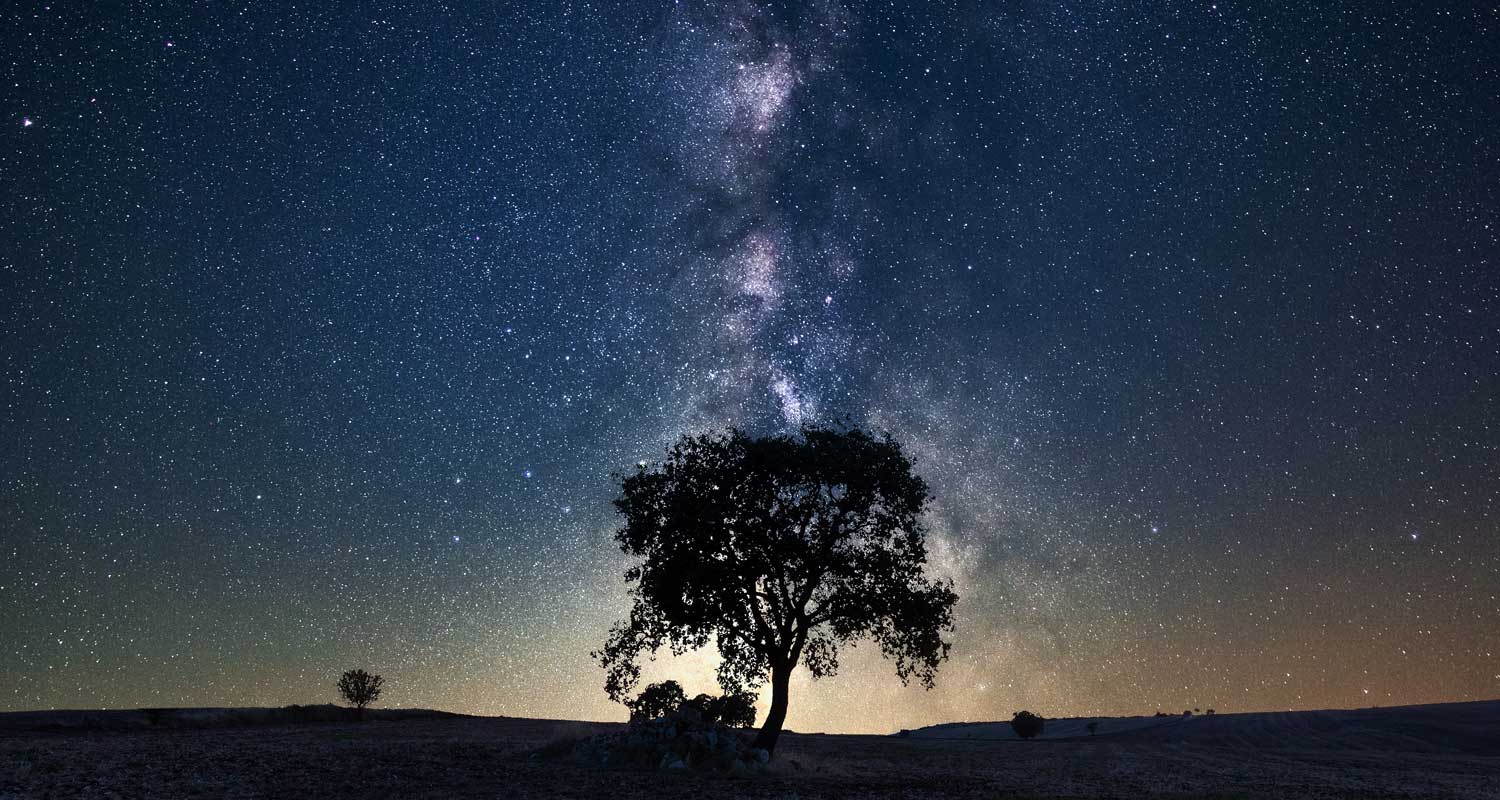
The challenge the researchers faced was that about 20% of the sky is hidden behind the Milky Way’s dense disc of dust and stars, a region known as the Zone of Avoidance. For decades, this blind spot prevented astronomers from building a complete picture of the large-scale structure of the universe.
MeetKAT, Salt
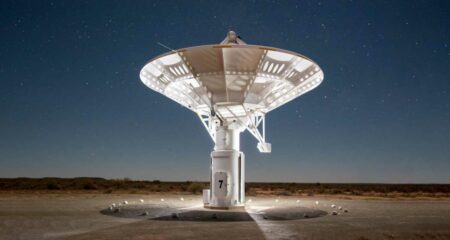
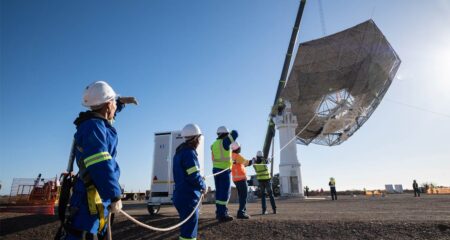
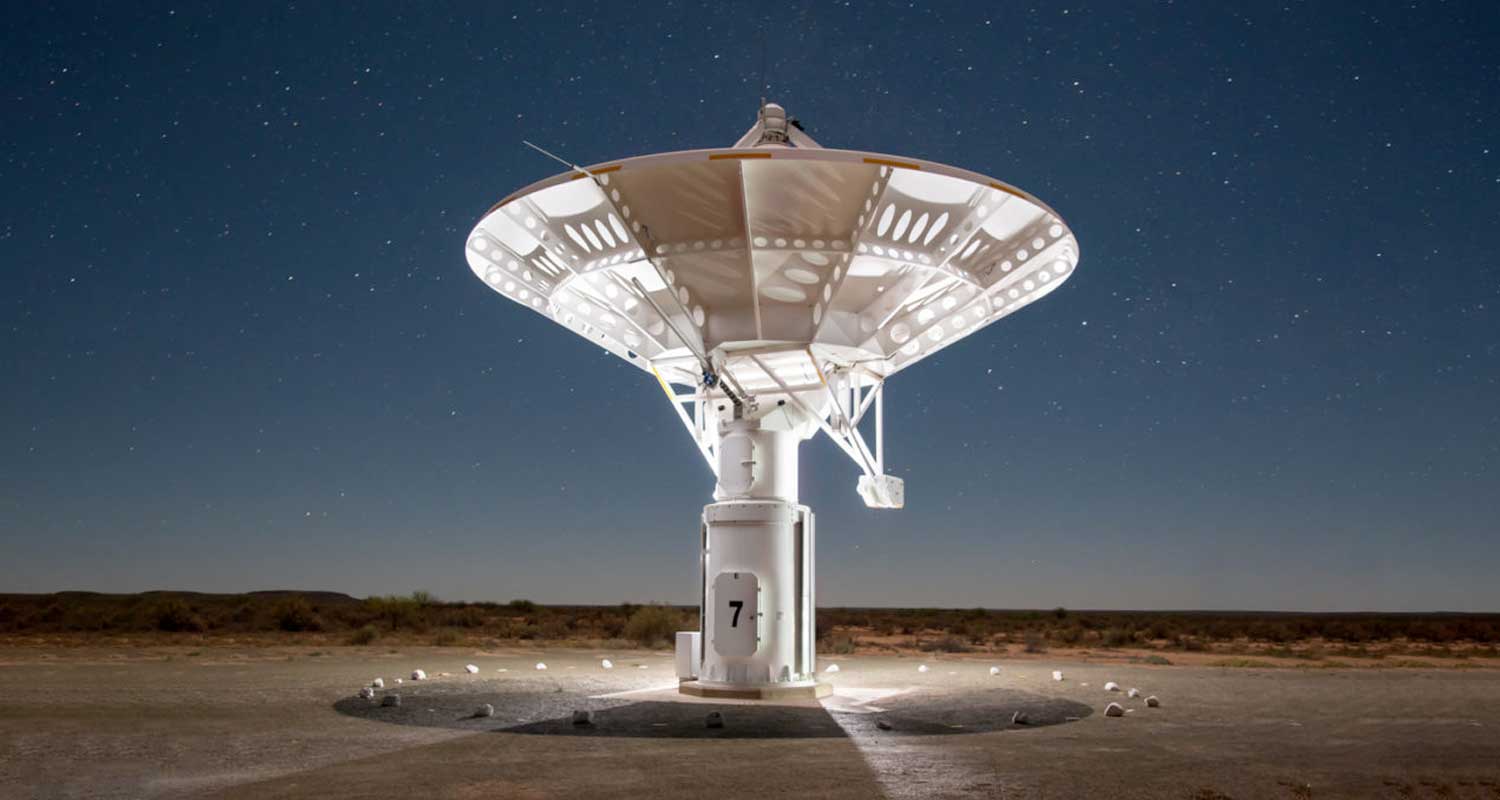
MeerKAT, operated by the South African Radio Astronomy Observatory, proved critical to the breakthrough. The radio telescope can detect hydrogen gas at wavelengths that pass through dust, allowing astronomers to observe galaxies that would otherwise remain invisible.
Salt, the largest single optical telescope in the southern hemisphere, also contributed key observations.
Read: MeerKAT detects most powerful natural radio laser ever observed
“I am truly exhilarated that the data gathered by my group could be successfully incorporated into this novel methodology,” said UCT emeritus professor Renée Kraan-Korteweg, who led the UCT team. “It has finally confirmed the prominence of the Vela-Banzi supercluster — something I suspected more than a decade ago.”
The supercluster has a complex internal structure, with two main dense cores moving towards each other. Its gravitational pull is shaping the large-scale motions of galaxies across hundreds of millions of light years, including those in our own Local Group.
The international collaboration included researchers from Université Claude Bernard Lyon 1 in France, Swinburne University of Technology in Australia and the INAF Osservatorio Astronomico di Cagliari in Italy.
The team has given the structure the affectionate name “Vela-Banzi”, derived from isiXhosa, meaning “revealing widely” — a nod to the South African infrastructure that helped bring the hidden supercluster into view.
Read: South African telescope solves mystery of ‘doomed’ giant star
The research highlights the growing global role of South African astronomy facilities and demonstrates techniques that will become increasingly important as next-generation observatories come online. — (c) 2026 NewsCentral Media
Get breaking news from TechCentral on WhatsApp. Sign up here.