Close Menu
TechCentralTechCentral

    Subscribe to the newsletter

    Get the best South African technology news and analysis delivered to your e-mail inbox every morning.

    Facebook X (Twitter) YouTube LinkedIn
    WhatsApp Facebook X (Twitter) LinkedIn YouTube
    TechCentralTechCentral
    • News
      SA finally has a broadband map - and it reveals where the gaps are

      SA finally has a broadband map – and it reveals where the gaps are

      31 March 2026
      Bookmakers want banks to cut off offshore online gambling sites

      Bookmakers want banks to cut off offshore online gambling sites

      31 March 2026
      Government steps in as fuel shock hits

      Government steps in as fuel shock hits

      31 March 2026
      Uber commits R5-billion to South Africa amid licensing woes - Deepesh Thomas

      Uber commits R5-billion to South Africa amid licensing woes

      31 March 2026
      'It's done for my industry': the SA director betting everything on AI film - Donovan Marsh

      The SA director betting everything on AI filmmaking

      31 March 2026
    • World

      Apple plans to open Siri to rival AI services

      27 March 2026
      It's official: ads are coming to ChatGPT

      It’s official: ads are coming to ChatGPT

      23 March 2026
      Mystery Chinese AI model revealed to be Xiaomi's

      Mystery Chinese AI model revealed to be Xiaomi’s

      19 March 2026
      A mystery AI model has developers buzzing

      A mystery AI model has developers buzzing

      18 March 2026
      Samsung's trifold gamble ends in retreat

      Samsung’s trifold gamble ends in retreat

      17 March 2026
    • In-depth
      The R18-billion tech giant hiding in plain sight - Jens Montanana

      The R16-billion tech giant hiding in plain sight

      26 March 2026
      The last generation of coders

      The last generation of coders

      18 February 2026
      Sentech is in dire straits

      Sentech is in dire straits

      10 February 2026
      How liberalisation is rewiring South Africa's power sector

      How liberalisation is rewiring South Africa’s power sector

      21 January 2026
      The top-performing South African tech shares of 2025

      The top-performing South African tech shares of 2025

      12 January 2026
    • TCS
      Anoosh Rooplal

      TCS | Anoosh Rooplal on the Post Office’s last stand

      27 March 2026
      Meet the CIO | HealthBridge CTO Anton Fatti on the future of digital health

      Meet the CIO | Healthbridge CTO Anton Fatti on the future of digital health

      23 March 2026
      TCS+ | Arctic Wolf unpacks the evolving threat landscape for SA businesses - Clare Loveridge and Jason Oehley

      TCS+ | Arctic Wolf unpacks the evolving threat landscape for SA businesses

      19 March 2026
      TCS+ | Vox Kiwi: a wireless solution promising a fibre-like experience - Theo van Zyl

      TCS+ | Vox Kiwi: a wireless solution promising a fibre-like experience

      13 March 2026
      TCS+ | Flipping the narrative on AI in the Global South - Josefin Rosén

      TCS+ | Flipping the narrative on AI in the Global South

      13 March 2026
    • Opinion
      The conflict of interest at the heart of PayShap's slow adoption - Cheslyn Jacobs

      The conflict of interest at the heart of PayShap’s slow adoption

      26 March 2026
      South Africa's energy future hinges on getting wheeling right - Aishah Gire

      South Africa’s energy future hinges on getting wheeling right

      10 March 2026
      Hold the doom: the case for a South African comeback - Duncan McLeod

      Apple just dropped a bomb on the Windows world

      5 March 2026
      VC's centre of gravity is shifting - and South Africa is in the frame - Alison Collier

      VC’s centre of gravity is shifting – and South Africa is in the frame

      3 March 2026
      Hold the doom: the case for a South African comeback - Duncan McLeod

      Hold the doom: the case for a South African comeback

      26 February 2026
    • Company Hubs
      • 1Stream
      • Africa Data Centres
      • AfriGIS
      • Altron Digital Business
      • Altron Document Solutions
      • Altron Group
      • Arctic Wolf
      • Ascent Technology
      • AvertITD
      • Braintree
      • CallMiner
      • CambriLearn
      • CYBER1 Solutions
      • Digicloud Africa
      • Digimune
      • Domains.co.za
      • ESET
      • Euphoria Telecom
      • HOSTAFRICA
      • Incredible Business
      • iONLINE
      • IQbusiness
      • Iris Network Systems
      • LSD Open
      • Mitel
      • NEC XON
      • Netstar
      • Network Platforms
      • Next DLP
      • Ovations
      • Paracon
      • Paratus
      • Q-KON
      • SevenC
      • SkyWire
      • Solid8 Technologies
      • Telit Cinterion
      • Telviva
      • Tenable
      • Vertiv
      • Videri Digital
      • Vodacom Business
      • Wipro
      • Workday
      • XLink
    • Sections
      • AI and machine learning
      • Banking
      • Broadcasting and Media
      • Cloud services
      • Contact centres and CX
      • Cryptocurrencies
      • Education and skills
      • Electronics and hardware
      • Energy and sustainability
      • Enterprise software
      • Financial services
      • HealthTech
      • Information security
      • Internet and connectivity
      • Internet of Things
      • Investment
      • IT services
      • Lifestyle
      • Motoring
      • Policy and regulation
      • Public sector
      • Retail and e-commerce
      • Satellite communications
      • Science
      • SMEs and start-ups
      • Social media
      • Talent and leadership
      • Telecoms
    • Events
    • Advertise
    TechCentralTechCentral
    Home » Sections » Energy and sustainability » Upheaval coming over South Africa’s shift to renewables

    Upheaval coming over South Africa’s shift to renewables

    By Agency Staff16 February 2021
    Twitter LinkedIn Facebook WhatsApp Email Telegram Copy Link
    News Alerts
    WhatsApp
    Out with the old… Image: Steve Buissinne

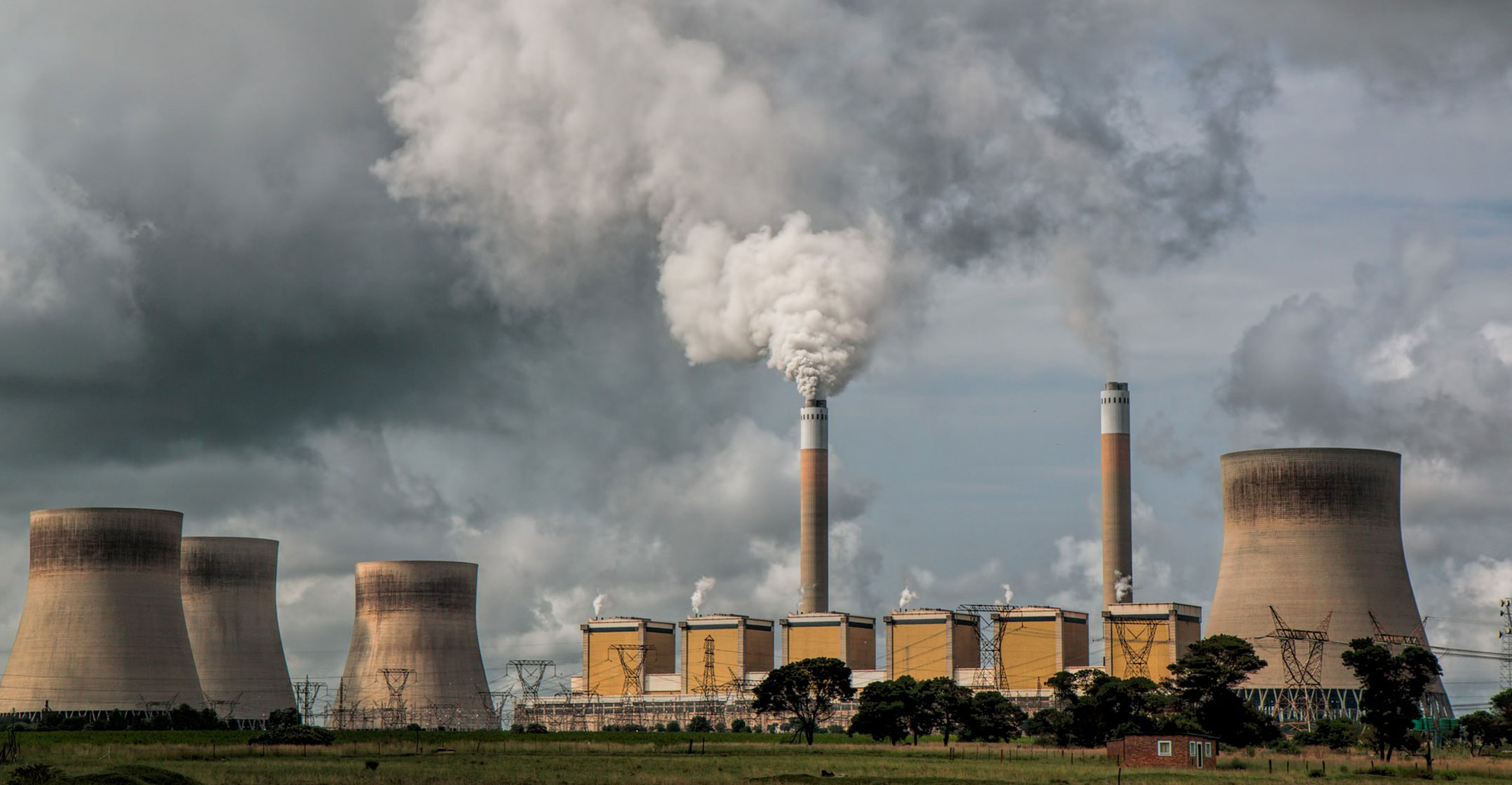
    A photograph in the entrance hall at Komati power station shows the plant in better times, its nine generating units belching steam and smoke into the night sky.

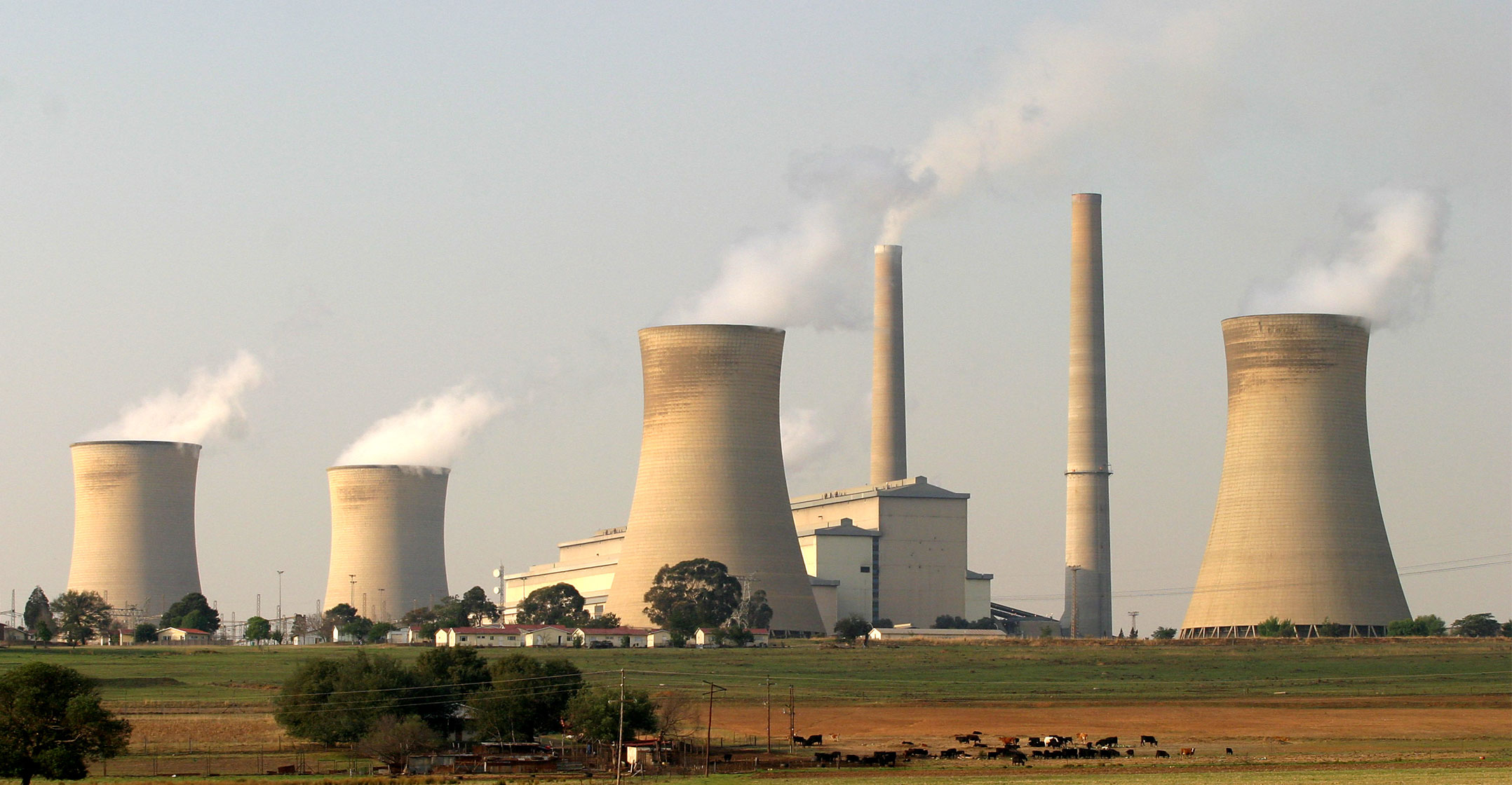
    Those days are never coming back: Komati’s sole remaining working unit is facing closure within two years under plans by Eskom to shut about a quarter of its coal-fired capacity by 2030. Next door at the Goedehoop mine, arrays of solar panels line the main access road, a sign of what may be to come for South Africa’s coal belt.

    For decades, almost all the electricity needed to power the economy has been produced by a fleet of ageing coal-fired plants constructed alongside the mines to the east of Johannesburg. That’s made Mpumalanga, in which Komati is located, one of the most coal-dependent and polluted regions on Earth.

    Decommissioning those plants is essential if President Cyril Ramaphosa is to meet a commitment to reach net-zero carbon emissions by 2050…

    Decommissioning those plants is essential if President Cyril Ramaphosa is to meet a commitment to reach net-zero carbon emissions by 2050, and yet the closures also put tens of thousands of jobs at risk. Potentially destabilising anywhere, in South Africa it’s a recipe for dangerous economic and political upheaval that’s prompted the government and industry to sign on to the concept of a “just energy transition” — an attempt to create new employment and win public buy-in for the impending change.

    “If you look at some of these communities, they have been dependent on the power station and, in some cases, mining for many many decades, generations,” said Mandy Rambharos, head of Eskom’s Just Energy Transition office. “You can’t just lock the door, throw away the keys and walk away.”

    ‘Highly insufficient’

    South Africa’s current plans are still “highly insufficient” to help meet global climate goals, according to Climate Action Tracker, which provides independent scientific analysis. And with South Africa yet to submit an updated set of climate commitments ahead of the United Nations COP26 summit in the Scottish city of Glasgow in November, the government is under pressure to set more ambitious goals.

    The lack of certainty over the future is unsettling for those on the front line who must shoulder the burden of change.

    They include Cathy Mkhuma, who was born in Komati and now represents it as a local government councillor for the ANC. Mkhuma, 36, has witnessed the town’s demise up close: Her father worked as a gardener for Eskom, which started generating electricity in the town in 1961.
    Living on borrowed time

    In that time, “it has changed from best to worst”, she said as she stood next to a drab community library, across the road from abandoned sports facilities that Eskom once paid for. “There’s nothing left.”

    South Africa’s challenge in filling that void is one that’s confronting coal belts from Pennsylvania to Poland, China and Australia as pressure increases to eradicate a fossil fuel that is the single biggest contributor to global climate change. While the economic and environmental logic points to the shift away from coal, the political will to make it happen can be harder to summon because of the need to mitigate the impact of job losses, or suffer the consequences at the ballot box in democracies.

    In Eastern Europe, governments that have until recently been unwilling to address climate change have begun to shift their policy stance to cut carbon emissions, in part to capture youth votes or to blunt political opponents, but also in response to relentless corporate pressure that links money to climate policies.

    Coal mining earned the country R139-billion in 2019 and employed over 92 000 people, according to the Minerals Council South Africa

    Take Poland, which, if you exclude Germany, generated more energy from coal than the rest of the European Union combined in the first half of last year. The government courted anger last year in the coal-producing region of Silesia by negotiating a deal with unions to exit the fuel entirely by 2049. Prime Minister Mateusz Morawiecki justified the move saying the energy transition was inevitable. “What we want is for this process to be just,” he said.

    Spain stands out as a rare example of doing it right, albeit with a far smaller mining sector. In 2018, its government struck a deal with the miners’ union that would see an investment of €250-million go to the affected regions over the next 10 years, showing that it’s politically possible to do right by workers while rushing to meet climate goals.

    Under pressure

    In India, the world’s third biggest carbon emitter, Prime Minister Narendra Modi’s government is under pressure to meet China’s commitment to net zero emissions by 2060 with its own target. Yet doing so would require an overhaul of its development aims to put climate change on a par with infrastructure building, a move that would require institutional changes, according to Ajay Mathur, chairman of the Energy Research Institute in New Delhi. “And institutional changes take time because you need to address concerns of those who lose,” he said.

    South Africa’s future losers are clear; how to address their concerns less so. Some municipalities in Mpumalanga depend on coal for more than 40% of their economic activity. Coal mining earned the country R139-billion in 2019 and employed over 92 000 people, according to the Minerals Council South Africa. With many banks now refusing to finance new coal projects, Eskom has plans to convert some plants into renewable energy facilities, install gas turbines and create industrial zones. The problem is all of the plans cost money and Eskom has none: It is R464-billion in debt.

    Still, the global appetite for “green finance” to fund renewable projects and socioeconomic initiatives to lessen the impact of closures offers one possibility. Eskom’s Rambharos said the utility has received a number of letters of interest from development finance institutions.
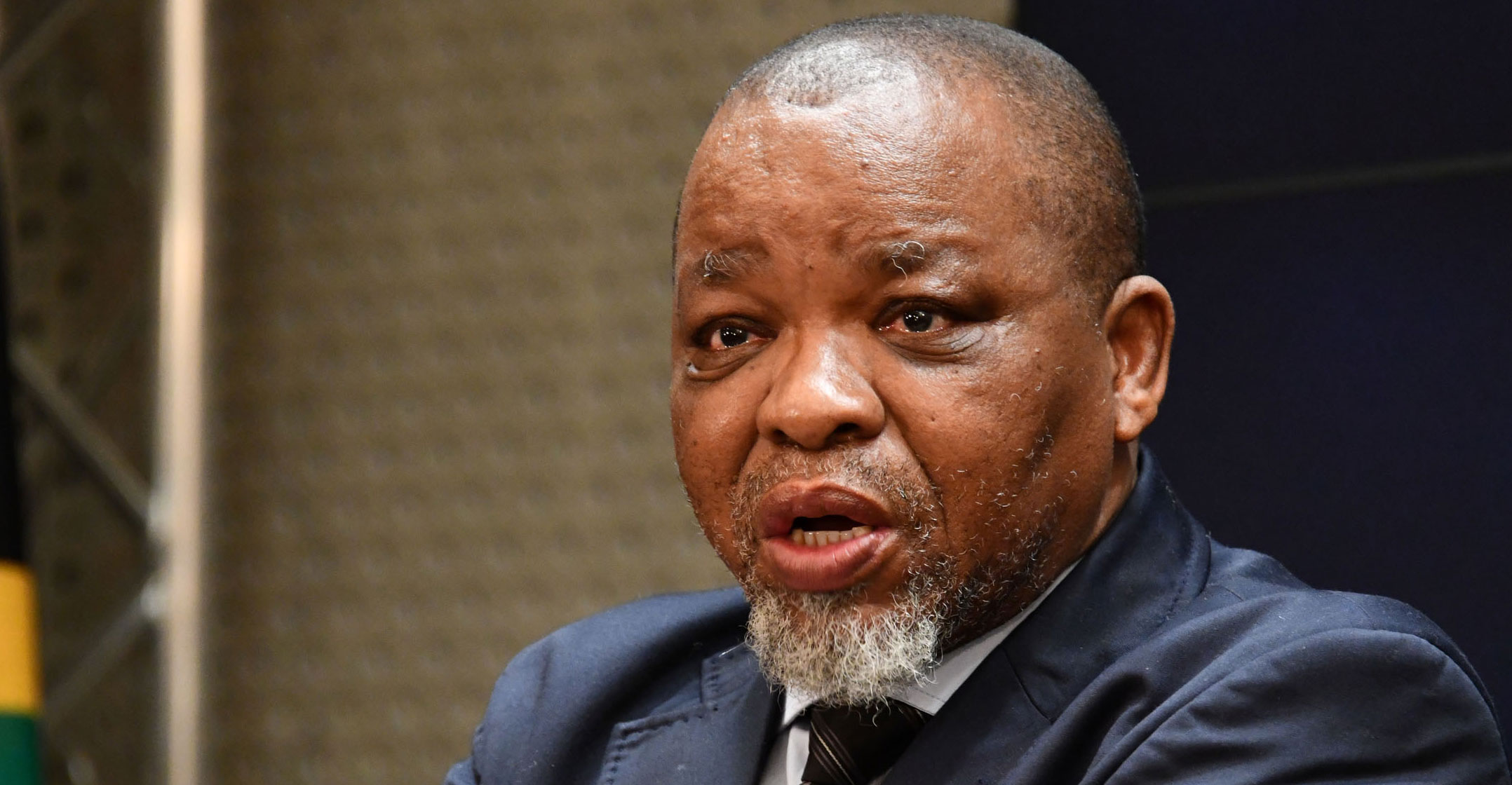
    Gwede Mantashe. Image: GCIS

    A little south of Komati, Sasol owns the vast Secunda plant, which employs some 22 000 people turning coal into petrol and petrochemicals, producing more harmful emissions than the entire output of some oil companies. Sasol aims to use more power from clean energy and eventually switch to natural gas in the 2030s then ultimately hydrogen. Yet South Africa has little gas infrastructure in the form of pipelines or liquefied natural gas terminals, showing the lack of coordination over the energy switch.

    “We have to be cognisant of the fact that we do operate in a South African economy with no gas infrastructure right now and no big renewable power,” said Shamini Harrington, vice president for climate change at Sasol.

    Political considerations are another hurdle to be overcome. Mine unions and mining have always been core to ANC support: Ramaphosa founded the National Union of Mineworkers, the biggest union at Eskom, while minerals & energy minister Gwede Mantashe is a former secretary general of the union who once headed a branch of the organisation in the coal belt. Both are reliant on labour support to keep them in power, and Mpumalanga’s municipal councils and provincial government are firmly in the hands of the ruling party.

    While Ramaphosa regularly touts the potential of renewables, Mantashe stresses that a just transition must be gradual…

    Mixed messages from government add to the confusion. While Ramaphosa regularly touts the potential of renewables, Mantashe stresses that a just transition must be gradual and that a significant role should be maintained for nuclear and “clean coal”, which would mean investing in technologies to use coal without the carbon impact.

    For many, the only certainty is the approaching deadline for plants to be decommissioned.

    “People will be losing jobs, for the community there are shops and accommodation that will suffer,” David Fankomo, a NUM official, said in a boardroom at Komati. As yet, there have been no discussions on what will replace the station when it goes, he said.

    What comes next is the subject of talks at executive level with the help of consultants, but plant and mine workers are largely in the dark, as are the communities they live in.

    “We are just waiting to see what happens,” said Mkhuma, the Komati councilor.  — Reported by Antony Sguazzin, Paul Burkhardt and Akshat Rathi, (c) 2021 Bloomberg LP

    Follow TechCentral on Google News Add TechCentral as your preferred source on Google


    Cyril Ramaphosa Eskom Gwede Mantashe top
    WhatsApp YouTube
    Share. Facebook Twitter LinkedIn WhatsApp Telegram Email Copy Link
    Previous ArticleHow McLaren aims to rebuild supercars to roar into electric era
    Next Article iOCO’s nuvoteQ: The SA company making waves in the global medtech field

    Related Posts

    Government steps in as fuel shock hits

    Government steps in as fuel shock hits

    31 March 2026
    Setback for South Africa's electricity market reform

    Setback for South Africa’s electricity market reform

    26 March 2026
    Eskom must build renewables or face extinction: Mteto Nyati

    Eskom must build renewables or face extinction: Mteto Nyati

    19 March 2026
    Company News
    How consumers can identify a true QLED TV

    How consumers can identify a true QLED TV

    30 March 2026
    Kaspersky, Afripol team up to combat African cybercrime

    Kaspersky, Afripol team up to combat African cybercrime

    30 March 2026
    Modernise infrastructure with next-gen compute using HPE VM Essentials - Riaan Swart Tarsus Distribution

    Modernise infrastructure with next-gen compute using HPE VM Essentials

    30 March 2026
    Opinion
    The conflict of interest at the heart of PayShap's slow adoption - Cheslyn Jacobs

    The conflict of interest at the heart of PayShap’s slow adoption

    26 March 2026
    South Africa's energy future hinges on getting wheeling right - Aishah Gire

    South Africa’s energy future hinges on getting wheeling right

    10 March 2026
    Hold the doom: the case for a South African comeback - Duncan McLeod

    Apple just dropped a bomb on the Windows world

    5 March 2026

    Subscribe to Updates

    Get the best South African technology news and analysis delivered to your e-mail inbox every morning.

    Latest Posts
    SA finally has a broadband map - and it reveals where the gaps are

    SA finally has a broadband map – and it reveals where the gaps are

    31 March 2026
    Bookmakers want banks to cut off offshore online gambling sites

    Bookmakers want banks to cut off offshore online gambling sites

    31 March 2026
    Government steps in as fuel shock hits

    Government steps in as fuel shock hits

    31 March 2026
    Uber commits R5-billion to South Africa amid licensing woes - Deepesh Thomas

    Uber commits R5-billion to South Africa amid licensing woes

    31 March 2026
    © 2009 - 2026 NewsCentral Media
    • Cookie policy (ZA)
    • TechCentral – privacy and Popia

    Type above and press Enter to search. Press Esc to cancel.

    Manage consent

    TechCentral uses cookies to enhance its offerings. Consenting to these technologies allows us to serve you better. Not consenting or withdrawing consent may adversely affect certain features and functions of the website.

    Functional Always active
    The technical storage or access is strictly necessary for the legitimate purpose of enabling the use of a specific service explicitly requested by the subscriber or user, or for the sole purpose of carrying out the transmission of a communication over an electronic communications network.
    Preferences
    The technical storage or access is necessary for the legitimate purpose of storing preferences that are not requested by the subscriber or user.
    Statistics
    The technical storage or access that is used exclusively for statistical purposes. The technical storage or access that is used exclusively for anonymous statistical purposes. Without a subpoena, voluntary compliance on the part of your Internet Service Provider, or additional records from a third party, information stored or retrieved for this purpose alone cannot usually be used to identify you.
    Marketing
    The technical storage or access is required to create user profiles to send advertising, or to track the user on a website or across several websites for similar marketing purposes.
    • Manage options
    • Manage services
    • Manage {vendor_count} vendors
    • Read more about these purposes
    View preferences
    • {title}
    • {title}
    • {title}