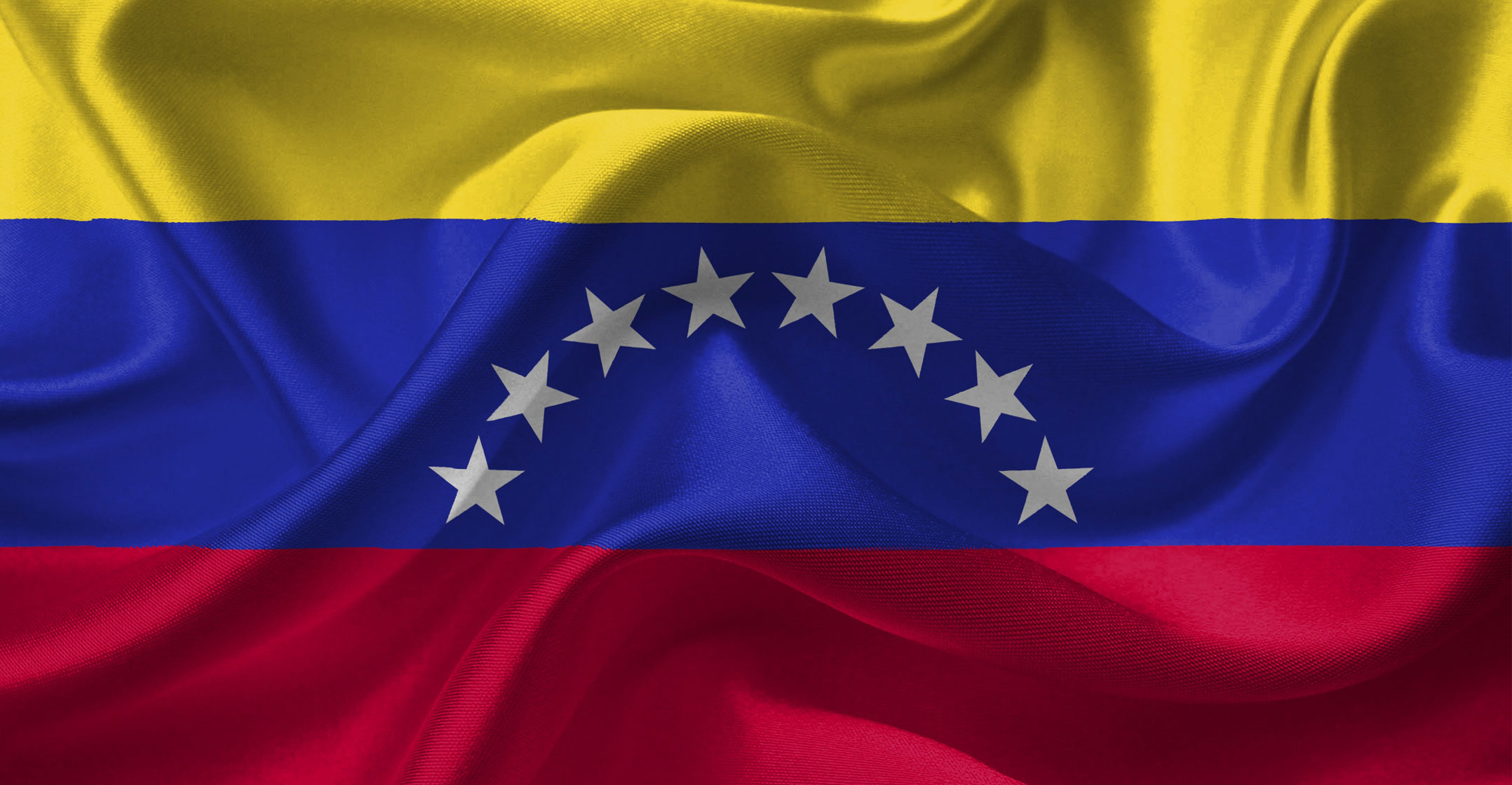
 Shakespeare tells us that “misery acquaints a man with strange bedfellows”. Venezuela’s 20-year slide from peaceful, prosperous democracy to violent, impoverished dictatorship has caused misery on a vast scale. And it brought together the protagonists in the story of el petro — a mashup of fringe economists and cypherpunks, socialists and libertarians, real-asset fundamentalists and next-generation financial engineers, the “Dutch disease” and exorbitant privilege. Their experiment ended in failure, but their ideas deserve exposure.
Consider the French Revolution in 1789. Its political accomplishments were short-lived: a century alternating among monarchy, republic and empire. But the metric system it introduced spread throughout the world and persists today.
When revolutionaries took over France, they looked to the cahiers de doléances, lists of grievances. Among the most common demands was one for standard weights and measures. Peasants hated local nobles changing the size of the containers used to measure their obligations. They wanted one fixed local bushel kept where they could see it year-round.
Five brilliant Enlightenment scientists were recruited: Jean-Charles de Borda, Joseph-Louis Lagrange, Pierre-Simon Laplace, Gaspard Monge and Nicolas de Condorcet. But they misunderstood the problem. They created a good system — though not one the peasants embraced — because it was designed by smart people.
El petro is an oil-backed cryptocurrency designed at an October 2017 meeting at the Venezuelan central bank, where bemused bankers met socialist economists and cryptocurrency zealots. A white paper and official announcement followed in December. But the details kept changing. Since then, Venezuela has produced a confusing series of grand announcements, countered by denunciations from elsewhere. Amid all the debate, there has been too little analysis of the underlying theory.
Commodity-backed currency
Benjamin Graham is remembered today as the father of value investing and Warren Buffett’s mentor. But he thought his important contribution to finance was his idea for a commodity-backed currency. He came up with it in 1921 — long before he lost his money on Wall Street and turned to undergraduate teaching and textbook writing to make ends meet. He promoted it in articles and books throughout his lifetime.
Graham, like many others, noticed that when commodities are plentiful and cheap, the economy is in recession. In prosperous times, commodities are scarce and expensive. As he wrote in his 1937 book Storage and Stability: A Modern Ever-Normal Granary:
If surplus stocks do operate as a national liability rather than an asset, the fault must lie in the functioning of the business machine and not in any inherent viciousness of the surplus itself… Some means must be found to restore the Goddess of Plenty to the role of benefactress-in-chief that was hers without question under a simpler economy.
Holding commodity buffer stocks to smooth supply is as old as the seven fat years story in the Bible, or the ancient Chinese system of “ever-normal granary.” But Graham’s genius was to use commodity buffer stocks to regulate the supply of money, not commodities. When commodities were cheap, the government would issue commodity-backed notes to buy them. These would not replace traditional banknotes, then backed by gold, but would circulate in parallel. The point was not to manipulate the supply or price of commodities. It was to get money into the hands of commodity producers so they could spend it — preventing financial distress for them and their workers and stimulating the economy, thus creating demand for the surplus.
If prices were high, the government could redeem the recession-issued notes by selling down its commodity stocks. This would pull money out of the economy, damping irrational exuberance.
John Maynard Keynes and Friedrich Hayek both enthusiastically backed this idea. It appeared in the English proposals brought to the Bretton Woods negotiations and had wide support among economists at the meeting. But gold producers and holders blocked it from the final agreement.
The resource curse
Graham’s idea was revived in the second half of the 20th century when oil discoveries wreaked havoc with developed economies (the Dutch disease, in which oil export revenue causes the currency to strengthen, draining profit and capital from other sectors) and undeveloped ones (the “resource curse”, in which natural resource wealth leads to corruption and violence, stifling productive economic activity). The government didn’t have to buy and store oil. It already owned it, safe in the ground. All it needed to do was issue an oil-backed currency when oil prices were low and redeem it when prices were high. It could do this through a central bank, which would make domestic loans in the oil currency when prices were low to help the local economy. The drop in lending when prices rose would help offset the flood of export earnings. The non-oil economy could function on a traditional currency.
Venezuela’s Hugo Chávez started lecturing oil-producing nations about the need for alternative economic arrangements as early as 2000. In 2009 he proposed an oil-backed currency. He appears to have been primarily seeking a way to avoid US financial controls. Nevertheless, some economists dusted off Graham’s arguments. Cryptocurrency lovers added a technological twist. Time will tell if they were as smart as the guys who designed the metric system.
The economists slipped an underappreciated aspect into el petro. Although Venezuela has the largest proven oil reserves in the world, its oil is low in quality and expensive to extract. The lowest quality and most expensive to extract, but also the largest in quantity, is in the Orinoco Belt. There could be two Saudi Arabias or more there, but extracting it requires massive investment. So one petro could be exchanged for a barrel of oil a kilometre under the remote village of Atapirire (population 1 300).
Some have taken that as evidence that el petro was a fraud. But the cryptocurrency makes sense in theory. Let’s do some wild ballparking. If the backing were credible and the government stable and honest and if giving the government one petro for every barrel you extract covered all royalties and taxes, a petro might be worth about half a barrel of oil.
Largely insulated
In that case, a Venezuelan entrepreneur might borrow 100 million petro from the central bank to fund extraction at a rate of 20 million barrels a year after, say, three years of development. Each barrel extracted would allow pay-down of one petro of debt, after one petro is paid to the government for the royalties and taxes. This could well be a positive net present value investment.
An oil-backed currency allows the government to offer loans in a hard currency without being limited by its currency reserves, and the investment return is largely insulated from oil price fluctuations because revenues and expenses are both denominated in oil.
Unfortunately, none of the key requirements to make this plan work — a credible government, an oil shortage and investors interested in taking on the massive technological and political risks of the drilling schemes — were in place. You could imagine it working better if oil soared above US$200/barrel and Canada tried it to spur development of its oil sands.
As a securitisation of future oil royalties and taxes, it could be managed on a private centralised ledger. Only a few people in the oil business would hold el petro, and the currency would flow from the central bank to the entrepreneurs, from the entrepreneurs to the equipment and expertise providers, and from the providers back to the central bank. That could help fund oil development, but policymakers in Venezuela had grander ideas.
Using cryptocurrency tools opened breathtaking possibilities. Venezuela was starved for a trusted currency, and its citizens were accustomed to mining and using cryptocurrencies. Global investors were wild for anything crypto and were buying into even obvious frauds. El petro had very weak backing — royalty and tax savings on oil that might never be extracted — but bitcoin and other cryptocurrencies had no backing at all, and their market capitalisation was approaching $1-trillion.
Need for trust
Many crypto enthusiasts denounced el petro because it required trust in the Venezuelan government to honour its legal promises to allow extraction of the oil. But if el petro had gone into general use for payment of taxes and fees, for government benefits, and eventually for nongovernment transactions, users wouldn’t care about the theoretical backing by oil any more than they did when currencies were backed by gold. People would have accepted the currency for what it could buy today, not for its ability to get oil in the distant future.
The bigger problem was the need for trust in the honesty and competence of Venezuela’s currency management. Because el petro was on a private centralised ledger, it would allow corrupt officials to expand issuance and steal the proceeds until the currency was worthless. That had already happened to the official currency, the bolivar. The Venezuelan government couldn’t be trusted, or more precisely, it could be trusted to steal everything.
But the technology exists for a thoroughly untrustworthy government to credibly manage the issuance, acceptance and use of a currency. Venezuela could have implemented a public blockchain. It could have released a public register of petro sales. But there never was a real cryptocurrency. Corrupt government officials need cryptotrust, the trustless exchange provided by a public blockchain, even more than anonymous Internet transactors; they know they are dealing with crooks; the Internet transactors only fear they might be.
During the 19th century, Venezuela averaged a revolution or civil war every five years. After the Blue Revolution of 1867-68, Venezuelan journalist Cecilio Acosta wrote in his essay Las Revoluciones:
The truth is that revolutions carry and leave new ideas to incubate; they throw down the old and force reconstruction. They are admirable as providential when they are honest; but honest or dishonest, they are convulsions that upset, and remedies that regenerate.
Chávez’s self-named Bolivarian Revolution carried and will leave behind new ideas to incubate. The French Revolution gave us the metric system, with worldwide influence more than two centuries later. Perhaps the chaos in Venezuela will be remembered for fusing — if only in theory — the technological and financial ideas that could someday allow us to link volatile resource prices with risky development to promote the economy’s general welfare. — (c) 2019 Bloomberg LP
- Written by Aaron Brown is a former MD and head of financial market research at AQR Capital Management. He is the author of The Poker Face of Wall Street. He may have a stake in the areas he writes about