Close Menu
TechCentralTechCentral

    Subscribe to the newsletter

    Get the best South African technology news and analysis delivered to your e-mail inbox every morning.

    Facebook X (Twitter) YouTube LinkedIn
    WhatsApp Facebook X (Twitter) LinkedIn YouTube
    TechCentralTechCentral
    • News
      Vula Medical named as South Africa's 2025 app of the year

      Vula Medical named as South Africa’s 2025 app of the year

      5 December 2025
      Netflix, Warner Bros talks raise fresh headaches for MultiChoice

      Netflix, Warner Bros talks raise fresh headaches for MultiChoice

      5 December 2025
      Big Microsoft 365 price increases coming next year

      Big Microsoft price increases coming next year

      5 December 2025
      Vodacom to take control of Safaricom in R36-billion deal - Shameel Joosub

      Vodacom to take control of Safaricom in R36-billion deal

      4 December 2025
      Black Friday goes digital in South Africa as online spending surges to record high

      Black Friday goes digital in South Africa as online spending surges to record high

      4 December 2025
    • World
      Amazon and Google launch multi-cloud service for faster connectivity

      Amazon and Google launch multi-cloud service for faster connectivity

      1 December 2025
      Google makes final court plea to stop US breakup

      Google makes final court plea to stop US breakup

      21 November 2025
      Bezos unveils monster rocket: New Glenn 9x4 set to dwarf Saturn V

      Bezos unveils monster rocket: New Glenn 9×4 set to dwarf Saturn V

      21 November 2025
      Tech shares turbocharged by Nvidia's stellar earnings

      Tech shares turbocharged by stellar Nvidia earnings

      20 November 2025
      Config file blamed for Cloudflare meltdown that disrupted the web

      Config file blamed for Cloudflare meltdown that disrupted the web

      19 November 2025
    • In-depth
      Jensen Huang Nvidia

      So, will China really win the AI race?

      14 November 2025
      Valve's Linux console takes aim at Microsoft's gaming empire

      Valve’s Linux console takes aim at Microsoft’s gaming empire

      13 November 2025
      iOCO's extraordinary comeback plan - Rhys Summerton

      iOCO’s extraordinary comeback plan

      28 October 2025
      Why smart glasses keep failing - no, it's not the tech - Mark Zuckerberg

      Why smart glasses keep failing – it’s not the tech

      19 October 2025
      BYD to blanket South Africa with megawatt-scale EV charging network - Stella Li

      BYD to blanket South Africa with megawatt-scale EV charging network

      16 October 2025
    • TCS
      TCS+ | How Cloud on Demand helps partners thrive in the AWS ecosystem - Odwa Ndyaluvane and Xenia Rhode

      TCS+ | How Cloud On Demand helps partners thrive in the AWS ecosystem

      4 December 2025
      TCS | MTN Group CEO Ralph Mupita on competition, AI and the future of mobile

      TCS | Ralph Mupita on competition, AI and the future of mobile

      28 November 2025
      TCS | Dominic Cull on fixing South Africa's ICT policy bottlenecks

      TCS | Dominic Cull on fixing South Africa’s ICT policy bottlenecks

      21 November 2025
      TCS | BMW CEO Peter van Binsbergen on the future of South Africa's automotive industry

      TCS | BMW CEO Peter van Binsbergen on the future of South Africa’s automotive industry

      6 November 2025
      TCS | Why Altron is building an AI factory - Bongani Andy Mabaso

      TCS | Why Altron is building an AI factory in Johannesburg

      28 October 2025
    • Opinion
      Your data, your hardware: the DIY AI revolution is coming - Duncan McLeod

      Your data, your hardware: the DIY AI revolution is coming

      20 November 2025
      Zero Carbon Charge founder Joubert Roux

      The energy revolution South Africa can’t afford to miss

      20 November 2025
      It's time for a new approach to government IT spend in South Africa - Richard Firth

      It’s time for a new approach to government IT spend in South Africa

      19 November 2025
      How South Africa's broken Rica system fuels murder and mayhem - Farhad Khan

      How South Africa’s broken Rica system fuels murder and mayhem

      10 November 2025
      South Africa's AI data centre boom risks overloading a fragile grid - Paul Colmer

      South Africa’s AI data centre boom risks overloading a fragile grid

      30 October 2025
    • Company Hubs
      • Africa Data Centres
      • AfriGIS
      • Altron Digital Business
      • Altron Document Solutions
      • Altron Group
      • Arctic Wolf
      • AvertITD
      • Braintree
      • CallMiner
      • CambriLearn
      • CYBER1 Solutions
      • Digicloud Africa
      • Digimune
      • Domains.co.za
      • ESET
      • Euphoria Telecom
      • Incredible Business
      • iONLINE
      • IQbusiness
      • Iris Network Systems
      • LSD Open
      • NEC XON
      • Netstar
      • Network Platforms
      • Next DLP
      • Ovations
      • Paracon
      • Paratus
      • Q-KON
      • SevenC
      • SkyWire
      • Solid8 Technologies
      • Telit Cinterion
      • Tenable
      • Vertiv
      • Videri Digital
      • Vodacom Business
      • Wipro
      • Workday
      • XLink
    • Sections
      • AI and machine learning
      • Banking
      • Broadcasting and Media
      • Cloud services
      • Contact centres and CX
      • Cryptocurrencies
      • Education and skills
      • Electronics and hardware
      • Energy and sustainability
      • Enterprise software
      • Financial services
      • Information security
      • Internet and connectivity
      • Internet of Things
      • Investment
      • IT services
      • Lifestyle
      • Motoring
      • Public sector
      • Retail and e-commerce
      • Satellite communications
      • Science
      • SMEs and start-ups
      • Social media
      • Talent and leadership
      • Telecoms
    • Events
    • Advertise
    TechCentralTechCentral
    Home » Sections » Science » What could follow the James Webb Space Telescope

    What could follow the James Webb Space Telescope

    Although the Nautilus Space Observatory is still a long way from launch, the team behind it says it has made a lot of progress.
    By The Conversation21 July 2023
    Twitter LinkedIn Facebook WhatsApp Email Telegram Copy Link
    News Alerts
    WhatsApp
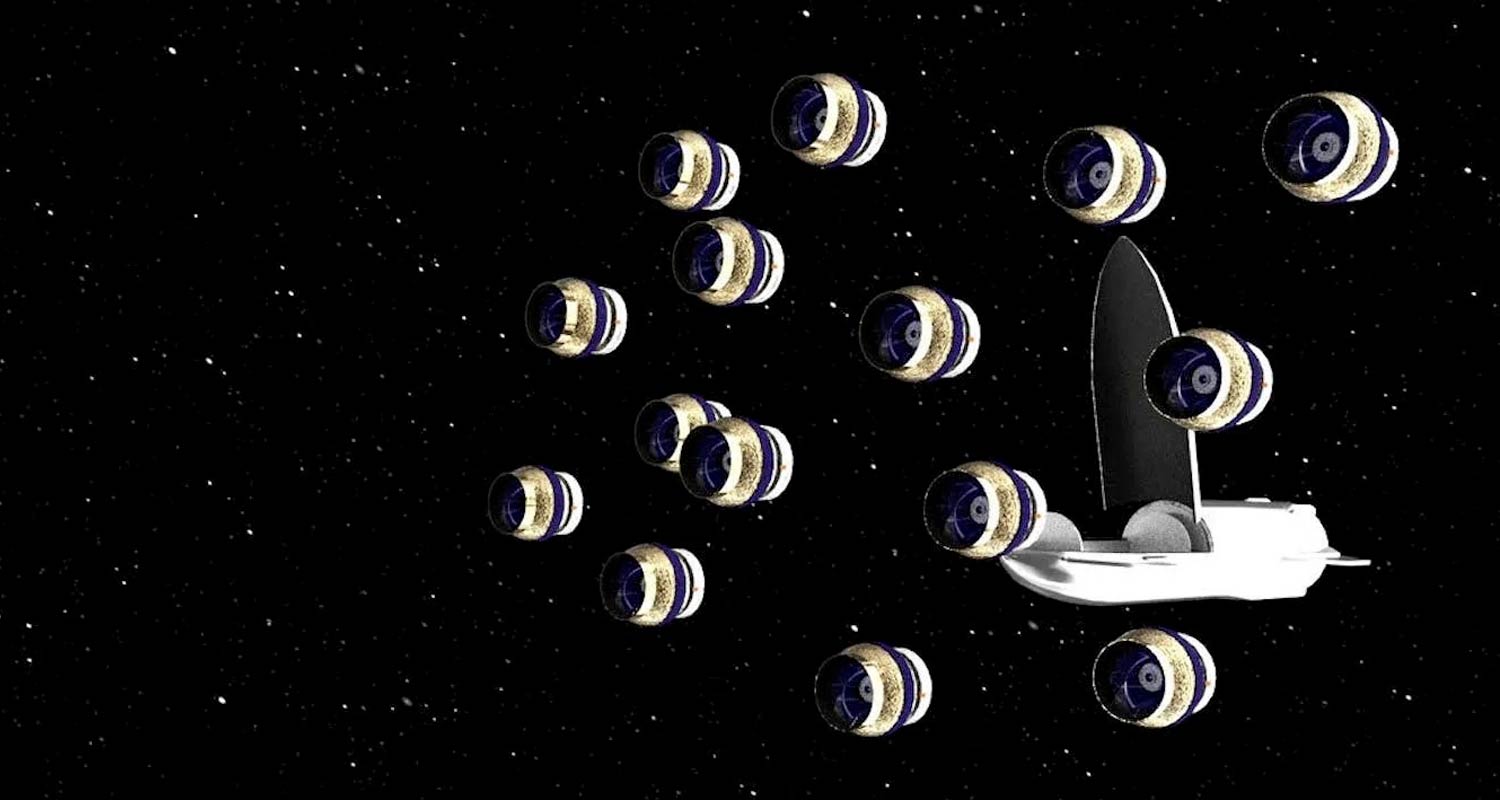
    A light, cheap space telescope design would make it possible to put many individual units in space at once. Katie Yung, Daniel Apai /University of Arizona and AllThingsSpace /SketchFab, CC BY-ND

    Astronomers have discovered more than 5 000 planets outside of the solar system to date. The grand question is whether any of these planets are home to life. To find the answer, astronomers will likely need more powerful telescopes than exist today.

    I am an astronomer who studies astrobiology and planets around distant stars. For the last seven years, I have been co-leading a team that is developing a new kind of space telescope that could collect a hundred times more light than the James Webb space telescope, the biggest space telescope ever built.

    Almost all space telescopes, including Hubble and Webb, collect light using mirrors. Our proposed telescope, the Nautilus Space Observatory, would replace large, heavy mirrors with a novel, thin lens that is much lighter, cheaper and easier to produce than mirrored telescopes. Because of these differences, it would be possible to launch many individual units into orbit and create a powerful network of telescopes.
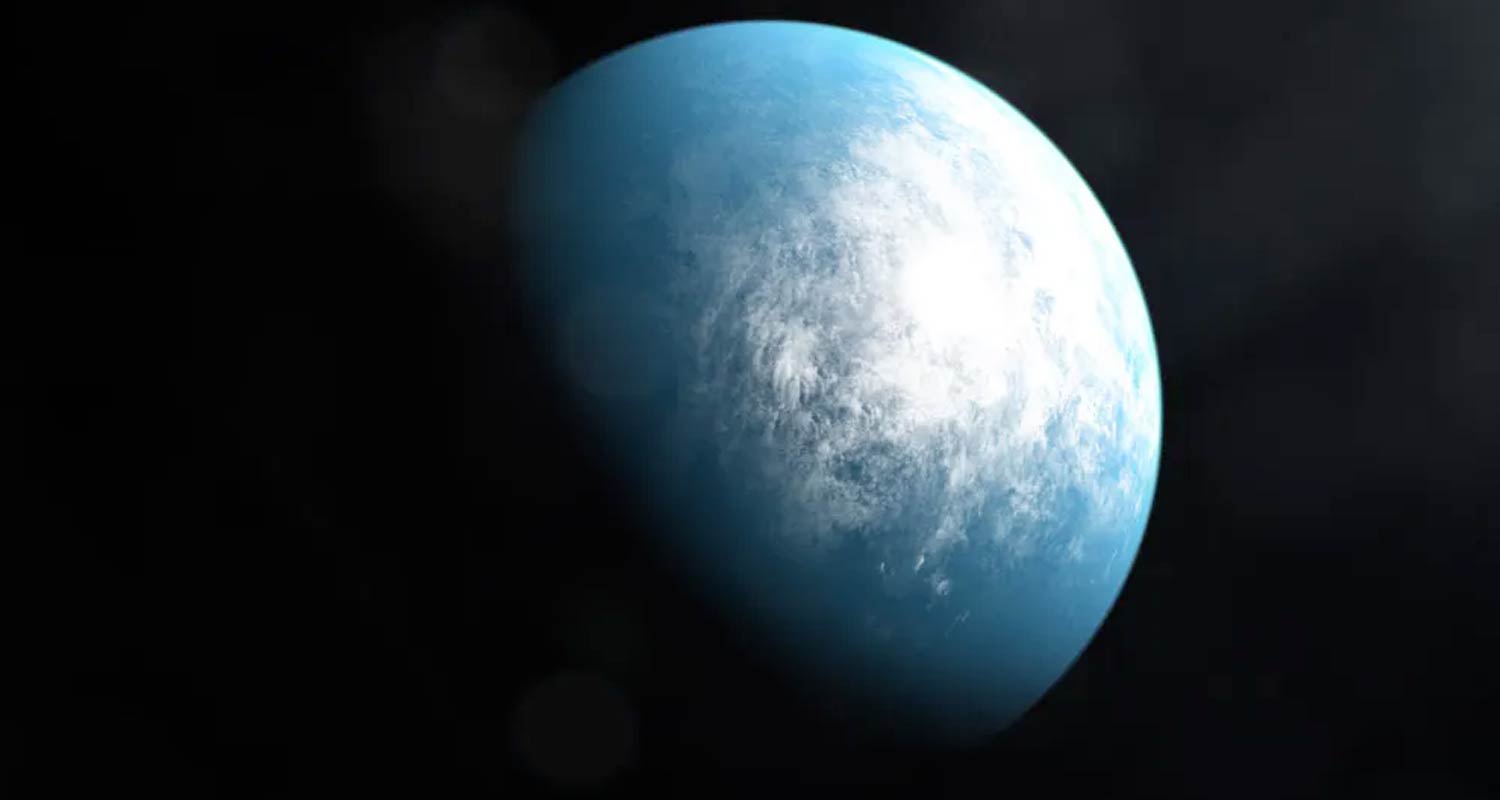
    Exoplanets, like TOI-700d shown in this artist’s conception, are planets beyond our solar system and are prime candidates in the search for life. Image: Nasa Goddard Space Flight Center

    Exoplanets – planets that orbit stars other than the sun – are prime targets in the search for life. Astronomers need to use giant space telescopes that collect huge amounts of light to study these faint and faraway objects.

    Existing telescopes can detect exoplanets as small as Earth. However, it takes a lot more sensitivity to begin to learn about the chemical composition of these planets. Even Webb is just barely powerful enough to search certain exoplanets for clues of life, – namely gases in the atmosphere.

    The James Webb Space Telescope cost more than US$8-billion and took over 20 years to build. The next flagship telescope is not expected to fly before 2045 and is estimated to cost US$11-billion. These ambitious telescope projects are always expensive, laborious and produce a single powerful – but very specialised – observatory.
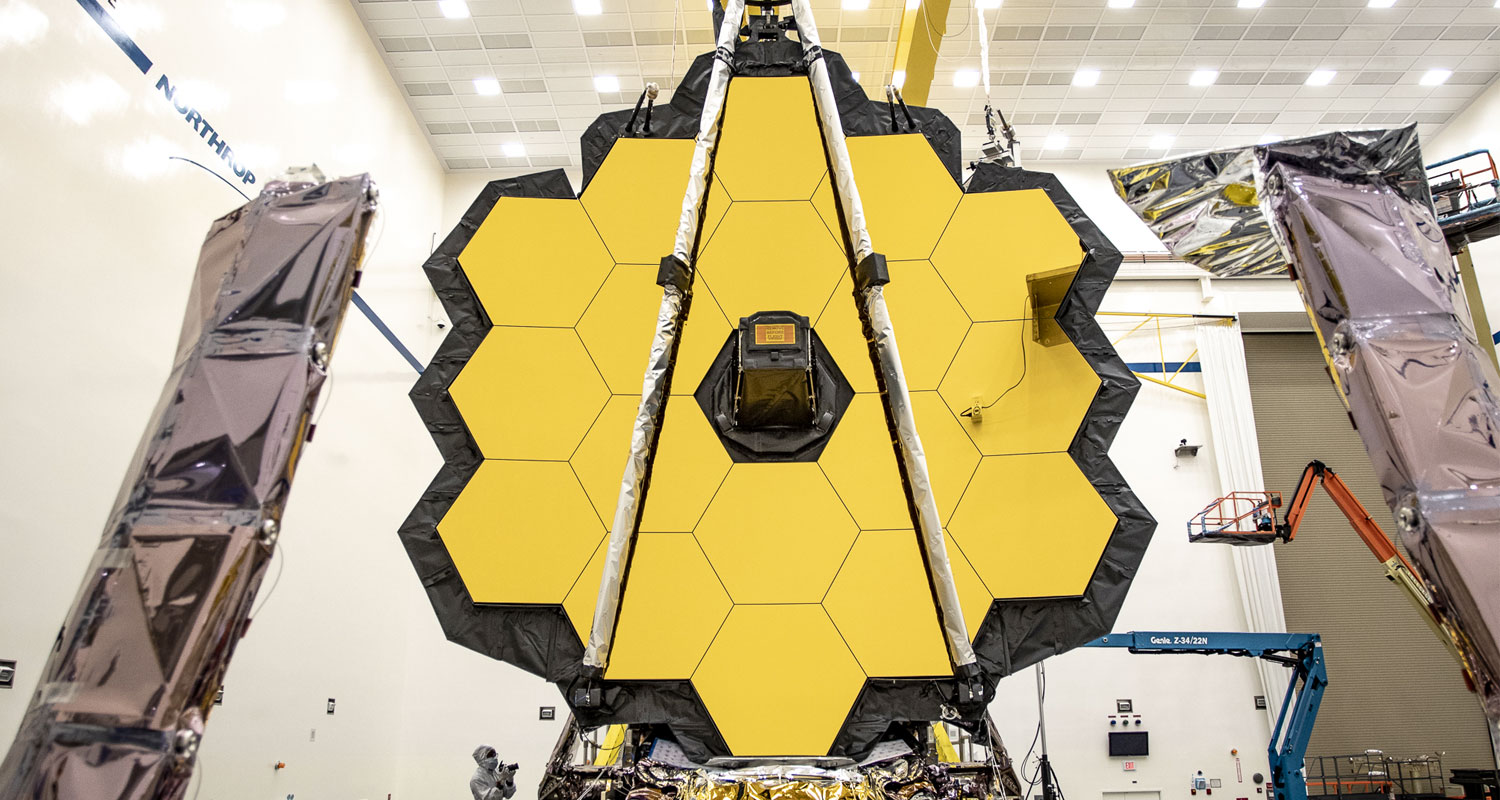
    The James Webb Space Telescope’s main mirror, photographed in April 2020. Image: Nasa

    In 2016, aerospace giant Northrop Grumman invited me and 14 other professors and Nasa scientists – all experts on exoplanets and the search for extraterrestrial life – to Los Angeles to answer one question: what will exoplanet space telescopes look like in 50 years?

    In our discussions, we realised that a major bottleneck preventing the construction of more powerful telescopes is the challenge of making larger mirrors and getting them into orbit. To bypass this bottleneck, a few of us came up with the idea of revisiting an old technology called diffractive lenses.

    Conventional lenses use refraction to focus light. Refraction is when light changes direction as it passes from one medium to another – it is the reason light bends when it enters water. In contrast, diffraction is when light bends around corners and obstacles. A cleverly arranged pattern of steps and angles on a glass surface can form a diffractive lens.

    The first such lenses were invented by the French scientist Augustin-Jean Fresnel in 1819 to provide lightweight lenses for lighthouses. Today, similar diffractive lenses can be found in many small-sized consumer optics – from camera lenses to virtual reality headsets.

    Thin, simple diffractive lenses are notorious for their blurry images, so they have never been used in astronomical observatories. But if you could improve their clarity, using diffractive lenses instead of mirrors or refractive lenses, it would allow a space telescope to be much cheaper, lighter and larger.

    After the meeting, I returned to the University of Arizona and decided to explore whether modern technology could produce diffractive lenses with better image quality. Luckily for me, Thomas Milster – one of the world’s leading experts on diffractive lens design – works in the building next to mine. We formed a team and got to work.

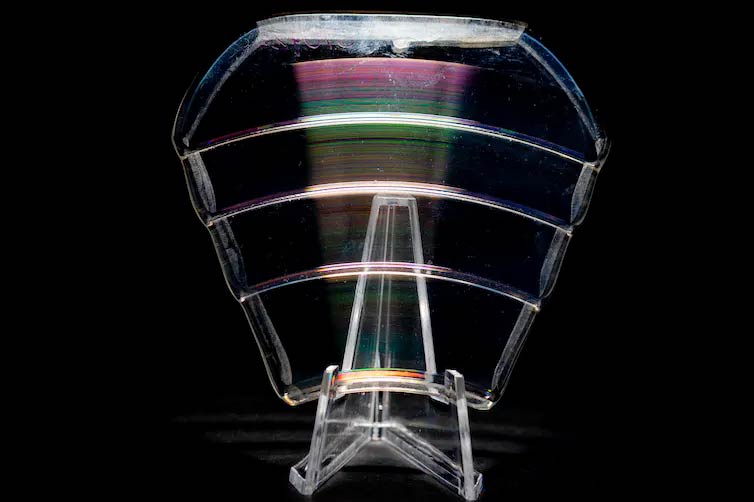
    Over the following two years, our team invented a new type of diffractive lens that required new manufacturing technologies to etch a complex pattern of tiny grooves onto a piece of clear glass or plastic. The specific pattern and shape of the cuts focuses incoming light to a single point behind the lens. The new design produces a near-perfect quality image, far better than previous diffractive lenses.
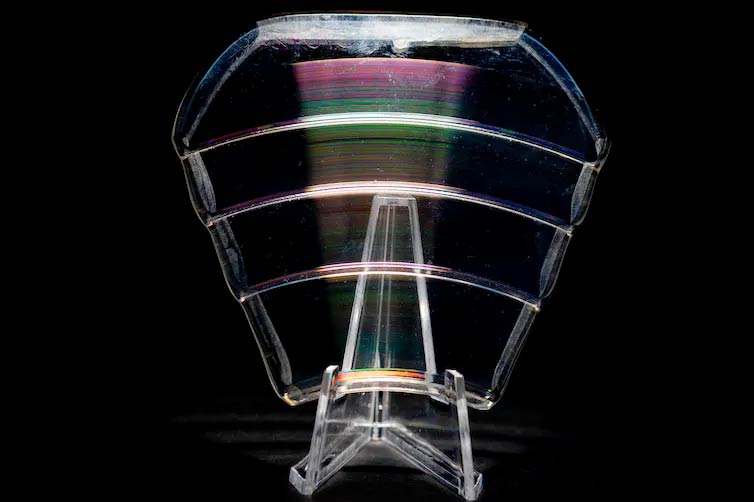
    A diffractive lens bends light using etchings and patterns on its surface. Daniel Apai/University of Arizona, CC BY-ND

    Because it is the surface texture of the lens that does the focusing, not the thickness, you can easily make the lens bigger while keeping it very thin and lightweight. Bigger lenses collect more light, and low weight means cheaper launches to orbit, – both great traits for a space telescope.

    In August 2018, our team produced the first prototype, a 5cm diameter lens. Over the next five years, we further improved the image quality and increased the size. We are now completing a 24cm diameter lens that will be more than 10 times lighter than a conventional refractive lens.

    This new lens design makes it possible to rethink how a space telescope might be built. In 2019, our team published a concept called the Nautilus Space Observatory.

    Using the new technology, our team thinks it is possible to build an 8.5m diameter lens that would be only about 0.5cm thick. The lens and support structure of our new telescope could weigh around 500kg. This is more than three times lighter than a Webb–style mirror of a similar size and would be bigger than Webb’s 6.5m diameter mirror.
    The thin lens allowed the team to design a lighter, cheaper telescope, which they named the Nautilus Space Observatory. Daniel Apai/University of Arizona, CC BY-ND

    The lenses have other benefits, too. First, they are much easier and quicker to fabricate than mirrors and can be made en masse. Second, lens-based telescopes work well even when not aligned perfectly, making these telescopes easier to assemble and fly in space than mirror-based telescopes, which require extremely precise alignment.

    Finally, since a single Nautilus unit would be light and relatively cheap to produce, it would be possible to put dozens of them into orbit. Our current design is in fact not a single telescope, but a constellation of 35 individual telescope units.

    Each individual telescope would be an independent, highly sensitive observatory able to collect more light than Webb. But the real power of Nautilus would come from turning all the individual telescopes toward a single target.

    Although the Nautilus Space Observatory is still a long way from launch, our team has made a lot of progress

    By combining data from all the units, Nautilus’ light-collecting power would equal a telescope nearly 10 times larger than Webb. With this powerful telescope, astronomers could search hundreds of exoplanets for atmospheric gases that may indicate extraterrestrial life.

    Although the Nautilus Space Observatory is still a long way from launch, our team has made a lot of progress. We have shown that all aspects of the technology work in small-scale prototypes and are now focusing on building a 1m diameter lens. Our next steps are to send a small version of the telescope to the edge of space on a high-altitude balloon.

    With that, we will be ready to propose a revolutionary new space telescope to Nasa and, hopefully, be on the way to exploring hundreds of worlds for signatures of life.The Conversation

    • The author, Daniel Apai, is associate dean for research and professor of astronomy and planetary sciences, University of Arizona
    • This article is republished from The Conversation under a Creative Commons licence


    Daniel Apai James Webb Space Telescope JWST Nautilus Nautilus Space Observatory
    Subscribe to TechCentral Subscribe to TechCentral
    Share. Facebook Twitter LinkedIn WhatsApp Telegram Email Copy Link
    Previous ArticleWild FTX allegations include plan to buy private island
    Next Article YouTube Premium prices hiked – US only, for now

    Related Posts

    For first time, Webb telescope discovers an alien planet

    For first time, Webb telescope discovers an alien planet

    26 June 2025
    Gases linked to life found in atmosphere of alien planet - K2-18 b

    Gases linked to life found in atmosphere of alien planet

    17 April 2025

    Bookmarks | Big Tech to take arse-kissing to new heights

    7 November 2024
    Company News
    Beat the summer heat with Samsung's WindFree air conditioners

    Beat the summer heat with Samsung’s WindFree air conditioners

    5 December 2025
    AI is not a technology problem - iqbusiness

    AI is not a technology problem – iqbusiness

    5 December 2025
    Telcos are sitting on a data gold mine - but few know what do with it - Phillip du Plessis

    Telcos are sitting on a data gold mine – but few know what do with it

    4 December 2025
    Opinion
    Your data, your hardware: the DIY AI revolution is coming - Duncan McLeod

    Your data, your hardware: the DIY AI revolution is coming

    20 November 2025
    Zero Carbon Charge founder Joubert Roux

    The energy revolution South Africa can’t afford to miss

    20 November 2025
    It's time for a new approach to government IT spend in South Africa - Richard Firth

    It’s time for a new approach to government IT spend in South Africa

    19 November 2025

    Subscribe to Updates

    Get the best South African technology news and analysis delivered to your e-mail inbox every morning.

    Latest Posts
    Vula Medical named as South Africa's 2025 app of the year

    Vula Medical named as South Africa’s 2025 app of the year

    5 December 2025
    Beat the summer heat with Samsung's WindFree air conditioners

    Beat the summer heat with Samsung’s WindFree air conditioners

    5 December 2025
    Netflix, Warner Bros talks raise fresh headaches for MultiChoice

    Netflix, Warner Bros talks raise fresh headaches for MultiChoice

    5 December 2025
    Big Microsoft 365 price increases coming next year

    Big Microsoft price increases coming next year

    5 December 2025
    © 2009 - 2025 NewsCentral Media
    • Cookie policy (ZA)
    • TechCentral – privacy and Popia

    Type above and press Enter to search. Press Esc to cancel.

    Manage consent

    TechCentral uses cookies to enhance its offerings. Consenting to these technologies allows us to serve you better. Not consenting or withdrawing consent may adversely affect certain features and functions of the website.

    Functional Always active
    The technical storage or access is strictly necessary for the legitimate purpose of enabling the use of a specific service explicitly requested by the subscriber or user, or for the sole purpose of carrying out the transmission of a communication over an electronic communications network.
    Preferences
    The technical storage or access is necessary for the legitimate purpose of storing preferences that are not requested by the subscriber or user.
    Statistics
    The technical storage or access that is used exclusively for statistical purposes. The technical storage or access that is used exclusively for anonymous statistical purposes. Without a subpoena, voluntary compliance on the part of your Internet Service Provider, or additional records from a third party, information stored or retrieved for this purpose alone cannot usually be used to identify you.
    Marketing
    The technical storage or access is required to create user profiles to send advertising, or to track the user on a website or across several websites for similar marketing purposes.
    • Manage options
    • Manage services
    • Manage {vendor_count} vendors
    • Read more about these purposes
    View preferences
    • {title}
    • {title}
    • {title}