Close Menu
TechCentralTechCentral

    Subscribe to the newsletter

    Get the best South African technology news and analysis delivered to your e-mail inbox every morning.

    Facebook X (Twitter) YouTube LinkedIn
    WhatsApp Facebook X (Twitter) LinkedIn YouTube
    TechCentralTechCentral
    • News
      Telecoms industry drags home affairs minister to court - Nomvuyiso Batyi

      Telecoms industry drags home affairs minister to court

      27 January 2026
      DStv cuts decoder prices and adds cost-sharing feature

      DStv cuts decoder prices and adds cost-sharing feature

      27 January 2026
      Amazon brings image-based shopping to South Africa - Robert Koen

      Amazon brings image-based shopping to South Africa

      27 January 2026
      South African cloud market set to top R100-billion by 2029 - BMIT

      South African cloud market set to top R100-billion by 2029

      27 January 2026
      Outa warns homeowners against rushing to register rooftop solar

      Outa warns homeowners against rushing to register rooftop solar

      27 January 2026
    • World
      Nvidia throws AI at the weather

      Nvidia throws AI at weather forecasting

      27 January 2026
      Debate erupts over value of in-flight Wi-Fi

      Debate erupts over value of in-flight Wi-Fi

      26 January 2026
      Intel takes another hit - Intel CEO Lip-Bu Tan. Laure Andrillon/Reuters

      Intel takes another hit

      23 January 2026
      ByteDance clinches US TikTok deal

      ByteDance clinches US TikTok deal

      23 January 2026
      New details emerge about Apple's big Siri overhaul

      New details emerge about Apple’s big Siri overhaul

      22 January 2026
    • In-depth
      How liberalisation is rewiring South Africa's power sector

      How liberalisation is rewiring South Africa’s power sector

      21 January 2026
      The top-performing South African tech shares of 2025

      The top-performing South African tech shares of 2025

      12 January 2026
      Digital authoritarianism grows as African states normalise internet blackouts

      Digital authoritarianism grows as African states normalise internet blackouts

      19 December 2025
      TechCentral's South African Newsmakers of 2025

      TechCentral’s South African Newsmakers of 2025

      18 December 2025
      Black Friday goes digital in South Africa as online spending surges to record high

      Black Friday goes digital in South Africa as online spending surges to record high

      4 December 2025
    • TCS
      Watts & Wheels S1E2: 'China attacks, BMW digs in, Toyota's sublime supercar'

      Watts & Wheels S1E2: ‘China attacks, BMW digs in, Toyota’s sublime supercar’

      23 January 2026

      TCS+ | Why cybersecurity is becoming a competitive advantage for SA businesses

      20 January 2026
      Watts & Wheels S1E2: 'China attacks, BMW digs in, Toyota's sublime supercar'

      Watts & Wheels: S1E1 – ‘William, Prince of Wheels’

      8 January 2026
      TCS+ | Africa's digital transformation - unlocking AI through cloud and culture - Cliff de Wit Accelera Digital Group

      TCS+ | Cloud without culture won’t deliver AI: Accelera’s Cliff de Wit

      12 December 2025
      TCS+ | How Cloud on Demand helps partners thrive in the AWS ecosystem - Odwa Ndyaluvane and Xenia Rhode

      TCS+ | How Cloud On Demand helps partners thrive in the AWS ecosystem

      4 December 2025
    • Opinion
      Why Elon Musk's Starlink is a 'hard no' for me - Songezo Zibi

      Why Elon Musk’s Starlink is a ‘hard no’ for me

      26 January 2026
      South Africa's new fibre broadband battle - Duncan McLeod

      South Africa’s new fibre broadband battle

      20 January 2026
      AI moves from pilots to production in South African companies - Nazia Pillay SAP

      AI moves from pilots to production in South African companies

      20 January 2026
      South Africa's new fibre broadband battle - Duncan McLeod

      ANC’s attack on Solly Malatsi shows how BEE dogma trumps economic reality

      14 December 2025
      South Africa's new fibre broadband battle - Duncan McLeod

      Netflix, Warner Bros deal raises fresh headaches for MultiChoice

      5 December 2025
    • Company Hubs
      • Africa Data Centres
      • AfriGIS
      • Altron Digital Business
      • Altron Document Solutions
      • Altron Group
      • Arctic Wolf
      • AvertITD
      • Braintree
      • CallMiner
      • CambriLearn
      • CYBER1 Solutions
      • Digicloud Africa
      • Digimune
      • Domains.co.za
      • ESET
      • Euphoria Telecom
      • Incredible Business
      • iONLINE
      • IQbusiness
      • Iris Network Systems
      • LSD Open
      • NEC XON
      • Netstar
      • Network Platforms
      • Next DLP
      • Ovations
      • Paracon
      • Paratus
      • Q-KON
      • SevenC
      • SkyWire
      • Solid8 Technologies
      • Telit Cinterion
      • Tenable
      • Vertiv
      • Videri Digital
      • Vodacom Business
      • Wipro
      • Workday
      • XLink
    • Sections
      • AI and machine learning
      • Banking
      • Broadcasting and Media
      • Cloud services
      • Contact centres and CX
      • Cryptocurrencies
      • Education and skills
      • Electronics and hardware
      • Energy and sustainability
      • Enterprise software
      • Financial services
      • Information security
      • Internet and connectivity
      • Internet of Things
      • Investment
      • IT services
      • Lifestyle
      • Motoring
      • Public sector
      • Retail and e-commerce
      • Satellite communications
      • Science
      • SMEs and start-ups
      • Social media
      • Talent and leadership
      • Telecoms
    • Events
    • Advertise
    TechCentralTechCentral
    Home » Editor's pick » What the great Sim heist means for you

    What the great Sim heist means for you

    By The Conversation2 March 2015
    Twitter LinkedIn Facebook WhatsApp Email Telegram Copy Link
    News Alerts
    WhatsApp


    sim-cards-640

    Is it true spies hack technology companies? Can governments really listen to your phone calls? Should we care? The latest details of NSA and GCHQ intelligence agency activities to come from files leaked by Edward Snowden are of the apparently massive theft of mobile phone Sim-card encryption keys from the Dutch firm Gemalto.

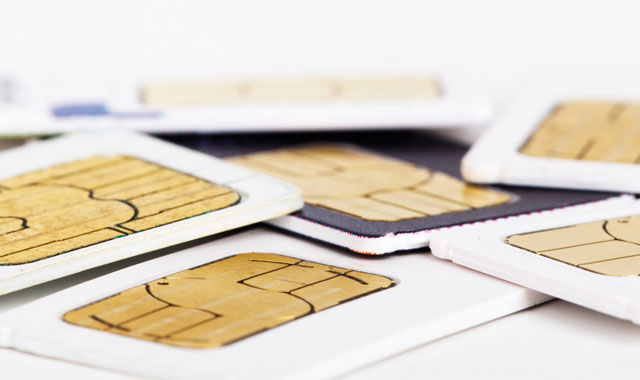
    This “great Sim heist” targeted Gemalto because it produces billions of mobile phone Sim cards for 450 telecommunications providers worldwide, and acquiring copies of encryption keys would make it possible to eavesdrop on cellphone calls with comparative ease. While press reports state these attempts were successful, after a brief internal audit — far too brief, some experts say — Gemalto has stated that nothing was stolen.

    Who is right? Whether this is resolved or not, in this particular case the handbags will no doubt fly. But the fact of the matter is that there are bigger issues we should all be considering.

    In the physical world we do a fairly good job of keeping ourselves secure. I assume, for example, that you locked your front door when you left your house this morning. In the digital world we tend to be a lot more careless. We tend to leave doors wide open. In many cases we don’t even put doors between the outside world and our data. For intelligence agencies this is very fortunate since our e-mails, social media posts, and browsing habits are usually conveniently just lying around.

    Encryption, on the other hand, provides a secure place with a front door behind which data is inaccessible. That is, unless you have the front door key. Encrypted data is meaningless and of little use to an intelligence agency — to make sense of it the keys to decrypt it are needed.

    Mobile phones encrypt calls between the phone and the nearest mobile phone mast, preventing anyone who intercepts the call as it travels through the air from making any sense of it. The encryption key used is derived from the phone’s Sim key, which is a personal key that comes preinstalled on your Sim card. Anyone who knows the Sim key — normally only your phone and your mobile operator — can decrypt the call if they listen in.

    Gemalto’s business is putting Sim keys into Sim cards; if someone breaks into Gemalto’s systems then it is certainly possible that they could make off with Sim encryption keys. This isn’t great news for the security of whatever mobile phones they later end up in.

    Bad though this sounds, it’s really just the latest of many revelations of this type that have leaked out of the Snowden files. The picture that has emerged is of intelligence agencies clearly frustrated by the increasing use of encryption in our everyday technology. As the encryption is (mostly) too good to break, so the intelligence agencies have been using every technique imaginable to find a way around it.

    Broadly speaking, there are really only two ways to get around good encryption. Option one is to try to access data either before it is encrypted or after it is decrypted — Snowden’s files suggest the intelligence agencies have been doing plenty of that. Option two is to try to get hold of the keys needed to decrypt the data. The great SIM heist seems to be the latest example of attempts at this second strategy.

    In one sense this is not a new development. As encryption has been deployed more widely, its use has created tension between the rights of the individual to privacy and the duties of the state to protect society. Over the last few decades, governments have made several attempts to mediate between these, attempts which appeared to have concluded in favour of strong encryption and individual privacy.

    Prior to Snowden, it was publicly believed that the “crypto wars” had largely been lost by the intelligence agencies. Instead, leaked files such as these reveal that the wars have just become bloodier than any of us really imagined.

    Many people are outraged by the many Snowden revelations. Others take the view that this is the intelligence agencies’ job and they ought to be left to get on with it. There are good arguments supporting both of these viewpoints.

    So, should you care? If you do, then there has never been a better time to stand up and make your feelings known. We as a society really ought to form an opinion on what “security norms” we wish to see developing around our increasing use of the Internet as a place where we, partially, live our lives. If we don’t, then clearly others, with perhaps very different agendas, will decide them for us.The Conversation

    • Keith Martin is director of the Information Security Group at Royal Holloway
    • This article was originally published on The Conversation


    Edward Snowden GCHQ Gemalto Keith Martin NSA
    WhatsApp YouTube Follow on Google News Add as preferred source on Google
    Share. Facebook Twitter LinkedIn WhatsApp Telegram Email Copy Link
    Previous ArticleAsus Zenbook UX305FA: elegant lightweight
    Next Article DStv Now app gets three new channels

    Related Posts

    Edward Snowden warns of AI ‘werewolves’

    5 June 2024

    NSA chief accuses China of ‘very aggressive’ hacking strategy

    31 May 2024
    AI cybersecurity

    Warning that AI will lead to increase in cyberattacks

    24 January 2024
    Company News
    The changing state of fintech - from disruption to infrastructure - BBD Software

    The changing state of fintech – from disruption to infrastructure

    27 January 2026
    Human behaviour, not AI will determine who wins in 2026

    Human behaviour, not AI, will determine who wins in 2026

    27 January 2026
    Arctic Wolf expands leading Security Operations Warranty to South Africa

    Arctic Wolf expands leading Security Operations Warranty to South Africa

    27 January 2026
    Opinion
    Why Elon Musk's Starlink is a 'hard no' for me - Songezo Zibi

    Why Elon Musk’s Starlink is a ‘hard no’ for me

    26 January 2026
    South Africa's new fibre broadband battle - Duncan McLeod

    South Africa’s new fibre broadband battle

    20 January 2026
    AI moves from pilots to production in South African companies - Nazia Pillay SAP

    AI moves from pilots to production in South African companies

    20 January 2026

    Subscribe to Updates

    Get the best South African technology news and analysis delivered to your e-mail inbox every morning.

    Latest Posts
    Telecoms industry drags home affairs minister to court - Nomvuyiso Batyi

    Telecoms industry drags home affairs minister to court

    27 January 2026
    DStv cuts decoder prices and adds cost-sharing feature

    DStv cuts decoder prices and adds cost-sharing feature

    27 January 2026
    Amazon brings image-based shopping to South Africa - Robert Koen

    Amazon brings image-based shopping to South Africa

    27 January 2026
    South African cloud market set to top R100-billion by 2029 - BMIT

    South African cloud market set to top R100-billion by 2029

    27 January 2026
    © 2009 - 2026 NewsCentral Media
    • Cookie policy (ZA)
    • TechCentral – privacy and Popia

    Type above and press Enter to search. Press Esc to cancel.

    Manage consent

    TechCentral uses cookies to enhance its offerings. Consenting to these technologies allows us to serve you better. Not consenting or withdrawing consent may adversely affect certain features and functions of the website.

    Functional Always active
    The technical storage or access is strictly necessary for the legitimate purpose of enabling the use of a specific service explicitly requested by the subscriber or user, or for the sole purpose of carrying out the transmission of a communication over an electronic communications network.
    Preferences
    The technical storage or access is necessary for the legitimate purpose of storing preferences that are not requested by the subscriber or user.
    Statistics
    The technical storage or access that is used exclusively for statistical purposes. The technical storage or access that is used exclusively for anonymous statistical purposes. Without a subpoena, voluntary compliance on the part of your Internet Service Provider, or additional records from a third party, information stored or retrieved for this purpose alone cannot usually be used to identify you.
    Marketing
    The technical storage or access is required to create user profiles to send advertising, or to track the user on a website or across several websites for similar marketing purposes.
    • Manage options
    • Manage services
    • Manage {vendor_count} vendors
    • Read more about these purposes
    View preferences
    • {title}
    • {title}
    • {title}