

Close Menu
TechCentralTechCentral

    Subscribe to the newsletter

    Get the best South African technology news and analysis delivered to your e-mail inbox every morning.

    Facebook X (Twitter) YouTube LinkedIn
    WhatsApp Facebook X (Twitter) LinkedIn YouTube
    TechCentralTechCentral
    • News
      Vula Medical named as South Africa's 2025 app of the year

      Vula Medical named as South Africa’s 2025 app of the year

      5 December 2025
      Netflix, Warner Bros talks raise fresh headaches for MultiChoice

      Netflix, Warner Bros talks raise fresh headaches for MultiChoice

      5 December 2025
      Big Microsoft 365 price increases coming next year

      Big Microsoft price increases coming next year

      5 December 2025
      Vodacom to take control of Safaricom in R36-billion deal - Shameel Joosub

      Vodacom to take control of Safaricom in R36-billion deal

      4 December 2025
      Black Friday goes digital in South Africa as online spending surges to record high

      Black Friday goes digital in South Africa as online spending surges to record high

      4 December 2025
    • World
      Amazon and Google launch multi-cloud service for faster connectivity

      Amazon and Google launch multi-cloud service for faster connectivity

      1 December 2025
      Google makes final court plea to stop US breakup

      Google makes final court plea to stop US breakup

      21 November 2025
      Bezos unveils monster rocket: New Glenn 9x4 set to dwarf Saturn V

      Bezos unveils monster rocket: New Glenn 9×4 set to dwarf Saturn V

      21 November 2025
      Tech shares turbocharged by Nvidia's stellar earnings

      Tech shares turbocharged by stellar Nvidia earnings

      20 November 2025
      Config file blamed for Cloudflare meltdown that disrupted the web

      Config file blamed for Cloudflare meltdown that disrupted the web

      19 November 2025
    • In-depth
      Jensen Huang Nvidia

      So, will China really win the AI race?

      14 November 2025
      Valve's Linux console takes aim at Microsoft's gaming empire

      Valve’s Linux console takes aim at Microsoft’s gaming empire

      13 November 2025
      iOCO's extraordinary comeback plan - Rhys Summerton

      iOCO’s extraordinary comeback plan

      28 October 2025
      Why smart glasses keep failing - no, it's not the tech - Mark Zuckerberg

      Why smart glasses keep failing – it’s not the tech

      19 October 2025
      BYD to blanket South Africa with megawatt-scale EV charging network - Stella Li

      BYD to blanket South Africa with megawatt-scale EV charging network

      16 October 2025
    • TCS
      TCS+ | How Cloud on Demand helps partners thrive in the AWS ecosystem - Odwa Ndyaluvane and Xenia Rhode

      TCS+ | How Cloud On Demand helps partners thrive in the AWS ecosystem

      4 December 2025
      TCS | MTN Group CEO Ralph Mupita on competition, AI and the future of mobile

      TCS | Ralph Mupita on competition, AI and the future of mobile

      28 November 2025
      TCS | Dominic Cull on fixing South Africa's ICT policy bottlenecks

      TCS | Dominic Cull on fixing South Africa’s ICT policy bottlenecks

      21 November 2025
      TCS | BMW CEO Peter van Binsbergen on the future of South Africa's automotive industry

      TCS | BMW CEO Peter van Binsbergen on the future of South Africa’s automotive industry

      6 November 2025
      TCS | Why Altron is building an AI factory - Bongani Andy Mabaso

      TCS | Why Altron is building an AI factory in Johannesburg

      28 October 2025
    • Opinion
      Your data, your hardware: the DIY AI revolution is coming - Duncan McLeod

      Your data, your hardware: the DIY AI revolution is coming

      20 November 2025
      Zero Carbon Charge founder Joubert Roux

      The energy revolution South Africa can’t afford to miss

      20 November 2025
      It's time for a new approach to government IT spend in South Africa - Richard Firth

      It’s time for a new approach to government IT spend in South Africa

      19 November 2025
      How South Africa's broken Rica system fuels murder and mayhem - Farhad Khan

      How South Africa’s broken Rica system fuels murder and mayhem

      10 November 2025
      South Africa's AI data centre boom risks overloading a fragile grid - Paul Colmer

      South Africa’s AI data centre boom risks overloading a fragile grid

      30 October 2025
    • Company Hubs
      • Africa Data Centres
      • AfriGIS
      • Altron Digital Business
      • Altron Document Solutions
      • Altron Group
      • Arctic Wolf
      • AvertITD
      • Braintree
      • CallMiner
      • CambriLearn
      • CYBER1 Solutions
      • Digicloud Africa
      • Digimune
      • Domains.co.za
      • ESET
      • Euphoria Telecom
      • Incredible Business
      • iONLINE
      • IQbusiness
      • Iris Network Systems
      • LSD Open
      • NEC XON
      • Netstar
      • Network Platforms
      • Next DLP
      • Ovations
      • Paracon
      • Paratus
      • Q-KON
      • SevenC
      • SkyWire
      • Solid8 Technologies
      • Telit Cinterion
      • Tenable
      • Vertiv
      • Videri Digital
      • Vodacom Business
      • Wipro
      • Workday
      • XLink
    • Sections
      • AI and machine learning
      • Banking
      • Broadcasting and Media
      • Cloud services
      • Contact centres and CX
      • Cryptocurrencies
      • Education and skills
      • Electronics and hardware
      • Energy and sustainability
      • Enterprise software
      • Financial services
      • Information security
      • Internet and connectivity
      • Internet of Things
      • Investment
      • IT services
      • Lifestyle
      • Motoring
      • Public sector
      • Retail and e-commerce
      • Satellite communications
      • Science
      • SMEs and start-ups
      • Social media
      • Talent and leadership
      • Telecoms
    • Events
    • Advertise
    TechCentralTechCentral
    Home » In-depth » Who’s leading in tech in Africa

    Who’s leading in tech in Africa

    By Editor1 September 2015
    Twitter LinkedIn Facebook WhatsApp Email Telegram Copy Link
    News Alerts
    WhatsApp

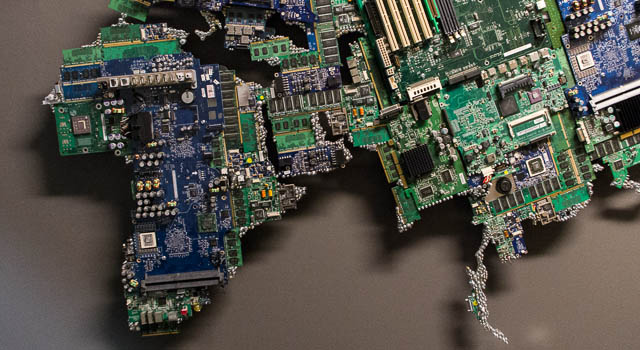
    Africa wrap map 640

    In 2001, the RAND Corporation’s Science and Technology Policy Institute created an index of science and technology capacity for the World Bank. They ranked 150 countries based on their potential to innovate and work with more scientifically advanced nations.

    Have these changes had an effect on African nations’ scientific and technological capacity? My study replicated the RAND Index in 2011 to answer this question and suggest which African nations might be best poised to move forward technologically in coming decades.

    The index ranked most countries in the world, according to their science and technology capacity, into:

    • Scientifically advanced countries
    • Scientifically proficient countries
    • Scientifically developing countries
    • Scientifically lagging countries

    Various indicators have been developed in an attempt to quantify science and technology capacity across countries. Examples of this are the OECD’s Science, Technology and Industry Scoreboard or the European Innovation Scoreboard.

    The RAND index selected seven components for which national level data were available for most countries for 2001 or an immediately preceding year.

    The variables were:

    • Gross national product (GNP) per capita
    • The number of universities and research institutions in the nation, per million people, as a representation of science and technology infrastructure
    • The number of scientists and engineers per million people
    • The number of a nation’s students studying in the US
    • The proportion of GNP spent on research and development
    • The number of academic science and technology journal articles published by citizens of the nation
    • The number of patents registered by citizens of the nation with the US Patent and Trademark Office and the European Patent Office

    To combine these different components into a single index, the RAND index standardised the numbers to show national performance. The value of each national characteristic was compared to the international average.

    Performance was ranked based on the number of standard deviations of the national value away from the international mean. The indicators were then weighted according to points for each criteria.

    A number of countries on the African continent are poised to reap the economic benefits of increased investment in science and technology.

    Science has helped stimulate economic growth in regions investing in innovative solutions around the world.

    The African Manifesto is a vision for a renaissance in science, technology and innovation for Africans, by Africans, in Africa.

    South Africa, Egypt, Tunisia, Morocco, Algeria, Nigeria and Mauritius are among the front runners in this group poised to do well because of the investment in science, technology and innovation.

    In sub-Saharan Africa, the countries with the greatest promise apart from South Africa and Nigeria are Benin, Botswana, Uganda, Mozambique, Ethiopia and Sudan.

    The countries that ranked rather low but show some promise for joining the others in the future are Liberia, Guinea, Namibia, Cote d´Ivoire and Cameroon.

    Tertiary foundation
    To benefit from the science and technology, tertiary education must fulfil the role as a driver of growth and technological capability.

    Countries such as Japan, Finland, Sweden Korea, Taiwan and South Korea have shown how efforts to raise tertiary education standards can yield benefits for technological innovation.

    Many experts in Africa acknowledge the crucial role of higher education in development as a key strategy to boost performance across economic sectors.

    Among other benefits, higher education also provides the capacity to understand and use global knowledge in science and technology. An example of this is in agriculture and other sectors.

    Investment in higher education can speed the rate of technology catch-up in Africa and boost income.

    But Africa’s tertiary education enrolment rates are among the lowest in the world. The African average is 7,1%, compared to 25,1% elsewhere in the world. Others on top of the African ranking and above the average enrolment rate on the continent are Tunisia, Egypt, Algeria, Mauritius, Morocco and Cape Verde. Botswana, Gabon and Senegal are also high on the rankings.

    A small group of sub-Saharan African nations is showing above average enrolment rates in tertiary education, but still lagging behind in science and technology capability.

    These are:

    • Liberia (17%)
    • Nigeria (10%)
    • Guinea (around 9%)
    • Namibia (around 9%)
    • Cote d´Ivoire (8.4%)
    • Cameroon (7.8%)

    If higher education is a key determinant of future science and technology capacity, these nations could progress in the coming years.

    How Africa ranks
    While African nations are still far behind in the latest study — and most remain near the bottom of the list — countries such as Morocco, Algeria, Nigeria, Botswana, Mozambique, Ethiopia, Sudan and Libya had advanced in the ranking by 2011.

    Out of the African nations in the original RAND index, South Africa was on top, followed by Mauritius, Benin, Egypt, Uganda, Togo and Tunisia. Mozambique, Chad and Eritrea were at the bottom.

    Morocco and Algeria showed the most progress, the former going from 116th to 62nd in the world and the latter from 123rd to 68th. In sub-Saharan Africa, Nigeria moved to 77th from 104th. Botswana, Mozambique, Ethiopia and Sudan also improved.

    In contrast, African leader Mauritius declined in the 2011 index, from 58th to 79th — as did Benin, Uganda, Libya, Togo, Congo and others. A decade later, most nations on the continent show a drop in the global ranking.

    Because of their large populations, South Africa, Morocco, Egypt, Algeria and Nigeria fell. Tunisia moved up and tiny Seychelles went from 98th to 87th. Gabon and Libya moved up but remained below the average.

    The countries lagging the furthest behind were the same as in the first index: Mauritania, Tanzania, Niger, Sierra Leone, Liberia, Comoros, Eritrea, Chad and Somalia.

    The widest differences, as could be expected, are in the indicators that reflect science and technology output. In the number of scientific and technological articles published in academic journals, every African nation was below the sample average. Tunisia, South Africa, the Seychelles and Botswana were listed as the best performers on the continent.

    In patents, only Seychelles was above the world average, with other nations lagging seriously behind. The human resource indicators also were substantially lower than for the rest of the world.

    As African countries advance in science and technology capability, their chances of orientating their economies toward sustained and sustainable growth are greatly enhanced. Hence this becomes a key indicator for the future. The Conversation

    • This piece was based on a study by Gayle Allard, PhD, professor of economics, IE Business School in Spain in the Journal of African Studies and Development in June
    • This article was originally published on The Conversation


    Gayle Allard RAND Corporation
    Subscribe to TechCentral Subscribe to TechCentral
    Share. Facebook Twitter LinkedIn WhatsApp Telegram Email Copy Link
    Previous ArticleIsaac Mophatlane on the history of BCX
    Next Article Eskom, Post Office woes soon over: Ramaphosa

    Related Posts

    The dangerous new face of modern warfare

    1 December 2015
    Company News
    Beat the summer heat with Samsung's WindFree air conditioners

    Beat the summer heat with Samsung’s WindFree air conditioners

    5 December 2025
    AI is not a technology problem - iqbusiness

    AI is not a technology problem – iqbusiness

    5 December 2025
    Telcos are sitting on a data gold mine - but few know what do with it - Phillip du Plessis

    Telcos are sitting on a data gold mine – but few know what do with it

    4 December 2025
    Opinion
    Your data, your hardware: the DIY AI revolution is coming - Duncan McLeod

    Your data, your hardware: the DIY AI revolution is coming

    20 November 2025
    Zero Carbon Charge founder Joubert Roux

    The energy revolution South Africa can’t afford to miss

    20 November 2025
    It's time for a new approach to government IT spend in South Africa - Richard Firth

    It’s time for a new approach to government IT spend in South Africa

    19 November 2025

    Subscribe to Updates

    Get the best South African technology news and analysis delivered to your e-mail inbox every morning.

    Latest Posts
    Vula Medical named as South Africa's 2025 app of the year

    Vula Medical named as South Africa’s 2025 app of the year

    5 December 2025
    Beat the summer heat with Samsung's WindFree air conditioners

    Beat the summer heat with Samsung’s WindFree air conditioners

    5 December 2025
    Netflix, Warner Bros talks raise fresh headaches for MultiChoice

    Netflix, Warner Bros talks raise fresh headaches for MultiChoice

    5 December 2025
    Big Microsoft 365 price increases coming next year

    Big Microsoft price increases coming next year

    5 December 2025
    © 2009 - 2025 NewsCentral Media
    • Cookie policy (ZA)
    • TechCentral – privacy and Popia

    Type above and press Enter to search. Press Esc to cancel.

    Manage consent

    TechCentral uses cookies to enhance its offerings. Consenting to these technologies allows us to serve you better. Not consenting or withdrawing consent may adversely affect certain features and functions of the website.

    Functional Always active
    The technical storage or access is strictly necessary for the legitimate purpose of enabling the use of a specific service explicitly requested by the subscriber or user, or for the sole purpose of carrying out the transmission of a communication over an electronic communications network.
    Preferences
    The technical storage or access is necessary for the legitimate purpose of storing preferences that are not requested by the subscriber or user.
    Statistics
    The technical storage or access that is used exclusively for statistical purposes. The technical storage or access that is used exclusively for anonymous statistical purposes. Without a subpoena, voluntary compliance on the part of your Internet Service Provider, or additional records from a third party, information stored or retrieved for this purpose alone cannot usually be used to identify you.
    Marketing
    The technical storage or access is required to create user profiles to send advertising, or to track the user on a website or across several websites for similar marketing purposes.
    • Manage options
    • Manage services
    • Manage {vendor_count} vendors
    • Read more about these purposes
    View preferences
    • {title}
    • {title}
    • {title}