Close Menu
TechCentralTechCentral

    Subscribe to the newsletter

    Get the best South African technology news and analysis delivered to your e-mail inbox every morning.

    Facebook X (Twitter) YouTube LinkedIn
    WhatsApp Facebook X (Twitter) LinkedIn YouTube
    TechCentralTechCentral
    • News
      Post Office still faces liquidation risk as policy rift widens - Mondli Gungubele

      Post Office still faces liquidation risk as policy rift widens

      9 February 2026
      SABC says it can't afford to cover the next election

      SABC says it can’t afford to cover the next election

      9 February 2026
      Home affairs' R10 ID fee is forcing companies to rethink identity verification

      Home affairs’ R10 ID fee is forcing companies to rethink identity verification

      9 February 2026
      Tech salaries in South Africa are bouncing back

      Tech salaries in South Africa are bouncing back

      9 February 2026
      Vumatel tops a million subscribers in South African broadband milestone - Dietlof Mare

      Vumatel tops a million subscribers in South African broadband milestone

      9 February 2026
    • World
      EU regulators take aim at WhatsApp

      EU regulators take aim at WhatsApp

      9 February 2026
      Musk hits brakes on Mars mission

      Musk hits brakes on Mars mission

      9 February 2026
      Crypto firm accidentally sends R700-billion in bitcoin to its users

      Crypto firm accidentally sends R700-billion in bitcoin to its users

      8 February 2026
      AI won't replace software, says Nvidia CEO amid market rout - Jensen Huang

      AI won’t replace software, says Nvidia CEO amid market rout

      4 February 2026
      Apple acquires audio AI start-up Q.ai

      Apple acquires audio AI start-up Q.ai

      30 January 2026
    • In-depth
      How liberalisation is rewiring South Africa's power sector

      How liberalisation is rewiring South Africa’s power sector

      21 January 2026
      The top-performing South African tech shares of 2025

      The top-performing South African tech shares of 2025

      12 January 2026
      Digital authoritarianism grows as African states normalise internet blackouts

      Digital authoritarianism grows as African states normalise internet blackouts

      19 December 2025
      TechCentral's South African Newsmakers of 2025

      TechCentral’s South African Newsmakers of 2025

      18 December 2025
      Black Friday goes digital in South Africa as online spending surges to record high

      Black Friday goes digital in South Africa as online spending surges to record high

      4 December 2025
    • TCS
      TCS+ | How Cloud On Demand is helping SA businesses succeed in the cloud - Xhenia Rhode, Dion Kalicharan

      TCS+ | Cloud On Demand and Consnet: inside a real-world AWS partner success story

      30 January 2026
      Watts & Wheels S1E3: 'BYD's Corolla Cross challenger'

      Watts & Wheels S1E3: ‘BYD’s Corolla Cross challenger’

      30 January 2026
      Watts & Wheels S1E3: 'BYD's Corolla Cross challenger'

      Watts & Wheels S1E2: ‘China attacks, BMW digs in, Toyota’s sublime supercar’

      23 January 2026

      TCS+ | Why cybersecurity is becoming a competitive advantage for SA businesses

      20 January 2026
      Watts & Wheels S1E3: 'BYD's Corolla Cross challenger'

      Watts & Wheels: S1E1 – ‘William, Prince of Wheels’

      8 January 2026
    • Opinion
      South Africa's skills advantage is being overlooked at home - Richard Firth

      South Africa’s skills advantage is being overlooked at home

      29 January 2026
      Why Elon Musk's Starlink is a 'hard no' for me - Songezo Zibi

      Why Elon Musk’s Starlink is a ‘hard no’ for me

      26 January 2026
      South Africa's new fibre broadband battle - Duncan McLeod

      South Africa’s new fibre broadband battle

      20 January 2026
      AI moves from pilots to production in South African companies - Nazia Pillay SAP

      AI moves from pilots to production in South African companies

      20 January 2026
      South Africa's new fibre broadband battle - Duncan McLeod

      ANC’s attack on Solly Malatsi shows how BEE dogma trumps economic reality

      14 December 2025
    • Company Hubs
      • Africa Data Centres
      • AfriGIS
      • Altron Digital Business
      • Altron Document Solutions
      • Altron Group
      • Arctic Wolf
      • AvertITD
      • Braintree
      • CallMiner
      • CambriLearn
      • CYBER1 Solutions
      • Digicloud Africa
      • Digimune
      • Domains.co.za
      • ESET
      • Euphoria Telecom
      • Incredible Business
      • iONLINE
      • IQbusiness
      • Iris Network Systems
      • LSD Open
      • NEC XON
      • Netstar
      • Network Platforms
      • Next DLP
      • Ovations
      • Paracon
      • Paratus
      • Q-KON
      • SevenC
      • SkyWire
      • Solid8 Technologies
      • Telit Cinterion
      • Tenable
      • Vertiv
      • Videri Digital
      • Vodacom Business
      • Wipro
      • Workday
      • XLink
    • Sections
      • AI and machine learning
      • Banking
      • Broadcasting and Media
      • Cloud services
      • Contact centres and CX
      • Cryptocurrencies
      • Education and skills
      • Electronics and hardware
      • Energy and sustainability
      • Enterprise software
      • Financial services
      • Information security
      • Internet and connectivity
      • Internet of Things
      • Investment
      • IT services
      • Lifestyle
      • Motoring
      • Public sector
      • Retail and e-commerce
      • Satellite communications
      • Science
      • SMEs and start-ups
      • Social media
      • Talent and leadership
      • Telecoms
    • Events
    • Advertise
    TechCentralTechCentral
    Home » Sections » Cryptocurrencies » Why China is cracking down on cryptocurrencies

    Why China is cracking down on cryptocurrencies

    By Agency Staff22 June 2021
    Twitter LinkedIn Facebook WhatsApp Email Telegram Copy Link
    News Alerts
    WhatsApp
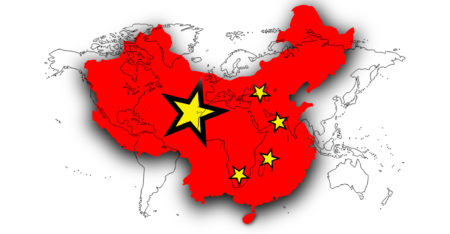
    Image: Macau Photo Agency

    China’s central bank said on Monday it had urged some banks and payment firms to crack down harder on cryptocurrency trading, in the latest move by Chinese authorities to stem the use of digital coins.

    The People’s Bank of China’s statement sent bitcoin tumbling to a two-week low and ether to a more than five-week low. On Tuesday, prices of major cryptocurrencies stabilised.

    What did the PBOC say?

    The PBOC statement followed a meeting with banks and payment firms in which it urged them to check client accounts thoroughly, identify those involved in cryptocurrency transactions, and promptly cut their payment channels.

    China Construction Bank, Industrial and Commercial Bank of China (ICBC), Agricultural Bank of China (AgBank) and Postal Savings Bank of China attended the meeting, along with Alipay, the ubiquitous payment platform owned by fintech giant Ant Group.

    Attendees vowed to comply. AgBank said that it would conduct due diligence to root out illegal crypto-related activities and shut down suspicious accounts, and Alipay said it would set up a monitoring system targeting key websites and accounts, and blacklist merchants involved in virtual currency transactions.

    What is the impact of the crackdown?

    The latest tightening makes it far more difficult for individuals in China to trade cryptocurrencies, even through channels that have avoided previous restrictions.

    “The law hasn’t changed, it’s just the enforcement,” said Bobby Lee, founder and CEO of Ballet, a cryptocurrency wallet app, and formerly CEO of BTC China, China’s first bitcoin exchange.

    The PBOC statement also effectively cuts off payment channels through which mainland Chinese traders have acquired cryptocurrencies to trade offshore.

    Banks and payment companies continue to face challenges of identifying money flows related to cryptocurrencies

    “Essentially this puts all the OTC platforms out of business … all the OTC platforms were skirting the last ban, which was to not have exchanges,” Lee said.

    But banks and payment companies continue to face challenges of identifying money flows related to cryptocurrencies. For now, Beijing has not targeted the holding of digital coins.

    “Bitcoin is still at this point a legal digital asset for people to own,” said Lee. “So maybe the final nail in the coffin, if it happens in a few years, is they literally declare bitcoin illegal to possess.”

    How has China sought to regulate crypto?

    Last month, three industry associations banned crypto-related financial services, and a meeting of the State Council’s financial stability & development committee chaired by vice Premier Liu He vowed a crackdown on bitcoin mining and trading as part of efforts to fend off financial risks.

    Bans on crypto mining have been issued in major bitcoin mining hubs, including Sichuan, Xinjiang and Inner Mongolia.

    China’s crypto restrictions date to 2013, when financial regulators banned banks and payment companies from providing bitcoin-related services.

    In September 2017, China banned initial coin offerings (ICOs), barred financial firms and payment companies from providing services for ICOs and cryptocurrencies, and banned cryptocurrency trading platforms from converting between legal tender and cryptocurrencies.

    The restrictions prompted most such platforms to shut down, with many moving offshore.

    Why has China tightened regulation?

    This year’s bitcoin bull run revived cryptocurrency trading in China, prompting warnings from regulators over financial risks and money laundering.

    With local exchanges shut down, many Chinese investors have switched to platforms owned by Chinese exchanges that had relocated overseas, including Huobi and OKEx, or trade over the counter through online platforms and social media trading chatrooms.

    China-focused exchanges, which also include Binance and MXC, have allowed Chinese individuals to easily open accounts online. They have also facilitated peer-to-peer deals in OTC markets that help convert Chinese yuan into cryptocurrencies. Traders make such transactions through banks or online payment channels such as Alipay or WeChat Pay.

    Retail investors have also been able to buy “computing power” from cryptocurrency miners, who design various investment schemes that promise quick and fat returns.

    Meanwhile, cryptocurrencies’ potential threat to China’s fiat currency, the yuan, has spurred the PBOC to launch its own digital currency.  — Reported by Andrew Galbraith and Samuel Shen, (c) 2021 Reuters



    PBOC
    WhatsApp YouTube Follow on Google News Add as preferred source on Google
    Share. Facebook Twitter LinkedIn WhatsApp Telegram Email Copy Link
    Previous ArticleMission impossible? Banks must provide hand sanitiser at all ATMs
    Next Article Echoes of neurodegenerative disease in fatal Covid cases

    Related Posts

    You can’t keep a good thing down: China bans crypto (again)

    28 September 2021

    Bitcoin plunges through $30 000

    22 June 2021

    China set to launch its own cryptocurrency

    12 August 2019
    Company News
    Xiaomi Redmi Note 15 Series launches with podcast recorded at Tugela Falls

    Xiaomi Redmi Note 15 Series launches with podcast recorded at Tugela Falls

    9 February 2026
    Paratus lights up new East Africa fibre highway linking Goma and Mombasa

    Paratus lights up new East Africa fibre highway linking Goma and Mombasa

    9 February 2026
    The new way of working - an Mweb study

    The new way of working – an Mweb study

    9 February 2026
    Opinion
    South Africa's skills advantage is being overlooked at home - Richard Firth

    South Africa’s skills advantage is being overlooked at home

    29 January 2026
    Why Elon Musk's Starlink is a 'hard no' for me - Songezo Zibi

    Why Elon Musk’s Starlink is a ‘hard no’ for me

    26 January 2026
    South Africa's new fibre broadband battle - Duncan McLeod

    South Africa’s new fibre broadband battle

    20 January 2026

    Subscribe to Updates

    Get the best South African technology news and analysis delivered to your e-mail inbox every morning.

    Latest Posts
    Post Office still faces liquidation risk as policy rift widens - Mondli Gungubele

    Post Office still faces liquidation risk as policy rift widens

    9 February 2026
    SABC says it can't afford to cover the next election

    SABC says it can’t afford to cover the next election

    9 February 2026
    Home affairs' R10 ID fee is forcing companies to rethink identity verification

    Home affairs’ R10 ID fee is forcing companies to rethink identity verification

    9 February 2026
    EU regulators take aim at WhatsApp

    EU regulators take aim at WhatsApp

    9 February 2026
    © 2009 - 2026 NewsCentral Media
    • Cookie policy (ZA)
    • TechCentral – privacy and Popia

    Type above and press Enter to search. Press Esc to cancel.

    Manage consent

    TechCentral uses cookies to enhance its offerings. Consenting to these technologies allows us to serve you better. Not consenting or withdrawing consent may adversely affect certain features and functions of the website.

    Functional Always active
    The technical storage or access is strictly necessary for the legitimate purpose of enabling the use of a specific service explicitly requested by the subscriber or user, or for the sole purpose of carrying out the transmission of a communication over an electronic communications network.
    Preferences
    The technical storage or access is necessary for the legitimate purpose of storing preferences that are not requested by the subscriber or user.
    Statistics
    The technical storage or access that is used exclusively for statistical purposes. The technical storage or access that is used exclusively for anonymous statistical purposes. Without a subpoena, voluntary compliance on the part of your Internet Service Provider, or additional records from a third party, information stored or retrieved for this purpose alone cannot usually be used to identify you.
    Marketing
    The technical storage or access is required to create user profiles to send advertising, or to track the user on a website or across several websites for similar marketing purposes.
    • Manage options
    • Manage services
    • Manage {vendor_count} vendors
    • Read more about these purposes
    View preferences
    • {title}
    • {title}
    • {title}