Close Menu
TechCentralTechCentral

    Subscribe to the newsletter

    Get the best South African technology news and analysis delivered to your e-mail inbox every morning.

    Facebook X (Twitter) YouTube LinkedIn
    WhatsApp Facebook X (Twitter) LinkedIn YouTube
    TechCentralTechCentral
    • News
      Big Microsoft 365 price increases coming next year

      Big Microsoft price increases coming next year

      5 December 2025
      Vodacom to take control of Safaricom in R36-billion deal - Shameel Joosub

      Vodacom to take control of Safaricom in R36-billion deal

      4 December 2025
      Black Friday goes digital in South Africa as online spending surges to record high

      Black Friday goes digital in South Africa as online spending surges to record high

      4 December 2025
      BYD takes direct aim at Toyota with launch of sub-R500 000 Sealion 5 PHEV

      BYD takes direct aim at Toyota with launch of sub-R500 000 Sealion 5 PHEV

      4 December 2025
      'Get it now': Takealot in new instant deliveries pilot

      ‘Get it now’: Takealot in new instant deliveries pilot

      4 December 2025
    • World
      Amazon and Google launch multi-cloud service for faster connectivity

      Amazon and Google launch multi-cloud service for faster connectivity

      1 December 2025
      Google makes final court plea to stop US breakup

      Google makes final court plea to stop US breakup

      21 November 2025
      Bezos unveils monster rocket: New Glenn 9x4 set to dwarf Saturn V

      Bezos unveils monster rocket: New Glenn 9×4 set to dwarf Saturn V

      21 November 2025
      Tech shares turbocharged by Nvidia's stellar earnings

      Tech shares turbocharged by stellar Nvidia earnings

      20 November 2025
      Config file blamed for Cloudflare meltdown that disrupted the web

      Config file blamed for Cloudflare meltdown that disrupted the web

      19 November 2025
    • In-depth
      Jensen Huang Nvidia

      So, will China really win the AI race?

      14 November 2025
      Valve's Linux console takes aim at Microsoft's gaming empire

      Valve’s Linux console takes aim at Microsoft’s gaming empire

      13 November 2025
      iOCO's extraordinary comeback plan - Rhys Summerton

      iOCO’s extraordinary comeback plan

      28 October 2025
      Why smart glasses keep failing - no, it's not the tech - Mark Zuckerberg

      Why smart glasses keep failing – it’s not the tech

      19 October 2025
      BYD to blanket South Africa with megawatt-scale EV charging network - Stella Li

      BYD to blanket South Africa with megawatt-scale EV charging network

      16 October 2025
    • TCS
      TCS+ | How Cloud on Demand helps partners thrive in the AWS ecosystem - Odwa Ndyaluvane and Xenia Rhode

      TCS+ | How Cloud On Demand helps partners thrive in the AWS ecosystem

      4 December 2025
      TCS | MTN Group CEO Ralph Mupita on competition, AI and the future of mobile

      TCS | Ralph Mupita on competition, AI and the future of mobile

      28 November 2025
      TCS | Dominic Cull on fixing South Africa's ICT policy bottlenecks

      TCS | Dominic Cull on fixing South Africa’s ICT policy bottlenecks

      21 November 2025
      TCS | BMW CEO Peter van Binsbergen on the future of South Africa's automotive industry

      TCS | BMW CEO Peter van Binsbergen on the future of South Africa’s automotive industry

      6 November 2025
      TCS | Why Altron is building an AI factory - Bongani Andy Mabaso

      TCS | Why Altron is building an AI factory in Johannesburg

      28 October 2025
    • Opinion
      Your data, your hardware: the DIY AI revolution is coming - Duncan McLeod

      Your data, your hardware: the DIY AI revolution is coming

      20 November 2025
      Zero Carbon Charge founder Joubert Roux

      The energy revolution South Africa can’t afford to miss

      20 November 2025
      It's time for a new approach to government IT spend in South Africa - Richard Firth

      It’s time for a new approach to government IT spend in South Africa

      19 November 2025
      How South Africa's broken Rica system fuels murder and mayhem - Farhad Khan

      How South Africa’s broken Rica system fuels murder and mayhem

      10 November 2025
      South Africa's AI data centre boom risks overloading a fragile grid - Paul Colmer

      South Africa’s AI data centre boom risks overloading a fragile grid

      30 October 2025
    • Company Hubs
      • Africa Data Centres
      • AfriGIS
      • Altron Digital Business
      • Altron Document Solutions
      • Altron Group
      • Arctic Wolf
      • AvertITD
      • Braintree
      • CallMiner
      • CambriLearn
      • CYBER1 Solutions
      • Digicloud Africa
      • Digimune
      • Domains.co.za
      • ESET
      • Euphoria Telecom
      • Incredible Business
      • iONLINE
      • IQbusiness
      • Iris Network Systems
      • LSD Open
      • NEC XON
      • Netstar
      • Network Platforms
      • Next DLP
      • Ovations
      • Paracon
      • Paratus
      • Q-KON
      • SevenC
      • SkyWire
      • Solid8 Technologies
      • Telit Cinterion
      • Tenable
      • Vertiv
      • Videri Digital
      • Vodacom Business
      • Wipro
      • Workday
      • XLink
    • Sections
      • AI and machine learning
      • Banking
      • Broadcasting and Media
      • Cloud services
      • Contact centres and CX
      • Cryptocurrencies
      • Education and skills
      • Electronics and hardware
      • Energy and sustainability
      • Enterprise software
      • Financial services
      • Information security
      • Internet and connectivity
      • Internet of Things
      • Investment
      • IT services
      • Lifestyle
      • Motoring
      • Public sector
      • Retail and e-commerce
      • Satellite communications
      • Science
      • SMEs and start-ups
      • Social media
      • Talent and leadership
      • Telecoms
    • Events
    • Advertise
    TechCentralTechCentral
    Home » Sections » Motoring » Why electric cars are still so expensive

    Why electric cars are still so expensive

    By Agency Staff23 October 2020
    Twitter LinkedIn Facebook WhatsApp Email Telegram Copy Link
    News Alerts
    WhatsApp
    Electric Mini Cooper from BMW

    At Tesla’s ballyhooed Battery Day event in September, CEO Elon Musk set himself an ambitious target: to produce a US$25 000 electric car in three years. Hitting that price — about $13 000 cheaper than the least expensive model today — is seen as critical to deliver a true, mass-market product.

    Getting there means finding new savings on technology, most critically the batteries that can make up a third of a vehicle’s cost. Musk says innovations and in-house manufacturing can quickly halve that expense, while most competitors see a slower road to reach price parity with petrol guzzlers.

    1. Why are EV batteries so expensive?

    Largely because of what goes in them. An EV uses the same rechargeable lithium-ion batteries that are in your laptop or mobile phone, they’re just much bigger to enable them to deliver far more energy. The priciest component in each cell is the cathode, one of the two electrodes that store and release a charge. That’s because the materials needed in cathodes to pack in more energy are often expensive: metals like cobalt, nickel, lithium and manganese. They need to be mined, processed and converted into high-purity chemical compounds.

    2. How much are we talking?

    At current rates and pack sizes, the average battery cost for a typical electric vehicle works out to about $7 350, or about R119 000 at the time of writing. That’s come down a lot — 87% over the past decade, according to BloombergNEF. But the average pack price of $156/kWh (from about $1 183 in 2010) is still above the $100 threshold at which the cost of an electric vehicle should match a car with an internal combustion engine. That would help trigger mass adoption.

    3. How will the batteries get cheaper?

    Costs aren’t expected to keep falling as quickly, but lithium-ion packs are on track to drop to $93/kWh by 2024, according to BNEF forecasts. To get there, one focus for manufacturers is on replacing high-cost cobalt with nickel. That has a double benefit: Nickel is cheaper and it also holds more energy, allowing manufacturers to reduce the volume needed. On the other hand, cobalt’s advantage is that it doesn’t overheat or catch fire easily, meaning manufacturers need to make safety adjustments when they use a substitute. Panasonic in Japan plans to commercialise a cobalt-free version of a high-energy battery in two to three years; other suppliers already produce lower-energy ones. There’s also attention on the battery packs, often resembling oversized suitcases, that house rows of individual cells. Simplifying the design, and using a standard product for a range of vehicles — rather than a pack tailored to each model — will deliver additional savings.
    4. Who are the biggest manufacturers?

    Asia dominates manufacturing of lithium-ion cells, accounting for more than 80% of existing capacity. The majority of that might is in China. Europe is building new factories and will surpass North America in cell manufacturing starting in 2021, according to Wood Mackenzie. Overall, the Chinese company Contemporary Amperex Technology (CATL) shipped the highest volumes in 2019, including batteries bound for power grids and storage systems. It’s a tighter field in the race to supply automakers, where Panasonic led last year. South Korea’s LG Chem has surged ahead in 2020, capturing about a quarter of the market in the first eight months, according to SNE Research. Tesla and Panasonic’s joint venture is the biggest battery producer in the US. Emerging producers include Northvolt in Sweden, founded by former Tesla executives, and Gotion High-tech in China.

    5. Are all EV batteries the same?

    Lithium-ion technology has dominated the rechargeable-battery sector since it was commercialised by Sony in 1991. Improvements to lifespan, power, weight and costs have helped the components leap from camcorders to SUVs, buses and ferries. While lithium-ion cells, like all batteries, have the same basic components — two electrodes (a cathode and an anode) and an electrolyte that helps shuttle the charge between them — there are differences in the materials used, and that’s key to the amount of energy they hold. Grid storage systems, or vehicles traveling short distances, can use cheaper and less powerful cathode chemistry that combines lithium, iron and phosphate. For higher-performance vehicles, automakers favour more energy-dense materials, such as lithium-nickel-manganese-cobalt oxide or lithium-nickel-cobalt-aluminum oxide. Further refinements are seeking to improve range — how far a vehicle can travel before recharging — as well as charging speed, while also balancing factors like fire-resistance. Recent battery blazes and vehicle recalls have highlighted safety issues.

    6. How else can costs come down?

    There’s the manufacturing process itself and the machinery required. Tesla has commissioned the largest casting machine ever made that’ll produce the entire rear section of a car as a single piece of die-cast aluminum. Integrating the battery with a vehicle chassis could also trim the volume of material used. Electric motors — which account for as much as a 10th of a car’s cost — should be about 5% cheaper in the next couple of years with improvements to both materials and the electronics that transmit power between the battery, motor and a vehicle’s wheels, BNEF says.
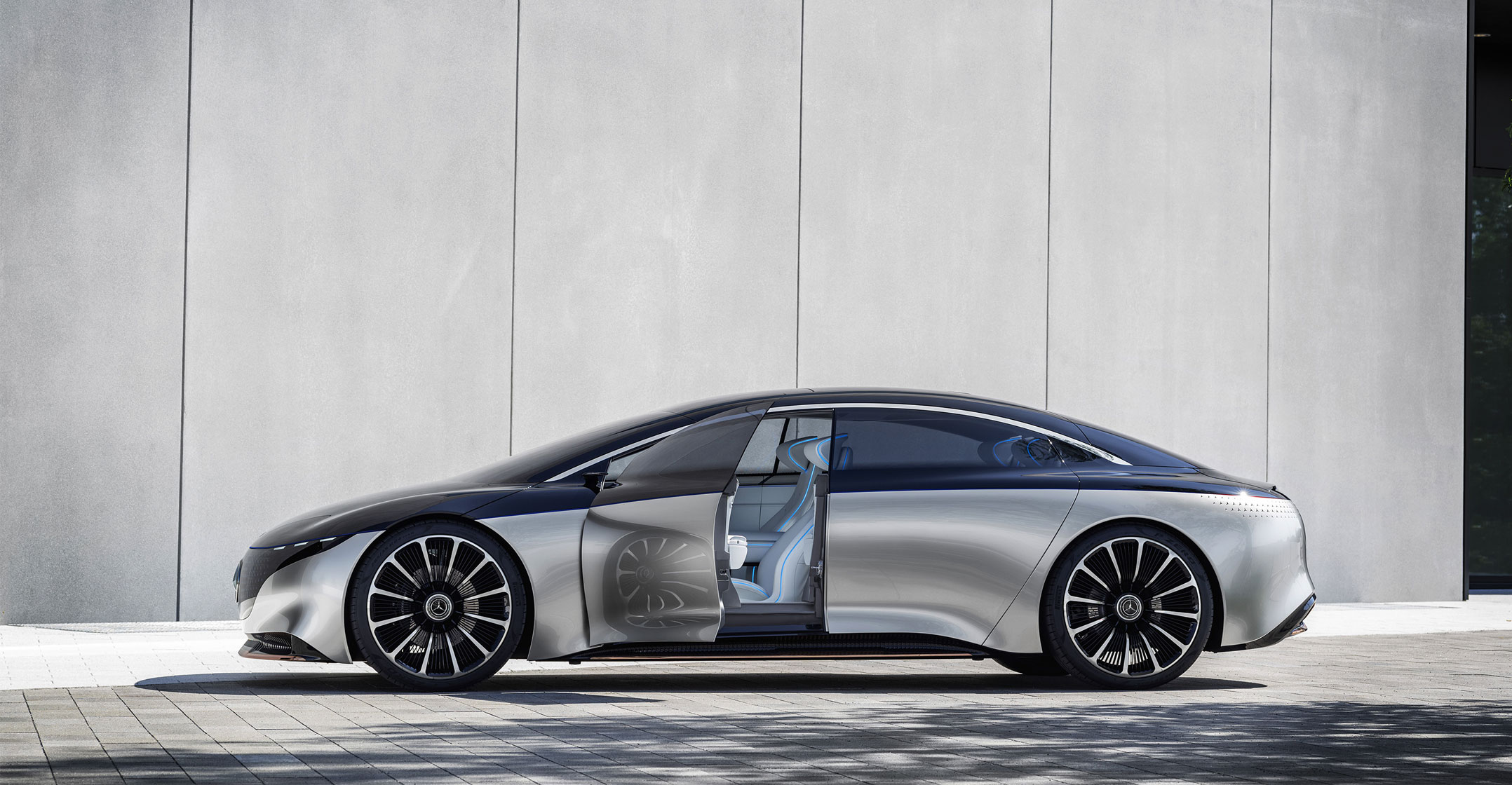
    Mercedes-Benz S-Class electric vehicle

    7. So China’s in pole position?

    Yes, in almost every aspect, with some key exceptions. China is responsible for about 80% of the chemical refining that converts lithium, cobalt and other raw materials into battery ingredients, though the metals themselves are largely mined in Australia, the Democratic Republic of Congo and Chile. China also dominates processes to make battery parts including capacity for cathodes, anodes, electrolyte solutions and separators, BNEF data shows. But China faces a rare challenge when it comes to advanced semiconductor design and software, components that are increasingly important as vehicles become more connected and autonomous. Less than 5% of automotive chips are made in China, according to China EV 100, a think tank. For example, major players in so-called insulated-gate bipolar transistors (IGBTs) include Infineon Technologies and Semikron in Germany and the Japanese companies Mitsubishi Motors, Fuji Electric and Toshiba. These high-efficiency switches reduce power loss and improve reliability in electric cars.

    8. Is cost the only hurdle?

    There’s still an issue with driving range. While the most expensive EVs can travel 640km or more before a top up, consumers considering more mainstream models remain anxious about how often they’ll need to recharge. Automakers and governments have become directly involved in the roll-out of public recharging infrastructure, conscious of a need to allay fears over not finding an electric pump on the go. Countries from China to Germany to Canada are building charging stations as part of stimulus measures adopted to combat the coronavirus-induced economic slump. Millions of units are being fitted on highways, in suburbs and at shopping mall parking lots, but distribution is uneven — more than a quarter of all public connectors in the US are in one state, California — and not all chargers are compatible with every EV model. Most recharging is expected to take place at home, and that means another cost for consumers, with an average price of about $1 000 per system.

    9. What’s around the corner?

    A host of innovations are seen moving from laboratories to production lines by the end of the decade. California-based Sila Nanotechnologies is adding silicon into battery anodes in place of graphite to allow a single charge to last at least 20% longer. Toyota and US start-ups including QuantumScape are racing to commercialise solid-state lithium-ion batteries, which overhaul a cell’s architecture to replace the flammable liquids that enable charging and discharging with ceramic, glass or polymers. That’s an advance that advocates claim can boost energy storage, lower costs, improve safety and cut recharging times. CATL is ready to produce a super long-life battery that lasts 16 years and two million kilometres — a typical battery warranty today covers about 240 000km or eight years. That means a single pack could be deployed in multiple vehicles or for several different tasks. As early electric cars retire, there’s also a fast-developing sector aimed at reusing batteries for less-strenuous tasks, or recycling the metals within them.  — Reported by David Stringer and Kyunghee Park, (c) 2020 Bloomberg LP



    CATL Elon Musk LG Chem Northvolt QuantumScape Sila Nanotechnologies Tesla top Toshiba
    Subscribe to TechCentral Subscribe to TechCentral
    Share. Facebook Twitter LinkedIn WhatsApp Telegram Email Copy Link
    Previous ArticleBusiness leaders urge ‘tough budget’ to trim fat
    Next Article Intel has lost its mojo – and investors are losing faith

    Related Posts

    Starlink risks ceding ground to rivals in South Africa amid licensing battle - Dominic Cull

    Starlink risks ceding ground to rivals in South Africa amid licensing battle

    17 November 2025
    Kuiper no more: Amazon Leo steps up to challenge to Musk's Starlink

    Kuiper no more: Amazon Leo steps up to challenge Musk’s Starlink

    14 November 2025
    Google agrees to major funding package for South African media

    Google agrees to major funding package for South African media

    13 November 2025
    Company News
    AI is not a technology problem - iqbusiness

    AI is not a technology problem – iqbusiness

    5 December 2025
    Telcos are sitting on a data gold mine - but few know what do with it - Phillip du Plessis

    Telcos are sitting on a data gold mine – but few know what do with it

    4 December 2025
    Unlock smarter computing with your surface Copilot+ PC

    Unlock smarter computing with your Surface Copilot+ PC

    4 December 2025
    Opinion
    Your data, your hardware: the DIY AI revolution is coming - Duncan McLeod

    Your data, your hardware: the DIY AI revolution is coming

    20 November 2025
    Zero Carbon Charge founder Joubert Roux

    The energy revolution South Africa can’t afford to miss

    20 November 2025
    It's time for a new approach to government IT spend in South Africa - Richard Firth

    It’s time for a new approach to government IT spend in South Africa

    19 November 2025

    Subscribe to Updates

    Get the best South African technology news and analysis delivered to your e-mail inbox every morning.

    Latest Posts
    Big Microsoft 365 price increases coming next year

    Big Microsoft price increases coming next year

    5 December 2025
    AI is not a technology problem - iqbusiness

    AI is not a technology problem – iqbusiness

    5 December 2025
    Vodacom to take control of Safaricom in R36-billion deal - Shameel Joosub

    Vodacom to take control of Safaricom in R36-billion deal

    4 December 2025
    Black Friday goes digital in South Africa as online spending surges to record high

    Black Friday goes digital in South Africa as online spending surges to record high

    4 December 2025
    © 2009 - 2025 NewsCentral Media
    • Cookie policy (ZA)
    • TechCentral – privacy and Popia

    Type above and press Enter to search. Press Esc to cancel.

    Manage consent

    TechCentral uses cookies to enhance its offerings. Consenting to these technologies allows us to serve you better. Not consenting or withdrawing consent may adversely affect certain features and functions of the website.

    Functional Always active
    The technical storage or access is strictly necessary for the legitimate purpose of enabling the use of a specific service explicitly requested by the subscriber or user, or for the sole purpose of carrying out the transmission of a communication over an electronic communications network.
    Preferences
    The technical storage or access is necessary for the legitimate purpose of storing preferences that are not requested by the subscriber or user.
    Statistics
    The technical storage or access that is used exclusively for statistical purposes. The technical storage or access that is used exclusively for anonymous statistical purposes. Without a subpoena, voluntary compliance on the part of your Internet Service Provider, or additional records from a third party, information stored or retrieved for this purpose alone cannot usually be used to identify you.
    Marketing
    The technical storage or access is required to create user profiles to send advertising, or to track the user on a website or across several websites for similar marketing purposes.
    • Manage options
    • Manage services
    • Manage {vendor_count} vendors
    • Read more about these purposes
    View preferences
    • {title}
    • {title}
    • {title}