 “Happy families are all alike; every unhappy family is unhappy in its own way.” So reads the opening line of Leon Tolstoy’s Anna Karenina. The novel comes to mind when looking at the prospects that confront mobile money. Success stories have many similarities, but failed efforts fail for their own different and varied reasons.
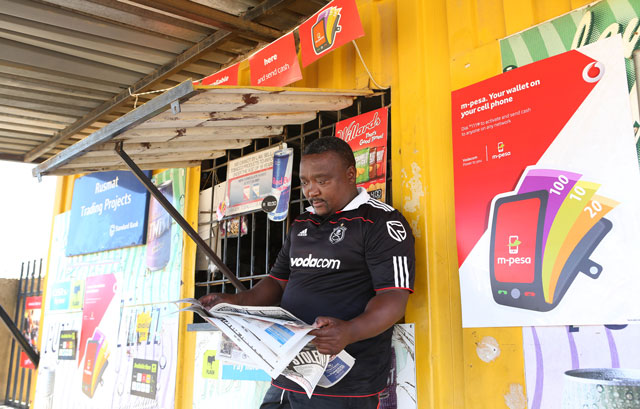
There is a renewed push to get mobile money going again in South Africa. Most recently, MTN announced it hopes that its money service launched in a partnership of sorts with Pick n Pay and other retailers could contribute as much as 15% of its total revenues in South Africa. And Vodacom has just re-launched M-Pesa here after a previous effort, started in 2010, fizzled out.
Several valiant efforts by banks — and the heroics of Wizzit — in extending mass retail banking and efficient payment mechanism for the unbanked can’t go unmentioned. But these offerings have also struggled to get mass market traction.
Apparently, the promise of a successful mobile money business that extends financial services to the unbanked is too much of a lure to ignore. The frustrating thing about mobile money around the globe, however, is that successes are just as hard to predict as those that crash and burn.
The earliest and most successful effort is Kenya’s M-Pesa service. It ought to be remembered that M-Pesa, as a mobile money transfer system, was initially pushed by the UK’s department of international development (DFID) following research showing that as early as 2002, people were transferring airtime to friends and family who were then reselling the airtime for cash. In other words, airtime had become a proxy for cash. The UK’s Vodafone, the owner of Kenya’s dominant mobile operator, Safaricom, was given a grant to pilot the first service in Kenya.
Kenya is the poster child of mobile money and it’s now hard to imagine, just seven years after its launch, how Kenya ever managed without M-Pesa. About 70% of the adult population uses it. But it has been much tougher going in other places. While Kenya has surged ahead, until recently neighbouring Tanzania has been a laggard despite several attempts to introduce the service there. But this has recently turned around. Recent figures released by Vodacom, which operates the biggest mobile operator in that market, show that US$1,2bn/month, a third of Tanzania’s GDP, is transacted through M-Pesa.
For some time now, mobile money services have been seen as a revolution for financial inclusion or bringing financial services to the formerly unbanked. A broad definition would include an electronic stored-value account linked a user’s cellphone, an application on the phone that allows users to manage their accounts and transfer value to other users and a network of cash in/cash out outlets where users can exchange electronic value for cash (deposits and withdrawals).
The Holy Grail for mobile money is to extend to full branchless banking, where the cellphone becomes a means for users to perform a wide range of transactions and to access the types of financial services only provided by retail banks. The ubiquity of cellphones, the thinking goes, allows a full range of financial services to the unbanked at a far lower cost than traditional “brick and mortar” bank branches.
Some places are receptive, but others are not. It is particularly hard to disentangle country-specific market factors from the specific business choices and capacities of the mobile money scheme. For various reasons, Kenya’s M-Pesa service was a success from the outset. One factor cited was the size and scale of its urban migrant population and the need to send money regularly to back home to the rural areas. The process of rural-urban migration must be sufficiently advanced to produce large migration flows, but not so advanced that rural communities lose their socioeconomic significance.
Countries with midrange urbanisation ratios, especially those that are urbanising at a rapid rate, are likely to exhibit strong rural-urban ties requiring transfer of value between them. Tanzania lags behind Kenya in some of those macro trends and is only now getting to the position that Kenya was at perhaps 20 years ago. Of course, many other factors have played a role. This includes the relatively permissive banking regulations in Kenya, know-your-customer (Fica) regulations, the state of alternative channels such as banks, and, importantly, the way that agents responsible for the physical transport of cash and the cashing out were incentivised.
Kenya’s agent appointment process was done very informally in a bottom-up organic fashion, whereas in Tanzania, the appointment of agents, at least initially, was done on a far more structured, hierarchical and top-down approach. The Kenyan model, it turned out, was the better one. Hindsight is like that.
Back to square one
Vodacom in South Africa has since gone back to the drawing board and built a strong team, which now has a strategy for success dealing with four identified areas: distribution, registration, functionality and loyalty.
CEO Shameel Joosub is reported to have said that the new service “has the potential to transform how South Africans manage money”. A quick examination of Vodacom’s latest M-Pesa offering shows that there is an effort to keep stored value in the system and to transact without the need to “cash out”.
While there is a lot of effort directed at transacting using cellphones, we need to remember that the key service enabled by services like M-Pesa remains its original purpose, remittances. In the same way, many people think that Google is a diversified Internet or technology firm, a look at its income statement confirms that it is still mostly an online advertising placement agency.
For all the problems associated with cash, it has some unique characteristics that make it useful. It is familiar to everyone and has a history stretching back centuries. Cash is easy to value (by counting), quick to exchange (at least for low values), guaranteed to be anonymous (no traceability), sturdy (withstands harsh handling), universally accepted (no basis for exclusion, de jure as well as de facto), and divisible (you don’t need to take all of it with you), and it incurs no marginal transaction cost. Children are taught to wash their hands after handling money because you don’t know where it has been.
Why is this important for South Africa? Well, recent research done by the UCT Unilever Institute set out to understand the behaviour the informal sector. It turns out it is huge, with economic activity here representing R280bn/year. This market is defined as households earning less than R6 172/month (average household income is around R3 000). The market consists of 34m South Africans, or 70% of the population, in 10m households representing R300bn in total spending power. In this sector, as many as 40% depend on social grants.
Statistics South Africa has a much smaller estimate, pegging economic activity in the informal sector at just R120bn. But on the other end of the scale, Loane Sharp, formerly of Adcorp and now of the Free Market Foundation, believes it to be at R680bn/year.
Sharp’s estimates, focusing on employment, and how his figures are calculated are an interesting debate of their own. But essentially, in measuring one leg of the calculation, he uses a currency demand method and in so doing tries to include unrecorded and illegal transactions such as employment of unregistered foreigners, evasion of income, payroll and other taxes as well as other economic activity in the underground economy. The currency demand method assumes that the difference between the amount of cash in circulation and the official levels of domestic expenditure represents unrecorded activity.
There is a fair bit of criticism of the currency demand methodology, but even outfits of the Finscope Survey of Small Businesses find much higher levels of self-employment in small firms than is seen in the official statistics. Other good work on the informal sector has been done by Kate Philip, a specialist in Inequality and Economic Inclusion.
While the size of the informal sector will be a matter of continued debate, it is this sector that mobile money solutions target. On the face of it, whatever the actual size of the market, the opportunities dangle invitingly. But it also operates outside the purview of the laws and regulations. We can be sure that some of it includes straight-up criminal activity, but other types of transactions are not directly criminal, as generally understood, but still illegal — like the person drawing a state pension or disability grant while also operating a small trading outfit from an RDP house rented from someone who is now, instead, renting the shack at the back of someone else’s house. That person, might be using the rent differential to fund a small micro-lending (loan shark) operation. That lending operation, in turn, might help bridge the regular cash-flow shortfalls of a shebeen down the road. Naturally, the South African Revenue Service doesn’t feature much in this matrix — if at all.
In this part of the economy, mobile money and efforts at financial inclusion looks like an answer in search of a question. Financial inclusion here is about having some “rolling stuff” in your pocket or tucked into your bra.
Inevitably then, mobile money schemes that add several additional financial services and transactional abilities move up the pyramid into the more formal sectors of the economy with greater number of formal wage earners. But this sector is already serviced by serious, battle-hardened operations like Capitec Bank, the financial services run by Pep Stores in partnership with existing banks, and Wizzit.
As Tolstoy’s Anna Karenina reminds us, an enterprise can fail for any number of different reasons. Trying to solve the non-problem of physical cash transactions in the informal sector looks to be just one reason why mobile money may, despite the best efforts, continue to struggle to find traction.
- Dirk de Vos runs corporate finance and advisory firm QED Solutions, specialising in the ICT and energy sectors. Find him on Twitter