South Africa’s potential to compete more effectively as a producer of critical minerals used in the technology sector is hampered by structural inefficiencies and policy uncertainty, leading to investments flowing to other countries where investors perceive it is easier to do business.
This is according to André Lourens, economist at the Minerals Council South Africa, who told TechCentral in an interview on Thursday that domestic output of these critical minerals, most needed in the tech sector, roughly amounts to only 5% of South Africa’s total production, even though more is possible.
“The minerals we look at as most critical, such as gold and platinum group metals, are not necessarily directly relevant to the tech sector. But those listed as moderately critical, such as silicon, vanadium, lithium and copper, are only produced in very small amounts in South Africa,” said Lourens.
“From our point of view, we need to lift whatever structural constraints we have and focus on producing more of those minerals knowing that they are going to more and more be used in the tech space.”
The department of mineral resources released a Critical Minerals and Metals Strategy document in December listing the minerals categorised as critical and setting out government’s plan to ensure South Africa can capitalise on its natural endowments.
Of the minerals in the list, lithium, cobalt, nickel manganese and graphite are used extensively in battery technology. Chrome ore and iron ore are combined to make stainless steel for industrial machinery. Platinum group metals are used in catalytic converters and are increasingly being used in hydrogen fuel cells, too. Gold and copper are used as conductors in electronic devices, with copper critical to the deployment of the latest AI data centres.
‘Global shift’
In the document, minerals & petroleum resources minister Gwede Mantashe acknowledged their importance to the technology sector and tech-adjacent industries.
“The 21st century is being shaped by the global shift towards green industrialisation, decarbonisation and digital transformation. At the heart of this shift lies a growing demand for critical minerals such as manganese, platinum group metals, vanadium, rare-earth elements and lithium. South Africa and the rest of the continent are abundantly endowed with most of these,” said Mantashe.
However, according to Lourens, one of the biggest problems is low prospecting rates. One such limiter is a black economic empowerment requirement that effectively forces prospecting companies to have some 26% of their equity held by local, historically disadvantaged entities.
Read: Batteries to move to the centre of South Africa’s energy transition
The department has acknowledged this requirement acts as a brake on investment, and discussions are under way to have it removed in the prospecting phase. But other issues exist, including a lack of transparency regarding which areas are available for prospecting and how to apply for them. The time it takes to administer licences is also a challenge, according to Lourens.
“It takes more than a year to get a prospecting licence in South Africa. Botswana, for example, does it in 90 days,” he said.
Another opportunity that looms large for South Africa’s mining sector is beneficiation. Cobalt and manganese, for example, which are used in batteries used to power electric vehicles, can be sold raw or beneficiated on the international market. While raw prices can be a few hundred dollars per ton, higher quality, beneficiated variants can be sold at up to US$1 800 in some instances.
South Africa has a dwindling smelting industry, with an estimated 67 furnaces across ferrochrome, ferromanganese, silicon and vanadium alloys. These facilities struggle to compete on an international footing for a number of reasons, including relatively high labour costs, challenges with domestic logistics infrastructure and port inefficiency, and lower investment arising from policy uncertainty. However, none of these factors is as restrictive as the cost of electricity.
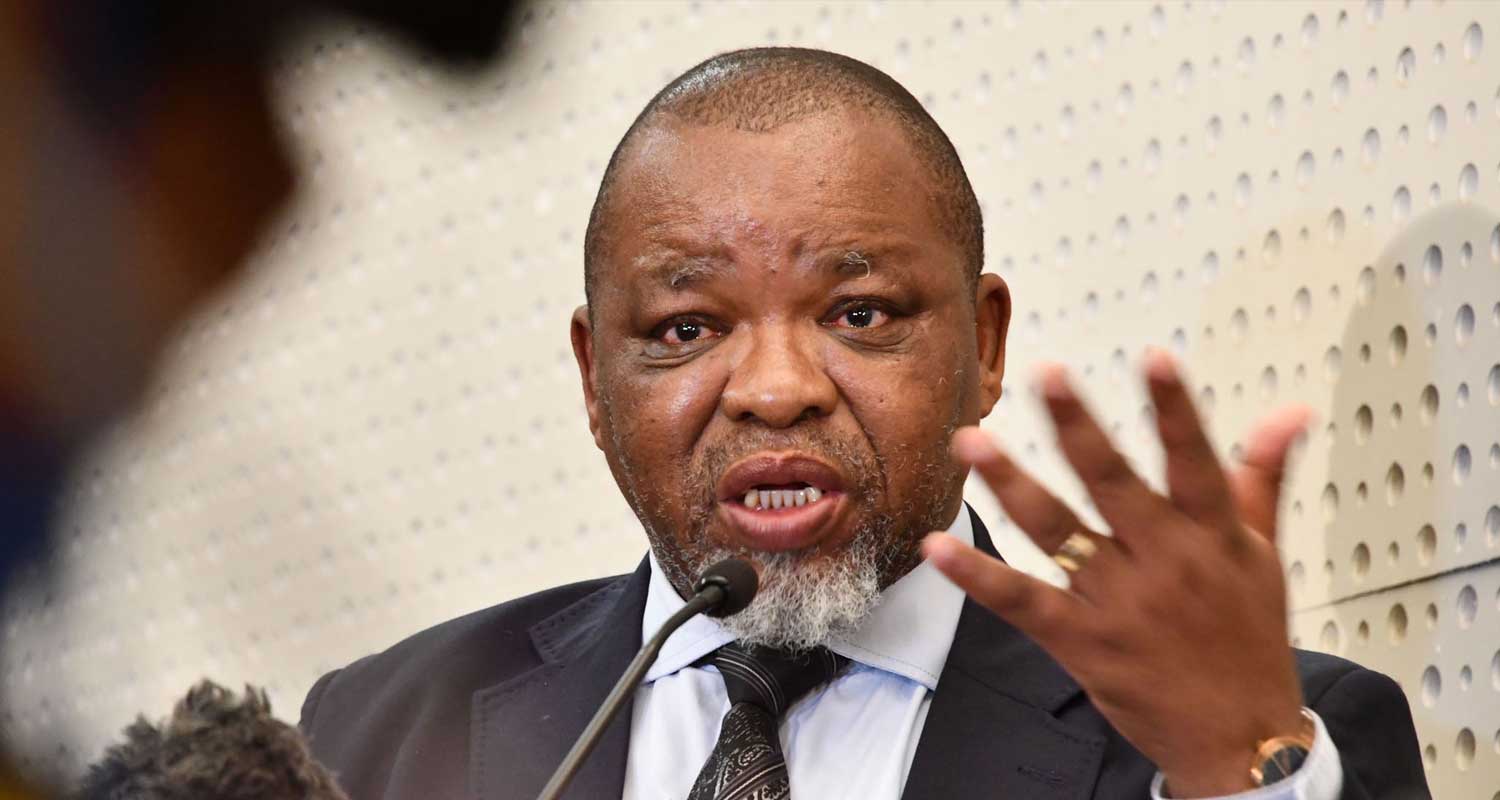
Speaking in an interview on Radio 702 on Wednesday, energy minister Kgosientsho Ramokgopa said South Africa is losing out on high-quality employment opportunities and additional sources of tax revenue because the cost of electricity makes beneficiating impractical.
“What we have found is that our players in the ferrochrome space, for example, have been decimated because they are uncompetitive due to the cost of electricity; the Chinese are offering this at a price that is half of what we are offering. So, there is no way they will succeed when electricity constitutes some 45% of the fixed cost of beneficiation,” said Ramokgopa.
The minister said his department is working with industry to address the cost factor in efforts to rekindle South Africa’s smelters, many of which are “mothballing”. Lourens argued that government also ought to consider incentivising the industry through “special economic zone” privileges, including tax breaks.
Read: The competing battery technologies shaping the EV industry
“It is not like we are setting out to want to build a new industry; we are just saving what is already there. If we can solve the electricity issue and not just this year, but on a long-term price path basis, we can extract more value from our critical mineral endowments,” said Lourens. – © 2026 NewsCentral Media
Get breaking news from TechCentral on WhatsApp. Sign up here.