
Close Menu
TechCentralTechCentral

    Subscribe to the newsletter

    Get the best South African technology news and analysis delivered to your e-mail inbox every morning.

    Facebook X (Twitter) YouTube LinkedIn
    WhatsApp Facebook X (Twitter) LinkedIn YouTube
    TechCentralTechCentral
    • News
      Africa's most popular phones have a tracking problem

      Africa’s most popular phones have a tracking problem

      24 July 2026
      Vodacom taps UJ, AWS to build its AI talent pipeline - Vodacom Group CEO Shameel Joosub

      Vodacom taps UJ, AWS to build its AI talent pipeline

      24 July 2026
      Intel is back in the game - Intel CEO Lip-Bu Tan. Laure Andrillon/Reuters

      Intel is back in the game

      24 July 2026
      Fat bonuses at Telkom despite group missing own targets - Serame Taukobong

      Fat bonuses at Telkom despite group missing own targets

      23 July 2026
      Massive changes coming to Amazon Prime Video - Jeff Bezos

      Massive changes coming to Amazon Prime Video

      23 July 2026
    • World
      Meta AI will now tell parents if their teen is in crisis

      Meta AI will now tell parents if their teen is in crisis

      17 July 2026
      IBM shares crash 25% as AI upends software spending - Arvind Krishna

      IBM shares crash 25% as AI upends software spending

      15 July 2026
      Jony Ive's first OpenAI device: an AI smart speaker - Jony Ive and Sam Altman

      Jony Ive’s first OpenAI device: an AI smart speaker

      15 July 2026
      Stripe, Advent in talks to buy PayPal for $53-billion

      Stripe, Advent in talks to buy PayPal for $53-billion

      15 July 2026
      Memory crisis sends smartphone market into steep decline

      Memory crisis sends smartphone market into steep decline

      13 July 2026
    • In-depth
      The plan to stop AI from breaking the world - Google DeepMind CEO Demis Hassabis. Image: John Sears

      The plan to stop AI from breaking the world

      16 July 2026
      The internet has a Strait of Hormuz problem

      The internet has a Strait of Hormuz problem

      15 July 2026
      AI boom sparks rally, frenzy and fear

      AI boom sparks rally, frenzy and fear

      11 June 2026
      Every plug-in hybrid on sale in South Africa, ranked by price - Lamborghini Temerario

      Every plug-in hybrid on sale in South Africa, ranked by price

      7 June 2026
      What Wi-Fi 8 will mean for wireless networks

      What Wi-Fi 8 will mean for wireless networks

      1 June 2026
    • TCS
      TCS | How Optasia lends billions to people banks can't see - Salvador Anglada

      TCS | How Optasia lends billions to people banks can’t see

      23 July 2026
      The rands-and-cents case for electric trucks - William Kelly Watts & Wheels with Wills

      The rands-and-cents case for electric trucks

      20 July 2026
      Watts & Wheels S1E7: 'Ferrari's EV breaks the internet'

      Watts & Wheels S1E7: ‘Ferrari’s EV breaks the internet’

      8 July 2026
      TCS | Pick n Pay's Enrico Ferigolli on Penny, the AI that shops for you

      TCS | Pick n Pay’s Enrico Ferigolli on Penny, the AI that shops for you

      2 July 2026
      TCS+ | How Tracker is turning vehicle data into business strategy - Silvia Schollenberger

      TCS+ | How Tracker is turning vehicle data into business strategy

      1 July 2026
    • Opinion
      Selling vapour is corporate suicide in slow motion - Jannie van Zyl

      Selling vapour is corporate suicide in slow motion

      16 July 2026
      Brazil's online gambling crackdown is a lesson for South Africa

      How Amazon outmanoeuvred Starlink in South Africa

      15 July 2026
      The Popia problem with agentic AI - Herman Haasbroek

      The Popia problem with agentic AI

      14 July 2026
      The author, Fanie van Rooyen

      South Africa can still catch the AI wave – here’s how

      7 July 2026
      The author, Fanie van Rooyen

      The AI utopia South Africa can’t afford

      1 July 2026
    • Company Hubs
      • 1Stream
      • Africa Data Centres
      • AfriGIS
      • Altron Digital Business
      • Altron Document Solutions
      • Altron Group
      • Arctic Wolf
      • Ascent Technology
      • AvertITD
      • BBD
      • Braintree
      • CallMiner
      • CambriLearn
      • CM Telecom
      • Contactable
      • CYBER1 Solutions
      • Digicloud Africa
      • Digimune
      • Domains.co.za
      • ESET
      • Euphoria Telecom
      • HOSTAFRICA
      • Incredible Business
      • iONLINE
      • IQbusiness
      • Iris Network Systems
      • Kaspersky
      • LSD Open
      • Mitel
      • NEC XON
      • Netstar
      • Network Platforms
      • Next DLP
      • Ovations
      • Paracon
      • Paratus
      • Q-KON
      • SevenC
      • SkyWire
      • Solid8 Technologies
      • Telit Cinterion
      • Telviva
      • Tenable
      • Vertiv
      • Videri Digital
      • Vodacom Business
      • Vox
      • Wipro
      • Workday
      • XLink
    • Sections
      • AI and machine learning
      • Banking
      • Broadcasting and Media
      • Cloud services
      • Contact centres and CX
      • Cryptocurrencies
      • Education and skills
      • Electronics and hardware
      • Energy and sustainability
      • Enterprise software
      • Financial services
      • HealthTech
      • Information security
      • Internet and connectivity
      • Internet of Things
      • Investment
      • IT services
      • Lifestyle
      • Policy and regulation
      • Public sector
      • Retail and e-commerce
      • Satellite communications
      • Science
      • SMEs and start-ups
      • Social media
      • Talent and leadership
      • Telecoms
      • Watts & Wheels
    • Events
    • Advertise
    TechCentralTechCentral
    Home » Sections » Watts & Wheels » The competing battery technologies shaping the EV industry

    The competing battery technologies shaping the EV industry

    Start-ups are racing to develop sodium, sulphur and solid-state batteries - here's a look at the state of play.
    By Agency Staff25 August 2025
    Twitter LinkedIn Facebook WhatsApp Email Telegram Copy Link
    News Alerts
    WhatsApp

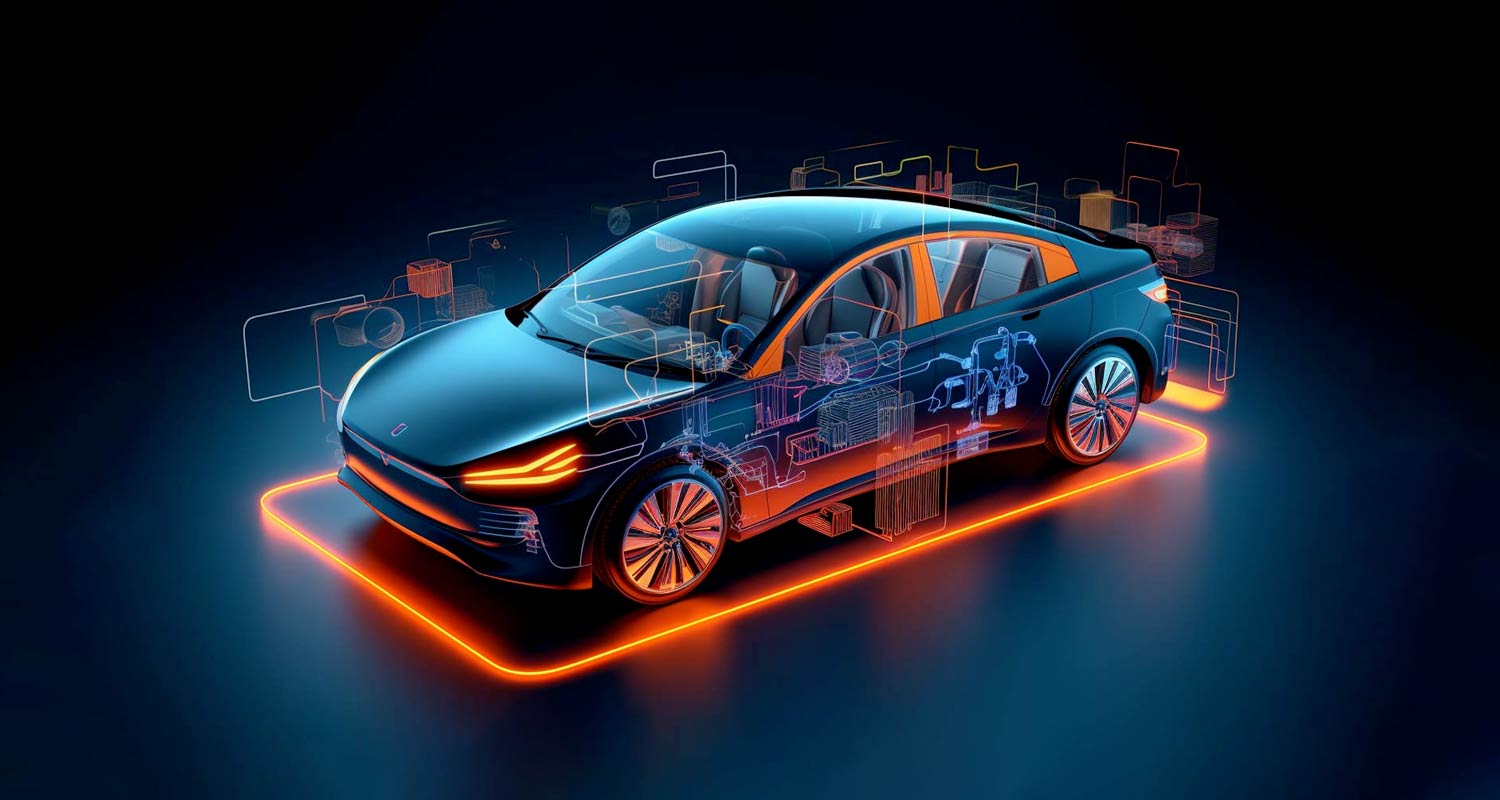
    The competing battery technologies shaping the EV industryStart-ups worldwide are racing to develop new battery technologies using materials like sodium and sulphur or other innovative chemistries, aiming to cut costs and reduce reliance on some critical minerals to supply electric vehicles.

    China controls 85% of the global battery cell production, and 90% of processing of raw materials used in two lithium-ion variants that dominate today’s EV market.

    Battery technology is evolving fast, but the basic principle remains unchanged, with three key components — a cathode, an anode and an electrolyte.

    Read: Every electric car you can buy in South Africa right now – with pricing

    As car makers weigh long-term options, here is a look at the various battery types currently in use or under development.

    Lead

    • What: Used in existing 6V or 12V batteries to power car starters
    • Pros: Cheap, works in extreme conditions
    • Cons: Heavy and low energy

    Nickel-cadmium (Ni-CD)

    • What: Rechargeable batteries

    Nickel-metal hydride (Ni-MH)

    • What: Technology used on Toyota’s first Prius, a precursor to hybrids, in 1997

    Sodium nickel chloride

    • What: Has been used on the Venturi Automobiles fleet of the French postal service
    • Pros: Smaller, this battery can be fitted to existing vehicles without having to convert them
    • Cons: Top speed limited to 100km/h, range limited to 100km

    Lithium metal polymer (LMP)

    • What: Used in Bolloré Pininfarina BlueCar model, Parisian car-sharing service Autolib, both now discontinued; technology now used mainly for stationary storage, buses and trams
    • Pros: “Dry” technology on the capacitor principle, easier industrial process
    • Cons: Requires pre-heating and maintaining the battery at a certain temperature
    Lithium-ion

    • What: The most widespread technology today, used in phone and laptop batteries, electric cars and other devices, first commercialised in 1991 by Sony
    • Pros: Lithium is the second most energetic metal after uraniuy, increasingly high top speed and range, no charge memory, fast and slow charging possible
    • Cons: Weight and sensitivity to external conditions (cold, vibrations), so-called “liquid” batteries which require close control of the risks of overheating

    Two lithium-ion technology families dominate the EV market:

    • NMC (nickel manganese cobalt): Features high energy density but at a cost more suited to large vehicles. Cobalt comes mainly from the Democratic Republic of Congo, where the conditions for extracting the metal pose strategic and ethical issues; and
    • LFP (lithium iron phosphate):
      • Pros: Eliminates the need for cobalt, more affordable technology suitable for smaller vehicles
      • Cons: Lower energy density than NMC

    Sodium-ion

    • Pros: Eliminates the need for lithium, nickel or cobalt, metals that are currently highly sought after, replaced by aluminium, iron and manganese. Since sodium is much more abundant than lithium, extraction and supply are easier and less expensive. Non-flammable, can withstand up to 50 000 recharge cycles, five to 10 times more than lithium-ion
    • Cons: Lower energy density, almost non-existent supply of this type of batteries currently, interest linked to the price of lithium

    Lithium nickel manganese oxide (LNMO)

    • Pros: Eliminates the need for cobalt. Renault argues that this technology, which it expects to deliver by 2028, combines the energy density of NMC, the cost and safety of LFP, and recharge times of less than 15 minutes
    • Cons: Still in development

    Lithium-sulphur

    • Pros: Stellantis-backed US start-up Lyten, which bought most of the assets of bankrupt Swedish battery maker Northvolt, claims that this technology has more than twice the energy density of lithium-ion. It also eliminates the need for nickel, cobalt and manganese and ensures greater independence since some of the raw materials can be produced locally, in North America and Europe
    • Cons: No deployment before 2028

    Read: Toyota to enter South Africa’s EV market with three models

    Solid-state batteries

    • What: A solid electrolyte (polymer, ceramic) replaces the liquid electrolyte of lithium-ion technology
    • Pros: Higher energy density, lighter, non-flammable
    • Cons: Still under development, no large-scale production yet.  — Gilles Guillaume, additional reporting by Nick Carey, translated by Alessandro Parodi and Marie Mannes, (c) 2025 Reuters

    Sources: futura-sciences.com, Plastec, Saft (TotalEnergies), Renault, Arkema, other companies

    Get breaking news from TechCentral on WhatsApp. Sign up here.

    Don’t miss:

    Driving on sunshine – how EVs and solar could power South Africa forward

    Follow TechCentral on Google News Add TechCentral as your preferred source on Google


    WhatsApp YouTube
    Share. Facebook Twitter LinkedIn WhatsApp Telegram Email Copy Link
    Previous ArticleCalls for crackdown on online gambling ‘wild west’ in South Africa
    Next Article TCS+ | Arctic Wolf on cybersecurity in the age of AI

    Related Posts

    Africa's most popular phones have a tracking problem

    Africa’s most popular phones have a tracking problem

    24 July 2026
    Vodacom taps UJ, AWS to build its AI talent pipeline - Vodacom Group CEO Shameel Joosub

    Vodacom taps UJ, AWS to build its AI talent pipeline

    24 July 2026
    Intel is back in the game - Intel CEO Lip-Bu Tan. Laure Andrillon/Reuters

    Intel is back in the game

    24 July 2026
    Company News
    Why Europe is turning to South Africa for cross-border innovation - BBD Software

    Why Europe is turning to South Africa for cross-border innovation

    24 July 2026
    Green dashboards, stalled change: the CIO's blind spot - Change Logic Marchant van den Heever

    Green dashboards, stalled change: the CIO’s blind spot

    24 July 2026
    Why Africa's cloud needs more than one path - Africa Data Centres

    Why Africa’s cloud needs more than one path

    23 July 2026
    Opinion
    Selling vapour is corporate suicide in slow motion - Jannie van Zyl

    Selling vapour is corporate suicide in slow motion

    16 July 2026
    Brazil's online gambling crackdown is a lesson for South Africa

    How Amazon outmanoeuvred Starlink in South Africa

    15 July 2026
    The Popia problem with agentic AI - Herman Haasbroek

    The Popia problem with agentic AI

    14 July 2026

    Subscribe to Updates

    Get the best South African technology news and analysis delivered to your e-mail inbox every morning.

    Latest Posts
    Africa's most popular phones have a tracking problem

    Africa’s most popular phones have a tracking problem

    24 July 2026
    Vodacom taps UJ, AWS to build its AI talent pipeline - Vodacom Group CEO Shameel Joosub

    Vodacom taps UJ, AWS to build its AI talent pipeline

    24 July 2026
    Intel is back in the game - Intel CEO Lip-Bu Tan. Laure Andrillon/Reuters

    Intel is back in the game

    24 July 2026
    Why Europe is turning to South Africa for cross-border innovation - BBD Software

    Why Europe is turning to South Africa for cross-border innovation

    24 July 2026
    © 2009 - 2026 NewsCentral Media
    Built and maintained by Chronon
    • Cookie policy (ZA)
    • TechCentral – privacy and Popia

    Type above and press Enter to search. Press Esc to cancel.

    Manage consent

    TechCentral uses cookies to enhance its offerings. Consenting to these technologies allows us to serve you better. Not consenting or withdrawing consent may adversely affect certain features and functions of the website.

    Functional Always active
    The technical storage or access is strictly necessary for the legitimate purpose of enabling the use of a specific service explicitly requested by the subscriber or user, or for the sole purpose of carrying out the transmission of a communication over an electronic communications network.
    Preferences
    The technical storage or access is necessary for the legitimate purpose of storing preferences that are not requested by the subscriber or user.
    Statistics
    The technical storage or access that is used exclusively for statistical purposes. The technical storage or access that is used exclusively for anonymous statistical purposes. Without a subpoena, voluntary compliance on the part of your Internet Service Provider, or additional records from a third party, information stored or retrieved for this purpose alone cannot usually be used to identify you.
    Marketing
    The technical storage or access is required to create user profiles to send advertising, or to track the user on a website or across several websites for similar marketing purposes.
    • Manage options
    • Manage services
    • Manage {vendor_count} vendors
    • Read more about these purposes
    View preferences
    • {title}
    • {title}
    • {title}