Close Menu
TechCentralTechCentral

    Subscribe to the newsletter

    Get the best South African technology news and analysis delivered to your e-mail inbox every morning.

    Facebook X (Twitter) YouTube LinkedIn
    WhatsApp Facebook X (Twitter) LinkedIn YouTube
    TechCentralTechCentral
    • News
      Vuyani Jarana: Mobile coverage masks a deeper broadband failure

      Vuyani Jarana: Mobile coverage masks a deeper broadband failure

      30 January 2026
      SABC Plus to flight Microsoft AI training videos

      SABC Plus to flight Microsoft AI training videos

      30 January 2026
      Fibre ducts

      Fibre industry consolidation in KZN

      30 January 2026
      Watts & Wheels S1E3: 'BYD's Corolla Cross challenger'

      Watts & Wheels S1E3: ‘BYD’s Corolla Cross challenger’

      30 January 2026
      What ordinary South Africans really think of AI

      What ordinary South Africans really think of AI

      30 January 2026
    • World
      Apple acquires audio AI start-up Q.ai

      Apple acquires audio AI start-up Q.ai

      30 January 2026
      SpaceX IPO may be largest in history

      SpaceX IPO may be largest in history

      28 January 2026
      Nvidia throws AI at the weather

      Nvidia throws AI at weather forecasting

      27 January 2026
      Debate erupts over value of in-flight Wi-Fi

      Debate erupts over value of in-flight Wi-Fi

      26 January 2026
      Intel takes another hit - Intel CEO Lip-Bu Tan. Laure Andrillon/Reuters

      Intel takes another hit

      23 January 2026
    • In-depth
      How liberalisation is rewiring South Africa's power sector

      How liberalisation is rewiring South Africa’s power sector

      21 January 2026
      The top-performing South African tech shares of 2025

      The top-performing South African tech shares of 2025

      12 January 2026
      Digital authoritarianism grows as African states normalise internet blackouts

      Digital authoritarianism grows as African states normalise internet blackouts

      19 December 2025
      TechCentral's South African Newsmakers of 2025

      TechCentral’s South African Newsmakers of 2025

      18 December 2025
      Black Friday goes digital in South Africa as online spending surges to record high

      Black Friday goes digital in South Africa as online spending surges to record high

      4 December 2025
    • TCS
      TCS+ | How Cloud On Demand is helping SA businesses succeed in the cloud - Xhenia Rhode, Dion Kalicharan

      TCS+ | Cloud On Demand and Consnet: inside a real-world AWS partner success story

      30 January 2026
      Watts & Wheels S1E3: 'BYD's Corolla Cross challenger'

      Watts & Wheels S1E2: ‘China attacks, BMW digs in, Toyota’s sublime supercar’

      23 January 2026

      TCS+ | Why cybersecurity is becoming a competitive advantage for SA businesses

      20 January 2026
      Watts & Wheels S1E3: 'BYD's Corolla Cross challenger'

      Watts & Wheels: S1E1 – ‘William, Prince of Wheels’

      8 January 2026
      TCS+ | Africa's digital transformation - unlocking AI through cloud and culture - Cliff de Wit Accelera Digital Group

      TCS+ | Cloud without culture won’t deliver AI: Accelera’s Cliff de Wit

      12 December 2025
    • Opinion
      South Africa's skills advantage is being overlooked at home - Richard Firth

      South Africa’s skills advantage is being overlooked at home

      29 January 2026
      Why Elon Musk's Starlink is a 'hard no' for me - Songezo Zibi

      Why Elon Musk’s Starlink is a ‘hard no’ for me

      26 January 2026
      South Africa's new fibre broadband battle - Duncan McLeod

      South Africa’s new fibre broadband battle

      20 January 2026
      AI moves from pilots to production in South African companies - Nazia Pillay SAP

      AI moves from pilots to production in South African companies

      20 January 2026
      South Africa's new fibre broadband battle - Duncan McLeod

      ANC’s attack on Solly Malatsi shows how BEE dogma trumps economic reality

      14 December 2025
    • Company Hubs
      • Africa Data Centres
      • AfriGIS
      • Altron Digital Business
      • Altron Document Solutions
      • Altron Group
      • Arctic Wolf
      • AvertITD
      • Braintree
      • CallMiner
      • CambriLearn
      • CYBER1 Solutions
      • Digicloud Africa
      • Digimune
      • Domains.co.za
      • ESET
      • Euphoria Telecom
      • Incredible Business
      • iONLINE
      • IQbusiness
      • Iris Network Systems
      • LSD Open
      • NEC XON
      • Netstar
      • Network Platforms
      • Next DLP
      • Ovations
      • Paracon
      • Paratus
      • Q-KON
      • SevenC
      • SkyWire
      • Solid8 Technologies
      • Telit Cinterion
      • Tenable
      • Vertiv
      • Videri Digital
      • Vodacom Business
      • Wipro
      • Workday
      • XLink
    • Sections
      • AI and machine learning
      • Banking
      • Broadcasting and Media
      • Cloud services
      • Contact centres and CX
      • Cryptocurrencies
      • Education and skills
      • Electronics and hardware
      • Energy and sustainability
      • Enterprise software
      • Financial services
      • Information security
      • Internet and connectivity
      • Internet of Things
      • Investment
      • IT services
      • Lifestyle
      • Motoring
      • Public sector
      • Retail and e-commerce
      • Satellite communications
      • Science
      • SMEs and start-ups
      • Social media
      • Talent and leadership
      • Telecoms
    • Events
    • Advertise
    TechCentralTechCentral
    Home » In-depth » Windows 10 and the future of Microsoft

    Windows 10 and the future of Microsoft

    By The Conversation30 July 2015
    Twitter LinkedIn Facebook WhatsApp Email Telegram Copy Link
    News Alerts
    WhatsApp
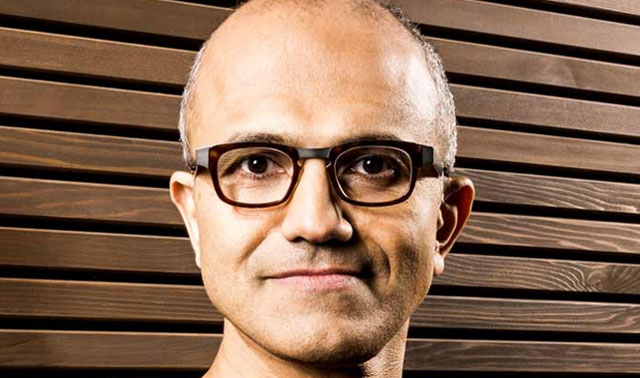
    Microsoft CEO Satya Nadella
    Microsoft CEO Satya Nadella

    29 July 2015 is an important date for Satya Nadella, Microsoft’s CEO. Twenty years after Bill Gates introduced Windows 95 to the world, he is launching another version of the ubiquitous software that promises an equally seismic shift.

    This is not just another update to the PC operating system. It marks the manifestation of Nadella’s bold vision for Microsoft to look into the future and deliver next-generation experiences for individuals and enterprises.

    It’s a huge challenge, and it is still uncertain if he’ll succeed. He has to seamlessly weave together devices, software applications and cloud services from both Microsoft and its partners to build a vibrant ecosystem that’s capable of vying against the ones orchestrated by Apple and Google.

    Sceptics wonder if Windows 10, offered as a free upgrade, can help it regain its position at the top. Investors worry if his ideas of shifting the business model from charging for software to earning fees for services on the cloud will make it go the way of IBM’s similar, painful transition. Others wonder if he can win with a vision of “mobile-first, cloud-first” without a credible mobile operating system or sizeable share of the online storage market?

    This is a critical moment for Nadella. Microsoft has stumbled repeatedly in recent years as it’s struggled to compete with Apple and Google in the worlds of smartphones, search and wearables. While Windows still dominates desktops with a 91% share, its presence in the fast-growing mobile market remains stuck in the single digits (just 2%).

    Coming 19 years and 11 months since the launch of Windows 95 — an operating system that revolutionised the industry at the time — Windows 10 provides a fresh opportunity to do it again.

    I’ve been studying the strategies of companies in the digital sector for the past two decades. My research suggests there are six things Nadella will need to do to win — and he’ll need to do them well and with conviction, confidence and speed.

    First, it’s important to redefine the scope of Microsoft’s platform. Most look at Windows 10 as PC-centric, when in reality it is broader than that.

    The future is not about computers, laptops and mobile phones being treated separately. It is about a digitally connected world with about 50bn devices linked to the so-called Internet of things. The platform for the Internet of things is still evolving, and Microsoft is in a good position to become the essential building block it in a way that defines how we live, work and play.

    He can do this by inviting the software development community to treat Windows 10 Universal Applications Platform as their primary gateway to build apps that scale across devices of varying shapes and sizes.

    The next step is clarifying the role of first-party hardware in Microsoft’s strategy. As it pursues this plan to become the key gateway to the Internet of things, managing the inevitable tensions between the devices it continues to create and those of its partners will be tricky.
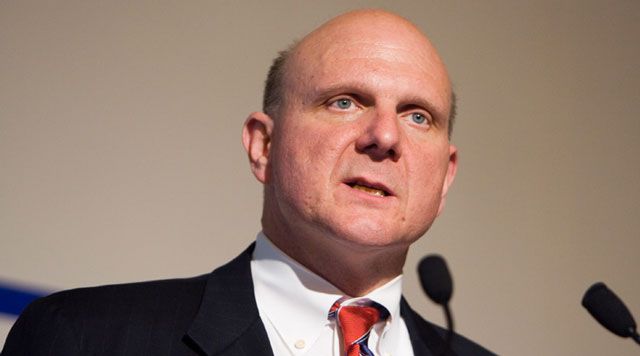
    Steve Ballmer
    Steve Ballmer

    Nadella will need to convince hardware partners that its continuing efforts in that direction, such as the Surface 3 tablet or the much larger Surface Hub collaboration screen, are meant only to showcase its vision and not as serious competition to the breadth of devices possible for Windows 10.

    Third, in the same vein, a willingness to interoperate with competitors will be important. Unlike previous CEO Steve Ballmer, Nadella has so far shown more openness to work with companies that could be considered Microsoft’s rivals.

    Two key elements of that strategy include:

    • Demonstrating that the announced relationships with Adobe, Salesforce and Box are more than symbolic gestures.
    • Gaining credibility with the chief information officers at major enterprise customers by showing how their IT roadmap could be predicated on seamlessly integrating Microsoft and non-Microsoft offerings.

    Stores need a rethink
    A fourth element involves reimagining Microsoft’s stores. Like Apple’s, they need to become experience destinations where customers can get a sense of Microsoft’s vision of how devices, software and cloud will come together.

    But that’s where the comparison with Apple’s stores ends. Microsoft’s, by contrast, should be organised to demonstrate how consumers can connect their devices with partners’ applications and access content and services in the cloud.

    Other ways the stores could be used include educating individuals so they can better protect against identity theft and fraud and explaining what happens with data from wearable devices like Microsoft Band and others. Helping people understand how their information is used in different situations will build trust with consumers by helping them make informed choices.

    Fifth, Nadella needs to energise his engineering team to help him deliver on the connected experience underlying his plans.

    He has inherited an organisation notorious for infighting, particularly under his predecessor. For his strategy to work, he has to get the engineering team to cooperate across the three parts of his strategy — software (Windows), apps (Office) and the cloud (Azure).

    Nadella has designed his new organisational structure and designated his leadership team. But, he has to keep a watchful eye on how the teams work to overcome the dysfunctional culture that existed during Ballmer’s “lost decade”. This means that it’s important that innovations such as the HoloLens holographic computer and the Cortona voice-activated assistant not become standalone businesses — as happened with the Xbox — but are integrated with Windows 10 and the promised connected experience.

    Lastly, Microsoft’s biggest challenge lies in its ability to effectively capture value in its new ecosystem.

    Apple’s cash register is in its devices, from which it takes a 30% cut of every app, album or newspaper subscription purchased through its stores. Google’s cash register is in advertising. Can Microsoft successfully shift its cash registers from retailers, where it simply collects revenue from hardware and software sales, to the cloud, where it can more fully monetise the value of its services over a customer’s lifetime?
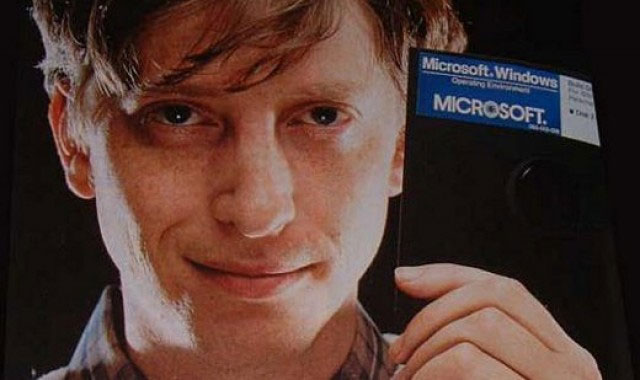
    Bill Gates
    Bill Gates

    Chris Capossela, Microsoft’s chief marketing officer, recently laid out the four stages of monetisation for individuals: acquire, engage, enlist and monetise.

    “Acquire” is getting individuals to use free apps such as Office for iPad or OneNote for Android. In the “engage” stage, individuals get committed and locked in to such apps, while in the “enlist” stage, they invite other users to create what are known as positive network effects. The final proof is in the monetisation stage: what’s the revenue per user and how can it be protected and expanded?

    Similarly, for enterprises, the cash register shifts from multiyear licence fees based on the number of users to include security, services and enterprise app stores. Simply put: cash registers in this ecosystem are complex to design and control.

    Microsoft’s ability to consistently show growth in revenues and profits at scale by leveraging the Windows ecosystems for individuals and enterprises is Nadella’s biggest test.

    Finding a new formula
    Nadella recognised early on that for too long Microsoft had operated with the outmoded formula that the PC was at the hub.
    Early last year, he remarked in an interview with the New York Times about the need to go beyond the old formula:

    Now, it is about discovering the new formula. So … how do we take the intellectual capital of 130 000 people and innovate where none of the category definitions of the past will matter? Any organisational structure you have today is irrelevant because no competition or innovation is going to respect those boundaries.

    Recognition of the challenges ahead is an important hallmark of a good leader. Beyond 29 July, he will be tested for his ability to respond to the challenge by pulling his internal organisation and external partners in alignment to put Microsoft as a distinguished leader in the “mobile-first, cloud-first” world.

    Bill Gates innovated by making the Windows software and Office applications central to the first wave of productivity at work and home. Ballmer failed to adapt to the shift to mobile. Now Nadella hopes to regain Microsoft’s relevance in an increasingly digital world.

    We are still in its early stages. Nadella’s success will depend on his ability to pull together the energy of 130 000 Microsoft employees but also several hundred thousand software developers to believe in the future of Windows beyond the PC.The Conversation

    • N Venkat Venkatraman is professor of digital strategy at Boston University
    • This article was originally published on The Conversation

    Apple Bill Gates IBM Microsoft Satya Nadella Steve Ballmer
    WhatsApp YouTube Follow on Google News Add as preferred source on Google
    Share. Facebook Twitter LinkedIn WhatsApp Telegram Email Copy Link
    Previous ArticleFibre rivals pile pressure on Telkom
    Next Article Telecoms dep’t not worried over staff exodus

    Related Posts

    SABC Plus to flight Microsoft AI training videos

    SABC Plus to flight Microsoft AI training videos

    30 January 2026
    Apple acquires audio AI start-up Q.ai

    Apple acquires audio AI start-up Q.ai

    30 January 2026
    Cloud adoption the weak link in SA's digital government push: Microsoft - Vukani Mngxati

    Cloud adoption the weak link in SA’s digital government push: Microsoft

    29 January 2026
    Company News
    Huawei turns 25 in South Africa, celebrates with major device discounts

    Huawei turns 25 in South Africa, celebrates with major device discounts

    30 January 2026
    Phishing has not disappeared, but it has grown up - KnowBe4

    Phishing has not disappeared, but it has grown up

    30 January 2026
    Smartphone affordability: South Africa's new economic divide - PayJoy

    Smartphone affordability: South Africa’s new economic divide

    29 January 2026
    Opinion
    South Africa's skills advantage is being overlooked at home - Richard Firth

    South Africa’s skills advantage is being overlooked at home

    29 January 2026
    Why Elon Musk's Starlink is a 'hard no' for me - Songezo Zibi

    Why Elon Musk’s Starlink is a ‘hard no’ for me

    26 January 2026
    South Africa's new fibre broadband battle - Duncan McLeod

    South Africa’s new fibre broadband battle

    20 January 2026

    Subscribe to Updates

    Get the best South African technology news and analysis delivered to your e-mail inbox every morning.

    Latest Posts
    Vuyani Jarana: Mobile coverage masks a deeper broadband failure

    Vuyani Jarana: Mobile coverage masks a deeper broadband failure

    30 January 2026
    TCS+ | How Cloud On Demand is helping SA businesses succeed in the cloud - Xhenia Rhode, Dion Kalicharan

    TCS+ | Cloud On Demand and Consnet: inside a real-world AWS partner success story

    30 January 2026
    Huawei turns 25 in South Africa, celebrates with major device discounts

    Huawei turns 25 in South Africa, celebrates with major device discounts

    30 January 2026
    SABC Plus to flight Microsoft AI training videos

    SABC Plus to flight Microsoft AI training videos

    30 January 2026
    © 2009 - 2026 NewsCentral Media
    • Cookie policy (ZA)
    • TechCentral – privacy and Popia

    Type above and press Enter to search. Press Esc to cancel.

    Manage consent

    TechCentral uses cookies to enhance its offerings. Consenting to these technologies allows us to serve you better. Not consenting or withdrawing consent may adversely affect certain features and functions of the website.

    Functional Always active
    The technical storage or access is strictly necessary for the legitimate purpose of enabling the use of a specific service explicitly requested by the subscriber or user, or for the sole purpose of carrying out the transmission of a communication over an electronic communications network.
    Preferences
    The technical storage or access is necessary for the legitimate purpose of storing preferences that are not requested by the subscriber or user.
    Statistics
    The technical storage or access that is used exclusively for statistical purposes. The technical storage or access that is used exclusively for anonymous statistical purposes. Without a subpoena, voluntary compliance on the part of your Internet Service Provider, or additional records from a third party, information stored or retrieved for this purpose alone cannot usually be used to identify you.
    Marketing
    The technical storage or access is required to create user profiles to send advertising, or to track the user on a website or across several websites for similar marketing purposes.
    • Manage options
    • Manage services
    • Manage {vendor_count} vendors
    • Read more about these purposes
    View preferences
    • {title}
    • {title}
    • {title}