
Close Menu
TechCentralTechCentral

    Subscribe to the newsletter

    Get the best South African technology news and analysis delivered to your e-mail inbox every morning.

    Facebook X (Twitter) YouTube LinkedIn
    WhatsApp Facebook X (Twitter) LinkedIn YouTube
    TechCentralTechCentral
    • News
      Ambassador Bozell flags scale of US tech investment in South Africa - Leo Brent Bozell III

      Ambassador Bozell flags scale of US tech investment in South Africa

      10 March 2026
      Africa leads the world in stablecoin adoption - Chris Harmse

      Africa leads the world in stablecoin adoption

      10 March 2026
      South Africa's energy future hinges on getting wheeling right

      South Africa’s energy future hinges on getting wheeling right

      10 March 2026
      Eskom tariffs to surge on 1 April as Nersa blunder hits home

      Eskom tariffs to surge on 1 April as Nersa blunder hits home

      10 March 2026
      Weaver Fintech's retail roots fade as fintech engine roars - Sean Wibberley

      Weaver Fintech’s retail roots fade as fintech engine roars

      10 March 2026
    • World
      OpenAI secures $840-billion valuation in latest funding round

      OpenAI secures $840-billion valuation in latest funding round

      1 March 2026

      Stripe mulling bid for PayPal: report

      25 February 2026
      Xbox chief Phil Spencer retires from Microsoft

      Xbox chief Phil Spencer retires from Microsoft

      22 February 2026
      Prominent Southern African journalist targeted with Predator spyware

      Prominent Southern African journalist targeted with Predator spyware

      18 February 2026
      More drama in Warner Bros tug of war

      More drama in Warner Bros tug of war

      17 February 2026
    • In-depth
      The last generation of coders

      The last generation of coders

      18 February 2026
      Sentech is in dire straits

      Sentech is in dire straits

      10 February 2026
      How liberalisation is rewiring South Africa's power sector

      How liberalisation is rewiring South Africa’s power sector

      21 January 2026
      The top-performing South African tech shares of 2025

      The top-performing South African tech shares of 2025

      12 January 2026
      Digital authoritarianism grows as African states normalise internet blackouts

      Digital authoritarianism grows as African states normalise internet blackouts

      19 December 2025
    • TCS
      TCS+ | Bolt ups the ante on platform safety - Simo Kalajdzic

      TCS+ | Bolt ups the ante on platform safety

      4 March 2026
      Watts & Wheels S1E4: 'We drive an electric Uber'

      Watts & Wheels S1E4: ‘We drive an electric Uber’

      10 February 2026
      TCS+ | How Cloud On Demand is helping SA businesses succeed in the cloud - Xhenia Rhode, Dion Kalicharan

      TCS+ | Cloud On Demand and Consnet: inside a real-world AWS partner success story

      30 January 2026
      Watts & Wheels S1E4: 'We drive an electric Uber'

      Watts & Wheels S1E3: ‘BYD’s Corolla Cross challenger’

      30 January 2026
      Watts & Wheels S1E4: 'We drive an electric Uber'

      Watts & Wheels S1E2: ‘China attacks, BMW digs in, Toyota’s sublime supercar’

      23 January 2026
    • Opinion
      The AI fraud crisis your bank is not ready for - Andries Maritz

      The AI fraud crisis your bank is not ready for

      18 February 2026
      A million reasons monopolies don't work - Duncan McLeod

      A million reasons monopolies don’t work

      10 February 2026
      The author, Business Leadership South Africa CEO Busi Mavuso

      Eskom unbundling U-turn threatens to undo hard-won electricity gains

      9 February 2026
      South Africa's skills advantage is being overlooked at home - Richard Firth

      South Africa’s skills advantage is being overlooked at home

      29 January 2026
      Why Elon Musk's Starlink is a 'hard no' for me - Songezo Zibi

      Why Elon Musk’s Starlink is a ‘hard no’ for me

      26 January 2026
    • Company Hubs
      • 1Stream
      • Africa Data Centres
      • AfriGIS
      • Altron Digital Business
      • Altron Document Solutions
      • Altron Group
      • Arctic Wolf
      • AvertITD
      • Braintree
      • CallMiner
      • CambriLearn
      • CYBER1 Solutions
      • Digicloud Africa
      • Digimune
      • Domains.co.za
      • ESET
      • Euphoria Telecom
      • Incredible Business
      • iONLINE
      • IQbusiness
      • Iris Network Systems
      • LSD Open
      • Mitel
      • NEC XON
      • Netstar
      • Network Platforms
      • Next DLP
      • Ovations
      • Paracon
      • Paratus
      • Q-KON
      • SevenC
      • SkyWire
      • Solid8 Technologies
      • Telit Cinterion
      • Tenable
      • Vertiv
      • Videri Digital
      • Vodacom Business
      • Wipro
      • Workday
      • XLink
    • Sections
      • AI and machine learning
      • Banking
      • Broadcasting and Media
      • Cloud services
      • Contact centres and CX
      • Cryptocurrencies
      • Education and skills
      • Electronics and hardware
      • Energy and sustainability
      • Enterprise software
      • Financial services
      • HealthTech
      • Information security
      • Internet and connectivity
      • Internet of Things
      • Investment
      • IT services
      • Lifestyle
      • Motoring
      • Policy and regulation
      • Public sector
      • Retail and e-commerce
      • Satellite communications
      • Science
      • SMEs and start-ups
      • Social media
      • Talent and leadership
      • Telecoms
    • Events
    • Advertise
    TechCentralTechCentral
    Home » In-depth » Zuma in a fix over nuclear

    Zuma in a fix over nuclear

    By The Conversation17 May 2017
    Twitter LinkedIn Facebook WhatsApp Email Telegram Copy Link
    News Alerts
    WhatsApp

    Nuclear energy in South Africa is a hotly contested issue — so much so that a court recently ruled against the government’s plans to issue a contract for the construction of eight new nuclear power stations.

    The ruling appeared to have delivered a significant blow to President Jacob Zuma, and those who support him, who had set their sights on immediate nuclear expansion. The court’s decision was met with jubilation by those opposing the nuclear plan.

    The expectation was that the government would appeal the decision. It didn’t, but this shouldn’t be read as a shift in its thinking.

    Energy minister Nkhensani Kubayi made it clear after the court ruling that, while there would be no appeal, the government remained fully committed to nuclear expansion, and was planning to initiate a new process without delay.

    This signals a realisation by government that an appeal would have little chance of success, and that a lengthy court process would tie up the parties in legal cases for months or even years. This would delay a nuclear build even further.

    The minister has made it clear that the government is not giving up on its push for the controversial nuclear plan. But it has realised the process must start from scratch. This is the clearest indication yet that Zuma intends launching the nuclear build before his term of office ends in 2019.

    Adding to fears that the government isn’t giving up the fight was the surprise reinstatement of Brian Molefe as CEO of the country’s power utility, Eskom. Molefe left the job under a cloud six months ago. His reappointment led to immediate and widespread public outrage. Many have interpreted his return as beefing up the quest for nuclear.

    Molefe’s return, however, isn’t as critical to the nuclear project as imagined, as Eskom has maintained his pro-nuclear stance in his absence.

    What’s more important is that it’s clear that contestation around the future of South Africa’s energy sector will continue unabated. This despite the president having been severely weakened in recent months, and with it the power of the pro-nuclear lobby supported by his faction.

    The high court decided that three international intergovernmental nuclear agreements and two ministerial proclamations to kick-start the establishment of new nuclear power plants were unconstitutional and illegal.

    The order nullified an agreement in which South Africa had committed to appointing Russian agency Rosatom to build new nuclear plants. The agreement had allocated the build to Rosatom without costs being established or a competitive tender process.
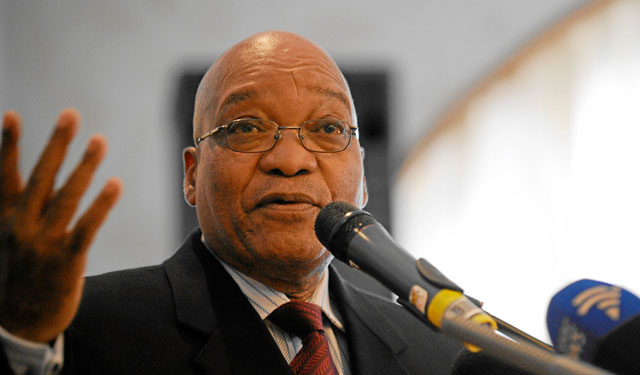
    Jacob Zuma

    The court also negated the government’s decision to delegate nuclear power procurement to Eskom and ruled that the country’s energy regulator was compelled to engage in meaningful public consultation before any major development can proceed.

    By saying that it will restart the process from scratch, the government came to the obvious conclusion that it could only achieve its objective without the double albatross of the Russian agreement and the short-circuiting of consultative processes hanging around their head.

    Nuclear isn’t needed

    The drive to develop 9,6GW of new nuclear energy-generating capacity is the result of a governmental Integrated Resource Plan for electricity drafted in 2010. But the plan is now completely outdated. It overestimated electricity demand growth, and did not anticipate the dramatic drop in the cost of renewable energy technology, particularly solar photovoltaics.

    The latest draft, published in 2016, does not foresee any need for nuclear for the next 20 years. Studies have also shown that a larger renewable energy investment is more feasible in South Africa than was previously thought.

    Nuclear’s main drawback is the excessively high costs. It has been widely argued that this technology is unaffordable.

    So why the inexplicable urgency to drive this highly expensive programme?

    One answer is that it shows there’s massive outside pressure influencing the push. The influence over the president enjoyed by politically connected business people, in particular the Gupta family, suggests that local oligarchs might be manipulating the president.

    It is, however, probable that the dominant source of the pressure on the president is Russian interests, in particular President Vladimir Putin. There is no proof, only speculation, about the high degree of influence the Kremlin has over the South African head of state. What is known is that Zuma endorsed the nuclear agreement concluded without due process with Russia in 2014 after a private meeting with Putin in Moscow.

    What happens next

    In line with the ministerial announcement, expectations are that new intergovernmental nuclear cooperation agreements will be concluded and tabled in parliament before the end of this year. The Russian agreement is likely to be aligned with agreements that have been signed with France, China, South Korea and the US, removing all specifics that afford Rosatom an advantage. Despite this, perceptions will remain that the Russians have been promised the nuclear build.

    Even so, and despite the president’s current efforts, new nuclear power plant developments remain improbable in the next decade. This is because the publication of the final energy plan document — expected in the coming months — and any adjustments to the draft in favour of nuclear are likely to be vigorously challenged in the now mandatory consultative process. This will make it almost impossible to initiate a nuclear build before 2019.

    The political terrain will become even trickier after that as the country will go to the polls in a general election in 2019. The ruling party won’t be able to afford being associated with a controversial nuclear agenda during an election year.The Conversation

    • Hartmut Winkler is professor of physics, University of Johannesburg
    • This article was originally published on The Conversation

    Follow TechCentral on Google News Add TechCentral as your preferred source on Google


    Brian Molefe Hartmut Winkler Jacob Zuma Rosatom
    WhatsApp YouTube
    Share. Facebook Twitter LinkedIn WhatsApp Telegram Email Copy Link
    Previous ArticleIt’s ANC vs Zuma as Molefe returns to Eskom
    Next Article SA fintech firm Synthesis sold for R132m

    Related Posts

    Hold the doom: the case for a South African comeback

    Hold the doom: the case for a South African comeback

    26 February 2026
    Television at 50 | How the SABC lost its way - and what it must become

    Television at 50 | How the SABC lost its way – and what it must become

    5 January 2026
    ICT BEE fight deepens as MK, EFF target Malatsi - Colleen Makhubele

    ICT BEE fight deepens as MK, EFF target Malatsi

    15 December 2025
    Company News
    The 90% renewal story behind Cisco enterprise agreements

    The 90% renewal story behind Cisco Enterprise Agreements

    10 March 2026
    Mitel WX - a single comms framework for the entire workforce

    Mitel WX – a single comms framework for the entire workforce

    10 March 2026
    Global memory crunch threatens laptop value for business buyers - RentWorks Africa

    Global memory crunch threatens laptop value for business buyers

    9 March 2026
    Opinion
    The AI fraud crisis your bank is not ready for - Andries Maritz

    The AI fraud crisis your bank is not ready for

    18 February 2026
    A million reasons monopolies don't work - Duncan McLeod

    A million reasons monopolies don’t work

    10 February 2026
    The author, Business Leadership South Africa CEO Busi Mavuso

    Eskom unbundling U-turn threatens to undo hard-won electricity gains

    9 February 2026

    Subscribe to Updates

    Get the best South African technology news and analysis delivered to your e-mail inbox every morning.

    Latest Posts
    Ambassador Bozell flags scale of US tech investment in South Africa - Leo Brent Bozell III

    Ambassador Bozell flags scale of US tech investment in South Africa

    10 March 2026
    Africa leads the world in stablecoin adoption - Chris Harmse

    Africa leads the world in stablecoin adoption

    10 March 2026
    South Africa's energy future hinges on getting wheeling right

    South Africa’s energy future hinges on getting wheeling right

    10 March 2026
    The 90% renewal story behind Cisco enterprise agreements

    The 90% renewal story behind Cisco Enterprise Agreements

    10 March 2026
    © 2009 - 2026 NewsCentral Media
    • Cookie policy (ZA)
    • TechCentral – privacy and Popia

    Type above and press Enter to search. Press Esc to cancel.

    Manage consent

    TechCentral uses cookies to enhance its offerings. Consenting to these technologies allows us to serve you better. Not consenting or withdrawing consent may adversely affect certain features and functions of the website.

    Functional Always active
    The technical storage or access is strictly necessary for the legitimate purpose of enabling the use of a specific service explicitly requested by the subscriber or user, or for the sole purpose of carrying out the transmission of a communication over an electronic communications network.
    Preferences
    The technical storage or access is necessary for the legitimate purpose of storing preferences that are not requested by the subscriber or user.
    Statistics
    The technical storage or access that is used exclusively for statistical purposes. The technical storage or access that is used exclusively for anonymous statistical purposes. Without a subpoena, voluntary compliance on the part of your Internet Service Provider, or additional records from a third party, information stored or retrieved for this purpose alone cannot usually be used to identify you.
    Marketing
    The technical storage or access is required to create user profiles to send advertising, or to track the user on a website or across several websites for similar marketing purposes.
    • Manage options
    • Manage services
    • Manage {vendor_count} vendors
    • Read more about these purposes
    View preferences
    • {title}
    • {title}
    • {title}