Close Menu
TechCentralTechCentral

    Subscribe to the newsletter

    Get the best South African technology news and analysis delivered to your e-mail inbox every morning.

    Facebook X (Twitter) YouTube LinkedIn
    WhatsApp Facebook X (Twitter) LinkedIn YouTube
    TechCentralTechCentral
    • News
      So, who exactly will buy Apple's R50 000 iPhone Duo

      Why Apple can’t tell you who its R50 000 iPhone is for

      11 September 2026
      'There are no adults in the room': the AI safety exodus

      ‘There are no adults in the room’: the AI safety exodus

      11 September 2026
      US in move to counter Huawei in Africa

      US in move to counter Huawei in Africa

      11 September 2026
      SAPS wants to deploy AI bodycams with facial recognition

      SAPS wants to deploy AI bodycams with facial recognition

      10 September 2026
      Lesaka's first profit comes as its merchant business goes backwards - Lincoln Mali

      Lesaka’s first profit comes as its merchant business goes backwards

      10 September 2026
    • World
      'This is not circular': Jensen Huang defends $3.5-billion MediaTek deal

      ‘This is not circular’: Jensen Huang defends $3.5-billion MediaTek deal

      2 September 2026
      AI-generated music banned from Australian charts

      AI-generated music banned from Australian charts

      26 August 2026
      Traders brace for a R4.5-trillion swing in Nvidia's value

      Traders brace for a R4.5-trillion swing in Nvidia’s value

      25 August 2026
      Russia building its own Starlink - and faster than expected - Vadym Skibitskyi

      Russia building its own Starlink – and faster than expected

      11 August 2026
      Meta AI will now tell parents if their teen is in crisis

      Meta AI will now tell parents if their teen is in crisis

      17 July 2026
    • In-depth
      Google DeepMind CEO Demis Hassabis. Image: John Sears

      The plan to stop AI from breaking the world

      16 July 2026
      The internet has a Strait of Hormuz problem

      The internet has a Strait of Hormuz problem

      15 July 2026
      AI boom sparks rally, frenzy and fear

      AI boom sparks rally, frenzy and fear

      11 June 2026
      Every plug-in hybrid on sale in South Africa, ranked by price - Lamborghini Temerario

      Every plug-in hybrid on sale in South Africa, ranked by price

      7 June 2026
      What Wi-Fi 8 will mean for wireless networks

      What Wi-Fi 8 will mean for wireless networks

      1 June 2026
    • TCS
      Meet the CIO | Shoprite's Chris Shortt on what a supermarket becomes

      Meet the CIO | Shoprite’s Chris Shortt on what a supermarket becomes

      9 September 2026
      Rubicon's EV charging network is profitable - and growing fast - Watts & Wheels

      Rubicon’s EV charging network is profitable – and growing fast

      8 September 2026
      Winstone Jordaan on building a national EV charging network

      Winstone Jordaan on building a national EV charging network

      2 September 2026
      Watts & Wheels S1E8: 'Tesla lands in Africa, just not here'

      Watts & Wheels S1E8: ‘Tesla lands in Africa, just not here’

      24 August 2026
      TCS | Herotel CEO Van Zyl Botha on beating Starlink to South Africa

      TCS | Herotel CEO Van Zyl Botha on beating Starlink to South Africa

      14 August 2026
    • Opinion
      The fragile joint in the Capitec machine - Pambos Soteriades

      The R197-billion market the banks can’t reach

      25 August 2026
      South African tech's compounding debt problem - Jannie van Zyl

      Management consulting as we know it is over

      21 August 2026
      South African tech's compounding debt problem - Jannie van Zyl

      The most dangerous customer is the quiet one

      10 August 2026
      South African tech's compounding debt problem - Jannie van Zyl

      South African tech’s compounding debt problem

      29 July 2026
      The fragile joint in the Capitec machine - Pambos Soteriades

      Best network, worst vibes: the puzzle of SA telecoms

      20 July 2026
    • Company Hubs
      • 1Stream
      • Africa Data Centres
      • AfriGIS
      • Altron Digital Business
      • Altron Document Solutions
      • Altron Group
      • Arctic Wolf
      • Ascent Technology
      • AvertITD
      • BBD
      • Braintree
      • CallMiner
      • CambriLearn
      • CM.com
      • Contactable
      • CYBER1 Solutions
      • Digicloud Africa
      • Digimune
      • Domains.co.za
      • ESET
      • Euphoria Telecom
      • HOSTAFRICA
      • Incredible Business
      • iONLINE
      • IQbusiness
      • Iris Network Systems
      • Kaspersky
      • LSD Open
      • Mitel
      • NEC XON
      • Netstar
      • Network Platforms
      • Next DLP
      • Ovations
      • Paracon
      • Paratus
      • Q-KON
      • SevenC
      • SkyWire
      • Solid8 Technologies
      • Telit Cinterion
      • Telviva
      • Tenable
      • Vertiv
      • Videri Digital
      • Vodacom Business
      • Vox
      • Wipro
      • Workday
      • XLink
    • Sections
      • AI and machine learning
      • Banking
      • Broadcasting and Media
      • Cloud services
      • Contact centres and CX
      • Cryptocurrencies
      • Education and skills
      • Electronics and hardware
      • Energy and sustainability
      • Enterprise software
      • Financial services
      • HealthTech
      • Information security
      • Internet and connectivity
      • Internet of Things
      • Investment
      • IT services
      • Lifestyle
      • Policy and regulation
      • Public sector
      • Retail and e-commerce
      • Satellite communications
      • Science
      • SMEs and start-ups
      • Social media
      • Talent and leadership
      • Telecoms
      • Watts & Wheels
    • Events
    • Advertise
    TechCentralTechCentral
    Home » Sections » Electronics and hardware » $40-billion won’t buy the US chip independence

    $40-billion won’t buy the US chip independence

    US President Joe Biden lauded TSMC's investment in US chip-making facilities a "game changer". It is no such thing.
    By Tim Culpan8 December 2022
    Twitter LinkedIn Facebook WhatsApp Email Telegram Copy Link
    Get breaking news on WhatsApp

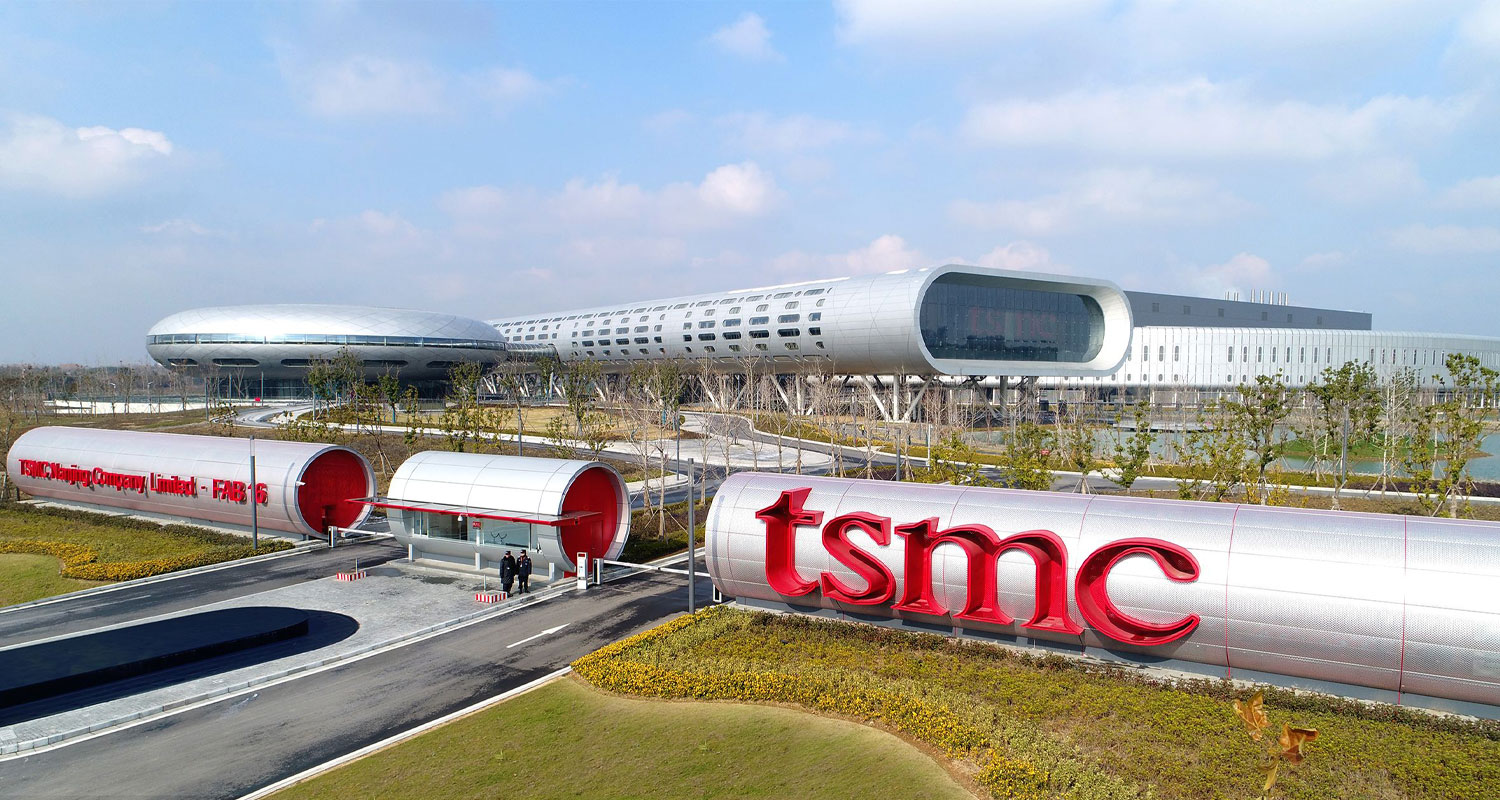
    A TSMC fabrication facility in Taiwan

    US President Joe Biden is so proud of TSMC’s new American facility that he went to Arizona to celebrate it. A US$40-billion figure tends to attract heads of state and corporate chieftains, with the chip factories TSMC is building there being hailed as the largest foreign direct investment in US history.

    “Apple had to buy all the advanced chips from overseas,” Biden said at the plant outside Phoenix on Tuesday. “Now they’re going to bring more of their supply chain here at home. It could be a game changer.”

    Unfortunately, Mr President, it won’t be a game changer.

    Everything announced by TSMC this week was in line with long-term plans for the site

    Everything announced by TSMC this week was in line with long-term plans for the site. The amount of land it acquired indicates six distinct chip fabs. The first was announced in May 2020 and scheduled to begin operations in 2024. A $12-billion figure was put on that first instalment, which was a bit of a misnomer because it also included operational costs over nine years, not just the big-ticket capex number usually cited.

    This week comes news of the second factory, which will start manufacturing in 2026, with the total budget now climbing to $40-billion. Expect announcements for third, fourth and maybe fifth plants in coming years.

    Also keep an eye out for upgrades to the technology that will be deployed. Much was made of news that TSMC would manufacture at the 4-nanometre node (dubbed N4) in Arizona. At that time, 7nm was the most advanced available. A smaller metric means better technology, but thanks to Moore’s Law, industry advancements occur rapidly. The company’s timeline meant N4 would be available in Taiwan this year, two years before it would reach the US.

    Still behind

    This week, TSMC is lauding the fact that 3nm will hit Arizona in 2026, whereas that same technology is scheduled to be unveiled in Taiwan next year. In other words, the US will still be behind by two to three years, or one to two generations of chip technology.

    No less important is capacity. TSMC’s Arizona fabs will produce 600 000 wafers annually. That sounds impressive, but it’s really not. The Taiwanese company topped 14.2 million last year and is on track to churn out 15.4 million 12-inch wafers loaded with chips this year. If it keeps the same average capacity growth of 8.1% it achieved over the past five years, Arizona will account for just 2.85% of its 21 million annual global output in 2026.

    That’s a drop in the bucket, not a game changer.

    US companies accounted for 64% of TSMC’s revenue last year. Apple alone contributed 26%. Taking into account higher prices for newer technologies and the fact that Apple is the key buyer of advanced nodes, the iPhone maker likely bought as much as 20% of TSMC’s capacity. To supply just Apple, the Taiwanese firm would need to expand its US footprint by a further seven times if the Cupertino company was to fully source its chips from home soil. That’s just not going to happen.

    Then there are all the other US companies — such as Nvidia, Qualcomm and AMD — that want to show off American-made chips. To entirely satisfy the US appetite for chips from local facilities, TSMC would need to spend around $1-trillion.

    US President Joe Biden

    TSMC’s latest announcement offers something for everyone. Biden is selling it as a vote of confidence in the nation’s hi-tech workforce, ignoring the fact that TSMC founder Morris Chang has poured cold water on the US’s ability to compete.

    “There’s a lack of manufacturing talents to begin with,” Chang told The Brookings Institution earlier this year. “We did it at the urging of the US government, and we felt that we should do it.”

    Apple CEO Tim Cook was quite transparent in his enthusiasm for TSMC’s new fabs. The company develops its own semiconductor designs and sends them to factories in Hsinchu, Taichung and Tainan in Taiwan for manufacturing. As previously predicted, Arizona serves as a marketing win for the Californian company: “Now, thanks to the hard work of so many people, these chips can be proudly stamped ‘made in America,’” he said.

    Proponents of this project, and of government incentives used to secure these factories, will note that even a small amount of leading-edge chip making on home soil is better than nothing. That’s somewhat true, but it also leaves the US exposed to tensions between China and Taiwan.

    Read: Warren Buffett’s investment firm takes big stake in TSMC

    Research, development, planning and operations will all remain in Taiwan. Should Beijing decide to attack, those functions will cease at least temporarily, if not permanently. This would mean cutting TSMC Arizona off from all the crucial know-how it needs to run the minuscule capacity it has on US soil. With the chip industry moving at breakneck speed, it wouldn’t be long before thousands of jobs and billions of dollars in infrastructure in Arizona would be at the mercy of a war 11 000km away.

    It may indeed be the case that TSMC’s $40-billion spending bill is the largest foreign direct investment, but that’s still not enough to ensure the US builds itself a self-sufficient semiconductor industry. It just buys bragging rights.  — (c) 2022 Bloomberg LP

    Get TechCentral’s daily newsletter

    Add TechCentral as a preferred source on GoogleFollow TechCentral on Google NewsGet breaking news on WhatsApp


    AMD Apple Joe Biden Nvidia Qualcomm Tim Cook TSMC
    WhatsApp YouTube
    Share. Facebook Twitter LinkedIn WhatsApp Telegram Email Copy Link
    Previous ArticleClosing the gaps in cybersecurity solutions
    Next Article South Africa and Ramaphosa still have a big mess to fix

    Related Posts

    So, who exactly will buy Apple's R50 000 iPhone Duo

    Why Apple can’t tell you who its R50 000 iPhone is for

    11 September 2026
    From foldgate to the iPhone Duo: the strange history of folding phones

    From foldgate to the iPhone Duo: the strange history of folding phones

    10 September 2026
    So, who exactly will buy Apple's R50 000 iPhone Duo

    How much Apple’s iPhone Duo will cost in South Africa

    9 September 2026
    Company News
    Nitda, NDPC and Galaxy Backbone back CyFrica 2026

    Nitda, NDPC and Galaxy Backbone back CyFrica 2026

    11 September 2026
    Can an online school produce a scientist? CambriLearn has an independent answer

    Can an online school produce a scientist? CambriLearn has an independent answer

    9 September 2026
    The ASUS ExpertCenter Pro ET900N from Altron Arrow

    A petaflop on a desk – rethinking AI infrastructure for South Africa

    9 September 2026
    Opinion
    The fragile joint in the Capitec machine - Pambos Soteriades

    The R197-billion market the banks can’t reach

    25 August 2026
    South African tech's compounding debt problem - Jannie van Zyl

    Management consulting as we know it is over

    21 August 2026
    South African tech's compounding debt problem - Jannie van Zyl

    The most dangerous customer is the quiet one

    10 August 2026

    Subscribe to Updates

    Get the best South African technology news and analysis delivered to your e-mail inbox every morning.

    Latest Posts
    So, who exactly will buy Apple's R50 000 iPhone Duo

    Why Apple can’t tell you who its R50 000 iPhone is for

    11 September 2026
    Nitda, NDPC and Galaxy Backbone back CyFrica 2026

    Nitda, NDPC and Galaxy Backbone back CyFrica 2026

    11 September 2026
    'There are no adults in the room': the AI safety exodus

    ‘There are no adults in the room’: the AI safety exodus

    11 September 2026
    US in move to counter Huawei in Africa

    US in move to counter Huawei in Africa

    11 September 2026
    © 2009 - 2026 NewsCentral Media
    Built and maintained by Chronon
    • Cookie policy (ZA)
    • TechCentral – privacy and Popia

    Type above and press Enter to search. Press Esc to cancel.

    Manage consent

    TechCentral uses cookies to enhance its offerings. Consenting to these technologies allows us to serve you better. Not consenting or withdrawing consent may adversely affect certain features and functions of the website.

    Functional Always active
    The technical storage or access is strictly necessary for the legitimate purpose of enabling the use of a specific service explicitly requested by the subscriber or user, or for the sole purpose of carrying out the transmission of a communication over an electronic communications network.
    Preferences
    The technical storage or access is necessary for the legitimate purpose of storing preferences that are not requested by the subscriber or user.
    Statistics
    The technical storage or access that is used exclusively for statistical purposes. The technical storage or access that is used exclusively for anonymous statistical purposes. Without a subpoena, voluntary compliance on the part of your Internet Service Provider, or additional records from a third party, information stored or retrieved for this purpose alone cannot usually be used to identify you.
    Marketing
    The technical storage or access is required to create user profiles to send advertising, or to track the user on a website or across several websites for similar marketing purposes.
    • Manage options
    • Manage services
    • Manage {vendor_count} vendors
    • Read more about these purposes
    View preferences
    • {title}
    • {title}
    • {title}