Close Menu
TechCentralTechCentral

    Subscribe to the newsletter

    Get the best South African technology news and analysis delivered to your e-mail inbox every morning.

    Facebook X (Twitter) YouTube LinkedIn
    WhatsApp Facebook X (Twitter) LinkedIn YouTube
    TechCentralTechCentral
    • News
      South Africa's mobile operators strike spectrum gold

      South Africa’s mobile operators strike spectrum gold

      26 July 2026
      MTN, Vodacom take Icasa to court over data expiry rules

      MTN, Vodacom take Icasa to court over data expiry rules

      26 July 2026
      Africa's most popular phones have a tracking problem

      Africa’s most popular phones have a tracking problem

      24 July 2026
      Vodacom taps UJ, AWS to build its AI talent pipeline - Vodacom Group CEO Shameel Joosub

      Vodacom taps UJ, AWS to build its AI talent pipeline

      24 July 2026
      Intel is back in the game - Intel CEO Lip-Bu Tan. Laure Andrillon/Reuters

      Intel is back in the game

      24 July 2026
    • World
      Meta AI will now tell parents if their teen is in crisis

      Meta AI will now tell parents if their teen is in crisis

      17 July 2026
      IBM shares crash 25% as AI upends software spending - Arvind Krishna

      IBM shares crash 25% as AI upends software spending

      15 July 2026
      Jony Ive's first OpenAI device: an AI smart speaker - Jony Ive and Sam Altman

      Jony Ive’s first OpenAI device: an AI smart speaker

      15 July 2026
      Stripe, Advent in talks to buy PayPal for $53-billion

      Stripe, Advent in talks to buy PayPal for $53-billion

      15 July 2026
      Memory crisis sends smartphone market into steep decline

      Memory crisis sends smartphone market into steep decline

      13 July 2026
    • In-depth
      The plan to stop AI from breaking the world - Google DeepMind CEO Demis Hassabis. Image: John Sears

      The plan to stop AI from breaking the world

      16 July 2026
      The internet has a Strait of Hormuz problem

      The internet has a Strait of Hormuz problem

      15 July 2026
      AI boom sparks rally, frenzy and fear

      AI boom sparks rally, frenzy and fear

      11 June 2026
      Every plug-in hybrid on sale in South Africa, ranked by price - Lamborghini Temerario

      Every plug-in hybrid on sale in South Africa, ranked by price

      7 June 2026
      What Wi-Fi 8 will mean for wireless networks

      What Wi-Fi 8 will mean for wireless networks

      1 June 2026
    • TCS
      TCS | How Optasia lends billions to people banks can't see - Salvador Anglada

      TCS | How Optasia lends billions to people banks can’t see

      23 July 2026
      The rands-and-cents case for electric trucks - William Kelly Watts & Wheels with Wills

      The rands-and-cents case for electric trucks

      20 July 2026
      Watts & Wheels S1E7: 'Ferrari's EV breaks the internet'

      Watts & Wheels S1E7: ‘Ferrari’s EV breaks the internet’

      8 July 2026
      TCS | Pick n Pay's Enrico Ferigolli on Penny, the AI that shops for you

      TCS | Pick n Pay’s Enrico Ferigolli on Penny, the AI that shops for you

      2 July 2026
      TCS+ | How Tracker is turning vehicle data into business strategy - Silvia Schollenberger

      TCS+ | How Tracker is turning vehicle data into business strategy

      1 July 2026
    • Opinion
      Selling vapour is corporate suicide in slow motion - Jannie van Zyl

      Selling vapour is corporate suicide in slow motion

      16 July 2026
      Brazil's online gambling crackdown is a lesson for South Africa

      How Amazon outmanoeuvred Starlink in South Africa

      15 July 2026
      The Popia problem with agentic AI - Herman Haasbroek

      The Popia problem with agentic AI

      14 July 2026
      The author, Fanie van Rooyen

      South Africa can still catch the AI wave – here’s how

      7 July 2026
      The author, Fanie van Rooyen

      The AI utopia South Africa can’t afford

      1 July 2026
    • Company Hubs
      • 1Stream
      • Africa Data Centres
      • AfriGIS
      • Altron Digital Business
      • Altron Document Solutions
      • Altron Group
      • Arctic Wolf
      • Ascent Technology
      • AvertITD
      • BBD
      • Braintree
      • CallMiner
      • CambriLearn
      • CM Telecom
      • Contactable
      • CYBER1 Solutions
      • Digicloud Africa
      • Digimune
      • Domains.co.za
      • ESET
      • Euphoria Telecom
      • HOSTAFRICA
      • Incredible Business
      • iONLINE
      • IQbusiness
      • Iris Network Systems
      • Kaspersky
      • LSD Open
      • Mitel
      • NEC XON
      • Netstar
      • Network Platforms
      • Next DLP
      • Ovations
      • Paracon
      • Paratus
      • Q-KON
      • SevenC
      • SkyWire
      • Solid8 Technologies
      • Telit Cinterion
      • Telviva
      • Tenable
      • Vertiv
      • Videri Digital
      • Vodacom Business
      • Vox
      • Wipro
      • Workday
      • XLink
    • Sections
      • AI and machine learning
      • Banking
      • Broadcasting and Media
      • Cloud services
      • Contact centres and CX
      • Cryptocurrencies
      • Education and skills
      • Electronics and hardware
      • Energy and sustainability
      • Enterprise software
      • Financial services
      • HealthTech
      • Information security
      • Internet and connectivity
      • Internet of Things
      • Investment
      • IT services
      • Lifestyle
      • Policy and regulation
      • Public sector
      • Retail and e-commerce
      • Satellite communications
      • Science
      • SMEs and start-ups
      • Social media
      • Talent and leadership
      • Telecoms
      • Watts & Wheels
    • Events
    • Advertise
    TechCentralTechCentral
    Home » Company News » A short description of how barcode technology works

    A short description of how barcode technology works

    By Paul Werkstroom20 December 2019
    Twitter LinkedIn Facebook WhatsApp Email Telegram Copy Link
    News Alerts
    WhatsApp

    When it comes to barcoding, South Africa is, for once, on trend with the latest and greatest in barcode technology. But what’s really in a barcode and how does barcode technology work? Let’s take a look.

    The simplest explanation of how barcode technology works is to think about a principle called symbology. Symbology in its most basic sense is what explains the barcode: it regulates the charting and explanation of the encrypted information or statistics.

    This encryption permits the barcode scanner to understand when a number or character starts and when it ends, a system which is comparable to a binary depiction. We identify barcodes as a collection of parallel lines that alternate between white lines and black lines respectively. Barcode technology offers a straightforward and cheap way of recording statistics or information in a range of applications.

    The simplest explanation of how barcode technology works is to think about a principle called symbology

    The symbology behind product barcode technology can be organised or charted in an assortment of ways. A constant symbology is manifested by the numbers or characters starting with a black line and concluding with a white line (or a blank space). A discreet symbology formation does things a little differently and has characters or numbers encrypted as a black line, a white line (or blank space) followed by another black line. This covers all you need to know about the characters or numbers and how each separate digit or letter is interpreted. The black and white lines that make up a barcode also show variations in encryption of the thicknesses of each line. Some of the technological schemes behind barcodes use two different thicknesses to ascertain the character or digit, while others make use of numerous width lines. Using any of these methods of encryption is dependent, obviously, on what kind of industry or what kind of application the barcode technology is being used for.

    1D and 2D

    The linear barcode generator technology is occasionally known as one-dimensional, or 1D, encoding. These are the types of barcodes that the ordinary person would be the most familiar with. However, there are other kinds of more complicated barcodes that make use of dot matrixes to accomplish a more complicated encoding procedure. They also have the ability to store and recognise a far greater range of information and data. These are known as two-dimensional or sometimes dataglyphs barcodes. They are made up of minute dots, similar to that of the old dot matrix printers, which generates patterns that are then interpreted in the process of scanning. They are only able to work in this particular format and can be made up of rounded patterns or an assortment of shapes and units implanted into a certain image for the person using the barcode.

    To be able to understand the information contained in a barcode, the barcode needs to be scanned by a laser scanner and then understood. The laser scanners that are used to read the barcodes calculate light that is reflected from the 1D barcode and can differentiate between which lines are white and which lines are black. Standardisation of the laser and scanning system is required to guarantee the proper understanding of the barcode itself. This is all dependent on whether it is symbology in its constant or discreet form, whether the images are one-dimensional or two-dimensional images, and whether it makes use of two-width or multiple-width lines. The most popular laser scanners used are helium neon lasers because they have a low energy consumption and are highly reliable and efficient.

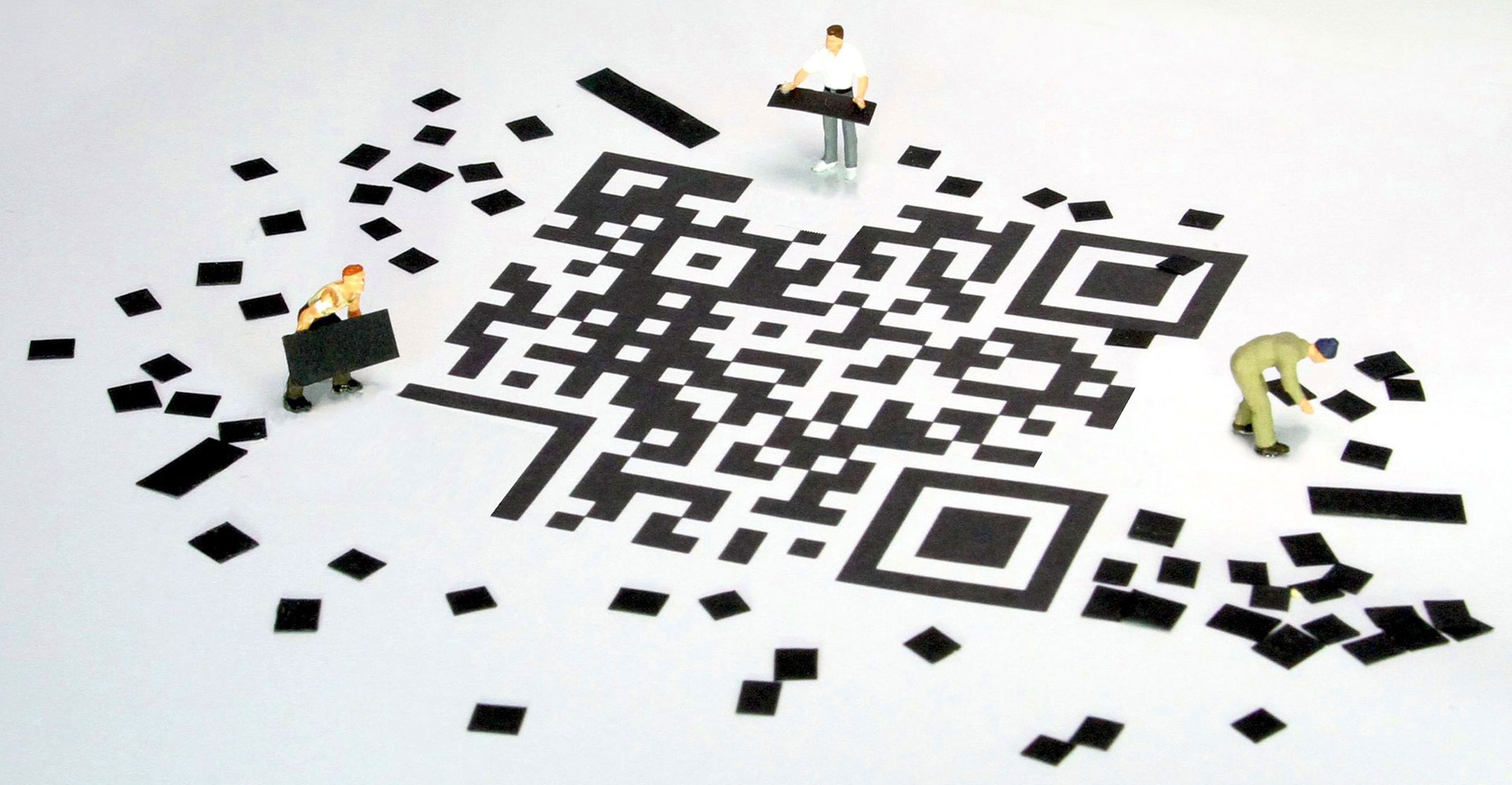
    The more complicated 2D barcodes cannot be read the same way as a 1D linear barcode with a simple laser scanner. This barcode requires an all-inclusive reader that is able to read the full image in its entirety. Linear barcode technology only requires a mere sweeping across to be read as the lines are the same irrespective of the placement of the laser scanner. 2D barcodes must be scanned by a scanner that is image-based, comparable to the scanners that people use at home or in offices in order to scan documents and images. They come at a higher price but have the ability to encrypt more information and data. These are most commonly used for encoding URLs for scanning by cellphone cameras and applications that are more on the higher end.

    • This promoted content was paid for by the party concerned

    Follow TechCentral on Google News Add TechCentral as your preferred source on Google


    WhatsApp YouTube
    Share. Facebook Twitter LinkedIn WhatsApp Telegram Email Copy Link
    Previous ArticleFacebook is building its own operating system
    Next Article Eskom unplanned breakdowns above 13GW

    Related Posts

    South Africa's mobile operators strike spectrum gold

    South Africa’s mobile operators strike spectrum gold

    26 July 2026
    MTN, Vodacom take Icasa to court over data expiry rules

    MTN, Vodacom take Icasa to court over data expiry rules

    26 July 2026
    Africa's most popular phones have a tracking problem

    Africa’s most popular phones have a tracking problem

    24 July 2026
    Company News
    Why Europe is turning to South Africa for cross-border innovation - BBD Software

    Why Europe is turning to South Africa for cross-border innovation

    24 July 2026
    Green dashboards, stalled change: the CIO's blind spot - Change Logic Marchant van den Heever

    Green dashboards, stalled change: the CIO’s blind spot

    24 July 2026
    Why Africa's cloud needs more than one path - Africa Data Centres

    Why Africa’s cloud needs more than one path

    23 July 2026
    Opinion
    Selling vapour is corporate suicide in slow motion - Jannie van Zyl

    Selling vapour is corporate suicide in slow motion

    16 July 2026
    Brazil's online gambling crackdown is a lesson for South Africa

    How Amazon outmanoeuvred Starlink in South Africa

    15 July 2026
    The Popia problem with agentic AI - Herman Haasbroek

    The Popia problem with agentic AI

    14 July 2026

    Subscribe to Updates

    Get the best South African technology news and analysis delivered to your e-mail inbox every morning.

    Latest Posts
    South Africa's mobile operators strike spectrum gold

    South Africa’s mobile operators strike spectrum gold

    26 July 2026
    MTN, Vodacom take Icasa to court over data expiry rules

    MTN, Vodacom take Icasa to court over data expiry rules

    26 July 2026
    Africa's most popular phones have a tracking problem

    Africa’s most popular phones have a tracking problem

    24 July 2026
    Vodacom taps UJ, AWS to build its AI talent pipeline - Vodacom Group CEO Shameel Joosub

    Vodacom taps UJ, AWS to build its AI talent pipeline

    24 July 2026
    © 2009 - 2026 NewsCentral Media
    Built and maintained by Chronon
    • Cookie policy (ZA)
    • TechCentral – privacy and Popia

    Type above and press Enter to search. Press Esc to cancel.

    Manage consent

    TechCentral uses cookies to enhance its offerings. Consenting to these technologies allows us to serve you better. Not consenting or withdrawing consent may adversely affect certain features and functions of the website.

    Functional Always active
    The technical storage or access is strictly necessary for the legitimate purpose of enabling the use of a specific service explicitly requested by the subscriber or user, or for the sole purpose of carrying out the transmission of a communication over an electronic communications network.
    Preferences
    The technical storage or access is necessary for the legitimate purpose of storing preferences that are not requested by the subscriber or user.
    Statistics
    The technical storage or access that is used exclusively for statistical purposes. The technical storage or access that is used exclusively for anonymous statistical purposes. Without a subpoena, voluntary compliance on the part of your Internet Service Provider, or additional records from a third party, information stored or retrieved for this purpose alone cannot usually be used to identify you.
    Marketing
    The technical storage or access is required to create user profiles to send advertising, or to track the user on a website or across several websites for similar marketing purposes.
    • Manage options
    • Manage services
    • Manage {vendor_count} vendors
    • Read more about these purposes
    View preferences
    • {title}
    • {title}
    • {title}