Close Menu
TechCentralTechCentral

    Subscribe to the newsletter

    Get the best South African technology news and analysis delivered to your e-mail inbox every morning.

    Facebook X (Twitter) YouTube LinkedIn
    WhatsApp Facebook X (Twitter) LinkedIn YouTube
    TechCentralTechCentral
    • News
      DStv's biggest shake-up in 15 years lands on 17 September

      DStv’s biggest shake-up in 15 years lands on 17 September

      7 September 2026
      The man now carrying South Africa's auto industry fight - Mncane Mthunzi

      The man now carrying South Africa’s auto industry fight

      7 September 2026
      UN warns AI could disrupt democracy itself - Mohamed Azakir

      UN warns AI could disrupt democracy itself

      7 September 2026
      R1.5-billion to switch off the sun

      R1.5-billion to switch off the sun

      7 September 2026
      Ageing Safe cable prompts new R1.7-billion Indian Ocean link

      Ageing Safe cable prompts new R1.7-billion Indian Ocean link

      7 September 2026
    • World
      'This is not circular': Jensen Huang defends $3.5-billion MediaTek deal

      ‘This is not circular’: Jensen Huang defends $3.5-billion MediaTek deal

      2 September 2026
      AI-generated music banned from Australian charts

      AI-generated music banned from Australian charts

      26 August 2026
      Traders brace for a R4.5-trillion swing in Nvidia's value

      Traders brace for a R4.5-trillion swing in Nvidia’s value

      25 August 2026
      Russia building its own Starlink - and faster than expected - Vadym Skibitskyi

      Russia building its own Starlink – and faster than expected

      11 August 2026
      Meta AI will now tell parents if their teen is in crisis

      Meta AI will now tell parents if their teen is in crisis

      17 July 2026
    • In-depth
      Google DeepMind CEO Demis Hassabis. Image: John Sears

      The plan to stop AI from breaking the world

      16 July 2026
      The internet has a Strait of Hormuz problem

      The internet has a Strait of Hormuz problem

      15 July 2026
      AI boom sparks rally, frenzy and fear

      AI boom sparks rally, frenzy and fear

      11 June 2026
      Every plug-in hybrid on sale in South Africa, ranked by price - Lamborghini Temerario

      Every plug-in hybrid on sale in South Africa, ranked by price

      7 June 2026
      What Wi-Fi 8 will mean for wireless networks

      What Wi-Fi 8 will mean for wireless networks

      1 June 2026
    • TCS
      Winstone Jordaan on building a national EV charging network

      Winstone Jordaan on building a national EV charging network

      2 September 2026
      Watts & Wheels S1E8: 'Tesla lands in Africa, just not here'

      Watts & Wheels S1E8: ‘Tesla lands in Africa, just not here’

      24 August 2026
      TCS | Herotel CEO Van Zyl Botha on beating Starlink to South Africa

      TCS | Herotel CEO Van Zyl Botha on beating Starlink to South Africa

      14 August 2026
      Meet the CIO | Discovery's Derek Wilcocks on AI, guardrails and growth

      Meet the CIO | Derek Wilcocks on how AI personalised Vitality

      13 August 2026
      TCS | Money just became native to the internet - Steven Boykey Sidley

      TCS | Money just became native to the internet – Steven Boykey Sidley

      12 August 2026
    • Opinion
      The fragile joint in the Capitec machine - Pambos Soteriades

      The R197-billion market the banks can’t reach

      25 August 2026
      South African tech's compounding debt problem - Jannie van Zyl

      Management consulting as we know it is over

      21 August 2026
      South African tech's compounding debt problem - Jannie van Zyl

      The most dangerous customer is the quiet one

      10 August 2026
      South African tech's compounding debt problem - Jannie van Zyl

      South African tech’s compounding debt problem

      29 July 2026
      The fragile joint in the Capitec machine - Pambos Soteriades

      Best network, worst vibes: the puzzle of SA telecoms

      20 July 2026
    • Company Hubs
      • 1Stream
      • Africa Data Centres
      • AfriGIS
      • Altron Digital Business
      • Altron Document Solutions
      • Altron Group
      • Arctic Wolf
      • Ascent Technology
      • AvertITD
      • BBD
      • Braintree
      • CallMiner
      • CambriLearn
      • CM.com
      • Contactable
      • CYBER1 Solutions
      • Digicloud Africa
      • Digimune
      • Domains.co.za
      • ESET
      • Euphoria Telecom
      • HOSTAFRICA
      • Incredible Business
      • iONLINE
      • IQbusiness
      • Iris Network Systems
      • Kaspersky
      • LSD Open
      • Mitel
      • NEC XON
      • Netstar
      • Network Platforms
      • Next DLP
      • Ovations
      • Paracon
      • Paratus
      • Q-KON
      • SevenC
      • SkyWire
      • Solid8 Technologies
      • Telit Cinterion
      • Telviva
      • Tenable
      • Vertiv
      • Videri Digital
      • Vodacom Business
      • Vox
      • Wipro
      • Workday
      • XLink
    • Sections
      • AI and machine learning
      • Banking
      • Broadcasting and Media
      • Cloud services
      • Contact centres and CX
      • Cryptocurrencies
      • Education and skills
      • Electronics and hardware
      • Energy and sustainability
      • Enterprise software
      • Financial services
      • HealthTech
      • Information security
      • Internet and connectivity
      • Internet of Things
      • Investment
      • IT services
      • Lifestyle
      • Policy and regulation
      • Public sector
      • Retail and e-commerce
      • Satellite communications
      • Science
      • SMEs and start-ups
      • Social media
      • Talent and leadership
      • Telecoms
      • Watts & Wheels
    • Events
    • Advertise
    TechCentralTechCentral
    Home » Sections » Energy and sustainability » Why African mines are turning to battery storage

    Why African mines are turning to battery storage

    Promoted | Battery storage is emerging as a sustainable solution to energy challenges in Africa's mining industry.
    By Vertiv18 August 2025
    Twitter LinkedIn Facebook WhatsApp Email Telegram Copy Link
    News Alerts
    WhatsApp

    Why African mines are turning to battery storage - VertivMining remains a cornerstone of economic output across many sub-Saharan African nations, often contributing a substantial share of GDP. As the global energy transition accelerates, the demand for critical minerals – such as cobalt, lithium and copper – is placing Africa’s mineral wealth under renewed strategic focus.

    To capitalise on this shift, many countries are intensifying efforts to modernise and extend their mining value chains, leveraging targeted investments in infrastructure, energy and technology to drive industrial growth and long-term sustainable development.

    According to a leading Africa-focused investment conference, Afsic – Investing in Africa – some of the biggest issues facing mines across the continent include infrastructure challenges around energy supply (which includes issues of quality, reliability and availability). Additionally, Afsic notes that increasing demands from both environmental regulations and corporate sustainability targets mean that mining companies must reduce both operational costs and environmental impact while also maintaining production levels.

    Against this background, the African mining industry is beginning to explore the viability of battery energy storage systems (Bess) as a potential solution to chronic power supply challenges. We unpack the advantages of Bess technology after first looking at the current and future importance of mining across the continent.

    Mining across Africa: a strong history

    Mining plays a significant role in many African countries, with some nations showing potential that is not yet fully tapped. A snapshot of mining within the West, East and Southern African regions showcases a number of examples, as outlined by Energy Capital & Power (ECP), an Africa-focused investment platform for the energy sector, as well as other sources.

    West Africa

    • Mali: The country’s mining sector is experiencing a surge in investment, with mining expected to contribute about US$1.2-billion to the country’s economy for the first quarter of 2025, partly as a result of significant reforms undertaken during 2023. As Africa’s second largest gold supplier and an emerging lithium provider, Mali continues to liaise with global investors while expanding exploration projects.
    • Ghana: According to travel platform Tourispot Ghana, gold mining has become one of the most vital sectors for Ghana’s export revenue, with exports from gold in recent years accounting for up to 36% (2021) of the country’s total exports, a figure that remained steady at 34% as recently as 2023. The gold sector adds to export revenues and plays a significant role in overall economic growth, providing employment for thousands of Ghanaians and supporting local businesses related to mining activities.

    Over and above gold, as noted by ECP, other minerals such as manganese, bauxite (the primary ore used to produce aluminium) and diamonds also generate substantial revenue for the economy.

    East and Central Africa

    There is significant mining potential in this region, which is diverse in minerals but faced with challenges that have an impact on the sector. These include a lack of capital and technology, and conflicts within the region, including in the Democratic Republic of Congo (DRC), which has grappled with civil conflict and war for decades.

    Nonetheless, Reuters reported that the country has recently become the world’s second largest copper producer (behind Chile in South America).

    Tanzania has also seen recent and rising success in the mining sector, reaching 10.1% of GDP in 2024, and becoming the fourth largest gold producer in Africa (after South Africa, Ghana and Mali), as reported by the Tanzania Investing and Consultant Group.

    Southern Africa

    • South Africa: The country’s mining industry, by generating R424.6-billion in national revenue in 2023, increased the country’s GDP by 6.2%. The mining industry furthermore provided nearly half a million (477 000) formal jobs, with some 7 500 jobs supplementing the economy in that year and thus supporting livelihoods against the background of a weak domestic economy. Efforts are underway to unlock further potential in the mining industry by addressing initiatives such as improvements in private sector participation in energy and transport.
    • Zambia: Mining plays a critical role in Zambia, adding around 15% to GDP, 70% of export earnings and 44% to government revenues, as analysed by a recent World Bank report. Since 2022, several international mining companies have announced new investments in the country.

    The rise of renewable energy technologies has also brought with it an escalating global demand for certain metals and minerals, many of which are to be found in abundance in Africa.

    It is therefore in the continent’s best interests to find solutions for energy and infrastructure challenges. While regulations remain the ambit of the sovereign nations themselves, Vertiv is strongly positioned to offer power solutions to mining operations across Africa.

    Looking ahead: mining takes on even more significance

    Because renewable energy technologies require copper, worldwide demand for this metal is projected to surge to over 30 million tonnes by the end of the decade, with a growth in the global copper market of around 70 percent predicted between 2020 and 2050.

    Zambia’s Copperbelt and North-Western provinces are part of the world’s richest source of known reserves and estimated future discoveries. Cobalt, lithium and nickel are also important in the alternative energy transition, playing crucial parts in electric batteries and vehicles, as well as in solar panels, turbines and energy storage.

    Bess: a gamechanger in remote mining

    Mining requires a dependable and constant electricity supply to power its energy-hungry operations – power costs represent up to 40% of operating expenses in African mines – and support the safety of its workers. An investment in backup energy is critical.

    However, diesel generators are expensive to run and maintain, as well as being serious sources of pollution in a world that is increasingly aware of the growing fragility of the Earth. Investing in energy storage is therefore the way of the future, both economically and environmentally.

    A battery energy storage system (Bess) stores energy for later use. Vertiv’s Bess solutions are starting to demonstrate success in remote African mining operations, providing crucial support during grid fluctuations, and helping to manage unpredictable power supplies and grid stabilisation.

    Vertiv Bess solutions can charge from the grid or other forms of local generation, including wind, hydro, solar and generators

    Vertiv Bess solutions can charge from the grid or other forms of local generation, including wind, hydro, solar and generators. Using Bess technology, mines can store excess energy during periods of low demand.

    Large banks of batteries are charged with surplus energy and then discharged when needed. This stored energy can be used to supplement power supply during peak operating periods or when there are power cuts, something that is particularly useful for mines operating in remote locations with less reliable infrastructure.

    This means that a Bess solution fills in as an emergency power source, supporting crucial safety systems, ventilation and other essential machinery can remain operational.

    Bess installations are also designed to integrate easily with renewable energy generation in the form of solar panels or wind turbines. This supports sustainability practices by decreasing reliance on a coal-powered national grid, or on expensive and polluting diesel generators. At the same time, a reduction in diesel usage and maintenance costs saves significantly on costs.
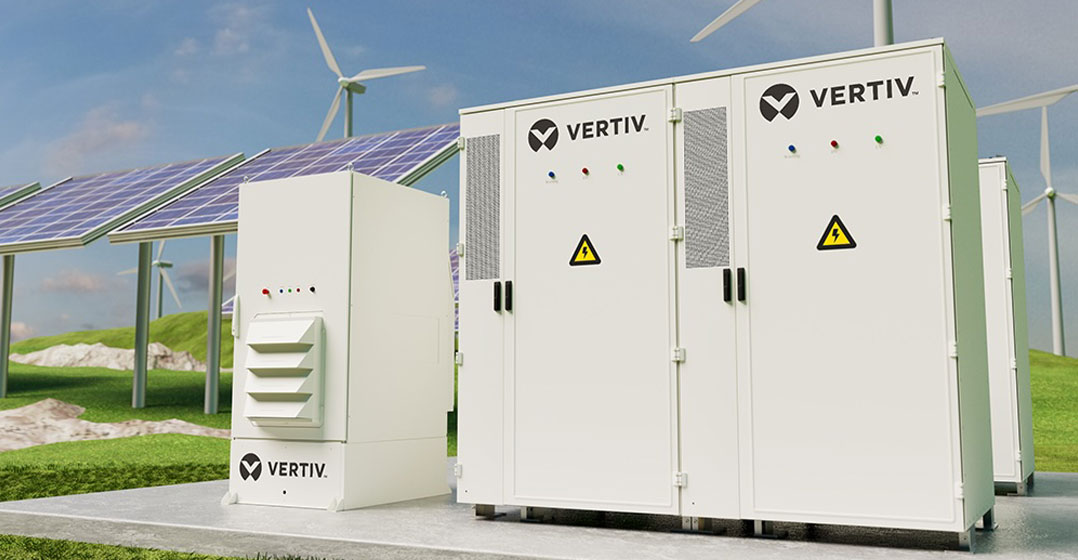
    By addressing unreliable power supply, inconsistent feeds, irregular harmonic distortion, high costs, environmental pressures and infrastructure challenges within the mining environment, Vertiv’s Bess solutions could be a gamechanger in helping to transform Africa’s energy landscape.

    Vertiv, which is a global leader in critical digital infrastructure, is proud to be a bronze sponsor of the upcoming C&I Energy & Storage Summit Zambia 2025, where the organisation will feature its Bess for mining, data centres and critical infrastructure applications, Vertiv EnergyCore Grid. The event will take place on 27-28 August at The Pamodzi Hotel in Lusaka. For more information or to register as a delegate, please visit energy-storagesummit.com/zambia.

    Learn more about Vertiv’s portfolio of power and critical infrastructure solutions.

    • The author, Henry Myburgh, is strategic account manager at Vertiv Africa
    • Read more articles by Vertiv on TechCentral
    • This promoted content was paid for by the party concerned

    Don’t miss:

    Vertiv OneCore – accelerating the deployment of scalable prefabricated infrastructure

    Follow TechCentral on Google News Add TechCentral as your preferred source on Google


    WhatsApp YouTube
    Share. Facebook Twitter LinkedIn WhatsApp Telegram Email Copy Link
    Previous ArticleHuawei’s AI contact centre solution reshapes customer engagements
    Next Article Gen Digital: AI arms race fuels pharma fraud, ransomware, social scams

    Related Posts

    DStv's biggest shake-up in 15 years lands on 17 September

    DStv’s biggest shake-up in 15 years lands on 17 September

    7 September 2026
    The man now carrying South Africa's auto industry fight - Mncane Mthunzi

    The man now carrying South Africa’s auto industry fight

    7 September 2026
    UN warns AI could disrupt democracy itself - Mohamed Azakir

    UN warns AI could disrupt democracy itself

    7 September 2026
    Company News
    Most enterprises don't have an identity strategy - they have a patchwork - Contactable

    Most enterprises don’t have an identity strategy – they have a patchwork

    7 September 2026
    Ozgur Danisman, Cloudflare’s director of solutions engineering

    AI guardrails: the fastest way to move fast

    7 September 2026
    How to build a security operations centre that actually works - Kaspersky

    How to build a security operations centre that actually works

    3 September 2026
    Opinion
    The fragile joint in the Capitec machine - Pambos Soteriades

    The R197-billion market the banks can’t reach

    25 August 2026
    South African tech's compounding debt problem - Jannie van Zyl

    Management consulting as we know it is over

    21 August 2026
    South African tech's compounding debt problem - Jannie van Zyl

    The most dangerous customer is the quiet one

    10 August 2026

    Subscribe to Updates

    Get the best South African technology news and analysis delivered to your e-mail inbox every morning.

    Latest Posts
    DStv's biggest shake-up in 15 years lands on 17 September

    DStv’s biggest shake-up in 15 years lands on 17 September

    7 September 2026
    The man now carrying South Africa's auto industry fight - Mncane Mthunzi

    The man now carrying South Africa’s auto industry fight

    7 September 2026
    UN warns AI could disrupt democracy itself - Mohamed Azakir

    UN warns AI could disrupt democracy itself

    7 September 2026
    R1.5-billion to switch off the sun

    R1.5-billion to switch off the sun

    7 September 2026
    © 2009 - 2026 NewsCentral Media
    Built and maintained by Chronon
    • Cookie policy (ZA)
    • TechCentral – privacy and Popia

    Type above and press Enter to search. Press Esc to cancel.

    Manage consent

    TechCentral uses cookies to enhance its offerings. Consenting to these technologies allows us to serve you better. Not consenting or withdrawing consent may adversely affect certain features and functions of the website.

    Functional Always active
    The technical storage or access is strictly necessary for the legitimate purpose of enabling the use of a specific service explicitly requested by the subscriber or user, or for the sole purpose of carrying out the transmission of a communication over an electronic communications network.
    Preferences
    The technical storage or access is necessary for the legitimate purpose of storing preferences that are not requested by the subscriber or user.
    Statistics
    The technical storage or access that is used exclusively for statistical purposes. The technical storage or access that is used exclusively for anonymous statistical purposes. Without a subpoena, voluntary compliance on the part of your Internet Service Provider, or additional records from a third party, information stored or retrieved for this purpose alone cannot usually be used to identify you.
    Marketing
    The technical storage or access is required to create user profiles to send advertising, or to track the user on a website or across several websites for similar marketing purposes.
    • Manage options
    • Manage services
    • Manage {vendor_count} vendors
    • Read more about these purposes
    View preferences
    • {title}
    • {title}
    • {title}