Africa’s digital economy is expanding rapidly. Governments are digitising public services, businesses are accelerating digital transformation and millions more citizens are participating in the online economy. This creates enormous opportunities, but it also increases exposure to cybercrime, ransomware, digital fraud, data breaches and attacks on critical infrastructure.
The challenge is no longer whether Africa should prioritise cybersecurity, but how African countries coordinate their response.
Cybersecurity cannot happen in silos. Digital infrastructure, financial systems, telecommunications, aviation, government platforms and cross-border digital services are all interconnected. Africa therefore needs stronger collaboration between governments, industry, academia, law enforcement, regulators and civil society.
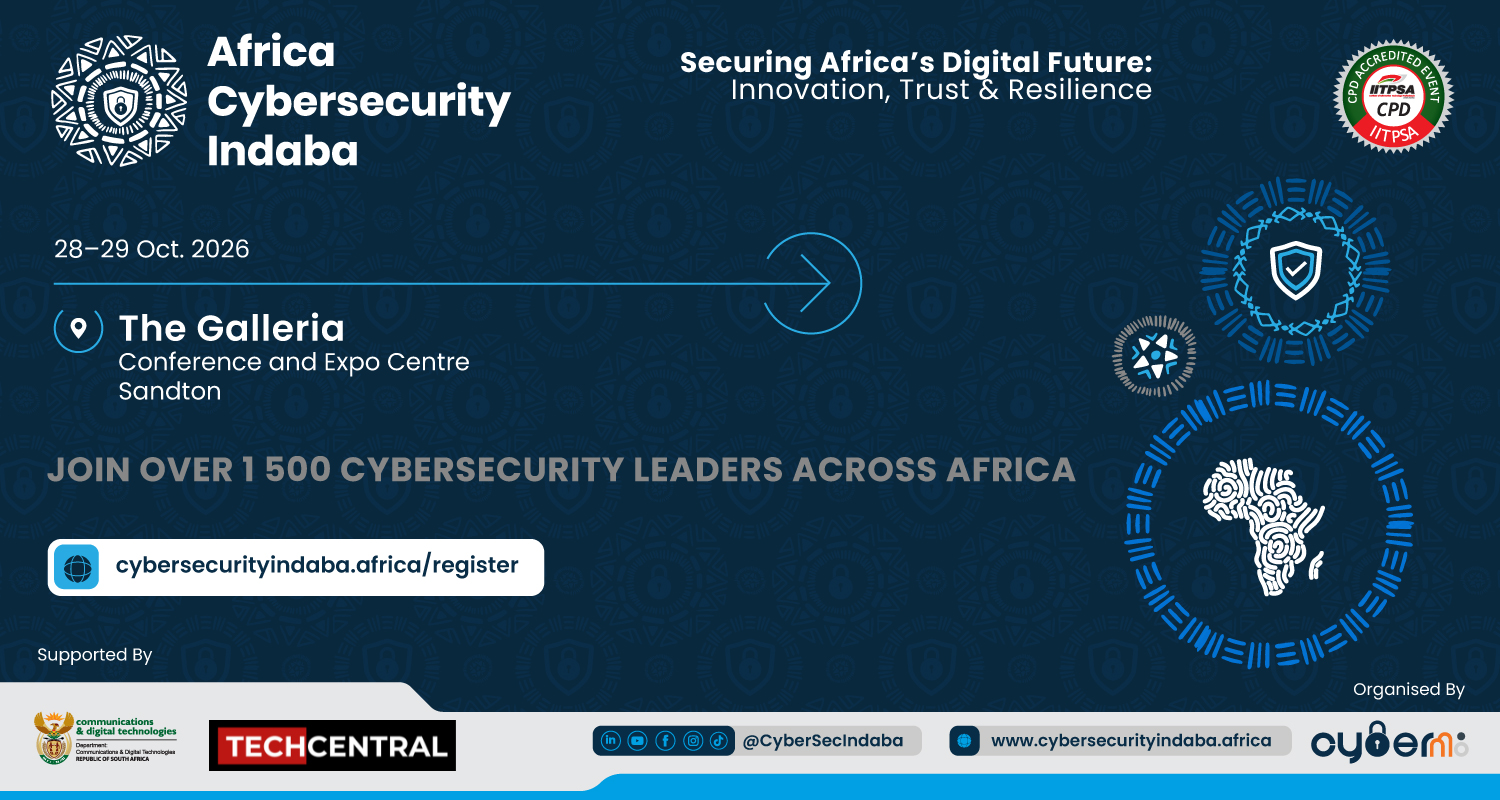
Against this backdrop, the Africa Cybersecurity Indaba 2026, hosted in partnership with the department of communications & digital technologies (DCDT), will convene decision-makers and cybersecurity experts under the theme “Securing Africa’s Digital Future: Innovation, Trust & Resilience”.
The DCDT is committed to advancing a secure, resilient and inclusive digital ecosystem across the continent. As cyberthreats continue to grow in scale, the indaba will foster collective action and strengthen coordinated responses to emerging digital security threats. It will also showcase technologies, policy frameworks and practices that enhance cybersecurity, promote digital trust and support Africa’s digital transformation agenda.
From national strategies to continental resilience
A central discussion will examine cybersecurity policies, national strategies and regulatory frameworks across African Union member states.
African countries are at different stages of implementing cybersecurity strategies, cybercrime legislation, data protection frameworks and national incident-response capabilities. The indaba will explore how these national efforts can contribute to greater continental coordination, including cooperation around African and international conventions, treaties and frameworks dealing with cybersecurity, cybercrime, data protection and digital cooperation.
The question is an important one: how does Africa turn different national cybersecurity strategies into collective cyber resilience?
A frank conversation about digital sovereignty
One of the most important conversations will be about digital sovereignty.
Africa’s digital economy depends increasingly on technologies, cloud infrastructure, platforms, cybersecurity products, artificial intelligence systems and data infrastructure developed or controlled outside the continent.
That raises difficult questions the continent cannot afford to avoid. Where is African data stored? Who controls the infrastructure on which governments and economies increasingly depend? Who develops the technologies that protect critical systems? And how does Africa reduce strategic dependency without isolating itself from global innovation?
Digital sovereignty should not mean digital isolation. It should mean strengthening Africa’s ability to make its own technology choices, protect its data, develop local cybersecurity capabilities, build resilient infrastructure and participate meaningfully in the global digital economy.
The indaba will create space for governments and industry to have that conversation openly.

Who regulates the cybersecurity industry?
As demand for cybersecurity services grows, Africa must also confront the regulation of cybersecurity service providers.
Governments and businesses increasingly entrust external providers with sensitive data and critical systems, raising questions about professional standards, competency, certification, accountability, ethics and regulatory oversight.
The indaba will examine how regulation can build trust in the cybersecurity industry while continuing to encourage innovation and enterprise development.
AI changes the cybersecurity equation
Artificial intelligence is changing both cyber defence and cybercrime. It is being deployed for threat detection, fraud prevention, security operations and incident response. But the same technologies can strengthen phishing, social engineering, disinformation and other cyberthreats.
Africa’s adoption of AI must therefore be accompanied by serious discussion about AI security, governance, data protection, digital sovereignty and responsible innovation.
The question is not simply how Africa adopts AI, but how it adopts AI securely and on its own terms.
One continent, one conversation
The indaba will further explore critical infrastructure protection, cybercrime, aviation cybersecurity, financial sector resilience, digital trust, skills development, research and emerging technologies.
Africa’s cybersecurity future will not be secured by one government, regulator, company or country. It requires coordination across borders, sectors and institutions.
The Africa Cybersecurity Indaba aims to provide that meeting point, where policy meets practice, national strategies meet continental priorities and technology meets Africa’s own development ambitions.
That is why Africa’s cybersecurity conversation cannot wait.
The Africa Cybersecurity Indaba 2026 takes place on 28 and 29 October 2026 at the Galleria Conference & Exhibition Centre in Sandton, Johannesburg. Registration is open. For more information about the programme, speakers, exhibition and sponsorship opportunities, visit www.cybersecurityindaba.africa.
About CyberM8
CyberM8 is a cybersecurity advocacy, awareness and skills development initiative dedicated to advancing cybersecurity knowledge across South Africa. The organisation works to address the country’s cybersecurity awareness gap by equipping individuals, micro, small and medium-sized enterprises and communities with the knowledge, practical skills and best practices needed to navigate the digital world safely and securely. Visit www.cyberm8.org.za to learn more.
- This promoted content was paid for by the party concerned