Close Menu
TechCentralTechCentral

    Subscribe to the newsletter

    Get the best South African technology news and analysis delivered to your e-mail inbox every morning.

    Facebook X (Twitter) YouTube LinkedIn
    WhatsApp Facebook X (Twitter) LinkedIn YouTube
    TechCentralTechCentral
    • News
      DStv drops premium paywall on Fifa World Cup in Canal+-era shift - SuperSport Rendani Ramovha

      DStv drops premium paywall on Fifa World Cup in Canal+-era shift

      17 April 2026
      How a connectivity levy became a tax on telecoms

      How a connectivity levy became a tax on telecoms

      17 April 2026
      Wits project pits African creators against AI music's blind spots

      Wits project pits African creators against AI music’s blind spots

      17 April 2026
      Prosus offloads 4.5% of Delivery Hero to Uber for €270-million

      Prosus offloads 4.5% of Delivery Hero to Uber for €270-million

      17 April 2026
      Numsa digs in for 8% as Eskom wage pact splits unions

      Numsa digs in as Eskom wage pact splits unions

      17 April 2026
    • World
      Adobe bets on AI agents to fend off cheaper rivals

      Adobe bets on AI agents to fend off cheaper rivals

      16 April 2026
      Google poised to lose ad crown to Meta

      Google poised to lose ad crown to Meta

      14 April 2026
      Grand Theft Data - hackers hit Rockstar Games - Grand Theft Auto

      Grand Theft Data – hackers hit Rockstar Games

      14 April 2026
      UK PM Keir Starmer declares war on doomscrolling

      UK PM Keir Starmer declares war on doomscrolling

      13 April 2026
      Big Tech is going nuclear

      Big Tech is going nuclear

      10 April 2026
    • In-depth
      Africa switches on as Europe dims the lights

      Africa switches on as Europe dims the lights

      9 April 2026
      The biggest untapped EV market on Earth is hiding in plain sight

      The biggest untapped EV market on Earth is hiding in plain sight

      1 April 2026
      The R18-billion tech giant hiding in plain sight - Jens Montanana

      The R16-billion tech giant hiding in plain sight

      26 March 2026
      The last generation of coders

      The last generation of coders

      18 February 2026
      Sentech is in dire straits

      Sentech is in dire straits

      10 February 2026
    • TCS
      TCS | Werner Lindemann on how AI is rewriting the infosec rulebook

      TCS | Werner Lindemann on how AI is rewriting the infosec rulebook

      15 April 2026
      TCS | Donovan Marsh on AI and the future of filmmaking

      TCS | Donovan Marsh on AI and the future of filmmaking

      7 April 2026
      TCS+ | Vodacom Business moves to crack the SME tech gap - Andrew Fulton, Sannesh Beharie

      TCS+ | Vodacom Business moves to crack the SME tech gap

      7 April 2026
      TCS | MTN's Divysh Joshi on the strategy behind Pi - Divyesh Joshi

      TCS | MTN’s Divyesh Joshi on the strategy behind Pi

      1 April 2026
      Anoosh Rooplal

      TCS | Anoosh Rooplal on the Post Office’s last stand

      27 March 2026
    • Opinion
      The conflict of interest at the heart of PayShap's slow adoption - Cheslyn Jacobs

      The conflict of interest at the heart of PayShap’s slow adoption

      26 March 2026
      South Africa's energy future hinges on getting wheeling right - Aishah Gire

      South Africa’s energy future hinges on getting wheeling right

      10 March 2026
      Hold the doom: the case for a South African comeback - Duncan McLeod

      Apple just dropped a bomb on the Windows world

      5 March 2026
      R230-million in the bag for Endeavor's third Harvest Fund - Alison Collier

      VC’s centre of gravity is shifting – and South Africa is in the frame

      3 March 2026
      Hold the doom: the case for a South African comeback - Duncan McLeod

      Hold the doom: the case for a South African comeback

      26 February 2026
    • Company Hubs
      • 1Stream
      • Africa Data Centres
      • AfriGIS
      • Altron Digital Business
      • Altron Document Solutions
      • Altron Group
      • Arctic Wolf
      • Ascent Technology
      • AvertITD
      • BBD
      • Braintree
      • CallMiner
      • CambriLearn
      • CYBER1 Solutions
      • Digicloud Africa
      • Digimune
      • Domains.co.za
      • ESET
      • Euphoria Telecom
      • HOSTAFRICA
      • Incredible Business
      • iONLINE
      • IQbusiness
      • Iris Network Systems
      • Kaspersky
      • LSD Open
      • Mitel
      • NEC XON
      • Netstar
      • Network Platforms
      • Next DLP
      • Ovations
      • Paracon
      • Paratus
      • Q-KON
      • SevenC
      • SkyWire
      • Solid8 Technologies
      • Telit Cinterion
      • Telviva
      • Tenable
      • Vertiv
      • Videri Digital
      • Vodacom Business
      • Wipro
      • Workday
      • XLink
    • Sections
      • AI and machine learning
      • Banking
      • Broadcasting and Media
      • Cloud services
      • Contact centres and CX
      • Cryptocurrencies
      • Education and skills
      • Electronics and hardware
      • Energy and sustainability
      • Enterprise software
      • Financial services
      • HealthTech
      • Information security
      • Internet and connectivity
      • Internet of Things
      • Investment
      • IT services
      • Lifestyle
      • Motoring
      • Policy and regulation
      • Public sector
      • Retail and e-commerce
      • Satellite communications
      • Science
      • SMEs and start-ups
      • Social media
      • Talent and leadership
      • Telecoms
    • Events
    • Advertise
    TechCentralTechCentral
    Home » Editor's pick » Alan Turing’s enduring legacy

    Alan Turing’s enduring legacy

    By The Conversation1 December 2014
    Twitter LinkedIn Facebook WhatsApp Email Telegram Copy Link
    News Alerts
    WhatsApp

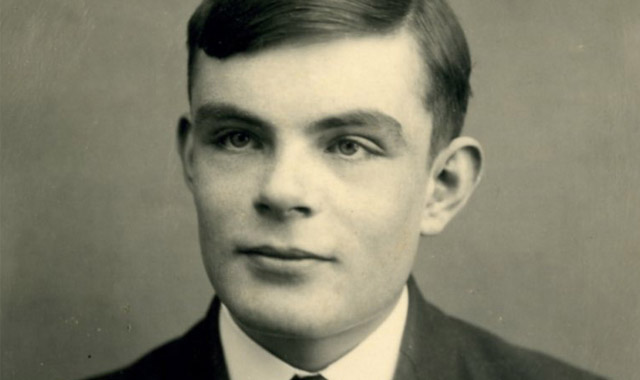
    alan-turing-640

    Alan Turing is one of the world’s best known mathematicians, and probably the best known in the past century. This is partly for his work on cracking German codes in World War 2, and partly for his arrest, conviction and punishment for homosexuality in the 1950s. The mathematics that made him famous, however, rarely gets mentioned.

    His early work, which is more theoretical in nature, set the foundations for the concept of a modern computer. He then went on to actually start building these computers, mostly during World War 2, and this is the part of Turing’s life that is most often talked about.

    After the war, he had a brief spell working on real-life computers before thinking about artificial intelligence. This is when the famous Turing Test appeared, and it was just before the other part of his life that is normally discussed — his conviction for homosexuality, his chemical castration and his suicide.

    If you have watched the recently released The Imitation Game, you will have heard about his exploits in World War 2, and of his later downfall and death. What is rarely mentioned is this early work on the theory of computers, but this is as important for the development of the field as his practical work at Bletchley Park.

    Turing’s first contribution to mathematics was to define what he called an a-machine, but which later became known as a Turing machine. To a generation used to computers, this makes a lot of intuitive sense, but in the 1930s it was a bold and innovative leap.

    Roughly speaking, a Turing machine needs an input of some description, a set of states it can be in, like an internal thought process reminding it what it should be doing, and a program that tells the machine what to do with the input it has and the frame of mind it is in.

    An example is a calculator: the input is you pressing the buttons, and the internal state is it being in an adding or subtracting mood, for example. The program tells the calculator, given the input 10 and 10 and the mood of addition, how to switch between the various states in its program in order to calculate the response.

    Often, for even simple tasks, the set of states is very large in this theoretical concept. Its use is not so much as a practical design but as a method of discerning what can and cannot be done by a computer. Turing took this one stage further by defining what became known as a Universal Turing Machine.

    This machine is programmable, in the sense that the input into this machine includes a complete program as well, so that it can simulate any other Turing machine.

    As an example of this, consider a standard computer. Opening the calculator application on your desktop produces a simulation of the earlier Turing machine I described. The computer here is a Universal Turing Machine, and the calculator program is on the hard drive, being read into the machine as an input. Thus, a Turing machine can be capable of only one task (like a light switch), a range of tasks (the calculator), or can be Universal, and then is capable of any task that can be done by any Turing machine one can consider.

    But why did Turing invent these concepts? He wanted to attack David Hilbert’s so-called “decision problem”: is there some algorithm which can take any mathematical statement and tell you whether it is true or false?

    Turing machines allowed one formally to define the concept of “algorithms”, and allowed Turing to prove rigorously that no such algorithm can ever exist. He did this via another problem, the “halting problem”: suppose you write some computer code, and you ask your computer to run it, will that computer program finish running after a minute, a year, a millennium, or will it continue running forever, and never end? The halting problem asks for an algorithm that will take any computer program and tell you whether, if you run it, it will eventually stop, or whether it will run forever. Like the decision problem, this has a negative answer.

    Hilbert’s decision problem was also solved by Alonzo Church (Turing’s PhD supervisor) at the same time, but whereas Church’s methods are difficult, Turing machines are intuitive, and it is his formulation that is taught to mathematicians and computer scientists across the world to this day. Turing’s radical ideas were a huge step in understanding, and led to people being able to ask deep questions about computers and the limits of computation. The formalism of Turing machines forms the fabric of computer science, and informs the ideas and concepts that have come since. This legacy will live on for centuries hence.

    • The ConversationDavid Craven Royal Society Research Fellow and Senior Birmingham Fellow at University of Birmingham
    • This article was originally published on The Conversation

    Follow TechCentral on Google News Add TechCentral as your preferred source on Google


    Alan Turing David Craven
    WhatsApp YouTube
    Share. Facebook Twitter LinkedIn WhatsApp Telegram Email Copy Link
    Previous ArticleEskom won’t cut power this week
    Next Article Gamergate: no more fun and games

    Related Posts

    Automation: First, choose what not to do

    2 September 2021

    The Imitation Game: history, drama or myth?

    9 January 2015

    Could AI be mankind’s undoing?

    7 December 2014
    Company News
    Fibre: the backbone of South Africa's digital health ecosystem - Mweb

    Fibre: the backbone of South Africa’s digital health ecosystem

    16 April 2026
    New man to accelerate wholesale connectivity in the DRC - Gaetan Soltesz, FAST Congo

    New man to accelerate wholesale connectivity in the DRC

    15 April 2026
    Avast Business and Avert IT Distribution rewrite the SMB cybersecurity playbook

    Avast Business and Avert IT Distribution rewrite the SMB cybersecurity playbook

    15 April 2026
    Opinion
    The conflict of interest at the heart of PayShap's slow adoption - Cheslyn Jacobs

    The conflict of interest at the heart of PayShap’s slow adoption

    26 March 2026
    South Africa's energy future hinges on getting wheeling right - Aishah Gire

    South Africa’s energy future hinges on getting wheeling right

    10 March 2026
    Hold the doom: the case for a South African comeback - Duncan McLeod

    Apple just dropped a bomb on the Windows world

    5 March 2026

    Subscribe to Updates

    Get the best South African technology news and analysis delivered to your e-mail inbox every morning.

    Latest Posts
    DStv drops premium paywall on Fifa World Cup in Canal+-era shift - SuperSport Rendani Ramovha

    DStv drops premium paywall on Fifa World Cup in Canal+-era shift

    17 April 2026
    How a connectivity levy became a tax on telecoms

    How a connectivity levy became a tax on telecoms

    17 April 2026
    Wits project pits African creators against AI music's blind spots

    Wits project pits African creators against AI music’s blind spots

    17 April 2026
    Prosus offloads 4.5% of Delivery Hero to Uber for €270-million

    Prosus offloads 4.5% of Delivery Hero to Uber for €270-million

    17 April 2026
    © 2009 - 2026 NewsCentral Media
    • Cookie policy (ZA)
    • TechCentral – privacy and Popia

    Type above and press Enter to search. Press Esc to cancel.

    Manage consent

    TechCentral uses cookies to enhance its offerings. Consenting to these technologies allows us to serve you better. Not consenting or withdrawing consent may adversely affect certain features and functions of the website.

    Functional Always active
    The technical storage or access is strictly necessary for the legitimate purpose of enabling the use of a specific service explicitly requested by the subscriber or user, or for the sole purpose of carrying out the transmission of a communication over an electronic communications network.
    Preferences
    The technical storage or access is necessary for the legitimate purpose of storing preferences that are not requested by the subscriber or user.
    Statistics
    The technical storage or access that is used exclusively for statistical purposes. The technical storage or access that is used exclusively for anonymous statistical purposes. Without a subpoena, voluntary compliance on the part of your Internet Service Provider, or additional records from a third party, information stored or retrieved for this purpose alone cannot usually be used to identify you.
    Marketing
    The technical storage or access is required to create user profiles to send advertising, or to track the user on a website or across several websites for similar marketing purposes.
    • Manage options
    • Manage services
    • Manage {vendor_count} vendors
    • Read more about these purposes
    View preferences
    • {title}
    • {title}
    • {title}