Close Menu
TechCentralTechCentral

    Subscribe to the newsletter

    Get the best South African technology news and analysis delivered to your e-mail inbox every morning.

    Facebook X (Twitter) YouTube LinkedIn
    WhatsApp Facebook X (Twitter) LinkedIn YouTube
    TechCentralTechCentral
    • News
      Musk hurls expletives at senior SA diplomat in Starlink row - Elon Musk, Clayson Monyela

      Musk hurls expletives at senior SA diplomat in Starlink row

      12 April 2026
      Wall Street strains to justify SpaceX's $1.75-trillion price tag

      Wall Street strains to justify SpaceX’s $1.75-trillion price tag

      12 April 2026
      Epic, must-watch 4K footage of the Artemis II launch

      Epic, must-watch 4K footage of the Artemis II launch

      12 April 2026
      Icasa moves to mandate national infrastructure database

      Icasa moves to mandate national infrastructure database

      12 April 2026
      South Africa's AI policy is a bureaucrat's dream - Solly Malatsi

      South Africa’s draft AI policy is a bureaucrat’s dream

      10 April 2026
    • World
      Big Tech is going nuclear

      Big Tech is going nuclear

      10 April 2026
      Software rout deepens as AI fears grip investors

      Software rout deepens as AI fears grip investors

      10 April 2026
      Anthropic mulls building its own AI chips

      Anthropic mulls building its own AI chips

      10 April 2026
      DeepSeek V4 to run on Huawei silicon as China builds its own AI stack

      DeepSeek V4 to run on Huawei silicon as China builds its own AI stack

      4 April 2026
      Amazon in talks to buy satellite operator Globalstar

      Amazon in talks to buy satellite operator Globalstar

      2 April 2026
    • In-depth
      Africa switches on as Europe dims the lights

      Africa switches on as Europe dims the lights

      9 April 2026
      The biggest untapped EV market on Earth is hiding in plain sight

      The biggest untapped EV market on Earth is hiding in plain sight

      1 April 2026
      The R18-billion tech giant hiding in plain sight - Jens Montanana

      The R16-billion tech giant hiding in plain sight

      26 March 2026
      The last generation of coders

      The last generation of coders

      18 February 2026
      Sentech is in dire straits

      Sentech is in dire straits

      10 February 2026
    • TCS
      TCS+ | Vodacom Business moves to crack the SME tech gap - Andrew Fulton, Sannesh Beharie

      TCS+ | Vodacom Business moves to crack the SME tech gap

      7 April 2026
      TCS | MTN's Divysh Joshi on the strategy behind Pi - Divyesh Joshi

      TCS | MTN’s Divyesh Joshi on the strategy behind Pi

      1 April 2026
      Anoosh Rooplal

      TCS | Anoosh Rooplal on the Post Office’s last stand

      27 March 2026
      Meet the CIO | HealthBridge CTO Anton Fatti on the future of digital health

      Meet the CIO | Healthbridge CTO Anton Fatti on the future of digital health

      23 March 2026
      TCS+ | Arctic Wolf unpacks the evolving threat landscape for SA businesses - Clare Loveridge and Jason Oehley

      TCS+ | Arctic Wolf unpacks the evolving threat landscape for SA businesses

      19 March 2026
    • Opinion
      The conflict of interest at the heart of PayShap's slow adoption - Cheslyn Jacobs

      The conflict of interest at the heart of PayShap’s slow adoption

      26 March 2026
      South Africa's energy future hinges on getting wheeling right - Aishah Gire

      South Africa’s energy future hinges on getting wheeling right

      10 March 2026
      Hold the doom: the case for a South African comeback - Duncan McLeod

      Apple just dropped a bomb on the Windows world

      5 March 2026
      R230-million in the bag for Endeavor's third Harvest Fund - Alison Collier

      VC’s centre of gravity is shifting – and South Africa is in the frame

      3 March 2026
      Hold the doom: the case for a South African comeback - Duncan McLeod

      Hold the doom: the case for a South African comeback

      26 February 2026
    • Company Hubs
      • 1Stream
      • Africa Data Centres
      • AfriGIS
      • Altron Digital Business
      • Altron Document Solutions
      • Altron Group
      • Arctic Wolf
      • Ascent Technology
      • AvertITD
      • BBD
      • Braintree
      • CallMiner
      • CambriLearn
      • CYBER1 Solutions
      • Digicloud Africa
      • Digimune
      • Domains.co.za
      • ESET
      • Euphoria Telecom
      • HOSTAFRICA
      • Incredible Business
      • iONLINE
      • IQbusiness
      • Iris Network Systems
      • Kaspersky
      • LSD Open
      • Mitel
      • NEC XON
      • Netstar
      • Network Platforms
      • Next DLP
      • Ovations
      • Paracon
      • Paratus
      • Q-KON
      • SevenC
      • SkyWire
      • Solid8 Technologies
      • Telit Cinterion
      • Telviva
      • Tenable
      • Vertiv
      • Videri Digital
      • Vodacom Business
      • Wipro
      • Workday
      • XLink
    • Sections
      • AI and machine learning
      • Banking
      • Broadcasting and Media
      • Cloud services
      • Contact centres and CX
      • Cryptocurrencies
      • Education and skills
      • Electronics and hardware
      • Energy and sustainability
      • Enterprise software
      • Financial services
      • HealthTech
      • Information security
      • Internet and connectivity
      • Internet of Things
      • Investment
      • IT services
      • Lifestyle
      • Motoring
      • Policy and regulation
      • Public sector
      • Retail and e-commerce
      • Satellite communications
      • Science
      • SMEs and start-ups
      • Social media
      • Talent and leadership
      • Telecoms
    • Events
    • Advertise
    TechCentralTechCentral
    Home » Sections » Retail and e-commerce » Amid lockdowns, Africa goes online for groceries

    Amid lockdowns, Africa goes online for groceries

    By Agency Staff5 June 2020
    Twitter LinkedIn Facebook WhatsApp Email Telegram Copy Link
    News Alerts
    WhatsApp
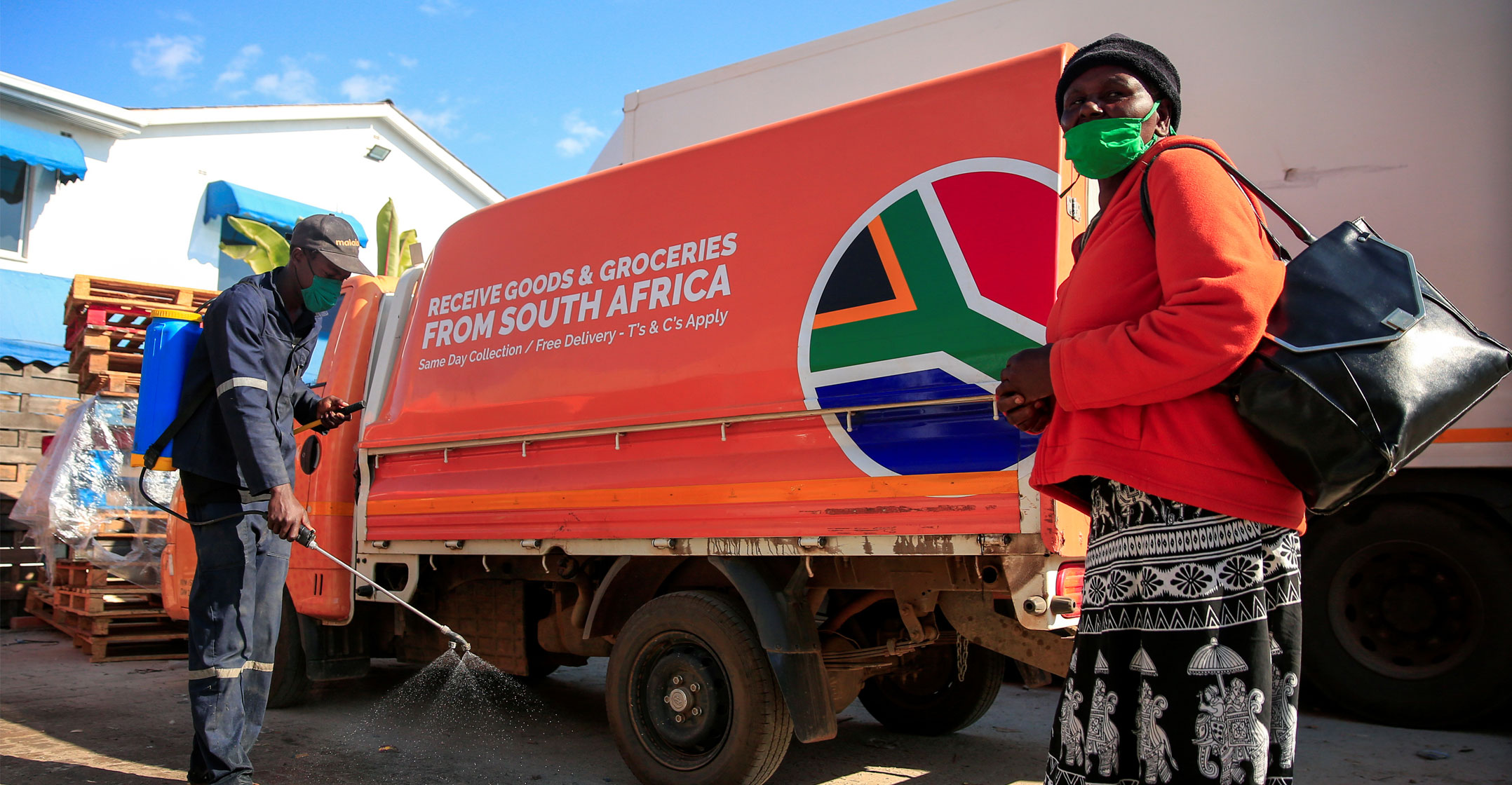
    A woman arrives to collect groceries from a Malaicha warehouse during a nationwide lockdown to help curb the spread of Covid-19 in Harare, Zimbabwe. Philimon Bulawayo/Reuters

    In between her shifts, Zimbabwean nurse Sinothando Mpofu used to go to Bulawayo’s open-air markets to buy tomatoes and cabbages for her family of nine — until the country’s coronavirus lockdown closed all stalls.

    Mpofu worried about where she would get fresh food, until she saw a message in her local church WhatsApp group about Fresh in a Box — one of rising numbers of African technology companies getting fresh food to people under lockdown.

    Now she puts in an order online and gets a box of produce delivered to her home every week. The fruits and vegetables are better quality than the food she used to buy at the supermarket, she said, at about a third of the cost.

    About a third of people in sub-Saharan Africa had access to a smartphone in 2018, more than double the number four years earlier

    “Buying vegetables at a local supermarket is very expensive, but now I get a variety of vegetables and I eat balanced meals all the time,” Mpofu, 37, said. She will keep using the site even after lockdown ends.

    In many African countries, measures put in place to slow the spread of Covid-19 have made it harder for people to access affordable, nutritious foods, sparking warnings from aid groups that the pandemic will worsen malnutrition rates.

    An estimated 73 million people in Africa are already acutely food insecure, noted Matshidiso Moeti, the World Health Organisation’s regional director for Africa, in a press release last month.

    “Covid-19 is exacerbating food shortages, as food imports, transportation and agricultural production have all been hampered by a combination of lockdowns, travel restrictions and physical distancing measures,” she said.

    Tech solution

    A possible global GDP loss of 5% this year could push another 147 million people into extreme poverty — more than half of them in sub-Saharan Africa, according to the International Food Policy Research Institute (IFPRI).

    Mobile tech startups are helping people get hold of fresh food during the pandemic by tapping into the rapid rise in smartphone use across Africa.

    About a third of people in sub-Saharan Africa had access to a smartphone in 2018, more than double the number four years earlier, according to the Pew Research Center, a Washington-based think tank.

    Launched in October 2018 and selling surplus fruits and vegetables from local farms, Fresh in a Box found itself scrambling to add more farmers to its roster to supply the sudden rush of new customers, said co-founder Kudakwashe Musasiwa.

    He added that it now distributes about 2.6t of vegetables daily from nearly 2 000 small-scale farmers to customers’ doorsteps.

    “With Covid-19, something incredible happened. We had to find a way of scaling up really quickly because all of a sudden our demand shot up,” Musasiwa said.

    Like Zimbabwe’s Fresh in a Box and the Market Garden app in Uganda, which is connecting women produce vendors to a new wave of online customers, Namibia has also seen a rise in the popularity of online markets under lockdown.

    A website called Tambula — meaning “take” in the local Oshiwambo language — is described as “an online mall” by its founder Jerobeam Mwedihanga, who launched the site about a week into Namibia’s lockdown, which started in March.

    Rental fees in malls are high in Namibia. And there are many home-run businesses with no place to showcase their products

    “Rental fees in malls are high in Namibia,” said Mwedihanga, 36, an IT engineer, whose site delivers electronics, beverages, furniture and more. “And there are many home-run businesses with no place to showcase their products.”

    Last month, Tambula partnered with the UN Development Programme on a pilot project to sell informal market goods online, including local foods like dried spinach, mopane worms and ground nuts.

    “For many consumers, this is their first time buying traditional foods online,” said Mwedihanga, adding that products from informal vendors have grown to make up 35% of online sales.

    One positive to come out of the new coronavirus pandemic, he said, is that people are becoming more aware of e-commerce and realising that food from informal traders is often more affordable than that from retail shops.

    Digital co-operative

    In Nigeria, entrepreneur Luther Lawoyin realised that bulk purchases could save consumers from overspending on food.

    He launched PricePally — described as a digital food co-operative — in November 2019, as a way of letting people buy food online in bulk from farmers and wholesalers and split the cost with other site users.

    “When the coronavirus outbreak was really picking up in Nigeria, we noticed a spike in our traffic and sales, so we figured that people need help to get their food items and, especially, to avoid the market,” said Lawoyin.

    The site’s customers save at least 15% on the food they buy, he added.

    The Malaicha app, which started in South Africa nearly one year ago, acts like a version of food remittances…

    PricePally had about 320 paying users before the virus hit — that number shot up to more than a thousand after the country’s lockdown kicked in on 30 March, Lawoyin said.

    Just as lockdowns around the world have disrupted food trade across borders, they have also made it difficult for people working abroad to send food to their loved ones back home.

    Zimbabweans living in South Africa who would normally pay bus and taxi drivers to carry food packages to their families have turned to an app called Malaicha.

    The app, which started in South Africa nearly one year ago, acts like a version of food remittances, allowing people in South Africa to order groceries for delivery in Zimbabwe.

    Essential goods

    While 70% of products are sourced locally in Zimbabwe at cheaper rates, about 30% come from South Africa where Malaicha has permission to import goods.

    Nokusa Nyathi, 24, stood in a snaking queue of up to 200 people at the Malaicha pick-up point in Bulawayo, waiting to get the parcel of goods that her father in South Africa had ordered online — essentials like cooking oil, sugar, spaghetti and soap.

    Through Malaicha, her father can get groceries to his family in a few days, compared to the weeks or months it can take to send the food from South Africa to Zimbabwe, Nyathi said.

    Using the service is also cheaper than if her father simply sent money for his family to buy the food themselves, she explained.

    The company is so confident about the future of online food shopping in Africa that it is launching Malaicha Global next week so that people can send goods to Zimbabwe from anywhere in the world.  — Reported by Kim Harrisberg and Lungelo Ndlovu, with additional reporting by Nellie Peyton.  — (c) 2020 Thomson Reuters Foundation

    Follow TechCentral on Google News Add TechCentral as your preferred source on Google


    Fresh in a Box Jerobeam Mwedihanga Kudakwashe Musasiwa Luther Lawoyin Malaicha Malaicha app Price Pally Tambula top
    WhatsApp YouTube
    Share. Facebook Twitter LinkedIn WhatsApp Telegram Email Copy Link
    Previous ArticleWebafrica appoints Sean Nourse as new CEO
    Next Article WhatsApp gets a raw deal in payments

    Related Posts

    18GW in unplanned breakdowns cripple Eskom

    2 November 2021

    Nersa kicks the Karpowership can down the road

    13 September 2021

    If you think South African load shedding is bad, try Zimbabwe’s

    13 September 2021
    Company News
    Vertiv AI Innovation Roadshow returns to Africa as virtual event

    Vertiv AI Innovation Roadshow returns to Africa as virtual event

    10 April 2026
    What South African parents look for in an online school - CambriLearn

    What South African parents look for in an online school

    9 April 2026
    Modernising legacy systems - without the downtime - BBD Software

    Modernising legacy systems – without the downtime

    9 April 2026
    Opinion
    The conflict of interest at the heart of PayShap's slow adoption - Cheslyn Jacobs

    The conflict of interest at the heart of PayShap’s slow adoption

    26 March 2026
    South Africa's energy future hinges on getting wheeling right - Aishah Gire

    South Africa’s energy future hinges on getting wheeling right

    10 March 2026
    Hold the doom: the case for a South African comeback - Duncan McLeod

    Apple just dropped a bomb on the Windows world

    5 March 2026

    Subscribe to Updates

    Get the best South African technology news and analysis delivered to your e-mail inbox every morning.

    Latest Posts
    Musk hurls expletives at senior SA diplomat in Starlink row - Elon Musk, Clayson Monyela

    Musk hurls expletives at senior SA diplomat in Starlink row

    12 April 2026
    Wall Street strains to justify SpaceX's $1.75-trillion price tag

    Wall Street strains to justify SpaceX’s $1.75-trillion price tag

    12 April 2026
    Epic, must-watch 4K footage of the Artemis II launch

    Epic, must-watch 4K footage of the Artemis II launch

    12 April 2026
    Icasa moves to mandate national infrastructure database

    Icasa moves to mandate national infrastructure database

    12 April 2026
    © 2009 - 2026 NewsCentral Media
    • Cookie policy (ZA)
    • TechCentral – privacy and Popia

    Type above and press Enter to search. Press Esc to cancel.

    Manage consent

    TechCentral uses cookies to enhance its offerings. Consenting to these technologies allows us to serve you better. Not consenting or withdrawing consent may adversely affect certain features and functions of the website.

    Functional Always active
    The technical storage or access is strictly necessary for the legitimate purpose of enabling the use of a specific service explicitly requested by the subscriber or user, or for the sole purpose of carrying out the transmission of a communication over an electronic communications network.
    Preferences
    The technical storage or access is necessary for the legitimate purpose of storing preferences that are not requested by the subscriber or user.
    Statistics
    The technical storage or access that is used exclusively for statistical purposes. The technical storage or access that is used exclusively for anonymous statistical purposes. Without a subpoena, voluntary compliance on the part of your Internet Service Provider, or additional records from a third party, information stored or retrieved for this purpose alone cannot usually be used to identify you.
    Marketing
    The technical storage or access is required to create user profiles to send advertising, or to track the user on a website or across several websites for similar marketing purposes.
    • Manage options
    • Manage services
    • Manage {vendor_count} vendors
    • Read more about these purposes
    View preferences
    • {title}
    • {title}
    • {title}