Close Menu
TechCentralTechCentral

    Subscribe to the newsletter

    Get the best South African technology news and analysis delivered to your e-mail inbox every morning.

    Facebook X (Twitter) YouTube LinkedIn
    WhatsApp Facebook X (Twitter) LinkedIn YouTube
    TechCentralTechCentral
    • News
      More organic compounds detected on Mars - Nasa Curiosity rover

      More organic compounds detected on Mars

      21 April 2026
      Liquid dodges debt crunch - at a hefty price - Hardy Pemhiwa

      Liquid dodges debt crunch – at a hefty price

      21 April 2026
      Seacom takes aim at regional peering costs - Prenesh Padayachee

      Seacom takes aim at regional peering costs

      21 April 2026
      WhatsApp to go premium with new Plus subscription

      WhatsApp to go premium with new Plus subscription

      21 April 2026
      The AI model spooking the world's biggest banks - Mythos

      The AI model spooking the world’s biggest banks

      21 April 2026
    • World
      Adobe bets on AI agents to fend off cheaper rivals

      Adobe bets on AI agents to fend off cheaper rivals

      16 April 2026
      Google poised to lose ad crown to Meta

      Google poised to lose ad crown to Meta

      14 April 2026
      Grand Theft Data - hackers hit Rockstar Games - Grand Theft Auto

      Grand Theft Data – hackers hit Rockstar Games

      14 April 2026
      UK PM Keir Starmer declares war on doomscrolling

      UK PM Keir Starmer declares war on doomscrolling

      13 April 2026
      Big Tech is going nuclear

      Big Tech is going nuclear

      10 April 2026
    • In-depth
      Africa switches on as Europe dims the lights

      Africa switches on as Europe dims the lights

      9 April 2026
      The biggest untapped EV market on Earth is hiding in plain sight

      The biggest untapped EV market on Earth is hiding in plain sight

      1 April 2026
      The R18-billion tech giant hiding in plain sight - Jens Montanana

      The R16-billion tech giant hiding in plain sight

      26 March 2026
      The last generation of coders

      The last generation of coders

      18 February 2026
      Sentech is in dire straits

      Sentech is in dire straits

      10 February 2026
    • TCS

      TCS+ | ‘The ISP for ISPs’: Vox’s shift to wholesale aggregator

      20 April 2026
      TCS | Werner Lindemann on how AI is rewriting the infosec rulebook

      TCS | Werner Lindemann on how AI is rewriting the infosec rulebook

      15 April 2026
      TCS | Donovan Marsh on AI and the future of filmmaking

      TCS | Donovan Marsh on AI and the future of filmmaking

      7 April 2026
      TCS+ | Vodacom Business moves to crack the SME tech gap - Andrew Fulton, Sannesh Beharie

      TCS+ | Vodacom Business moves to crack the SME tech gap

      7 April 2026
      TCS | MTN's Divysh Joshi on the strategy behind Pi - Divyesh Joshi

      TCS | MTN’s Divyesh Joshi on the strategy behind Pi

      1 April 2026
    • Opinion
      The conflict of interest at the heart of PayShap's slow adoption - Cheslyn Jacobs

      The conflict of interest at the heart of PayShap’s slow adoption

      26 March 2026
      South Africa's energy future hinges on getting wheeling right - Aishah Gire

      South Africa’s energy future hinges on getting wheeling right

      10 March 2026
      Hold the doom: the case for a South African comeback - Duncan McLeod

      Apple just dropped a bomb on the Windows world

      5 March 2026
      R230-million in the bag for Endeavor's third Harvest Fund - Alison Collier

      VC’s centre of gravity is shifting – and South Africa is in the frame

      3 March 2026
      Hold the doom: the case for a South African comeback - Duncan McLeod

      Hold the doom: the case for a South African comeback

      26 February 2026
    • Company Hubs
      • 1Stream
      • Africa Data Centres
      • AfriGIS
      • Altron Digital Business
      • Altron Document Solutions
      • Altron Group
      • Arctic Wolf
      • Ascent Technology
      • AvertITD
      • BBD
      • Braintree
      • CallMiner
      • CambriLearn
      • CYBER1 Solutions
      • Digicloud Africa
      • Digimune
      • Domains.co.za
      • ESET
      • Euphoria Telecom
      • HOSTAFRICA
      • Incredible Business
      • iONLINE
      • IQbusiness
      • Iris Network Systems
      • Kaspersky
      • LSD Open
      • Mitel
      • NEC XON
      • Netstar
      • Network Platforms
      • Next DLP
      • Ovations
      • Paracon
      • Paratus
      • Q-KON
      • SevenC
      • SkyWire
      • Solid8 Technologies
      • Telit Cinterion
      • Telviva
      • Tenable
      • Vertiv
      • Videri Digital
      • Vodacom Business
      • Wipro
      • Workday
      • XLink
    • Sections
      • AI and machine learning
      • Banking
      • Broadcasting and Media
      • Cloud services
      • Contact centres and CX
      • Cryptocurrencies
      • Education and skills
      • Electronics and hardware
      • Energy and sustainability
      • Enterprise software
      • Financial services
      • HealthTech
      • Information security
      • Internet and connectivity
      • Internet of Things
      • Investment
      • IT services
      • Lifestyle
      • Motoring
      • Policy and regulation
      • Public sector
      • Retail and e-commerce
      • Satellite communications
      • Science
      • SMEs and start-ups
      • Social media
      • Talent and leadership
      • Telecoms
    • Events
    • Advertise
    TechCentralTechCentral
    Home » In-depth » Anarchy is being used to subvert South Africa’s democracy

    Anarchy is being used to subvert South Africa’s democracy

    By Mcebisi Ndletyana14 July 2021
    Twitter LinkedIn Facebook WhatsApp Email Telegram Copy Link
    News Alerts
    WhatsApp
    Jacob Zuma

    The mayhem of the last few days is a reminder of the danger that South Africa continues to live with, as well as an indication of the disfigurement of its law enforcement institutions.

    The danger stems from the deferral of a “better life for all”, which the ANC promised when apartheid ended, while the crisis in law enforcement institutions is born of a sinister motive to evade accountability. The poor will emerge worse off, and the bandits are hoping for state institutions too weakened to dispossess them of their bounty and throw them into prison.

    Failure to stop former President Jacob Zuma’s incarceration has led to where the country is now. This is not an unavoidable result, but the fruition of a calculated strategy – call it “Plan B”. Zuma zealots had hoped their threats of a violent breakout would scare off the police from arresting him, thereby forcing the authorities to hatch some arrangement that would keep him out of prison.

    Zuma’s fanatics found willing accomplices among the hungry, the underworld and petty thieves looking to feed a drug habit

    Once the threats proved hollow, which led to Zuma being jailed, the plan morphed to inciting lawlessness. The intention is to inflict sufficient harm on property and sources of livelihood and instil fear of widespread loss of life to a point where the authorities regret the decision to proceed with Zuma’s incarceration.

    For their destructive plans, Zuma’s fanatics found willing accomplices among the hungry, the underworld and petty thieves looking to feed a drug habit. And criminality is not unusual in South Africa. It makes global headlines, now and then.

    Not unexpected

    The looting and violence is not unexpected for a country with the kind of social ills South Africa faces. For instance, of those who’re able to work, between the ages 15 and 65 years, 43% can’t find jobs. About two-thirds of the unemployed are youthful, below the age of 34. Most may never find jobs in their lifetime. They are school dropouts without any skills to sell in the labour market.

    Faced with dim prospects of finding jobs and without much to do, these unemployable youngsters have taken to drugs to soothe their misery and to criminality as a source of livelihood. Drug abuse has emerged recently as the most worrying problem among the country’s youth. It has predisposed them even more to criminality.

    What’s happening now also can’t possibly come as a surprise because of poor police visibility. Police absence has emboldened some. These are the hungry in South African society, but they have remained obedient and fearful of imprisonment. Given the unlikeliness of arrest in this climate, the usually timid have decided to join the looting frenzy. And, though it may not be their first choice, they all possibly feel entitled to steal to assuage hunger.
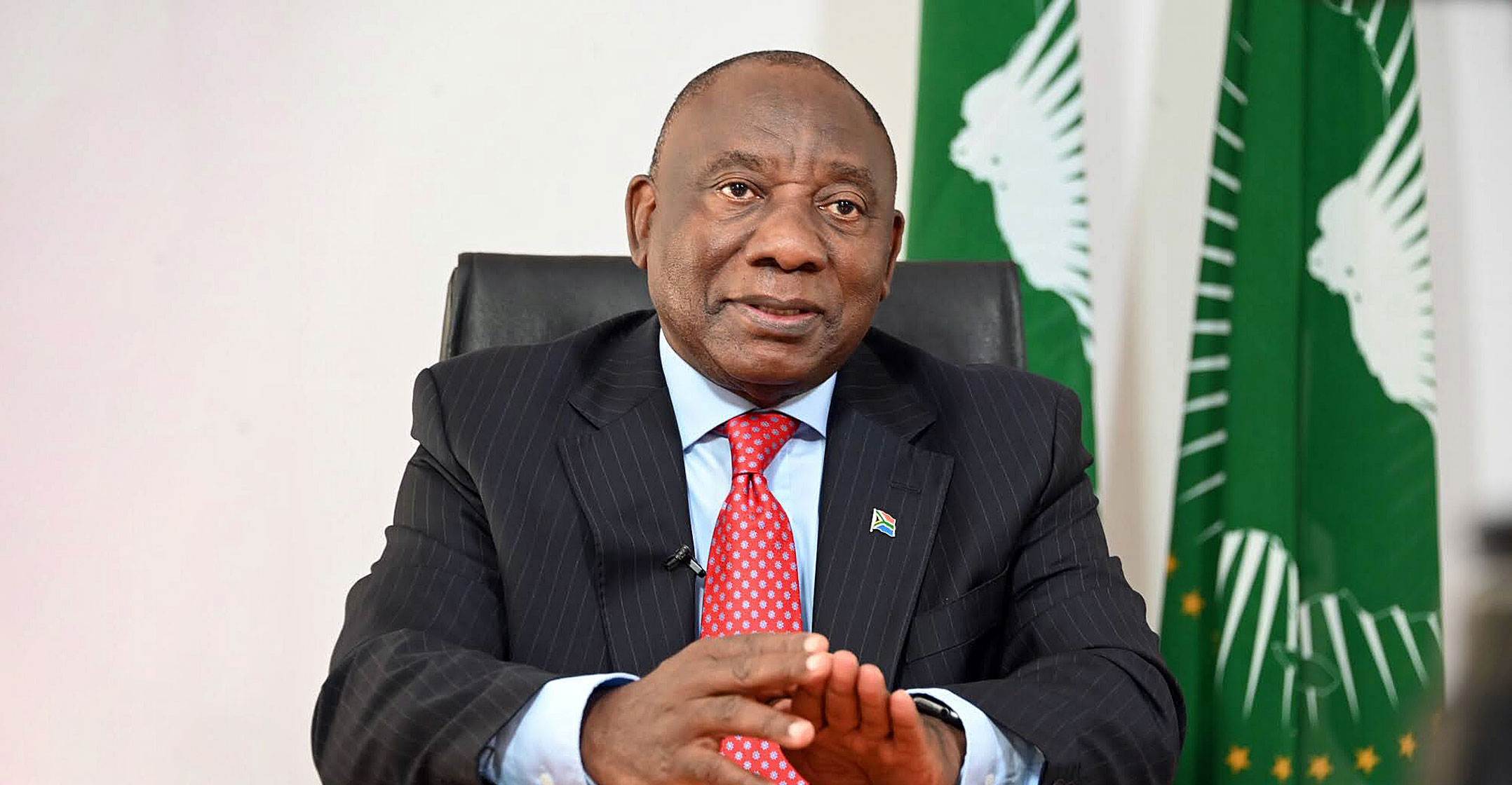
    South Africa, led by President, Cyril Ramaphosa may be facing a violent insurrection. Image: GCIS

    That is the social deprivation that Zuma’s devotees are successfully exploiting. One can’t rule out the possibility that these marauding mobs have been initially encouraged, or bused, to loot. It’s not unusual for leaders of the ANC to enlist the help of the underworld, including for murder of their own comrades.

    Once orchestrated, the looting and destruction frenzy took on a life of its own. But the aim of those involved is not just wanton destruction and to raise the spectre of mob attacks. Zuma devotees remained focused on freeing their cult-figure. They’re blaming the judiciary for the chaos, saying the jurists have taken an irresponsible decision. Their goal is to discredit the judiciary to justify making a deal that would free Zuma from punishment.

    A political pardon, especially under these circumstances, would set this country down a potentially irreversible path. It would mean that all the guilty need to do to avoid accountability is to threaten violence. That would mean Zuma would never be punished for accumulated allegations of corruption.

    If he managed to force a pardon now, who says he wouldn’t employ violence the next time he faced jail time

    If he managed to force a pardon now, who says he wouldn’t employ violence the next time he faced jail time. There’s a real possibility that Zuma will go back to prison. He’s currently going through a trial, and evidence of his impropriety is piling up at the Zondo commission probing allegations of state capture and corruption.

    If the state pardons Zuma now, it’s effectively saying he enjoys indemnity from prosecution, regardless of how severe his improprieties are. Once that happens, South Africa will lose any claim to being a country governed by the rule of law. It would pave the way for the proliferation of militia forces and mobs organised by strongmen to threaten law enforcement agencies.

    Dreadful failure

    Countries don’t renounce the rule of law on account of a mere refusal to comply. The idea is to enforce the law. That is why the police and prosecutors are called law enforcement agencies.

    But South Africa is faced with a dreadful failure of law enforcement, resulting from sheer failure to detect the likelihood of the current mayhem. Imprisonment of any heroic figure, especially one who encourages his zealots to break the law, is likely to incite chaos. The likelihood of that happening is even greater in a country with deep grievances like South Africa.

    How the country’s intelligence could not have foreseen this is inexplicable. Either they’re hopelessly inept, or they have simply deserted their posts and left the country exposed to internal threats.

    The current chaos has set the country back. More people have possibly been infected by Covid-19 due to failure to observe preventative measures. Even more deaths are likely to follow because of the disruption of the vaccination programme and lack of staff at hospitals for fear of violent attacks by the mob.

    This will add to the already high number of child-headed households in the country. Destruction of businesses will lead to a multiplication of unemployment, which is unlikely to decrease any time soon as businesspeople remain uncertain about the return of law and order. This means criminality is likely to rise even more.

    South Africa can’t possibly remain the same country in the aftermath of this mayhem. There are just too many storms ahead to simply continue unchanged. State institutions need to rid themselves of people who are not proving their worth. Their retention is truly reckless.

    The “ticking bomb” in South Africa does actually have the potential to explode. Mere promises of a better life are not enough to disarm the bomb. Malfeasant elements within the governing party are determined to take the entire country down with them. South Africans can’t say they have not been warned.The Conversation

    • Mcebisi Ndletyana is the author of Anatomy of the ANC in Power: Insights from Port Elizabeth, 1990 – 2019 (HSRC Press, 2020). He is associate professor of political science, University of Johannesburg
    • This article is republished from The Conversation under a Creative Commons licence

    Follow TechCentral on Google News Add TechCentral as your preferred source on Google


    Cyril Ramaphosa Jacob Zuma Mcebisi Ndletyana top
    WhatsApp YouTube
    Share. Facebook Twitter LinkedIn WhatsApp Telegram Email Copy Link
    Previous ArticleMicrosoft to offer a cloud-based version of Windows
    Next Article An open letter to Twitter CEO Jack Dorsey

    Related Posts

    Government steps in as fuel shock hits

    Government steps in as fuel shock hits

    31 March 2026
    Hold the doom: the case for a South African comeback - Duncan McLeod

    Hold the doom: the case for a South African comeback

    26 February 2026
    The biggest thing missing from the state of the nation address - Cyril Ramaphosa

    The biggest thing missing from the state of the nation address

    16 February 2026
    Company News
    Why retail's future is digital - but still physical - NEC XON

    Why the future of retail is digital – but still physical

    21 April 2026
    Africa's AI dream needs bricks and gigawatts - Gary Galolo, head of technology, media, and telecommunications and digital infrastructure finance at Nedbank CIB

    Africa’s AI dream needs bricks and gigawatts

    21 April 2026
    Fibre: the backbone of South Africa's digital health ecosystem - Mweb

    Fibre: the backbone of South Africa’s digital health ecosystem

    16 April 2026
    Opinion
    The conflict of interest at the heart of PayShap's slow adoption - Cheslyn Jacobs

    The conflict of interest at the heart of PayShap’s slow adoption

    26 March 2026
    South Africa's energy future hinges on getting wheeling right - Aishah Gire

    South Africa’s energy future hinges on getting wheeling right

    10 March 2026
    Hold the doom: the case for a South African comeback - Duncan McLeod

    Apple just dropped a bomb on the Windows world

    5 March 2026

    Subscribe to Updates

    Get the best South African technology news and analysis delivered to your e-mail inbox every morning.

    Latest Posts
    More organic compounds detected on Mars - Nasa Curiosity rover

    More organic compounds detected on Mars

    21 April 2026
    Why retail's future is digital - but still physical - NEC XON

    Why the future of retail is digital – but still physical

    21 April 2026
    Africa's AI dream needs bricks and gigawatts - Gary Galolo, head of technology, media, and telecommunications and digital infrastructure finance at Nedbank CIB

    Africa’s AI dream needs bricks and gigawatts

    21 April 2026
    Liquid dodges debt crunch - at a hefty price - Hardy Pemhiwa

    Liquid dodges debt crunch – at a hefty price

    21 April 2026
    © 2009 - 2026 NewsCentral Media
    • Cookie policy (ZA)
    • TechCentral – privacy and Popia

    Type above and press Enter to search. Press Esc to cancel.

    Manage consent

    TechCentral uses cookies to enhance its offerings. Consenting to these technologies allows us to serve you better. Not consenting or withdrawing consent may adversely affect certain features and functions of the website.

    Functional Always active
    The technical storage or access is strictly necessary for the legitimate purpose of enabling the use of a specific service explicitly requested by the subscriber or user, or for the sole purpose of carrying out the transmission of a communication over an electronic communications network.
    Preferences
    The technical storage or access is necessary for the legitimate purpose of storing preferences that are not requested by the subscriber or user.
    Statistics
    The technical storage or access that is used exclusively for statistical purposes. The technical storage or access that is used exclusively for anonymous statistical purposes. Without a subpoena, voluntary compliance on the part of your Internet Service Provider, or additional records from a third party, information stored or retrieved for this purpose alone cannot usually be used to identify you.
    Marketing
    The technical storage or access is required to create user profiles to send advertising, or to track the user on a website or across several websites for similar marketing purposes.
    • Manage options
    • Manage services
    • Manage {vendor_count} vendors
    • Read more about these purposes
    View preferences
    • {title}
    • {title}
    • {title}