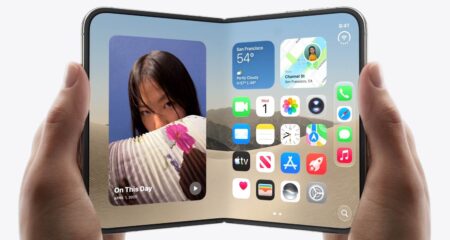
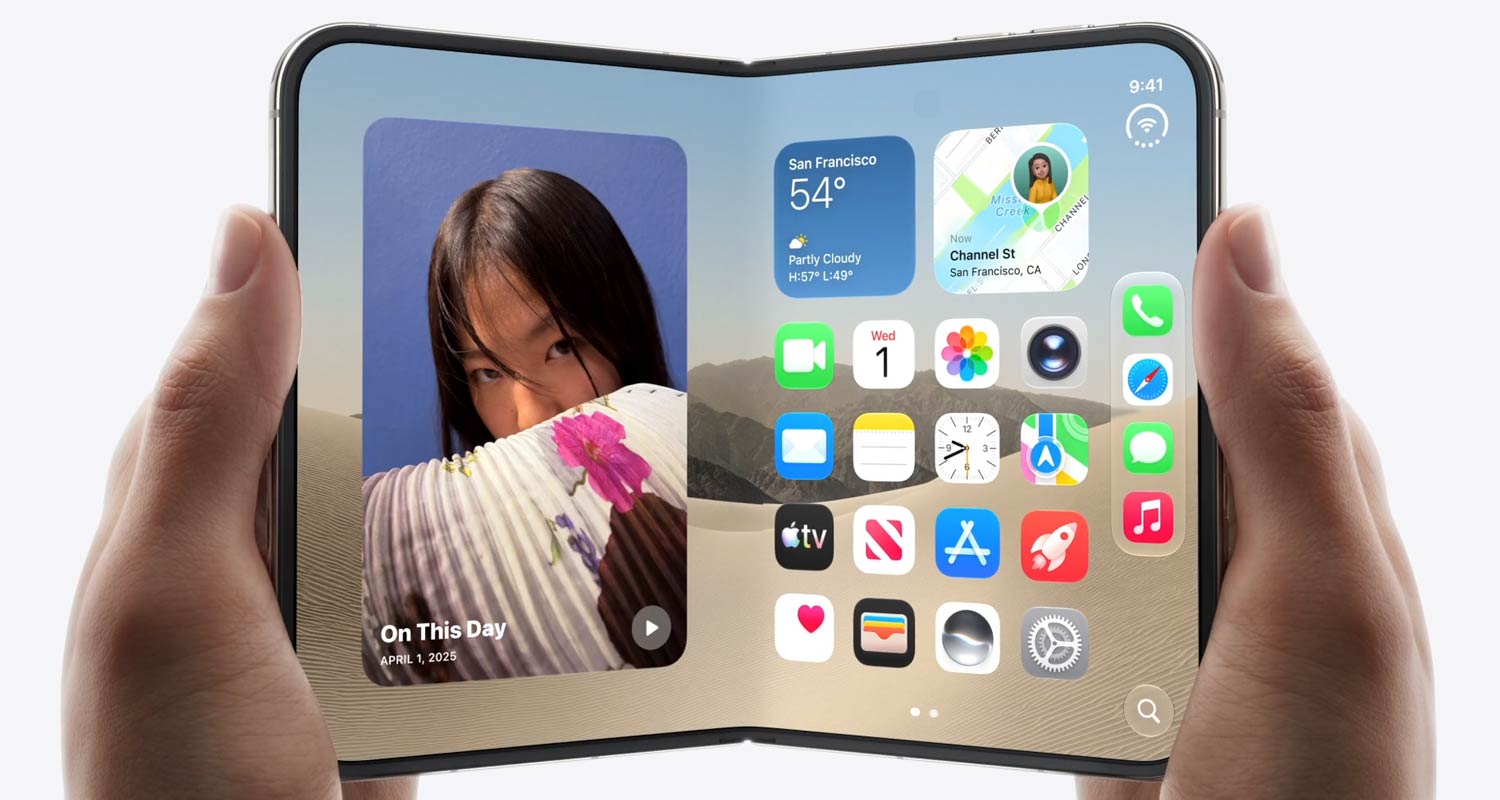
Sales of Apple’s first folding phone, the iPhone Duo, began on Friday, with market watchers betting on whether the device can reinvent the small foldables market in the same way the iPhone did for smartphones.
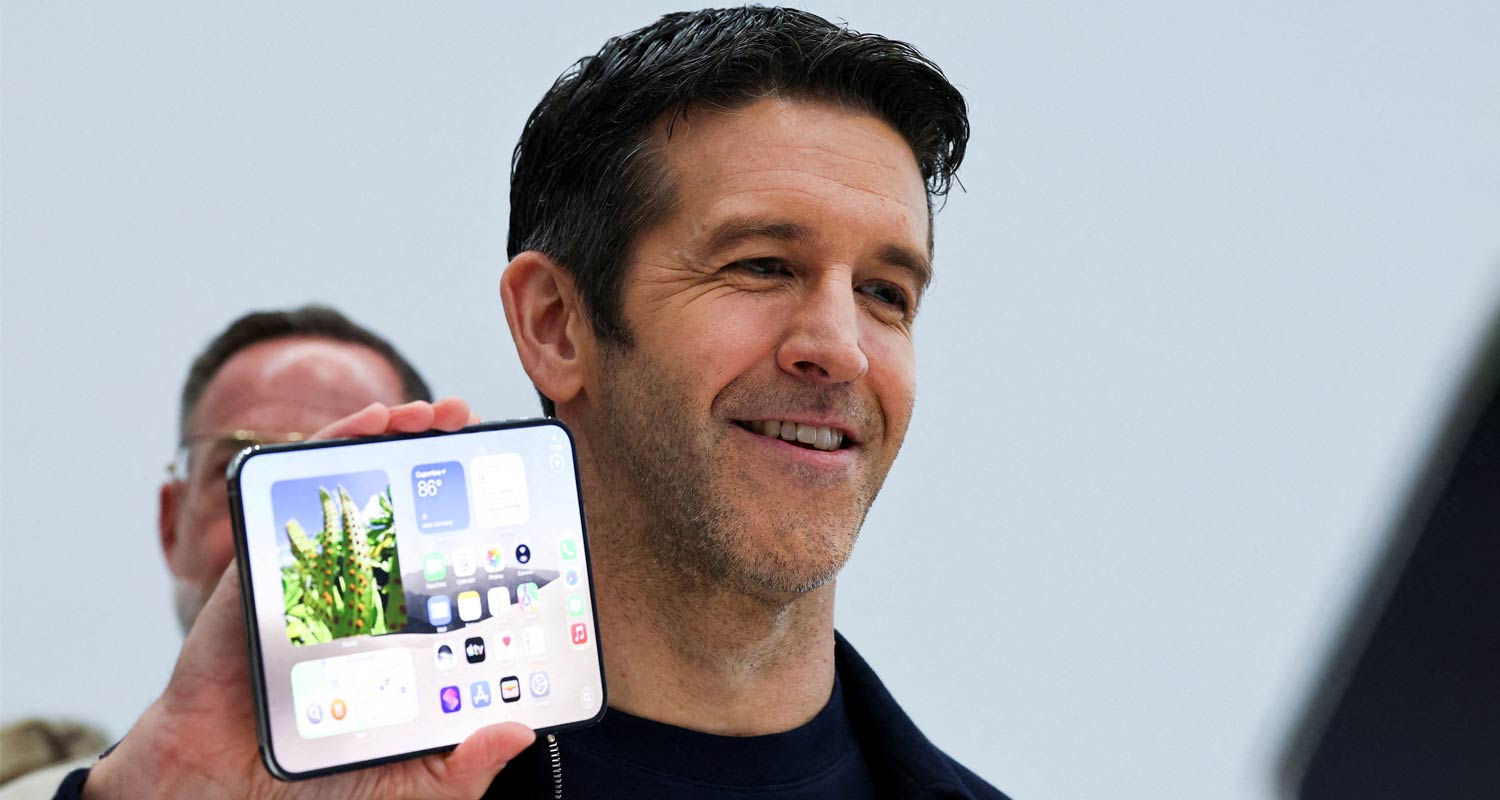
The Duo’s reception could be an early test for new CEO John Ternus, the former hardware chief who succeeded Tim Cook on 1 September and unveiled the phone barely a week after taking charge. It could also have large implications for a niche category in which rivals such as Samsung Electronics and Huawei Technologies have sold premium foldables for several years.
Within minutes of pre-orders opening last Friday, Apple’s estimated delivery dates for the Duo had slipped to late January as demand outpaced supply. Apple called the response from customers “nothing short of extraordinary”.
In South Africa, the Duo is sold through iStore and other retailers at R47 999 for the 256GB model, R52 999 for 512GB, R62 499 for 1TB and R76 999 for 2TB, TechCentral reported last week. That is a premium of about 27% over US prices after converting at R16.46/$ and adding VAT, far steeper than the roughly 11% on Apple’s new home devices. The 2TB model costs R17 000 more than the most expensive iPhone 18 Pro Max, at R59 999.
Early reviews have praised the Duo’s design and its sturdy, barely visible hinge, a major feat for phones whose prominent creased screens have long been a drawback and a potential deterrent for buyers.
But reviewers have said that camera compromises, including the absence of a telephoto lens, and third-party apps that still need to be reworked for the new display size could disappoint some buyers. They have also said the Duo, in its smaller, folded state, is less handy for the quick tasks most people carry out each day on standard iPhones, and several prominent reviewers have recommended against it for many Apple customers.
‘Extraordinarily polished prototype’
“It’s been a lot of fun trying the Duo out for a week, but it feels like I’ve gotten to use an extraordinarily polished prototype – not a finished product that I’d want to buy and carry,” longtime Apple commentator John Gruber, author of the blog Daring Fireball, wrote in a review.
Tech commentator Marques Brownlee, known as MKBHD, said in a YouTube review that “if you’re just a regular person who doesn’t do much more than texting, social media and browsing here and there, then it is probably a no. But if the $2 000 doesn’t mean much to you, and you like the idea, after the learning curve and getting used to not having facial identification, it is a really fun phone.”
Limited supplies could disappoint Apple fans queuing outside stores. Apple said walk-in availability would vary by country, with limited stock in the US, Australia, Canada, Mexico and much of Britain and Europe. In China, France, Hong Kong, India and Japan, units would be available only to customers who had ordered online.
“Foldables have been an established category for years, but adoption has remained relatively limited compared with conventional smartphones. Apple’s entry could bring the format to a much broader audience,” said Francisco Jeronimo, vice-president at market researcher IDC.
IDC expects Apple to take 44% of the foldable market by value in 2026, on 31% of units. By 2027, it will lead the category in both value and units shipped, IDC forecast.
“Apple has made a convincing case for this form factor,” Jeronimo said after spending a week with the passport-shaped Duo. “Now comes the next test: turning excitement into availability, adoption and a lasting new chapter for the smartphone market.” — Aditya Soni, Stephen Nellis, Nicoco Chan, Joyce Zhou and Christine Chen, (c) 2026 Reuters, with additional reporting (c) 2026 NewsCentral Media