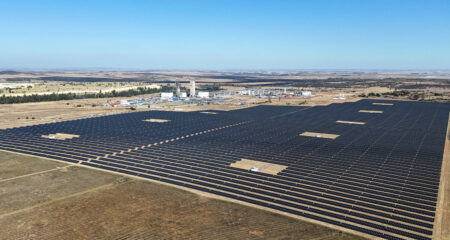
Blu Label Unlimited Group has secured about 400MW of generation capacity for Blu Energy, its power unit, and has sites, power-purchase agreements and grid connections for 180MW of it.
However, none of it is generating yet.
Co-CEO Mark Levy set out the detail at a media briefing after the group’s annual results on Wednesday, the first time Blu Label has put project-level numbers to a strategy it first described in February.
Rooftop solar comes first because the sites already exist: two projects, one of 9MW and one of 19MW, are contracted. Ground-mounted plants follow, with projects of 50MW, 20MW and 12MW contracted and a further 70MW identified. Deployment on the rooftops is due to start in the third or fourth quarter of this year, with ground-mounted work running in parallel.
Levy described the 400MW as a starting point rather than a ceiling, and said the group would keep adding capacity.
The strategy, as Levy laid it out in February, is to build 10-40MW plants feeding individual municipal substations rather than one large facility. A 200MW plant would take four or five years and cost R4-billion to R5-billion, he said at the time. The same 200MW spread across 10 or 20 nodes could be running inside 15 months, with no concentration risk.
Visibility of cash flows
Each site needs a power-purchase agreement with the municipality, land within about 5km of the substation, an assessment of whether that substation is still viable over a 10- or 20-year project life, and environmental approvals. Some of those steps run in parallel and some do not, which is what governs the timeline. Levy said the group is pushing to get construction started before the December shutdown.
Funding is meant to come from infrastructure lenders and green energy funds rather than Blu Label’s balance sheet. The group’s leverage is that Cigicell, its municipal collections subsidiary, already collects electricity payments on behalf of municipalities, which gives funders visibility of the cash flows and allows escrow arrangements against them.
Read: Blu Label’s R46-billion electricity squeeze
Blu Energy also holds a multi-year electricity trading licence from Nersa, secured during the financial year, which lets it buy, sell and trade power and wheel electricity to large users. Trading remains constrained by what the market allows, and Levy said the unit would trade when the opportunity avails itself.
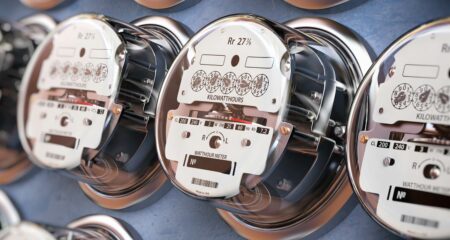
The second leg is Cigicell. It has deployed more than 50 000 smart meters and has another 10 000 to 15 000 committed. Meters are rolled out either under RT29, the national treasury’s transversal contract under which Blu Label is one of six companies allocated work, or directly with municipalities on a commercial arrangement. The revenue is front-loaded, with most of it recognised in year one.
The third leg, revenue assurance, is the one Levy called a sleeping giant. Blu Label estimates about 30% of the electricity municipalities distribute is lost, stolen or never billed. It agrees a collections baseline with a municipality, sends teams to geo-code properties, replace tampered meters, match them to the right accounts, check tariffs and rebuild billing histories, then keeps an agreed share of what it recovers. If it cannot beat the baseline, it is not paid. Arrears can be claimed going back 36 months.
A pilot in Tshwane covering 300 customers identified hundreds of millions of rands that should have been billed and was not, Levy said. A pilot in Ekurhuleni covering about 2 200 customers is about to start, and work is under way in Johannesburg. The group has also begun testing the same approach on water, where infrastructure leaks make the picture different – a broken electricity line stops the flow, a broken pipe does not.
Trading vending margin for recovery fees
The energy build is the answer to a problem in the existing business. Blu Label sold R46.2-billion of prepaid electricity in the year to 31 May, up 4%, and earned 13% less in commission for it. Levy explained the mechanism plainly on Wednesday: commission is earned on kilowatt-hours, not turnover, so when tariffs rise the same R100 buys 8kWh instead of 10 and Blu Label is paid on the eight.
He went further than the group has before, saying Blu Label is willing to accept falling vending margins because the money in finding lost electricity is worth more than what it gives up on the tokens.
Read: Blu Label bets big on energy as it pivots beyond prepaid distribution
None of the energy business is earning yet. Blu Label’s annual results say only that Blu Energy is progressing towards first contracted revenues. A note on the incoming IFRS 20 accounting standard gives the clearest indication of the model: contracts priced per unit of energy consumed rather than a fixed sum for the contract period. – © 2026 NewsCentral Media
- Subscribe to TechCentral’s daily newsletter
- Get breaking news alerts on WhatsApp