Close Menu
TechCentralTechCentral

    Subscribe to the newsletter

    Get the best South African technology news and analysis delivered to your e-mail inbox every morning.

    Facebook X (Twitter) YouTube LinkedIn
    WhatsApp Facebook X (Twitter) LinkedIn YouTube
    TechCentralTechCentral
    • News
      Home affairs opens visa fast lane - with tech talent a top priority

      Home affairs opens visa fast lane – with tech talent a top priority

      21 July 2026
      Skills authority to probe MICT Seta leadership crisis - Buti Manamela

      Skills authority to probe MICT Seta leadership crisis

      21 July 2026
      Mastercard bets billions on the tech that could eat its lunch - Prakriti Singh

      Mastercard bets billions on the tech that could eat its lunch

      21 July 2026
      From care homes to production lines, the robots are coming

      From care homes to production lines, the robots are coming

      21 July 2026
      Remote work in South Africa hits record high

      Remote work in South Africa hits record high

      21 July 2026
    • World
      Meta AI will now tell parents if their teen is in crisis

      Meta AI will now tell parents if their teen is in crisis

      17 July 2026
      IBM shares crash 25% as AI upends software spending - Arvind Krishna

      IBM shares crash 25% as AI upends software spending

      15 July 2026
      Jony Ive's first OpenAI device: an AI smart speaker - Jony Ive and Sam Altman

      Jony Ive’s first OpenAI device: an AI smart speaker

      15 July 2026
      Stripe, Advent in talks to buy PayPal for $53-billion

      Stripe, Advent in talks to buy PayPal for $53-billion

      15 July 2026
      Memory crisis sends smartphone market into steep decline

      Memory crisis sends smartphone market into steep decline

      13 July 2026
    • In-depth
      The plan to stop AI from breaking the world - Google DeepMind CEO Demis Hassabis. Image: John Sears

      The plan to stop AI from breaking the world

      16 July 2026
      The internet has a Strait of Hormuz problem

      The internet has a Strait of Hormuz problem

      15 July 2026
      AI boom sparks rally, frenzy and fear

      AI boom sparks rally, frenzy and fear

      11 June 2026
      Every plug-in hybrid on sale in South Africa, ranked by price - Lamborghini Temerario

      Every plug-in hybrid on sale in South Africa, ranked by price

      7 June 2026
      What Wi-Fi 8 will mean for wireless networks

      What Wi-Fi 8 will mean for wireless networks

      1 June 2026
    • TCS
      Watts & Wheels S1E7: 'Ferrari's EV breaks the internet'

      Watts & Wheels S1E7: ‘Ferrari’s EV breaks the internet’

      8 July 2026
      TCS+ | How Tracker is turning vehicle data into business strategy - Silvia Schollenberger

      TCS+ | How Tracker is turning vehicle data into business strategy

      1 July 2026
      TCS+ | IBM Bob: an AI-powered 'development partner' for the enterprise - David Spurway

      TCS+ | IBM Bob: an AI-powered development partner for the enterprise

      30 June 2026
      Watts & Wheels S1E6: 'A flawless Alfa and a bakkie that divides'

      Watts & Wheels S1E6: ‘A flawless Alfa and a bakkie that divides’

      17 June 2026
      Watts & Wheels S1E6: 'A flawless Alfa and a bakkie that divides'

      Watts & Wheels S1E5: ‘A Bentley of the bush and a car that swims’

      8 June 2026
    • Opinion
      Selling vapour is corporate suicide in slow motion - Jannie van Zyl

      Selling vapour is corporate suicide in slow motion

      16 July 2026
      Brazil's online gambling crackdown is a lesson for South Africa

      How Amazon outmanoeuvred Starlink in South Africa

      15 July 2026
      The Popia problem with agentic AI - Herman Haasbroek

      The Popia problem with agentic AI

      14 July 2026
      The author, Fanie van Rooyen

      South Africa can still catch the AI wave – here’s how

      7 July 2026
      The author, Fanie van Rooyen

      The AI utopia South Africa can’t afford

      1 July 2026
    • Company Hubs
      • 1Stream
      • Africa Data Centres
      • AfriGIS
      • Altron Digital Business
      • Altron Document Solutions
      • Altron Group
      • Arctic Wolf
      • Ascent Technology
      • AvertITD
      • BBD
      • Braintree
      • CallMiner
      • CambriLearn
      • CM Telecom
      • Contactable
      • CYBER1 Solutions
      • Digicloud Africa
      • Digimune
      • Domains.co.za
      • ESET
      • Euphoria Telecom
      • HOSTAFRICA
      • Incredible Business
      • iONLINE
      • IQbusiness
      • Iris Network Systems
      • Kaspersky
      • LSD Open
      • Mitel
      • NEC XON
      • Netstar
      • Network Platforms
      • Next DLP
      • Ovations
      • Paracon
      • Paratus
      • Q-KON
      • SevenC
      • SkyWire
      • Solid8 Technologies
      • Telit Cinterion
      • Telviva
      • Tenable
      • Vertiv
      • Videri Digital
      • Vodacom Business
      • Wipro
      • Workday
      • XLink
    • Sections
      • AI and machine learning
      • Banking
      • Broadcasting and Media
      • Cloud services
      • Contact centres and CX
      • Cryptocurrencies
      • Education and skills
      • Electronics and hardware
      • Energy and sustainability
      • Enterprise software
      • Financial services
      • HealthTech
      • Information security
      • Internet and connectivity
      • Internet of Things
      • Investment
      • IT services
      • Lifestyle
      • Policy and regulation
      • Public sector
      • Retail and e-commerce
      • Satellite communications
      • Science
      • SMEs and start-ups
      • Social media
      • Talent and leadership
      • Telecoms
      • Watts & Wheels
    • Events
    • Advertise
    TechCentralTechCentral
    Home » In-depth » Bunfight over spectrum on the cards

    Bunfight over spectrum on the cards

    By Duncan McLeod10 February 2015
    Twitter LinkedIn Facebook WhatsApp Email Telegram Copy Link
    News Alerts
    WhatsApp
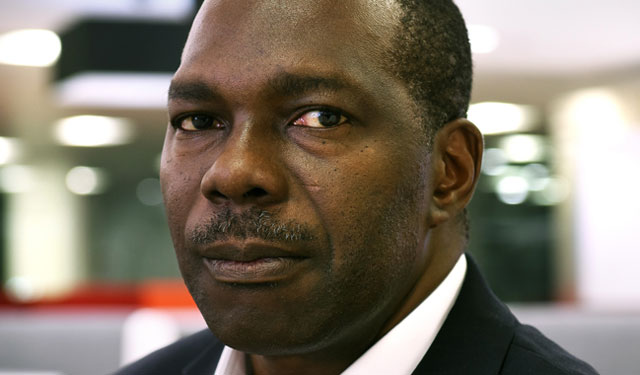
    Mortimer Hope
    Mortimer Hope

    Radio and television broadcasters, satellite providers and even radar operators will have to make way for mobile broadband companies if radio frequency spectrum proposals to be put to the International Telecommunication Union’s World Radiocommunication Conference (WRC) later this year are adopted.

    Decisions made at WRC 2015, to be held in Geneva from 2 to 27 November, will have a direct bearing on the future growth of the Internet, especially in emerging markets — and the GSMA, a mobile industry lobby group, is arguing that to cope with the anticipated demand for mobile broadband by 2020, the WRC needs to free up an additional 600MHz for the purpose.

    It’s a proposal that is likely to encounter fierce resistance from those that already have access to the spectrum that the mobile industry wants repurposed for broadband.

    The GSMA’s director for Africa, Mortimer Hope, says the association is hoping that four new chunks of spectrum will be allocated to mobile broadband at this year’s conference.

    The spectrum the GSMA wants reallocated includes the upper end of the UHF band used by TV broadcasters. It also wants the spectrum between 1 350MHz and 1 518MHz, 2,7GHz and 2,9GHz, and a portion of the satellite C-band between 3,4GHz and 4,2GHz repurposed.

    The push to open many of these bands is likely to prove contentious, particularly among broadcasters and satellite operators. Hope concedes that satellite providers are already pushing back against the proposal to repurpose the C-band for mobile broadband, but claims the band is not being used fully and that the costs of migrating satellite users within the band is far outweighed by the socioeconomic benefits that will flow from such a decision.

    The GSMA published a research study in January that suggests allocating the lower half of C-band spectrum to mobile would lead to 25 times the benefits of the cost of reallocation in the sub-Saharan African region. In South Africa, the benefit was 13 times, the report said.

    C-band spectrum is well suited to building mobile broadband networks in dense urban areas and the GSMA wants all the spectrum between 3,4GHz and 3,8GHz in region one (Africa, the Middle East and Europe) reallocated for this purpose.

    Hope says demand for C-band satellite services in Africa has reduced significantly in the past 10-15 years as satellite operators moved to higher frequencies such as Ka-band and Ku-band, which require less power, and as fibre and microwave backhaul networks were constructed across the continent, leaving satellite serving more of a backup role than as a primary communications method.

    Also, satellite communication has become more “spectrally efficient”, says Hope, meaning less spectrum is needed to carry the same volume of data.

    If half the band is reallocated to mobile broadband, satellite providers will need to install filters on customers’ equipment to restrict the spectrum they utilise, he says.

    In the television broadcasting bands, the GSMA is also keen for access to spectrum between 470MHz and 694MHz. Like spectrum in the digital dividend bands of 700MHz and 800MHz, which has already been identified for mobile broadband, UHF spectrum is well suited to building networks with wide coverage, lowering network build costs, and allowing operators to bring broadband to more rural parts of Africa for the first time.

    Although digital terrestrial television is much more efficient than analogue broadcasts, the GSMA’s proposals are likely to encounter fierce resistance from broadcasters keen to expand their terrestrial channel bouquets. Hope says that “realistically”, the GSMA is hoping to get access to the upper part of the band adjacent 700MHz.

    The third band the GSMA hopes to reallocate, between 1 350MHz and 1 518MHz is used for radar and for digital audio broadcasting, which Hope says “never took off”. With digital terrestrial television, “you don’t need a separate audio broadcast channel”, he argues, and so this spectrum should be reallocated to mobile broadband.

    The 2,7GHz to 2,9GHz band is typically used for radar and air navigation systems, says Hope. “It’s not heavily used in Africa. Some countries have one or two radar stations — that is it. It wouldn’t be difficult to install filters to limit their range of operation.”

    Like C-band spectrum, this spectrum is well suited for urban rather than rural applications because of the propagation characteristics of signals using this band.

    Before the WRC in November, there will be intense lobbying and debate at both a country and regional level, with a Southern African Development Community preparatory meeting scheduled for later this month in Johannesburg.

    Despite this preparation, debate in Geneva is likely to be robust. “At the end, it’s a good outcome if everyone leaves equally unhappy,” says Hope. “If you have one party that is happy and one that is unhappy, that is a bad outcome.”  — (c) 2015 NewsCentral Media

    Follow TechCentral on Google News Add TechCentral as your preferred source on Google


    GSMA International Telecommunication Union ITU Mortimer Hope
    WhatsApp YouTube
    Share. Facebook Twitter LinkedIn WhatsApp Telegram Email Copy Link
    Previous ArticleE-commerce lockers coming to Engen forecourts
    Next Article Mustek expects big jump in earnings

    Related Posts

    The lone ship guarding Africa's internet - Léon Thévenin

    The lone ship guarding Africa’s internet

    14 July 2026
    MTN's Ralph Mupita named to new UN AI commission - Ralph Mupita

    MTN’s Ralph Mupita named to new UN AI commission

    6 July 2026
    GSMA tells Africa to copy South Africa on devices

    GSMA tells Africa to copy South Africa on devices

    17 June 2026
    Company News
    Cloud adoption is done. Execution is the new frontier - Cloud on Demand

    Cloud adoption is done. Execution is the new frontier

    21 July 2026
    Data poisoning in AI models: what businesses need to know - Domains.co.za

    Data poisoning in AI models: what businesses need to know

    21 July 2026
    The AI-led industrial revolution has begun - CallMiner Bruce McMahon

    The AI-led industrial revolution has begun

    20 July 2026
    Opinion
    Selling vapour is corporate suicide in slow motion - Jannie van Zyl

    Selling vapour is corporate suicide in slow motion

    16 July 2026
    Brazil's online gambling crackdown is a lesson for South Africa

    How Amazon outmanoeuvred Starlink in South Africa

    15 July 2026
    The Popia problem with agentic AI - Herman Haasbroek

    The Popia problem with agentic AI

    14 July 2026

    Subscribe to Updates

    Get the best South African technology news and analysis delivered to your e-mail inbox every morning.

    Latest Posts
    Home affairs opens visa fast lane - with tech talent a top priority

    Home affairs opens visa fast lane – with tech talent a top priority

    21 July 2026
    Skills authority to probe MICT Seta leadership crisis - Buti Manamela

    Skills authority to probe MICT Seta leadership crisis

    21 July 2026
    Mastercard bets billions on the tech that could eat its lunch - Prakriti Singh

    Mastercard bets billions on the tech that could eat its lunch

    21 July 2026
    From care homes to production lines, the robots are coming

    From care homes to production lines, the robots are coming

    21 July 2026
    © 2009 - 2026 NewsCentral Media
    Built and maintained by Chronon
    • Cookie policy (ZA)
    • TechCentral – privacy and Popia

    Type above and press Enter to search. Press Esc to cancel.

    Manage consent

    TechCentral uses cookies to enhance its offerings. Consenting to these technologies allows us to serve you better. Not consenting or withdrawing consent may adversely affect certain features and functions of the website.

    Functional Always active
    The technical storage or access is strictly necessary for the legitimate purpose of enabling the use of a specific service explicitly requested by the subscriber or user, or for the sole purpose of carrying out the transmission of a communication over an electronic communications network.
    Preferences
    The technical storage or access is necessary for the legitimate purpose of storing preferences that are not requested by the subscriber or user.
    Statistics
    The technical storage or access that is used exclusively for statistical purposes. The technical storage or access that is used exclusively for anonymous statistical purposes. Without a subpoena, voluntary compliance on the part of your Internet Service Provider, or additional records from a third party, information stored or retrieved for this purpose alone cannot usually be used to identify you.
    Marketing
    The technical storage or access is required to create user profiles to send advertising, or to track the user on a website or across several websites for similar marketing purposes.
    • Manage options
    • Manage services
    • Manage {vendor_count} vendors
    • Read more about these purposes
    View preferences
    • {title}
    • {title}
    • {title}