Close Menu
TechCentralTechCentral

    Subscribe to the newsletter

    Get the best South African technology news and analysis delivered to your e-mail inbox every morning.

    Facebook X (Twitter) YouTube LinkedIn
    WhatsApp Facebook X (Twitter) LinkedIn YouTube
    TechCentralTechCentral
    • News
      Gaping holes in South African government cyber defences

      Gaping holes in South African government cyber defences

      2 April 2026
      EV charging start-up Charge bypasses JSE for token-based raise - Joubert Roux

      EV charging start-up Charge bypasses JSE for token-based raise

      2 April 2026
      Ring, reject, repeat: South Africa's spam call crisis

      Ring, reject, repeat: South Africa’s spam call crisis

      2 April 2026
      Four astronauts begin humanity's return to the moon - Artemis II

      Four astronauts begin humanity’s return to the moon

      2 April 2026
      Sars to give every taxpayer a digital identity in sweeping tech overhaul

      Sars to give every taxpayer a digital identity in sweeping tech overhaul

      1 April 2026
    • World
      Amazon in talks to buy satellite operator Globalstar

      Amazon in talks to buy satellite operator Globalstar

      2 April 2026

      Apple plans to open Siri to rival AI services

      27 March 2026
      It's official: ads are coming to ChatGPT

      It’s official: ads are coming to ChatGPT

      23 March 2026
      Mystery Chinese AI model revealed to be Xiaomi's

      Mystery Chinese AI model revealed to be Xiaomi’s

      19 March 2026
      A mystery AI model has developers buzzing

      A mystery AI model has developers buzzing

      18 March 2026
    • In-depth
      The R18-billion tech giant hiding in plain sight - Jens Montanana

      The R16-billion tech giant hiding in plain sight

      26 March 2026
      The last generation of coders

      The last generation of coders

      18 February 2026
      Sentech is in dire straits

      Sentech is in dire straits

      10 February 2026
      How liberalisation is rewiring South Africa's power sector

      How liberalisation is rewiring South Africa’s power sector

      21 January 2026
      The top-performing South African tech shares of 2025

      The top-performing South African tech shares of 2025

      12 January 2026
    • TCS
      TCS | MTN's Divysh Joshi on the strategy behind Pi - Divyesh Joshi

      TCS | MTN’s Divyesh Joshi on the strategy behind Pi

      1 April 2026
      Anoosh Rooplal

      TCS | Anoosh Rooplal on the Post Office’s last stand

      27 March 2026
      Meet the CIO | HealthBridge CTO Anton Fatti on the future of digital health

      Meet the CIO | Healthbridge CTO Anton Fatti on the future of digital health

      23 March 2026
      TCS+ | Arctic Wolf unpacks the evolving threat landscape for SA businesses - Clare Loveridge and Jason Oehley

      TCS+ | Arctic Wolf unpacks the evolving threat landscape for SA businesses

      19 March 2026
      TCS+ | Vox Kiwi: a wireless solution promising a fibre-like experience - Theo van Zyl

      TCS+ | Vox Kiwi: a wireless solution promising a fibre-like experience

      13 March 2026
    • Opinion
      The conflict of interest at the heart of PayShap's slow adoption - Cheslyn Jacobs

      The conflict of interest at the heart of PayShap’s slow adoption

      26 March 2026
      South Africa's energy future hinges on getting wheeling right - Aishah Gire

      South Africa’s energy future hinges on getting wheeling right

      10 March 2026
      Hold the doom: the case for a South African comeback - Duncan McLeod

      Apple just dropped a bomb on the Windows world

      5 March 2026
      VC's centre of gravity is shifting - and South Africa is in the frame - Alison Collier

      VC’s centre of gravity is shifting – and South Africa is in the frame

      3 March 2026
      Hold the doom: the case for a South African comeback - Duncan McLeod

      Hold the doom: the case for a South African comeback

      26 February 2026
    • Company Hubs
      • 1Stream
      • Africa Data Centres
      • AfriGIS
      • Altron Digital Business
      • Altron Document Solutions
      • Altron Group
      • Arctic Wolf
      • Ascent Technology
      • AvertITD
      • BBD
      • Braintree
      • CallMiner
      • CambriLearn
      • CYBER1 Solutions
      • Digicloud Africa
      • Digimune
      • Domains.co.za
      • ESET
      • Euphoria Telecom
      • HOSTAFRICA
      • Incredible Business
      • iONLINE
      • IQbusiness
      • Iris Network Systems
      • Kaspersky
      • LSD Open
      • Mitel
      • NEC XON
      • Netstar
      • Network Platforms
      • Next DLP
      • Ovations
      • Paracon
      • Paratus
      • Q-KON
      • SevenC
      • SkyWire
      • Solid8 Technologies
      • Telit Cinterion
      • Telviva
      • Tenable
      • Vertiv
      • Videri Digital
      • Vodacom Business
      • Wipro
      • Workday
      • XLink
    • Sections
      • AI and machine learning
      • Banking
      • Broadcasting and Media
      • Cloud services
      • Contact centres and CX
      • Cryptocurrencies
      • Education and skills
      • Electronics and hardware
      • Energy and sustainability
      • Enterprise software
      • Financial services
      • HealthTech
      • Information security
      • Internet and connectivity
      • Internet of Things
      • Investment
      • IT services
      • Lifestyle
      • Motoring
      • Policy and regulation
      • Public sector
      • Retail and e-commerce
      • Satellite communications
      • Science
      • SMEs and start-ups
      • Social media
      • Talent and leadership
      • Telecoms
    • Events
    • Advertise
    TechCentralTechCentral
    Home » World » China is better prepared for Trump 2.0
    US to unleash new wave of chip sanctions on China

    China is better prepared for Trump 2.0

    By Agency Staff6 November 2024

    When Donald Trump first started a trade war with China in 2018, Beijing found itself on the back foot and unsure of how to respond. This time President Xi Jinping is better prepared for a fight, even as he has more to lose.

    Trump, who won a second term as president in an election on Tuesday, has threatened to put tariffs of as much as 60% on Chinese goods, a level that could decimate trade between the world’s biggest economies. That’s on top of a range of export controls on advanced technology that the Biden administration has only tightened since Trump left office.

    In that time, China has taken strategic steps to ensure it’s more resilient and well positioned to strike back. Key to that has been expanding its toolkit, which now includes export controls on critical raw materials, in addition to tariffs on agricultural goods and an Entity List that can target key American companies.

    China, psychologically speaking, is much more prepared in dealing with him again

    “China, psychologically speaking, is much more prepared in dealing with him again,” said Zhou Bo, a retired senior colonel in the People’s Liberation Army and senior fellow at Tsinghua University’s Centre for International Security and Strategy.

    Still, Xi would much prefer to avoid a tariff battle that risks proving much more devastating than the first round. China has relied on exports of goods like electric vehicles and batteries to buoy an economy beset by deflationary pressure and property woes, and Chinese lawmakers are meeting this week to formulate measures to bolster growth.

    If Trump follows through on his tariff threats, Chinese authorities will need to do much more to help the economy. Goldman Sachs Group said last week that steeper trade restrictions on China may force Xi’s hand to bolster domestic consumption, something the Communist Party has traditionally sought to avoid.

    Volatility ahead

    The yuan on Wednesday weakened the most in two years and Chinese stocks fell, giving investors a taste of the volatility that lies ahead as Trump clinches the US presidency. The offshore yuan fell as much as 1.3% against the dollar, the largest one-day drop since October 2022. Chinese shares listed in Hong Kong bore the brunt of the selling, with a Hang Seng gauge closing 2.6% lower.

    “China can hardly retaliate on 60% tariffs,” said Alicia Garcia Herrero, Asia-Pacific chief economist at Natixis. “What China will do is to announce a bigger stimulus to counteract so that the market doesn’t penalise China.”

    Read: China’s economy is in real trouble

    During Trump’s first term, roughly two years of threats, tariffs and talks ended with a deal signed in January 2020 that included a promise by China to buy US$200-billion worth of American goods to try and close its trade imbalance with the US. However, the outbreak of Covid around the same time quickly soured relations between the countries, and China never came close to achieving the targets as Chinese exports soared during the pandemic.

    A renewed trade war threatens to do greater damage to global trade. Last year, Chinese companies exported $500-billion in goods to the US, or about 15% of the value of all its exports. If the US were to put high tariffs on all or much of those products, it could wipe out those sales and further hurt firms facing a weak domestic economy and falling prices.
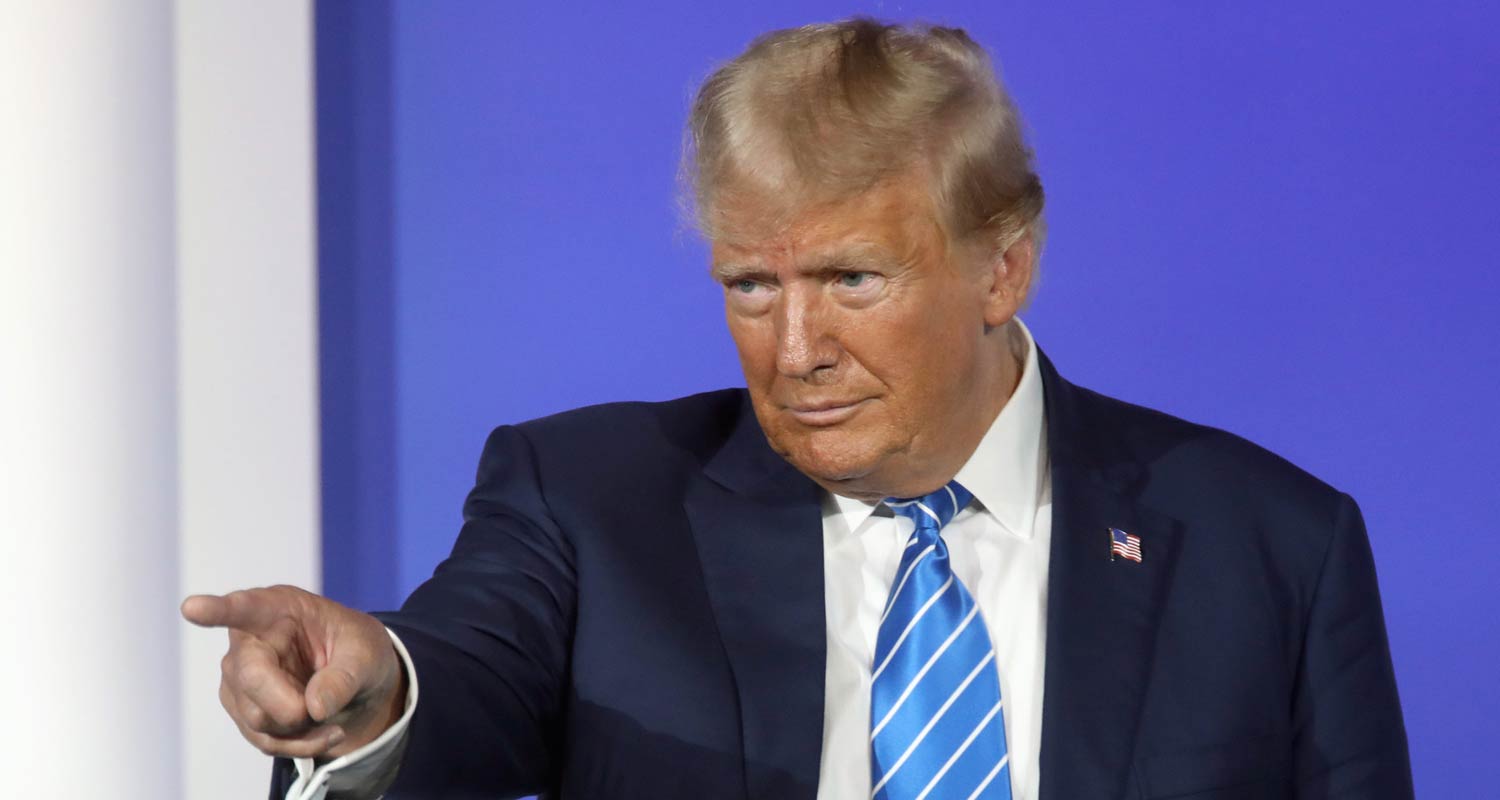
    Donald Trump. Image: Gage Skidmore
    Donald Trump. Image: Gage Skidmore

    While Chinese officials don’t want to overreact to Trump’s new tariff threats, they are also wary of looking weak, according to Scott Kennedy, a senior adviser at the Washington-based Center for Strategic and International Studies, who frequently travels to China. Potential options for Xi’s government, he said, include targeting American companies with sizeable interests in China, selling US treasuries, devaluing the yuan, and doing more outreach in Europe and Latin America.

    “They’re sick of being treated like a piñata and want to fight back,” Kennedy said of China. “They’re prepared to deal with Trump and fight fire with fire if needed.”

    One wild card for China is the emergence of Elon Musk as a major supporter of Trump’s campaign for president. The billionaire CEO of Tesla has extensive business interests in China, raising the possibility that he could advocate a softer approach. Trump praised Musk while declaring victory in the early morning hours of Wednesday in the US.

    China may now seek to impose curbs on critical raw materials the US needs for strategic technologies

    But if a trade war does erupt, China will be ready to hit back — and US exports of agricultural goods may again be the first target. Since Trump’s first term, Brazil has strengthened its position as the largest soybean supplier to China, and is now also the biggest source of corn imports, replacing the big spike of US exports to China as part of the 2020 trade deal. In 2016, the US supplied more than 40% of Chinese soybean imports, but that had fallen to less than 18% in the first nine months of this year.

    China’s slowing economy also provides Beijing with more of a buffer, as its demand for pork — as well as corn and soybeans to feed pigs — has slumped. That means it’s less reliant on imports and can more easily shift purchases from the US to other nations.

    “There should not be any doubt about China’s tit-for-tat retaliation,” said Zhou Xiaoming, a researcher at a Beijing think-tank and a former deputy representative to China’s UN mission in Geneva a decade ago. “Easy targets include corn and soya beans. The country is in a better position than 2018 to take counter measures as China has developed Brazil as a reliable alternative source of supplies and been able to reduce imports from the US.”

    Fewer obvious targets

    At the same time, however, China has fewer obvious targets to hit. The country’s imports from the US have fallen from a peak in 2021 and Beijing hasn’t signed a contract to buy new Boeing jets for years, meaning it has one less threat it can make. As well as a weakening trade relationship, direct investment ties between the US and China are also shrinking: the stock of Chinese investment in the US last year was down by 28% from the peak in 2019, according to UN data.

    That raises the possibility that China may seek to devalue its currency, making exports cheaper. While China’s last formal devaluation was in 2015, during the thick of the first trade spat from mid-2018 to mid-2019, authorities allowed the yuan to fall to almost C¥7.20/$, making its exports cheaper and providing some cushion to Trump’s tariffs.

    Read: South Africa asks China for better balanced trade

    The Chinese currency is currently around the same level, but allowing it to drop a lot further risks irking other trading partners around the world, who might in turn put their own tariffs on Chinese goods. A flood of cheap steel has already prompted nations to raise barriers to the metal, and that could spread to more products in a general trade war.

    One major new tool for Xi is export controls, which the US has deployed frequently against China. Last year, Beijing restricted overseas sales of gallium and germanium, two metals which are widely used across chip-making, communications equipment and defence industries. China may now seek to impose curbs on critical raw materials the US needs for strategic technologies, such as antimony, which is used in some semiconductor devices.
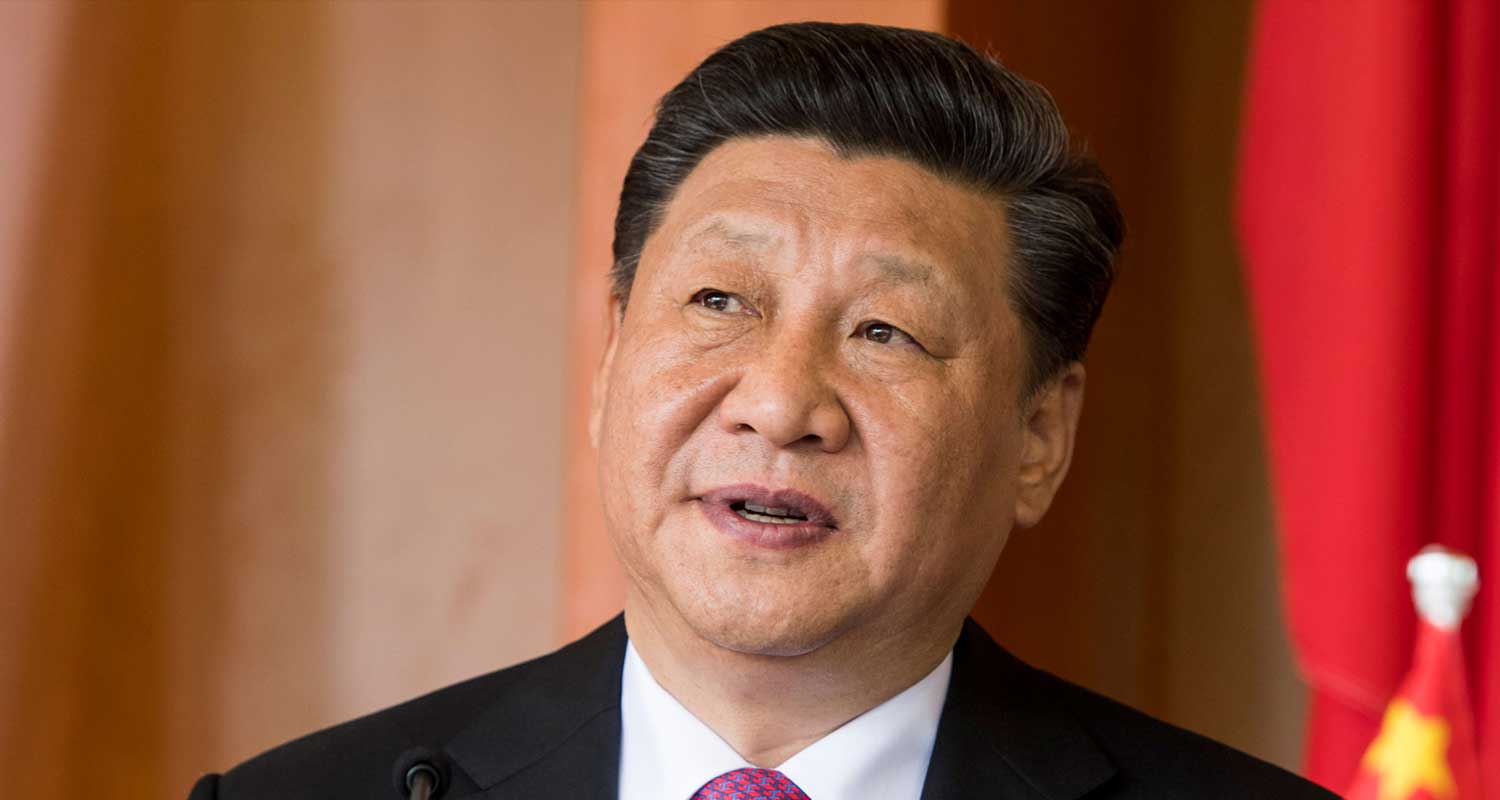
    Chinese President Xi Jinping

    China also now has a more formal process for sanctioning foreign firms. Authorities in September said China would begin a probe of PVH, the parent company of Tommy Hilfiger and Calvin Klein, for not using cotton from the far west region of Xinjiang, where the US restricted trade due to human rights concerns. Beijing has also sanctioned a US drone firm for supplying Taiwan, blocking it from purchasing parts in China, according to the Financial Times.

    Ultimately, China would prefer to strike a deal with Trump. The incoming president has signalled that he would be open to Chinese investment in the US, which could potentially form the basis for some sort of agreement, according to Henry Wang Huiyao, founder of the Centre for China and Globalisation research group in Beijing.

    “Trump is a pragmatic politician who focuses on solving specific problems,” Wang said. “China has the super lead on electric vehicles and green technology,” he added. “There’s an enormous opportunity that Chinese companies can help make America great again.”

    There’s a recognition in Beijing that China must hope for the best and prepare for the worst

    Still, there’s a recognition in Beijing that China must hope for the best and prepare for the worst. And there’s not a whole lot of options if Trump wants to make good on extreme threats that would also hurt the US and raise prices for American consumers.

    “We’ve talked a lot about what China can do to prepare for this scenario, but in the end there isn’t really too much that can be prepared,” said Tu Xinquan, a former adviser to China’s commerce ministry who is now professor and dean of the China Institute for WTO Studies at the University of International Business and Economics in Beijing.

    “There’s no silver bullet,” he added. “We can only deal with the problem when it comes.”  — (c) 2024 Bloomberg LP

    Don’t miss:

    Western car giants risk being left behind by China’s EV industry

    Follow TechCentral on Google News Add TechCentral as your preferred source on Google


    China Donald Trump Trump 2.0 Xi Jinping
    WhatsApp YouTube
    Share. Facebook Twitter LinkedIn WhatsApp Telegram Email Copy Link
    Previous ArticleWebb space telescope reveals rapid growth of primordial black hole
    Next Article FNB launches real-time cross-border payments

    Related Posts

    Perfect storm for South African tech buyers

    Perfect storm for South African tech buyers

    23 March 2026
    US orders diplomats to fight foreign data sovereignty rules - Marco Rubio

    US orders diplomats to fight foreign data sovereignty rules

    25 February 2026

    Washington takes on Beijing in race for Africa’s critical minerals

    9 February 2026
    Company News
    Synthesis helps financial enterprises transform with new Gemini Enterprise - Digicloud Africa

    Synthesis helps financial enterprises transform with new Gemini Enterprise

    2 April 2026
    The next churn wave is already in your contact centre conversations - CallMiner

    The next churn wave is already in your contact centre conversations

    2 April 2026
    Mining's problem isn't output, it's execution - Workday

    Mining’s problem isn’t output, it’s execution – Workday

    1 April 2026
    Opinion
    The conflict of interest at the heart of PayShap's slow adoption - Cheslyn Jacobs

    The conflict of interest at the heart of PayShap’s slow adoption

    26 March 2026
    South Africa's energy future hinges on getting wheeling right - Aishah Gire

    South Africa’s energy future hinges on getting wheeling right

    10 March 2026
    Hold the doom: the case for a South African comeback - Duncan McLeod

    Apple just dropped a bomb on the Windows world

    5 March 2026

    Subscribe to Updates

    Get the best South African technology news and analysis delivered to your e-mail inbox every morning.

    Latest Posts
    Gaping holes in South African government cyber defences

    Gaping holes in South African government cyber defences

    2 April 2026
    EV charging start-up Charge bypasses JSE for token-based raise - Joubert Roux

    EV charging start-up Charge bypasses JSE for token-based raise

    2 April 2026
    Ring, reject, repeat: South Africa's spam call crisis

    Ring, reject, repeat: South Africa’s spam call crisis

    2 April 2026
    Amazon in talks to buy satellite operator Globalstar

    Amazon in talks to buy satellite operator Globalstar

    2 April 2026
    © 2009 - 2026 NewsCentral Media
    • Cookie policy (ZA)
    • TechCentral – privacy and Popia

    Type above and press Enter to search. Press Esc to cancel.

    Manage consent

    TechCentral uses cookies to enhance its offerings. Consenting to these technologies allows us to serve you better. Not consenting or withdrawing consent may adversely affect certain features and functions of the website.

    Functional Always active
    The technical storage or access is strictly necessary for the legitimate purpose of enabling the use of a specific service explicitly requested by the subscriber or user, or for the sole purpose of carrying out the transmission of a communication over an electronic communications network.
    Preferences
    The technical storage or access is necessary for the legitimate purpose of storing preferences that are not requested by the subscriber or user.
    Statistics
    The technical storage or access that is used exclusively for statistical purposes. The technical storage or access that is used exclusively for anonymous statistical purposes. Without a subpoena, voluntary compliance on the part of your Internet Service Provider, or additional records from a third party, information stored or retrieved for this purpose alone cannot usually be used to identify you.
    Marketing
    The technical storage or access is required to create user profiles to send advertising, or to track the user on a website or across several websites for similar marketing purposes.
    • Manage options
    • Manage services
    • Manage {vendor_count} vendors
    • Read more about these purposes
    View preferences
    • {title}
    • {title}
    • {title}