Close Menu
TechCentralTechCentral

    Subscribe to the newsletter

    Get the best South African technology news and analysis delivered to your e-mail inbox every morning.

    Facebook X (Twitter) YouTube LinkedIn
    WhatsApp Facebook X (Twitter) LinkedIn YouTube
    TechCentralTechCentral
    • News
      Post Office on the brink of collapse

      Post Office on the brink of collapse

      13 March 2026
      New policy direction targets South Africa's municipal broadband logjam - Solly Malatsi

      New policy direction targets South Africa’s municipal broadband logjam

      13 March 2026
      How electronic warfare is threatening ships and their crews

      How electronic warfare is threatening ships and their crews

      13 March 2026
      Rand slumps for second week

      Rand slumps for second week

      13 March 2026
      Parliament opens nominations for Icasa council seats

      Parliament opens nominations for Icasa council seats

      13 March 2026
    • World
      Musk launches Macrohard in cheeky nod to Microsoft - Elon Musk

      Musk launches Macrohard in cheeky nod to Microsoft

      12 March 2026
      Europe is building an alternative to Microsoft Office

      Europe is building an alternative to Microsoft Office

      11 March 2026
      Microsoft bets on Anthropic as it loosens ties with OpenAI

      Microsoft bets on Anthropic as it loosens ties with OpenAI

      10 March 2026
      World hit by worst oil shock since the 1970s

      World hit by worst oil shock since the 1970s

      9 March 2026
      iStore prices MacBook Neo at R11 999 in South Africa

      Apple debuts MacBook Neo to challenge Windows PCs, Chromebooks

      5 March 2026
    • In-depth
      The last generation of coders

      The last generation of coders

      18 February 2026
      Sentech is in dire straits

      Sentech is in dire straits

      10 February 2026
      How liberalisation is rewiring South Africa's power sector

      How liberalisation is rewiring South Africa’s power sector

      21 January 2026
      The top-performing South African tech shares of 2025

      The top-performing South African tech shares of 2025

      12 January 2026
      Digital authoritarianism grows as African states normalise internet blackouts

      Digital authoritarianism grows as African states normalise internet blackouts

      19 December 2025
    • TCS
      TCS+ | Vox Kiwi: a wireless solution promising a fibre-like experience - Theo van Zyl

      TCS+ | Vox Kiwi: a wireless solution promising a fibre-like experience

      13 March 2026
      TCS+ | Flipping the narrative on AI in the Global South - Josefin Rosén

      TCS+ | Flipping the narrative on AI in the Global South

      13 March 2026
      TCS | Sink or swim? Antony Makins on how AI is rewriting the rules of work

      TCS | Sink or swim? Antony Makins on how AI is rewriting the rules of work

      5 March 2026
      TCS+ | Bolt ups the ante on platform safety - Simo Kalajdzic

      TCS+ | Bolt ups the ante on platform safety

      4 March 2026
      Watts & Wheels S1E4: 'We drive an electric Uber'

      Watts & Wheels S1E4: ‘We drive an electric Uber’

      10 February 2026
    • Opinion
      South Africa's energy future hinges on getting wheeling right - Aishah Gire

      South Africa’s energy future hinges on getting wheeling right

      10 March 2026
      Hold the doom: the case for a South African comeback - Duncan McLeod

      Apple just dropped a bomb on the Windows world

      5 March 2026
      VC's centre of gravity is shifting - and South Africa is in the frame - Alison Collier

      VC’s centre of gravity is shifting – and South Africa is in the frame

      3 March 2026
      Hold the doom: the case for a South African comeback - Duncan McLeod

      Hold the doom: the case for a South African comeback

      26 February 2026
      The AI fraud crisis your bank is not ready for - Andries Maritz

      The AI fraud crisis your bank is not ready for

      18 February 2026
    • Company Hubs
      • 1Stream
      • Africa Data Centres
      • AfriGIS
      • Altron Digital Business
      • Altron Document Solutions
      • Altron Group
      • Arctic Wolf
      • AvertITD
      • Braintree
      • CallMiner
      • CambriLearn
      • CYBER1 Solutions
      • Digicloud Africa
      • Digimune
      • Domains.co.za
      • ESET
      • Euphoria Telecom
      • HOSTAFRICA
      • Incredible Business
      • iONLINE
      • IQbusiness
      • Iris Network Systems
      • LSD Open
      • Mitel
      • NEC XON
      • Netstar
      • Network Platforms
      • Next DLP
      • Ovations
      • Paracon
      • Paratus
      • Q-KON
      • SevenC
      • SkyWire
      • Solid8 Technologies
      • Telit Cinterion
      • Tenable
      • Vertiv
      • Videri Digital
      • Vodacom Business
      • Wipro
      • Workday
      • XLink
    • Sections
      • AI and machine learning
      • Banking
      • Broadcasting and Media
      • Cloud services
      • Contact centres and CX
      • Cryptocurrencies
      • Education and skills
      • Electronics and hardware
      • Energy and sustainability
      • Enterprise software
      • Financial services
      • HealthTech
      • Information security
      • Internet and connectivity
      • Internet of Things
      • Investment
      • IT services
      • Lifestyle
      • Motoring
      • Policy and regulation
      • Public sector
      • Retail and e-commerce
      • Satellite communications
      • Science
      • SMEs and start-ups
      • Social media
      • Talent and leadership
      • Telecoms
    • Events
    • Advertise
    TechCentralTechCentral
    Home » Sections » Cryptocurrencies » China’s cryptocurrency is all about tracing – and power

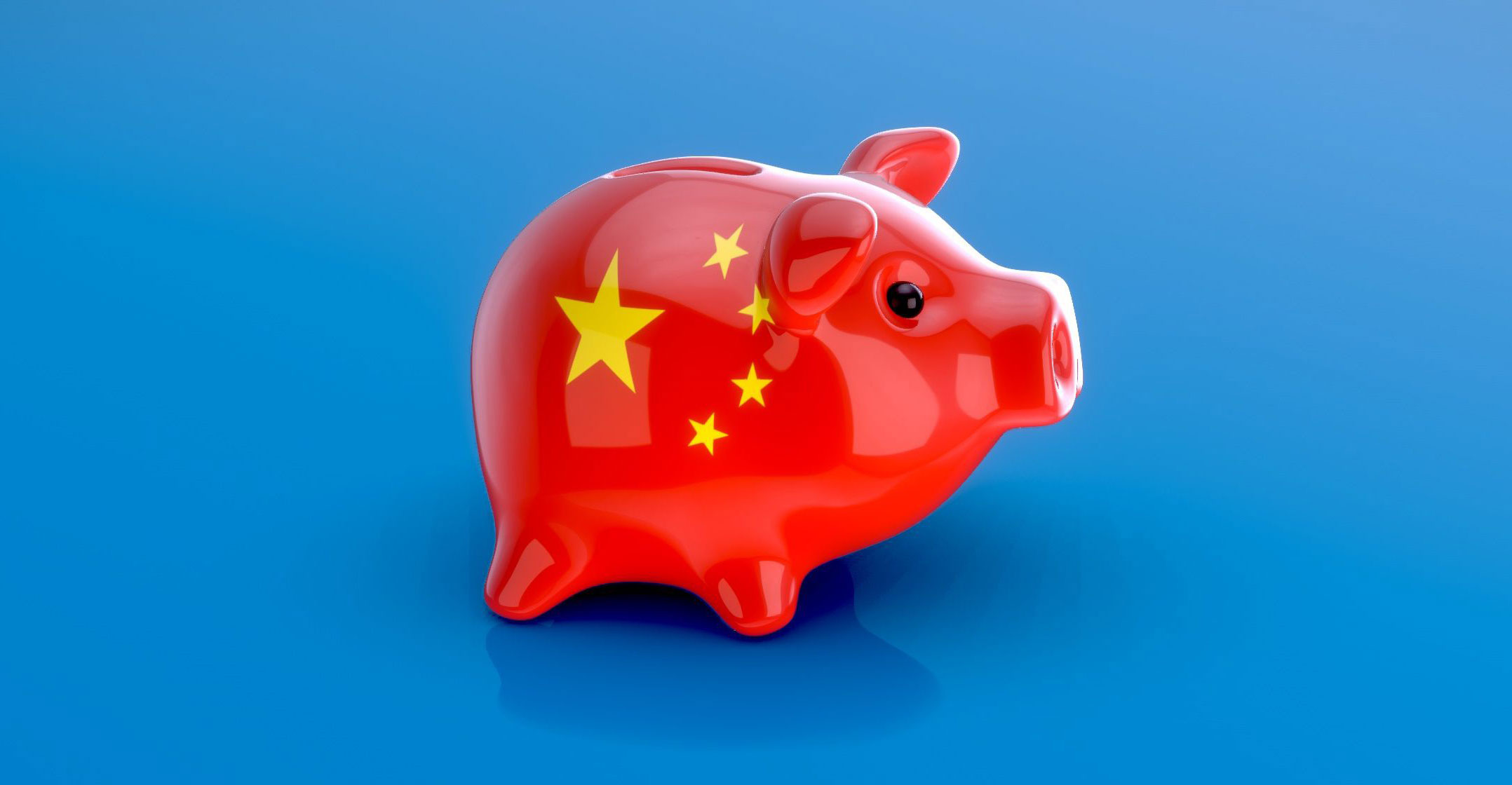
    China’s cryptocurrency is all about tracing – and power

    By Agency Staff24 May 2020
    Twitter LinkedIn Facebook WhatsApp Email Telegram Copy Link
    News Alerts
    WhatsApp

    The coronavirus has disrupted the world in very large ways. While that battle has been waged, however, another event has almost been missed: the birth of a new kind of fiat currency, which could forever reshape the relationship between money, economic power and geopolitical clout.

    An official Chinese digital yuan, more than five years in the making, is now in pilot runs to slowly start replacing the physical legal tender. If the experiment succeeds, this new cash, valued the same as the familiar banknotes bearing Mao Zedong’s image, will become the world’s first sovereign token to reside exclusively in the ether.

    The trials are taking place just as the blame game around the coronavirus deepens mistrust between the US and China. With President Donald Trump warning that Washington would respond if Beijing intervenes against protests and democratic movements in Hong Kong, chances of a detente from last year’s trade war are fading.

    Beijing was going to launch the digital money even before the pandemic. However, adoption could be faster now…

    Outside the People’s Republic, the big question is if the digital yuan is a challenger to the dollar. Within China, though, there’s a more mundane explanation for why Beijing wants to turn banknotes in circulation into virtual tokens.

    Chinese consumers have bypassed both computers and credit cards to embrace mobile payment apps, which have gone on to spawn large money-market funds investing in high-yielding wealth management products. This has led to the accumulation of risks in opaque shadow banking. Bringing them out in the open requires a leg up for traditional lenders in payments, an area where financial technology has left them far behind. The digital yuan, which will be pushed out to consumers via banks, seeks to restore this missing balance; it will allow authorities to “regulate an overstretched debt market more effectively”, says DBS Group Holdings economist Nathan Chow.

    Power play

    Still, there’s also a power play. It isn’t a coincidence that China’s project picked up speed last year as Facebook announced libra. The proposed stablecoin promised to hold its value against a basket of major official currencies rather than gyrating wildly like bitcoin. When it looked like regulators in the US and elsewhere would nix this synthetic global cryptocurrency, the Libra Association curbed the scope of its undertaking. But the idea of “a regulated global network for cost-effective retail payments”, as described by Singapore state investor Temasek Holdings, a new member of libra’s Geneva-based governing body, remains alive. For Beijing to shake the dollar’s hegemony, it has to pre-empt Silicon Valley from taking the pole position.

    Hence the hurry for China’s test runs. According to media reports, half the May transport subsidy for Suzhou municipal employees will be in the form of digital currency electronic payment, or DCEP, as it’s being called in the absence of a catchier moniker. The pilot plan in Xiong’an, a satellite city of Beijing, includes coffee shops, fast food, retailers, theatres and bookstores, Goldman Sachs Group has noted. The other trials are reserved for Chengdu and Shenzhen.

    Could China’s digital currency threaten the dollar?

    Thanks to Alipay and WeChat Pay, 80% of Chinese smartphone users whip out their mobiles to make payments, more than anywhere in the world. To them, the DCEP wallets being provided by the big four state banks should seem much the same. But there are differences. In this new system, a low-value transaction can go through even if both parties are offline. Also, this is sovereign liability, safe if an intermediary goes bankrupt. The big four lenders — and later fintech firms — will distribute the tokens, but the funds won’t reside in bank accounts. This will be unlike existing payment apps that only move one institution’s IOUs to another.

    Beijing was going to launch the digital money even before the pandemic. However, adoption could be faster now because of people’s fear of catching an infection from handling cash. Also, it’s possible to trace in real time whether an antivirus subsidy, given out in tokenised form, is reaching the target. Once it has, the tracking would be “turned off” to ensure corporate and household spending stays anonymous, Goldman says.

    With the outbreak giving legitimacy to intrusive physical contact tracing, the case for financial tracing gets stronger

    Strictly speaking, though, the anonymity of cash will no longer exist. Authorities can look under the hood of pseudonymous transactions for unwanted activity, an outcome far removed from the vision that drove libertarians (and money launderers) to cryptocurrencies in the first place. With the outbreak giving legitimacy to intrusive physical contact tracing, the case for financial tracing gets even stronger. Exchange of digital yuan between customers and merchants will pop up on a centralised ledger, and go through far more swiftly than in bitcoin-style setups that rely on widely distributed ledgers of asset ownership.

    Every nation projects power when others desire its money — something that costs the home country nothing to produce. But as with any digital network, the sovereign tokens that take off first could end up winning disproportionately. The digital yuan could find customers overseas, especially in places where China is making belt-and-road investments. For one thing, they wouldn’t have to pay banks fat fees for running the US$124-trillion-a-year business-to-business international transfers market.

    By distributing digital currency through banks, China has given its big institutions a chance to match the payment technology of fintech rivals. But it’s possible that a central bank in another country would bypass intermediaries altogether, potentially making the state the monopoly supplier of money to retail customers. That could upend banking. The digital yuan may have started modestly, but it might pave the way for changes that are both ambitious and long outlast the coronavirus.  — By Andy Mukherjee, (c) 2020 Bloomberg LP

    Follow TechCentral on Google News Add TechCentral as your preferred source on Google


    top
    WhatsApp YouTube
    Share. Facebook Twitter LinkedIn WhatsApp Telegram Email Copy Link
    Previous ArticleNaspers is said to be bidding for eBay’s classifieds business
    Next Article A defining moment: SpaceX will this week launch humans into space

    Related Posts

    18GW in unplanned breakdowns cripple Eskom

    2 November 2021

    Nersa kicks the Karpowership can down the road

    13 September 2021

    If you think South African load shedding is bad, try Zimbabwe’s

    13 September 2021
    Company News
    Households still under big pressure, Altron Fintech index shows

    Households still under big pressure, Altron Fintech index shows

    13 March 2026
    How AI is changing the way we work - Angela Ho, Obsidian Systems

    How AI is changing the way we work

    12 March 2026
    Domains.co.za introduces complete domain protection service

    Domains.co.za introduces complete domain protection service

    12 March 2026
    Opinion
    South Africa's energy future hinges on getting wheeling right - Aishah Gire

    South Africa’s energy future hinges on getting wheeling right

    10 March 2026
    Hold the doom: the case for a South African comeback - Duncan McLeod

    Apple just dropped a bomb on the Windows world

    5 March 2026
    VC's centre of gravity is shifting - and South Africa is in the frame - Alison Collier

    VC’s centre of gravity is shifting – and South Africa is in the frame

    3 March 2026

    Subscribe to Updates

    Get the best South African technology news and analysis delivered to your e-mail inbox every morning.

    Latest Posts
    Post Office on the brink of collapse

    Post Office on the brink of collapse

    13 March 2026
    New policy direction targets South Africa's municipal broadband logjam - Solly Malatsi

    New policy direction targets South Africa’s municipal broadband logjam

    13 March 2026
    How electronic warfare is threatening ships and their crews

    How electronic warfare is threatening ships and their crews

    13 March 2026
    Rand slumps for second week

    Rand slumps for second week

    13 March 2026
    © 2009 - 2026 NewsCentral Media
    • Cookie policy (ZA)
    • TechCentral – privacy and Popia

    Type above and press Enter to search. Press Esc to cancel.

    Manage consent

    TechCentral uses cookies to enhance its offerings. Consenting to these technologies allows us to serve you better. Not consenting or withdrawing consent may adversely affect certain features and functions of the website.

    Functional Always active
    The technical storage or access is strictly necessary for the legitimate purpose of enabling the use of a specific service explicitly requested by the subscriber or user, or for the sole purpose of carrying out the transmission of a communication over an electronic communications network.
    Preferences
    The technical storage or access is necessary for the legitimate purpose of storing preferences that are not requested by the subscriber or user.
    Statistics
    The technical storage or access that is used exclusively for statistical purposes. The technical storage or access that is used exclusively for anonymous statistical purposes. Without a subpoena, voluntary compliance on the part of your Internet Service Provider, or additional records from a third party, information stored or retrieved for this purpose alone cannot usually be used to identify you.
    Marketing
    The technical storage or access is required to create user profiles to send advertising, or to track the user on a website or across several websites for similar marketing purposes.
    • Manage options
    • Manage services
    • Manage {vendor_count} vendors
    • Read more about these purposes
    View preferences
    • {title}
    • {title}
    • {title}